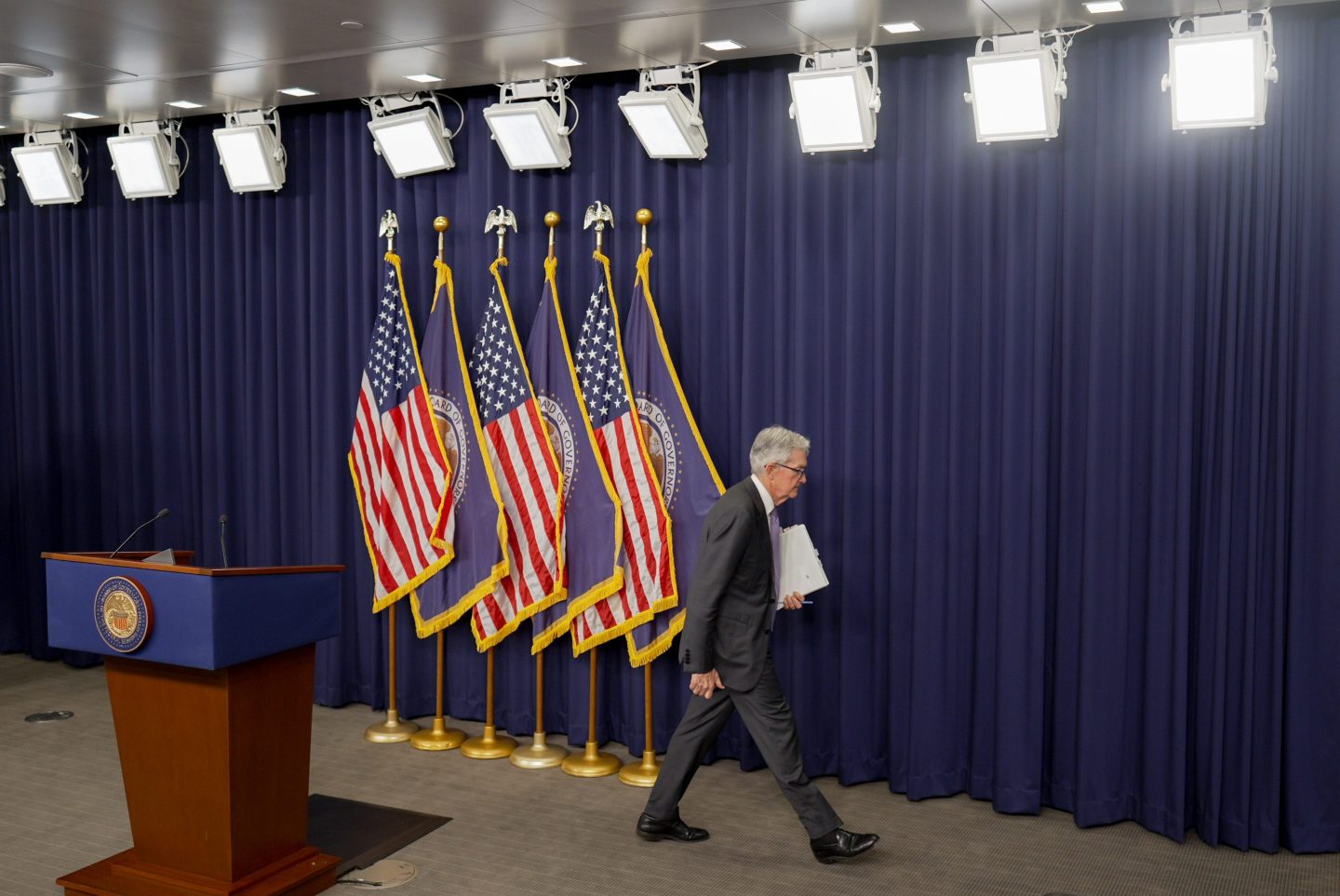
The Justice Department’s criminal inquiry into Federal Reserve Chairman Jerome Powell could prompt the central bank to circle the wagons to protect its independence.
On Sunday, Powell revealed the DOJ served the Fed with grand jury subpoenas, threatening an indictment over his testimony before the Senate last June related to renovations on the headquarters building.
If his unusually forceful response blasting the probe is any indication, Powell isn’t going down without a fight, and he could even continue overseeing interest rates—even if President Donald Trump installs a new chairman who will do his bidding.
That’s because Powell actually wears two hats: He is chair of the Fed’s Board of Governors and chair of the Federal Open Market Committee.
Historically, the board chair has also been FOMC chair, but it doesn’t have to be that way. In fact, the Fed even alludes to it in its own explainer on how the central bank works.
“By law, the FOMC determines its own internal organization, and by tradition, the FOMC elects the chair of the Board of Governors as its chair and the president of the Federal Reserve Bank of New York as its vice chair,” it says.
Fed governors, including the chair, are nominated by the president and confirmed by the Senate. But members of the FOMC decide who is chair of the rate-setting committee, which is comprised of the seven governors, the New York Fed president, and four other regional Fed presidents who serve on a rotating basis.
Fed policymakers carefully guard their reputation for being independent from political pressure. And this is where tradition and the law could diverge, resulting in one person serving as FOMC chair and another as board chair.
FOMC chair vs. board chair
Here’s how a hypothetical split could come about:
The FOMC picks its chair at its first meeting of the year. In 2026, that’s scheduled for Jan. 27–28. Only a current member of the FOMC is eligible to be chair.
Powell’s term as board chair expires on May 15, but his term as a governor extends to January 2028. In theory, he could stay on the FOMC and be eligible to serve as its chair until then—if he doesn’t resign and chooses to stick around longer.
The FOMC could hold another vote later in the year after a new board chair takes over. But no one can force a revote, according to Robert Eisenbeis, who previously served as director of research at the Atlanta Fed.
It’s customary for the New York Fed president to nominate the board chair as FOMC chair. But again, that’s not a requirement, he told Fortune last year.
Unless the FOMC decides to hold another vote, the next time they pick a chair would be at the following year’s first meeting in January 2027. And because Powell’s term as governor expires in January 2028, a similar situation could happen in 2027.
To his knowledge, Eisenbeis said there hasn’t been a case in the Fed’s history in which different people chaired the FOMC and the board. It’s also not clear if one chair would outrank the other.
Lisa Cook and the Supreme Court
But none of this is possible if Trump removes Powell from the Fed board. Sen. Elizabeth Warren, a Democrat who also sits on the Senate Banking Committee, highlighted this risk on Sunday, when she accused Trump of trying to force Powell off the board “to complete his corrupt takeover of our central bank.”
And that’s where DOJ’s criminal probe comes in. The Supreme Court is considering Trump’s attempt to oust Fed Governor Lisa Cook over alleged mortgage fraud. She has denied the claim and is fighting her dismissal. Justices are expected to render a decision soon.
Last year, the high court said Fed officials have a special status that shields them from being sacked unless it’s “for cause,” which has previously been interpreted to mean malfeasance or dereliction of duty.
Depending on how the Supreme Court rules in Cook’s case, any nuances in that decision could give Trump an opening as the DOJ pursues a criminal probe of Powell.
Meanwhile, Trump has said he already has someone in mind to replace Powell. Top candidates include Fed Governor Christopher Waller, National Economic Council Director Kevin Hassett, and former Governor Kevin Warsh.
But pushback from lawmakers who would confirm a nominee could slow that process. And even when a new chair takes over, that’s still just one vote on a 12-member panel.
Market veteran Ed Yardeni, president of Yardeni Research, said in a note in July whoever the next Fed chair is, a Trump loyalist or not, he must still work with the rest of the consensus-driven FOMC.
If a loyalist takes over and is too much of an outlier on monetary policy compared with the rest of the FOMC, then the chair could even be outvoted.
“That would seriously weaken the power of the Fed chair and raise concerns about the internal conflict with the Fed,” Yardeni warned.