• Home
  • Latest
  • Fortune 500
  • Finance
  • Tech
  • Leadership
  • Lifestyle
  • Rankings
  • Multimedia
EnergyVenezuela

‘What we call corruption’: Harvard economist and former Venezuelan minister says Trump’s oil profit motives have no place in Venezuela’s future

Sasha Rogelberg
By
Sasha Rogelberg
Sasha Rogelberg
Reporter
Down Arrow Button Icon
Sasha Rogelberg
By
Sasha Rogelberg
Sasha Rogelberg
Reporter
Down Arrow Button Icon
January 9, 2026, 3:27 PM ET
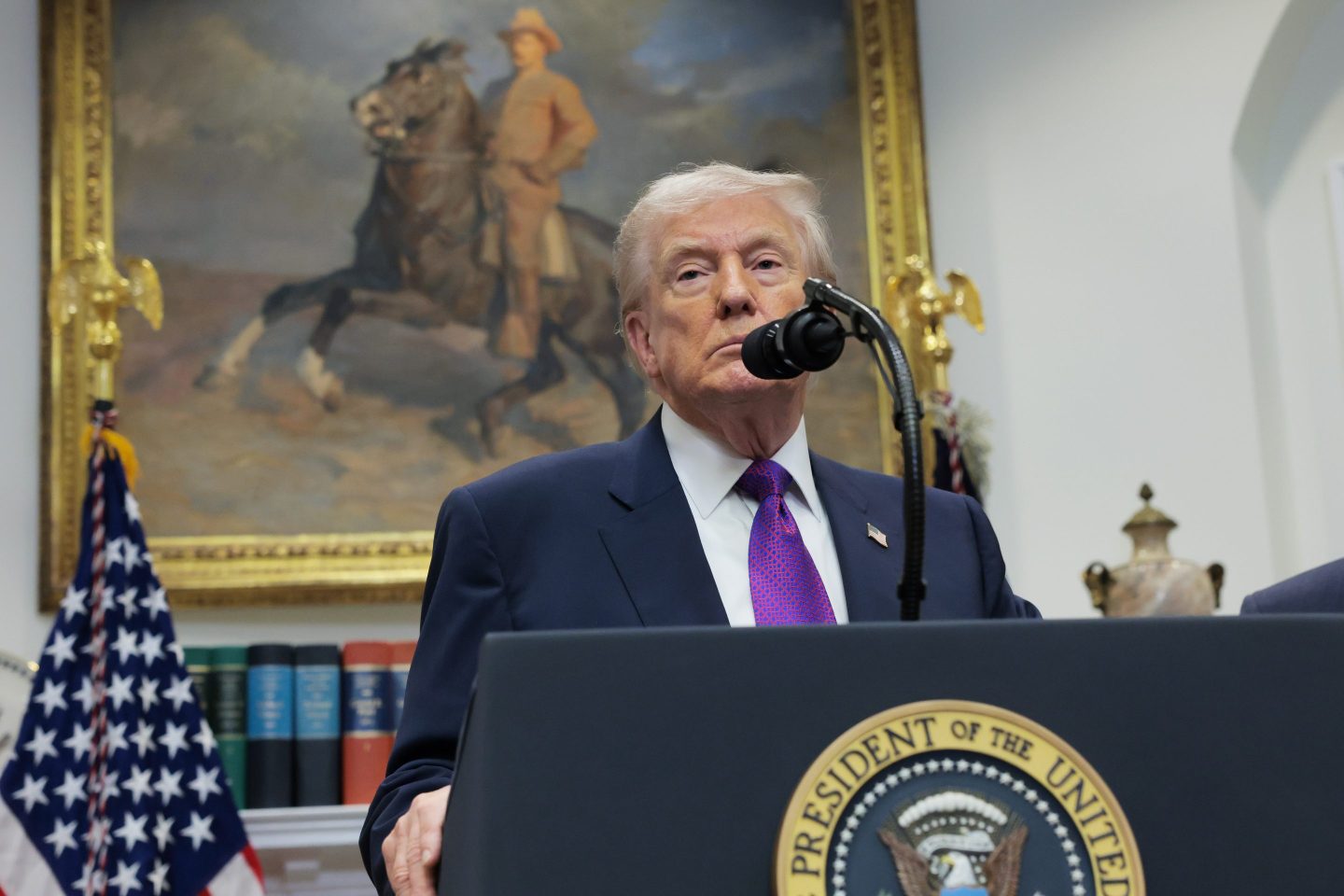
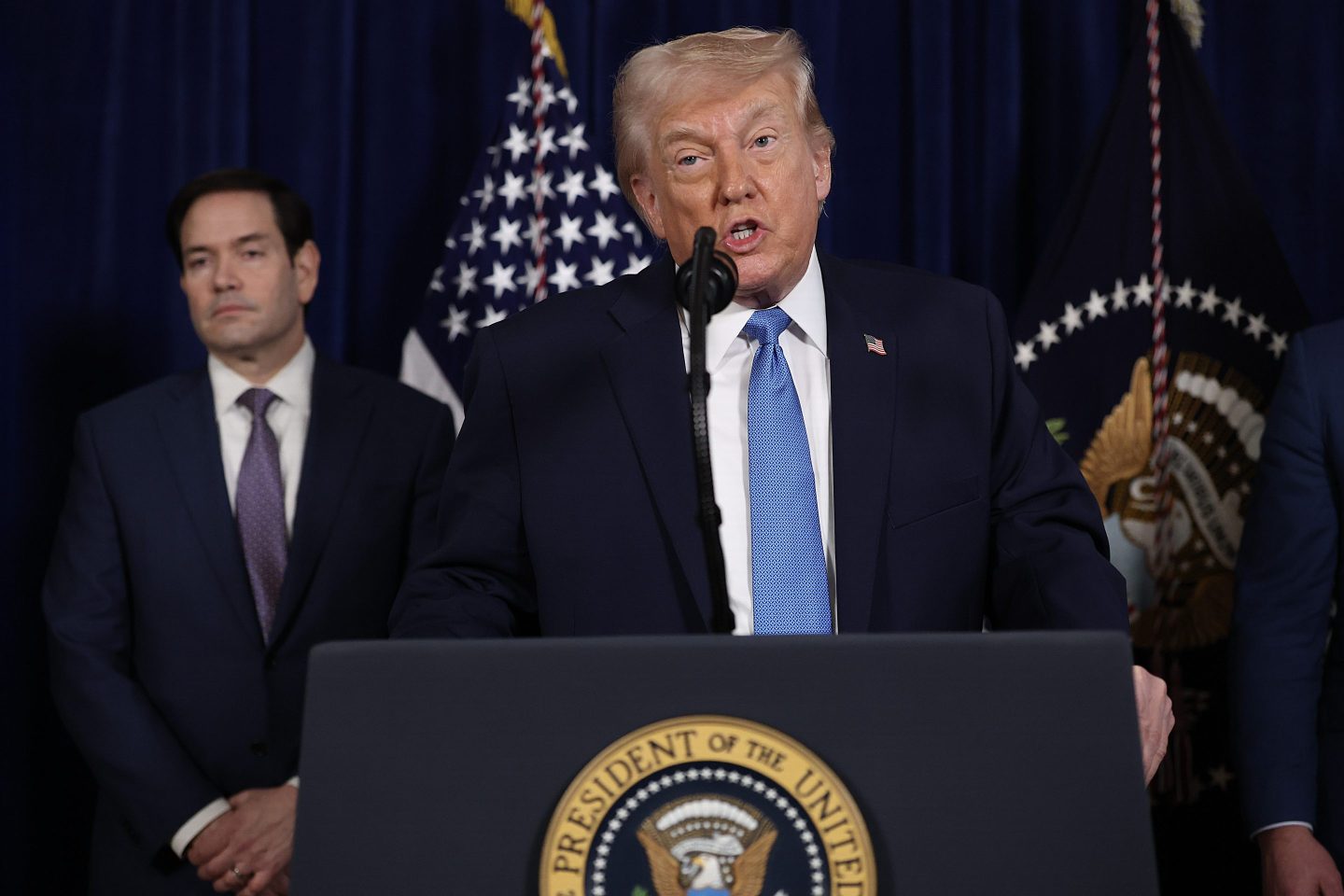
Donald Trump speaks behind a podium with Marco Rubio frowning in the background.
President Donald Trump said the U.S. will control Venezuela's oil industry for years to come.Joe Raedle—Getty Images

President Donald Trump has assured the people of Venezuela that his undertaking to restore the country’s oil infrastructure will be mutually beneficial to both them and the U.S. 

Recommended Video

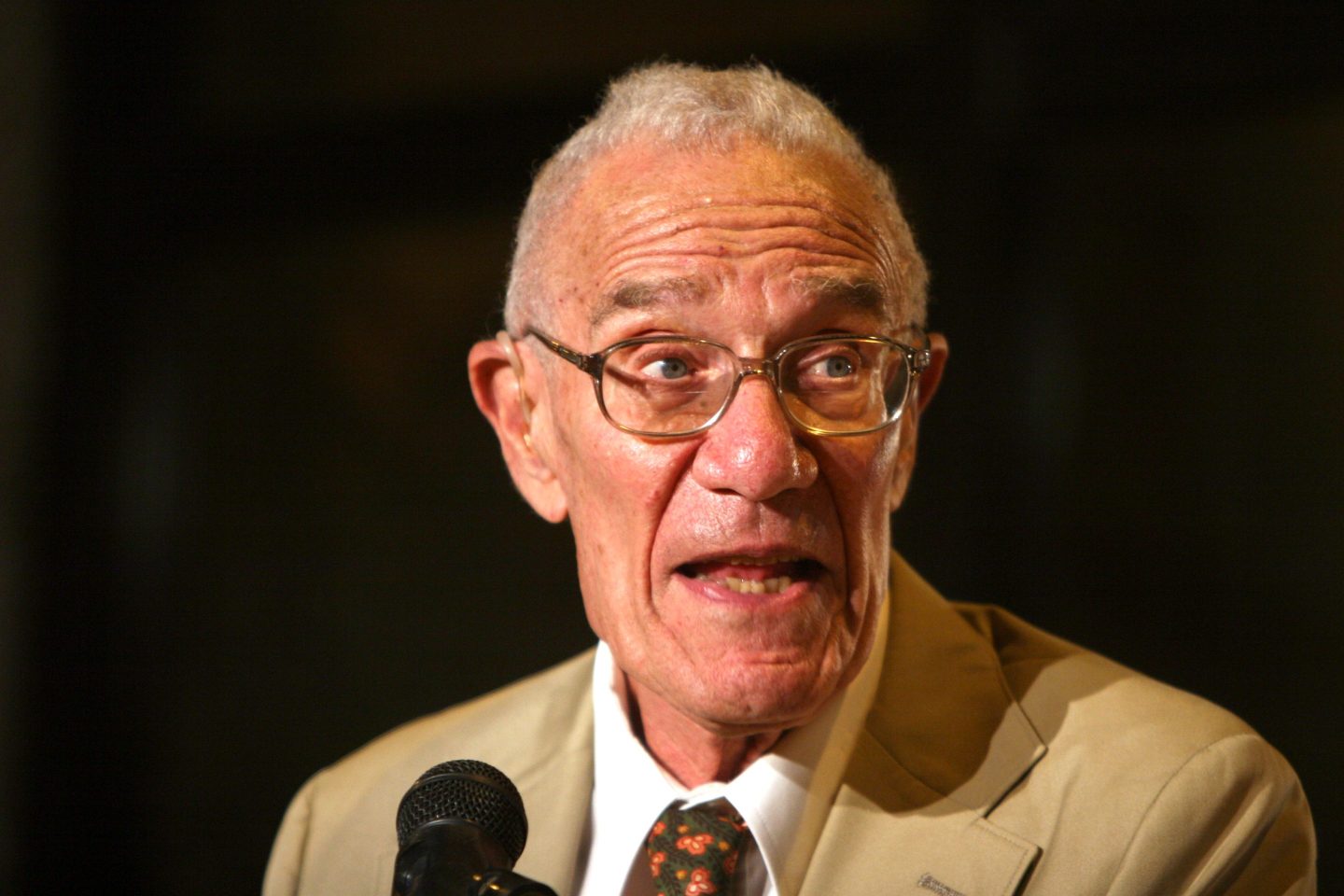
Ricardo Hausmann, professor of the practice of international political economy at the Harvard Kennedy School, isn’t convinced. 

“There’s a reason why there’s no profit motive in government,” Hausmann told Fortune, referring to the U.S. controlling the Venezuelan oil market. “Profit motive in government is what we call corruption.” 

Trump has unveiled lofty plans to revive Venezuela’s troubled oil industry, just days after U.S. forces captured Venezuelan leader Nicolas Maduro over the weekend. The White House explicitly said Maduro’s arrest—and the U.S.’s subsequent takeover of some of the country’s affairs—was an effort to dominate the Western Hemisphere, invoking the 19th century Monroe Doctrine to justify intervention in Venezuela. Venezuela is home to the world’s largest proven crude oil reserves.

“This is one of the countless good energy deals President Trump has brokered to restore American energy dominance that will benefit the American people, American energy companies, and the Venezuelan people,” White House spokesperson Taylor Rogers told Fortune in a statement.

The president said he will control the country and its oil market for years, reportedly meeting with U.S. oil company executives to discuss Venezuela’ s oil industry. On Tuesday, he announced Venezuela’s interim leadership would provide the U.S. with 30 million to 50 million barrels of oil, the proceeds from which would be sold at market rates, not discounted rates, and distributed to both the U.S. and Venezuela. The proceeds will go into U.S.-controlled bank accounts overseen by Trump, according to the White House.

“We will rebuild it in a very profitable way,” Trump said in an interview with the New York Times on Thursday. “We’re going to be using oil, and we’re going to be taking oil. We’re getting oil prices down, and we’re going to be giving money to Venezuela, which they desperately need.”

Trump’s government capitalism

Trump’s industry interventions and turn to state capitalism have become the hallmark of his second term: In August 2025, the U.S. government secured a 10% stake in Intel, becoming the largest shareholder of the struggling chipmaker. Earlier that month, Nvidia and AMD made a deal with the U.S. government to share 15% of revenue from chip sales to China.

These kinds of large-scale agreements are not only rare, but in the case of Nvidia and AMD, unprecedented and potentially unconstitutional according to some legal experts, as the U.S. Constitution prohibits duties on exports.

Hausmann, who served as the Venezuelan minister of planning from 1992 to 1993, argued Trump’s heavy hand in market affairs is counter to the purpose of government, which is not supposed to make money, but rather provide stability and policy that allow businesses to thrive.

In the case of Venezuela, Hausmann said, Trump’s prioritization of extracting oil for a short-term profit is not just a philosophical misalignment with his vision of government; it’s plain a bad idea.

“Having a policy because you want to make money, you’re going to be dramatically disappointed in any scenario you want to imagine,” Hausmann said. “If you want Venezuela to recover, money is going to go into Venezuela, not out of Venezuela. Venezuela is going to need to attract resources. It’s not [that] resources are going to go away.”

Trump told Fox News’ Sean Hannity this week that oil companies would need to spend at least $100 billion to revive Venezuela’s oil industry.

The state of Venezuelan oil

Hausmann noted that Trump’s strategy of leveraging oil to return Venezuela to economic prosperity is futile without restoring democratic leadership to the country, which can implement credible policy to stabilize the oil industry. 

When Maduro took power in Venezuela in 2013, Venezuelans were about four times wealthier than today; Venezuela was the richest country in South America in 2001. These periods of wealth aligned with higher oil production, which has since atrophied. When Hugo Chavez became president in 1999, Venezuela was producing around 3.5 million barrels of oil daily. Today, that total is around 1 million barrels per day.

Economists and public policy thinkers attribute this precipitous drop to the breakdown of the country’s oil infrastructure following decades of mismanagement, corruption, and U.S. sanctions. Chavez, for example, fired about 10,000 employees of state-owned oil giant Petróleos de Venezuela S.A. (PDVSA) in 2003 for participating in a two-month strike. PDVSA’s revenue would collapse about a decade later.

Analysts said Trump’s proposed solution of giving U.S. oil companies access to Venezuela to repair the infrastructure (and granting the U.S. access to 30% of the world’s oil reserves) is an expensive endeavor costing at least $10 billion annually for several years. Beyond repairing infrastructure, those companies will need to commit to the more-expensive extraction of heavy crude oil that makes up the vast majority of what is found in Venezuela’s Orinoco Belt.

The steep costs of rebuilding the oil industry means U.S. companies are going to need assurance that their investments will be worth it, Miguel Tinker Salas, a professor emeritus of history at Pamona College and author of The Enduring Legacy: Oil, Culture, and Society in Venezuela, told Fortune.

“I don’t think any large U.S. major company is going to want to invest without a series of guarantees, because you’re talking about billions of dollars of investment,” Tinker Salas said. “This is an investment for the long term, not for the short term.”

Hausmann suggested that one way for private oil companies to be lured to Venezuela—particularly when they have easier access to large oil reserves in Guyana and Namibia—is to address why the infrastructure of the industry decayed in the first place.

“These are self-inflicted wounds. If you want to recover oil, you need to go back to rule of law,” he said. “Let’s be very mechanical: You need to change the hydrocarbons law. And to change the hydrocarbons law, you need a congress that people think is legitimate.”

Hausmann’s vision for a Venezuelan future

The hydrocarbon laws to which Hausmann is referring originated in 1943, outlining that foreign oil companies must pay Venezuela 50% of their oil profits, a price companies were willing to pay to have access to the country’s massive reserves.

After PDVSA was established in 1976, foreign oil companies were able to partner with the state-owned giant, but at a steep cost: a 60% equity stake in their joint ventures. Chavez delivered a death knell to the industry decades later, according to Hausmann, seizing and nationalizing the assets of U.S. oil companies like ConocoPhillips and Exxon Mobil, which then left the country. Today, only Chevron, under a special U.S. license, continues to do business in Venezuela.

Venezuelan opposition leader María Corina Machado previously expressed intent to reform these hydrocarbon laws to increase foreign investment by getting rid of ownership restrictions. But Trump seems unlikely to give power to Venezuela’s popular political figures. He said Machado lacked the support necessary to lead the country, despite evidence of widespread backing for her and Edmundo González, who ran against Maduro in the 2024 election. Maduro’s vice president, Delcy Rodríguez, is Venezuela’s interim leader.

Hausmann said U.S. oil companies are aware of the political instabilities within Venezuela, another factor that may inform their decision to not immediately invest in the country. However, the economist also indicated that while Venezuela’s 303 billion barrels of oil in reserves make oil an obvious industry to expand, it’s not all the country has to offer. He suggests that if a democratic leader can come into power, Venezuela can invest more heavily in its other industries, such as tourism and its Caroni River, from which it derives 64% of its hydroelectric capacity.

“Venezuela has become much, much bigger than its oil, and Venezuela has an enormous potential in many other things,” Hausmann said. “You might say that the easiest thing would be oil, but even oil is not that simple.”
Join us at the Fortune Workplace Innovation Summit May 19–20, 2026, in Atlanta. The next era of workplace innovation is here—and the old playbook is being rewritten. At this exclusive, high-energy event, the world’s most innovative leaders will convene to explore how AI, humanity, and strategy converge to redefine, again, the future of work. Register now.
About the Author
Sasha Rogelberg
By Sasha RogelbergReporter
LinkedIn iconTwitter icon

Sasha Rogelberg is a reporter and former editorial fellow on the news desk at Fortune, covering retail and the intersection of business and popular culture.

See full bioRight Arrow Button Icon

Latest in Energy

Finance
Lorem ipsum dolor sit amet, consectetur adipiscing elit, sed do eiusmod tempor incididunt ut labore et dolore magna aliqua. Ut enim ad minim veniam
By Fortune Editors
October 20, 2025
Finance
Lorem ipsum dolor sit amet, consectetur adipiscing elit, sed do eiusmod tempor incididunt ut labore et dolore magna aliqua. Ut enim ad minim veniam
By Fortune Editors
October 20, 2025
Finance
Lorem ipsum dolor sit amet, consectetur adipiscing elit, sed do eiusmod tempor incididunt ut labore et dolore magna aliqua. Ut enim ad minim veniam
By Fortune Editors
October 20, 2025
Finance
Lorem ipsum dolor sit amet, consectetur adipiscing elit, sed do eiusmod tempor incididunt ut labore et dolore magna aliqua. Ut enim ad minim veniam
By Fortune Editors
October 20, 2025
Finance
Lorem ipsum dolor sit amet, consectetur adipiscing elit, sed do eiusmod tempor incididunt ut labore et dolore magna aliqua. Ut enim ad minim veniam
By Fortune Editors
October 20, 2025
Finance
Lorem ipsum dolor sit amet, consectetur adipiscing elit, sed do eiusmod tempor incididunt ut labore et dolore magna aliqua. Ut enim ad minim veniam
By Fortune Editors
October 20, 2025

Most Popular

Finance
Lorem ipsum dolor sit amet, consectetur adipiscing elit, sed do eiusmod tempor incididunt ut labore et dolore magna aliqua. Ut enim ad minim veniam
By Fortune Editors
October 20, 2025
Finance
Lorem ipsum dolor sit amet, consectetur adipiscing elit, sed do eiusmod tempor incididunt ut labore et dolore magna aliqua. Ut enim ad minim veniam
By Fortune Editors
October 20, 2025
Finance
Lorem ipsum dolor sit amet, consectetur adipiscing elit, sed do eiusmod tempor incididunt ut labore et dolore magna aliqua. Ut enim ad minim veniam
By Fortune Editors
October 20, 2025
Finance
Lorem ipsum dolor sit amet, consectetur adipiscing elit, sed do eiusmod tempor incididunt ut labore et dolore magna aliqua. Ut enim ad minim veniam
By Fortune Editors
October 20, 2025
Finance
Lorem ipsum dolor sit amet, consectetur adipiscing elit, sed do eiusmod tempor incididunt ut labore et dolore magna aliqua. Ut enim ad minim veniam
By Fortune Editors
October 20, 2025
Finance
Lorem ipsum dolor sit amet, consectetur adipiscing elit, sed do eiusmod tempor incididunt ut labore et dolore magna aliqua. Ut enim ad minim veniam
By Fortune Editors
October 20, 2025
Rankings
  • 100 Best Companies
  • Fortune 500
  • Global 500
  • Fortune 500 Europe
  • Most Powerful Women
  • Future 50
  • World’s Most Admired Companies
  • See All Rankings
Sections
  • Finance
  • Leadership
  • Success
  • Tech
  • Asia
  • Europe
  • Environment
  • Fortune Crypto
  • Health
  • Retail
  • Lifestyle
  • Politics
  • Newsletters
  • Magazine
  • Features
  • Commentary
  • Mpw
  • CEO Initiative
  • Conferences
  • Personal Finance
  • Education
Customer Support
  • Frequently Asked Questions
  • Customer Service Portal
  • Privacy Policy
  • Terms Of Use
  • Single Issues For Purchase
  • International Print
Commercial Services
  • Advertising
  • Fortune Brand Studio
  • Fortune Analytics
  • Fortune Conferences
  • Business Development
About Us
  • About Us
  • Editorial Calendar
  • Press Center
  • Work At Fortune
  • Diversity And Inclusion
  • Terms And Conditions
  • Site Map

Latest in Energy

EconomyVenezuela
Facing a 682% inflation rate, Venezuelans work three or more jobs and still can barely afford any food. ‘Everything is so expensive’
By Regina Garcia Cano, Matt Sedensky and The Associated PressJanuary 9, 2026
22 hours ago
Secretary of State Marco Rubio looks on as US President Donald Trump speaks to the press following US military actions in Venezuela, at his Mar-a-Lago residence in Palm Beach, Florida.
EnergyDonald Trump
Trump pushes for $100 billion in oil investments in Venezuela while Exxon and others say it’s currently ‘uninvestable’ without major reforms
By Jordan BlumJanuary 9, 2026
22 hours ago
Donald Trump speaks behind a podium with Marco Rubio frowning in the background.
EnergyVenezuela
‘What we call corruption’: Harvard economist and former Venezuelan minister says Trump’s oil profit motives have no place in Venezuela’s future
By Sasha RogelbergJanuary 9, 2026
1 day ago
Economycopper
The future depends on copper, but a coming shortage makes it a ‘systemic risk’ to the economy and a strategic flashpoint, S&P Global warns
By Jason MaJanuary 9, 2026
1 day ago
A refinery owned by Citgo, a subsidiary of PDVSA, the Venezuelan state owned oil company, sits along the I&M Canal on May 15, 2019 in Lemont, Illinois.
EnergyVenezuela
Paul Singer’s Elliott Management is one of the big winners in Venezuela’s forced sale of Citgo and the toppling of Maduro
By Jordan BlumJanuary 9, 2026
1 day ago
US President Donald Trump, alongside Deputy Chief of Staff Stephen Miller, Secretary of State Marco Rubio, and US Secretary of Defense Pete Hegseth, speaks to the press following US military actions in Venezuela, at his Mar-a-Lago residence in Palm Beach, Florida, on January 3, 2026. President Trump said Saturday that US forces had captured Venezuelan leader Nicolas Maduro after launching a "large scale strike" on the South American country.
EnergyVenezuela
The U.S. naval blockade of Venezuela has cost $700 million already—and is rising by $9 million daily
By Jordan BlumJanuary 8, 2026
3 days ago

Most Popular

placeholder alt text
Health
Bill Gates warns the world is going 'backwards' and gives 5-year deadline before we enter a new Dark Age
By Eleanor PringleJanuary 9, 2026
1 day ago
placeholder alt text
Politics
White House says it's 'reviewing protocols' after Trump seemingly violated federal policy by disclosing jobs data early
By Eva RoytburgJanuary 9, 2026
1 day ago
placeholder alt text
Success
Diary of a CEO founder says he hired someone with 'zero' work experience because she 'thanked the security guard by name' before the interview
By Emma BurleighJanuary 8, 2026
2 days ago
placeholder alt text
C-Suite
Silicon Valley billionaire flies coach out of solidarity: 'If I'm going to ask my employees to do it, I need to do it, too'
By Nick LichtenbergJanuary 9, 2026
1 day ago
placeholder alt text
Success
Walmart’s CEO Doug McMillon out-earns the average American’s salary in less than 20 hours—during a typical 30-minute commute, he’s already made $1,563
By Emma BurleighJanuary 9, 2026
1 day ago
placeholder alt text
Success
Gen Z are arriving to college unable to even read a sentence—professors warn it could lead to a generation of anxious and lonely graduates
By Preston ForeJanuary 9, 2026
1 day ago

© 2025 Fortune Media IP Limited. All Rights Reserved. Use of this site constitutes acceptance of our Terms of Use and Privacy Policy | CA Notice at Collection and Privacy Notice | Do Not Sell/Share My Personal Information
FORTUNE is a trademark of Fortune Media IP Limited, registered in the U.S. and other countries. FORTUNE may receive compensation for some links to products and services on this website. Offers may be subject to change without notice.