The tech giants fueling the AI boom generate so much cash relative to their debt that they have more than enough room to issue more, according to Bank of America.
In a note this week, analysts looked at the top five publicly traded AI hyperscalers: Meta, Alphabet, Microsoft, Amazon and Oracle.
BofA pointed out that while the companies can fund their near-term capital expenditures with cash, they are tapping debt markets for balance-sheet flexibility and better cost of capital. Last month alone, Meta, Alphabet, and Amazon raised tens of billions of dollars in the bond market.
Operating cash flow for the big five hyperscalers is expected to hit $577 billion this year from $378 billion in 2023, while debt should climb from $356 billion to $433 billion.
That means their overall debt burden is actually getting lighter as the debt-to-cash ratio should dip from 0.94 to 0.75.
“Given the hyperscalers’ historically conservative capital allocation and balance sheet policies, elevated debt issuance is possible, as evident by the recent bond deals from Meta, Alphabet and Amazon,” BofA said.
And plenty of additional cash is on the way. By 2029, operating cash flow is seen jumping 95% to $1.1 trillion, while capex is forecast to grow at a much slower pace of 58% to $632 billion.
But then there’s Oracle. Unlike the other AI hyperscalers, it will have negative free cash flow until 2029, meaning its capex will exceed cash from operations, according to BofA. As a result, it doesn’t have much capacity to take on more debt.
Indeed, fears about Oracle’s debt binge have rattled the overall AI stock trade as the company isn’t a cash machine like its AI peers.
Recent earnings guidance was also weak, and the company raised its forecast for fiscal 2026 capex by another $15 billion. In addition, surging lease obligations have spooked Wall Street.
A Financial Times report on Wednesday that said alternative investments firm Blue Owl didn’t team up with Oracle on a data center after all piled on more concerns. Shares fell on the news, though the company’s development partner, Related Digital, said Blue Owl was outbid on the project and didn’t back out of it.
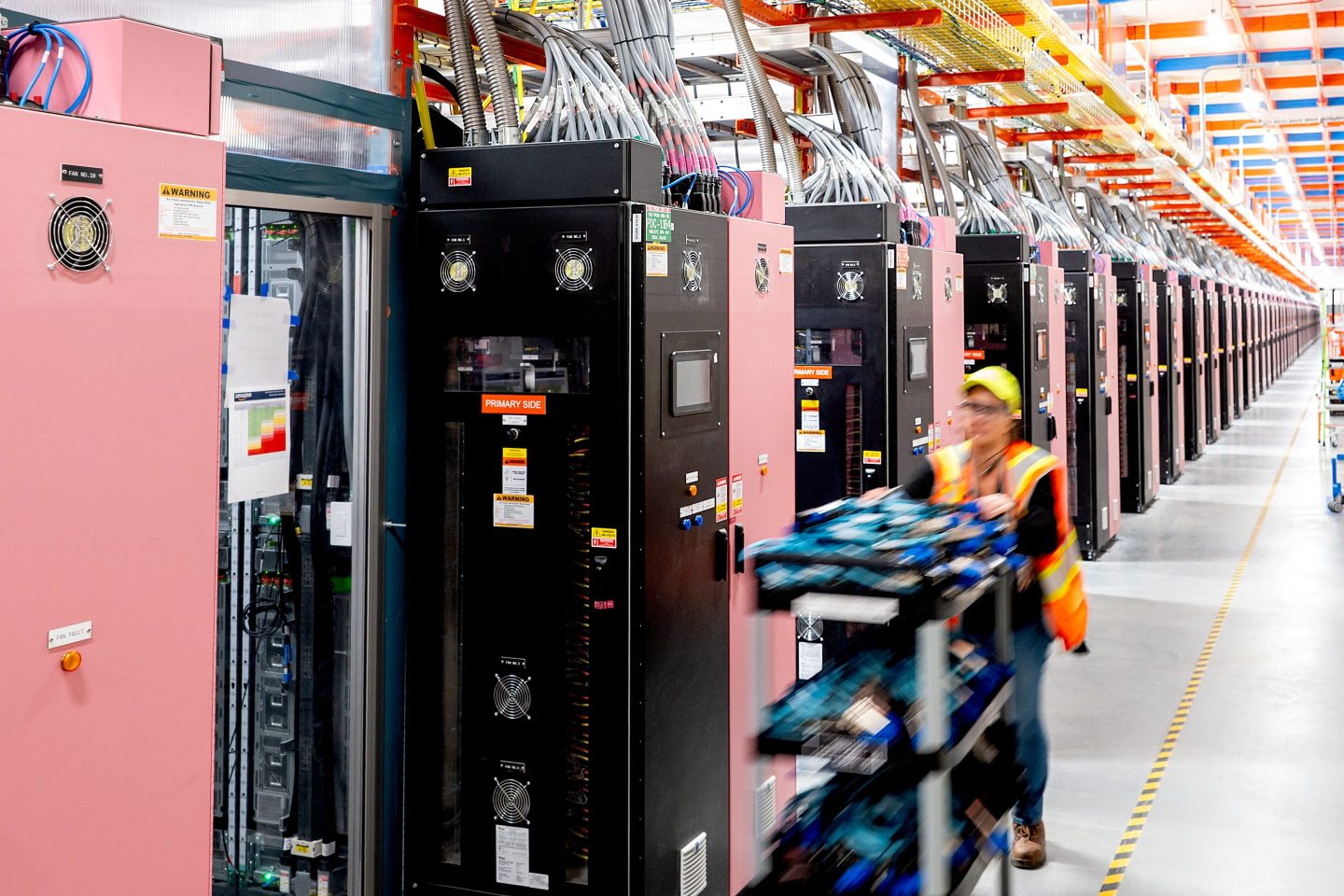
But even though debt may not pose a limit on hyperscalers’ ambitions, they still face physical limits, namely in building enough infrastructure fast enough to meet demand.
Data-center researcher Jonathan Koomey told Fortune’s Eva Roytburg that capital can be deployed instantly, but the equipment that capital must buy cannot. Tmelines for turbines, transformers, specialized cooling systems, and high-voltage gear have stretched into years, he explained.
“This happens every time there’s a massive shift in investment,” Koomey added. “Eventually manufacturers catch up, but not right away. Reality intervenes.”