At this time last December, OpenAI was dazzling the world with its “12 days of Shipmas,” a cleverly marketed daily drumbeat of new product releases that included its paradigm-setting 01 reasoning model. OpenAI had just raised $6.6 billion in fresh funding, and its ChatGPT user base was growing so fast that the company complained it was struggling to find enough computing power to keep up with demand.
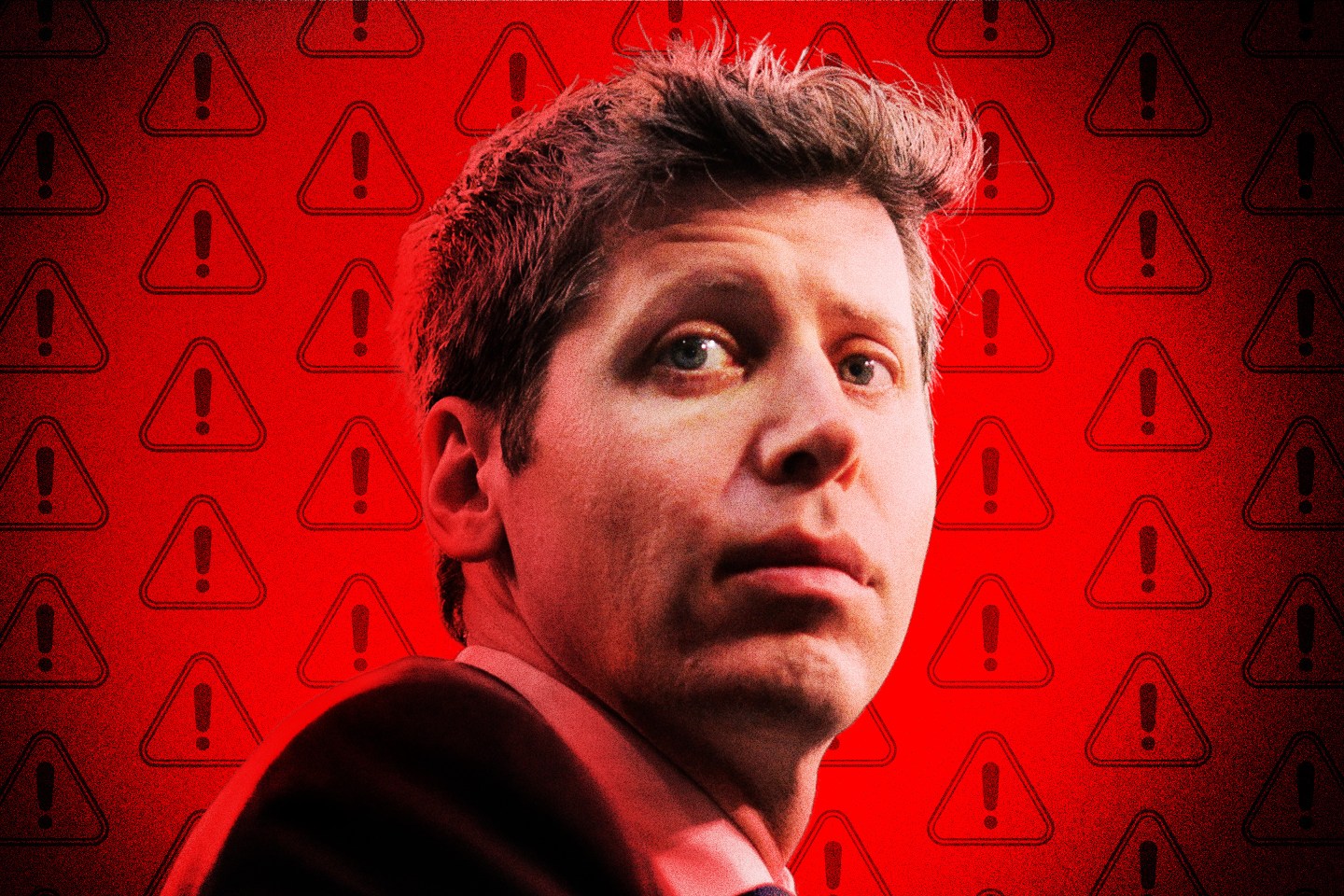
Fast-forward just one year to this December when employees got a decidedly different holiday present: a five-alarm “code red” laid out in a memo from CEO Sam Altman, bracing the team for “rough vibes” and economic headwinds in the wake of increased competition, and trying to light a fire under them to refocus over the coming weeks.
As part of the missive, Altman announced a temporary postponement of many of the initiatives that had promised to get OpenAI closer to its stated financial goal of breaking even by 2030. That includes delaying several major revenue generators that the company was counting on: advertising, an expanded e-commerce offering, and (to a lesser extent) agentic systems.
The company is not in a life-threatening crisis. ChatGPT topped Apple’s App Store charts as the most downloaded free app in the U.S. in 2025, and just last week, OpenAI announced a groundbreaking partnership with Walt Disney Co. that will bring the media company’s characters to OpenAI products (along with a $1 billion investment). But the code red alert reveals a real concern within OpenAI that the $500 billion company could lose its position as the standard-bearer and pacesetter for generative AI technology.
The data backs that up. While ChatGPT still holds a big lead with more than 800 million weekly users, Google’s Gemini is gaining fast: In its Q3 earnings, Google’s parent company Alphabet announced that its Gemini app now has 650 million monthly active users, up from 450 million in July. Preliminary November data from SimilarWeb reveals Google Gemini generated 1.351 billion website visits—a 14.3% increase from October. Meanwhile, ChatGPT fell below the 6 billion benchmark it had touched in October, recording 5.844 billion visits and marking its second month-over-month decline in 2025.
In the lucrative market for enterprise customers, OpenAI appears to have lost significant market share, falling to 27% according to one recent report by Menlo Ventures, while Gemini has risen to 21% and rival startup Anthropic leads at 40%. (OpenAI disputes the figures from Menlo, noting that the venture capital firm is an investor in Anthropic; it notes that more than 1 million business customers now use OpenAI tools, with sharp upticks in usage metrics over the past year. The company also just released a survey of its enterprise users that showed enterprise usage of OpenAI’s models more than doubling over the past year in many countries outside the U.S.)
As one former OpenAI researcher told Fortune, the situation is serious. “It’s pretty remarkable that Sam is so open about it…this is one of those few moments where he’s very transparent about the threat that OpenAI is receiving from Google.” As this person sees it, “If Google overtakes OpenAI in raw performance, it’s basically going to kill OpenAI’s API business…There’s a chance Google is going to give out Gemini for free entirely, too. And that could kill the consumer subscription business for OpenAI as well.”
The internal call to arms lays bare the very precarious position this market leader is now in, particularly as it confronts industry titans like Google (as well as Microsoft and Meta), with tens of billions of dollars in cash on their balance sheets and massive ecosystems of products to boost their distribution.
For Altman, a longtime tech entrepreneur, the historic matchups of Silicon Valley’s past, pitting innovators and incumbents in winner-takes-all battles, are surely contributing to the sense of urgency: The annihilation of browser pioneer Netscape by Microsoft or the eclipse of BlackBerry’s handheld communications gadgets by Apple’s iPhone comes to mind. But there’s also the example set by Facebook founder Mark Zuckerberg, whose famous “lockdowns” over a decade ago helped repel the threat of Google’s nascent—and ultimately doomed—social networking product.
The decisions made by OpenAI and its competitors at this critical juncture in a fast-moving market will decide which company cements its hold on what some have called the most transformative technology since electricity, and which will end up as odd footnotes in the final writing of the history of AI.
Demis versus Sam
Altman views new competitive threats like a “pandemic” that must be fought immediately and forcefully before any competitor gets too much traction, according to someone recently briefed on OpenAI’s thinking. “You just don’t let any competitor get oxygen,” Altman has said.
OpenAI unleashed the first element of its counterattack in mid-December, with the release of GPT-5.2, internally code-named Garlic. The model puts OpenAI back on top of many closely watched benchmarks for AI performance. Then on December 16, OpenAI launched a new image generation model designed to show it can match the buzz created by Google’s Nano Banana.
But even the company acknowledges that these are merely initial moves in what needs to be a much broader effort to regain momentum. The code red will last eight weeks—a time frame the company says is longer than its previous such exercises because of the holidays. The plan is to “exit” the code red in late January with the release of a second big product update. During this time some of its recent initiatives will be put on the back burner so that OpenAI can concentrate on shoring up its core ChatGPT product and the AI models that underpin it.
“The code red is to really signal to the company that we want to marshal resources in one particular area, and that’s a way to really define priorities and define things that can be deprioritized,” OpenAI’s CEO of applications Fidji Simo said on a call with reporters last week to announce GPT-5.2. Simo said that GPT-5.2 had been in the works for months and that the timing of its release last week was not directly related to the code red, but she said the launch was helped by the additional resources and focus of the alert.
One OpenAI employee who works on ChatGPT and its coding products describes the mood inside the company as focused but not panicked. “We were starting to get distracted before with all the other things we had going on, and this is going to get the whole company to focus a bit more on the core product. For us working on ChatGPT, it’s good.” And while OpenAI employees recognize that Gemini 3 is a good model, the person said they were not worried about a sudden mass defection of developers from OpenAI to Google.
By dialing up the intensity level within the company, OpenAI is following a playbook occasionally used by Silicon Valley tech companies during times of heightened competitive threats. Facebook’s lockdowns were an extreme example, with employees putting their personal lives on hold to buckle in for marathon work sessions accompanied by posters with printed Roman battle cries and the glare of a large neon “lockdown” sign.
Google declared its own code red after OpenAI’s ChatGPT came on the scene a few years ago. Since then, Google has reoriented the company to win the AI wars. Sergey Brin, Google’s billionaire cofounder who stepped back from day-to-day involvement in 2019, is back full-time, pitching in on some of the technical work and exhorting staffers to push themselves harder and to work longer hours, according to media reports.
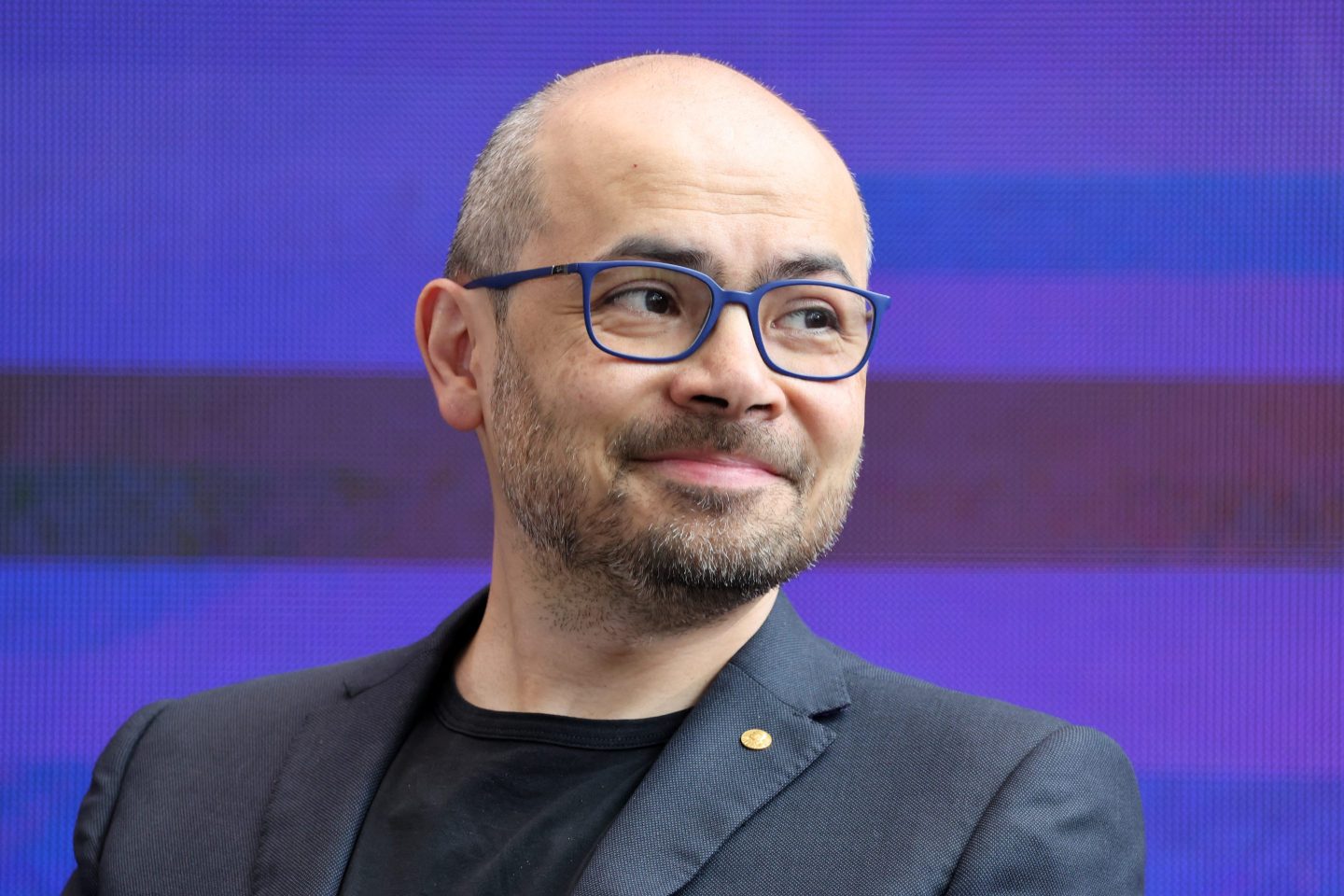
And Demis Hassabis, the now Nobel Laureate (for his work on AI science breakthrough AlphaFold) and former child chess prodigy, is at the center of Google’s efforts. He’s been at Google since 2014 when he sold his startup to the tech giant; in 2023 he was put in charge of Google’s merged AI divisions: DeepMind and Google Brain. With a team of thousands under his command, Hassabis has redoubled the company’s efforts on large language models, OpenAI’s stronghold. By December of 2023, Google, armed with a newly-christened Gemini large language model, was matching OpenAI’s ChatGPT on a series of benchmarks. But when that model was fully released to the public in early 2024, its strong performance on many tasks was eclipsed by an embarrassing debacle over its image-generation capabilities. (In an effort to try to make the model less likely to produce toxic images, it actually made the model politically correct to the point of ridiculousness, depicting black Vikings and Nazis for instance). That misstep, along with the “glue as a good pizza topping” advice that Gemini gave later that spring, made a lot of people question whether Google really had gotten its mojo back. But in the past year, it has shown it can produce models that are as capable, if not more capable, than those created by OpenAI.
As one tech entrepreneur mused to Fortune about Google and OpenAI, “Look, in some ways this is Demis vs. Sam [Altman], and if we’re honest, who do you believe in more here? Sam may be ruthless but long term is he really a match for Demis?”
Gemini rising
When Allie K. Miller, an AI advisor and investor, recently attended a Shark Tank–type event hosted by Mark Cuban, she was struck by what happened when Cuban said the words “Nano Banana.” She expected that the mention of Google’s whimsically named AI image generator might cause confusion among the thousands of people in the audience, who Miller described as mostly new to AI. Instead, the crowd nodded in recognition.
Like ChatGPT itself, she explained, “there are certain AI tools or models that you just start hearing over and over and over again that gain such a big pop culture moment.”
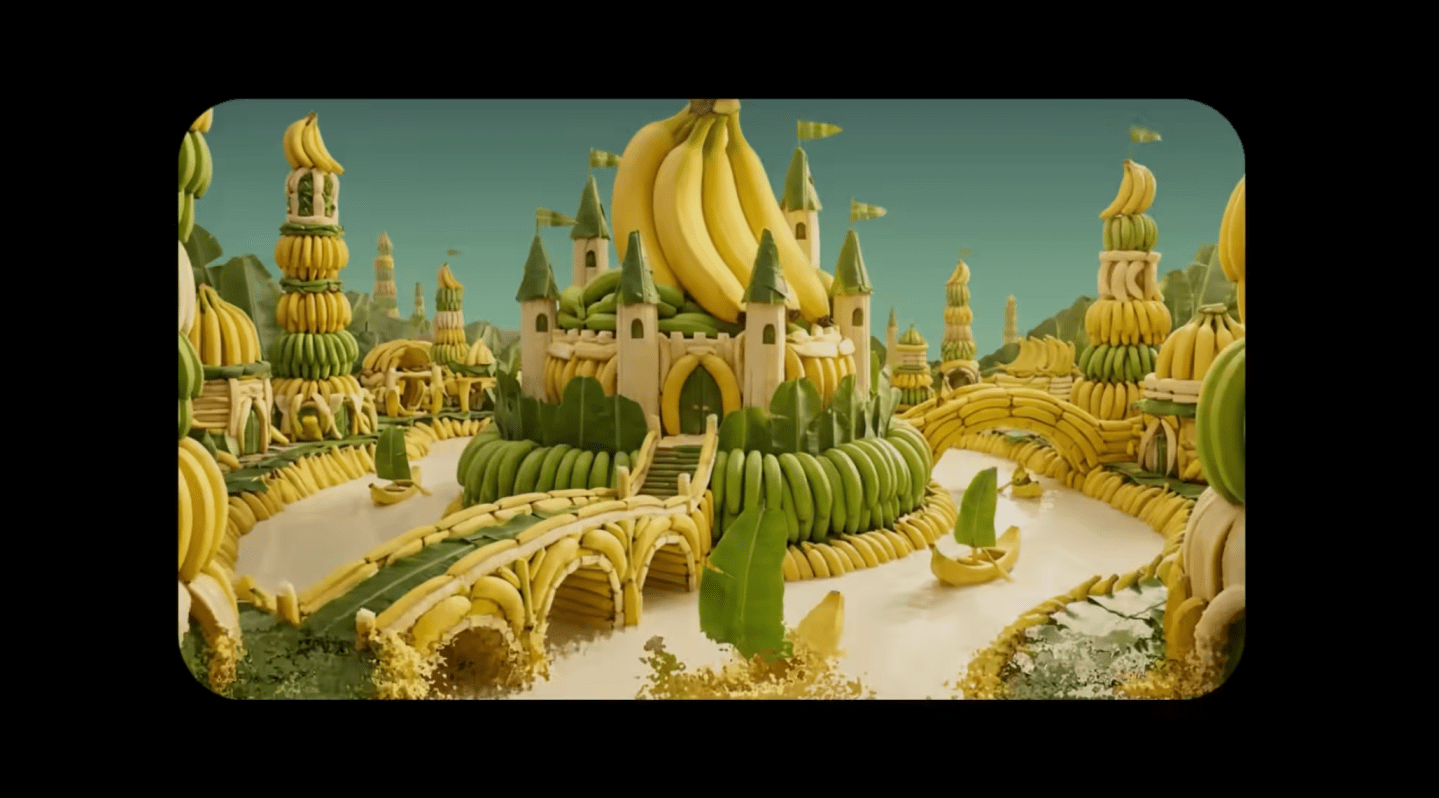
Google initially released Nano Banana in August, but it was the new Nano Banana Pro, which came out in late November, that has turned heads within the tech world and the general public. Hyper-realistic AI images of famous actors in movie scenes that never existed and tons of AI-generated memes filled social media feeds, eliciting expressions of wonder—the kind of adoration OpenAI had become accustomed to basking in. Nano Banana Pro was especially proficient at generating images with readable and context-appropriate text in the image, something that previous image generators couldn’t do reliably. This made the model good for creating PowerPoint slides and info graphics.
What may have truly spooked Altman, however, was the performance of Gemini 3, the newest version of Google’s flagship AI model (and the model powering Nano Banana Pro). From the impressive answers it delivers to complex business questions, to its writing and coding capabilities, Gemini 3 very quickly earned plaudits from influential AI users and the general public.
Google said that it achieved Gemini 3’s performance gains from both pre-training (the initial process of building an AI model in which it is fed tremendous amounts of data and simply taught to predict the next word in a sequence) as well as through post-training, in which a model’s outputs are shaped through different learning processes to exhibit certain qualities, such as being helpful and friendly. This surprised many AI industry insiders, since the conventional wisdom had been that any advantages from pre-training had largely been exhausted.
Worse for Altman, there were also rumors that many of OpenAI’s large pre-training runs in 2025 have failed to produce models that were any better than prior ones. If this is the case, it could be one of the major causes of anxiety within OpenAI because it implies that there’s some formula for success and model improvement that the company is not currently able to replicate. (When OpenAI released its newest GPT-5.2 model this past week, it said little about how it trained the AI. But it did say that it had found ways to optimize “all phases of training.”)
Because the performance of its models has long offered one of its primary defensive moats, OpenAI can’t afford to fall behind the competition for long. And as Altman and company endeavor to add features that match its rivals’ other strengths, the company needs a best-in-class AI model as its foundation.
That’s especially true when it comes to its battle with Google, which has nine products each boasting more than 1 billion users, including Gmail, Chrome, and YouTube.
“People are shifting over to Gemini not just because it’s got a better model, but they’re realizing that this capability is baked into everything,” says Ajay Agrawal, a researcher on the economics of AI. Just matching Gemini now won’t cut it—OpenAI will have to be measurably better, or bake what they’re doing into some workflows just to keep up. Says Agrawal, “It’s hard to imagine now that they’ll be able to just keep going with just a language model as a general tool.”
In the enterprise market, OpenAI needs to stop Anthropic’s gains in the sector and convince more businesses that ChatGPT is the best choice to meet their specialized security and privacy needs.
Enterprise customers are critical to OpenAI’s future, says Futurum Research CEO Daniel Newman, because the most substantial revenue opportunity is not in users paying for individual subscriptions for ChatGPT but in businesses applying AI to their vast pools of internal data and “consuming trillions of tokens daily.” It’s the “great unlock” that will allow OpenAI to finance its huge computing costs.
The importance of enterprise to OpenAI was underscored last week when COO Brad Lightcap spoke at a Fortune event. “I wake up every day and think about enterprise,” said Lightcap. “We have not yet really captured that moment of enterprise AI penetration,” he said, referring to the broader AI industry.
The company’s latest survey of its enterprise users shows that its existing customers are rapidly scaling up, with usage of OpenAI’s models among technology companies growing 11x year-over-year, while the figures for the healthcare sector are 8x and for manufacturing 7x, respectively. But the report does not break down either total customer numbers or the monetary value of these accounts.
The next code red
OpenAI’s past code reds have been called to deal with threats ranging from China’s DeepSeek to Anthropic’s Claude. But with 3,200 employees, the company is now larger than ever, and the former nonprofit’s mission has evolved, driven by the increasing pressures of building a sustainable business. And the extent of Altman’s ambitions means there will be more code reds ahead.
Looking beyond the next eight weeks, OpenAI is on a collision course with another consumer giant: Apple.

Altman has made no secret about how important he believes new types of hardware devices will be in the way that people use AI, and he has set an ambitious goal of creating an OpenAI gadget that replaces the smartphone as the standard gadget people carry around. In May he hired former Apple design guru Jony Ive and acquired Ive’s startup, with the goal of producing this new generation of AI gadgets. Speculation about those new devices ranges from glasses to a wearable pendant-like gadget.
While Altman has expressed mixed opinions about glasses as a form factor, he has spoken about innovations in 3D technology that, while still years away from being commercially viable, could eventually make glasses an ideal AI gadget. In the near term, Altman is optimistic about screen-based devices and audio interfaces, according to the source briefed on his thinking.
“We are all living in the constraints of this same kind of computer that we have been using for a long time, and that feels totally wrong and limiting,” Altman said at a conference in November, alongside Ive. “We don’t know how to figure out the right answer, but we think the world deserves better stuff.”
The first version of OpenAI’s hardware devices will be available in less than two years, Ive said at the event. For its part, Apple—like Google—is certain to ramp up its own efforts after being initially caught flat-footed by OpenAI.
As this battle rages, it will also be fought with perception: Which company do consumers trust? Which one do you want to own your data and get to “know” you? There, it’s not yet clear that there is a winner. But perception is a funny thing—and can change quickly. Just a few years back, Google was widely perceived to be a tech behemoth with too much power. Then OpenAI came along. As one Twitter user wryly noted of Altman’s AI company: “They somehow made Google look like the underdog good guys that everyone cheers for.”
With additional reporting by Allie Garfinkle and Sharon Goldman.