Among Hollywood’s creative class, AI is a sort of bogeyman right now. In a film and television market where less is being made and actors, writers, and directors are finding it harder and harder to get consistent work, executives’ talk about the potential of AI is not exactly landing well.
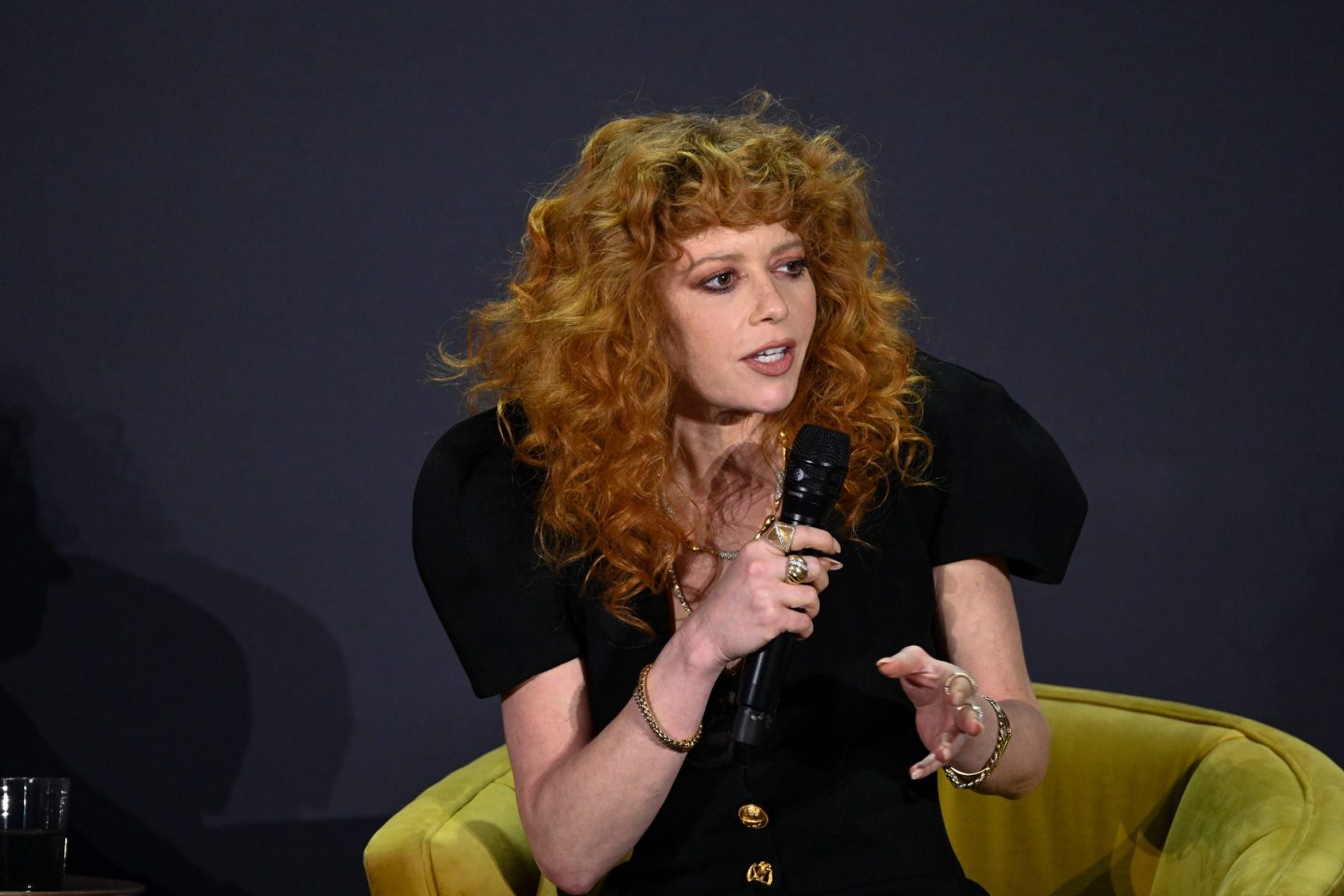
So some were initially surprised to see Natasha Lyonne, the actor and writer known for Russian Doll and Orange Is the New Black, launch an AI company. But she thinks that it’s better for creatives to figure out how to use AI in a way that benefits them, rather than be left behind.
Her company is called Asteria Film Co.; it uses AI tools to create “ambitious and visually rich films on independent budgets.” It relies on the AI model Moonvalley, which was built for filmmaking and cinematography.
Lyonne came to Fortune’s Brainstorm AI conference in San Francisco this week, where she talked with my colleague and Term Sheet author Allie Garfinkle about this new endeavor. She said she got interested in technology and science fiction when she was making Russian Doll (for those who haven’t watched the Netflix show, it involves time loops).
“It does seem that there’s some real rarefied air of sort of C-suite versus the rest,” she said of tension over AI in Hollywood. “And I’m deeply concerned, at least in my business, I’m someone who’s been doing this since I’m 4. … I really care about crews, cast, [the union] IATSE, Teamsters, all of us—writers, directors, people that have made their own work as artists.”
She says she’s not worried about some of the recent AI stories that have roiled the industry. “I’m not sweating Tilly Norwood,” she said of the AI-generated “actress.” “I’ve heard her name. Haven’t met her, not convinced she’s real or super important, might just be a distraction, a little fear tactic, chaos.”
To those in creative fields who pride themselves on avoiding AI entirely, she advises to look at the structures around them. “It’s very easy to say, ‘I made my album with no AI,’ but your marketing department did not,” she said. “So what do we really mean when we say AI?”
Emma Hinchliffe
emma.hinchliffe@fortune.com
The Most Powerful Women Daily newsletter is Fortune’s daily briefing for and about the women leading the business world. Subscribe here.
ALSO IN THE HEADLINES
María Corina Machado will collect her Nobel Peace Prize. She made it out of Venezuela by boat on Tuesday. She didn't make it to Norway in time for the ceremony, but plans to collect her award. After leaving Venezuela, she will likely be forced into exile after living in hiding to avoid arrest. WSJ
Hinge has a new CEO. The leading dating app, part of Match Group, will now be led by CMO Jackie Jantos. The app's founder, Justin McLeod, is stepping down to launch an AI dating product. TechCrunch
MacKenzie Scott just went on her biggest giving spree yet. She gave $7.2 billion, for a total of $26 billion over the past five years. Bloomberg
Activists target female CEOs more often. Between 2018 and 2025, women led only 6.3% of companies in the Russell 3000—but accounted for 15.75% of activist campaigns that publicly criticized the company's leader. Axios
A'ja Wilson is Time's athlete of the year. On the WNBA's contract negotiations and tension between players and commissioner Cathy Engelbert, Wilson said, "I only know Cathy by when she hands me trophies,” says Wilson. “If that’s her true self, thank you for showing that." Time
ON MY RADAR
Steven Bartlett’s FlightStory makes 'seven-figure' investment in Maggie Sellers Reum’s Hot Smart Rich Deadline
Sophie Kinsella, Confessions of a Shopaholic author, dies at 55 NYT
Miami elects Eileen Higgins as first Democratic mayor in three decades WSJ
PARTING WORDS
"You get burned enough times to know that we’re safer together."
— Amanda Seyfried on her friendship with Sydney Sweeney while filming The Housemaid