It’s not the year 2000, and there is not an impending tech bubble, but that doesn’t mean investors shouldn’t be bracing for turbulence, Bank of America Global Research says. Savita Subramanian, BofA head of U.S. equity and quantitative strategy, has been arguing that compared with the dotcom era, today’s AI boom has supported earnings growth and smaller IPOs, and “speculation in unprofitable stocks is less extreme.” However, she warned, aggressive capital expenditures from hyperscalers are increasingly relying on debt, presenting danger for investors still eagerly awaiting returns.
“Is this 2000? Are we in a bubble? No,” Subramanian said during BofA’s outlook call on Tuesday. “Will AI continue unfettered in leadership? Also, no.”
Subramanian unpacked her thoughts in a recent note on the future of AI, which she sees as somewhere between fully reliable and an all-out bubble burst, where capital spending is still greater than revenue growth. “On AI, in our view, investors should get ready for an air pocket,” Subramanian wrote. “Monetization is to be determined, and power is the bottleneck and will take a while to build out. So for now, investors are buying the dream.”
BofA took a more bearish stance on its stock market outlook for 2026 as a result of these air pocket concerns, forecasting just a 4% upside for the S&P 500 from where it currently sits. It breaks from the more bullish takes of analysts, including Deutsche Bank’s bet on a 17% jump at the end of next year and market veteran Ed Yardeni’s prediction of the S&P growing another 10% from this year to next.
Jean Boivin, head of the BlackRock Investment Institute, mirrored Subramanian’s stance on the AI boom, saying at a media roundtable on Tuesday that there’s enough skepticism from investors and markets that there shouldn’t be too much concern of a bubble.
“We don’t think the bubble framing is that useful at this stage for investors,” Boivin said. “There is so much talk about the potential of the bubble … People are conscious of the risk. It’s when there’s no discussion of that that we should be more worried.”
Healthy skepticism
The good news about today’s AI boom, Subramanian said, is that there appears to already be a series of checks and balances in place to curb AI hype. That includes recommended stock allocations: While the concentration of the S&P 500 has tightened, with the top 10 companies in the index accounting for 40% of its market capitalization, Apollo chief economist Torsten Slok has pushed for greater diversification.
“One should have some exposure to the S&P 500 and should certainly also have some exposure to AI,” Slok told Fortune in July. “But it’s very clear that [owing to] the market’s extreme focus and concentration on this story, this is the time to have a conversation around, ‘What are the things I should be doing with my money?’”
In addition to smaller IPOs and less extreme speculation in unprofitable stocks, Subramanian said, markets have some healthy skepticism about Big Tech’s capex spending. Meta’s October earnings report sparked a selloff that dropped shares by 9%, following CEO Mark Zuckerberg admitting the company raised guidance for capital expenditures by $2 billion.
‘Air pocket’ wariness
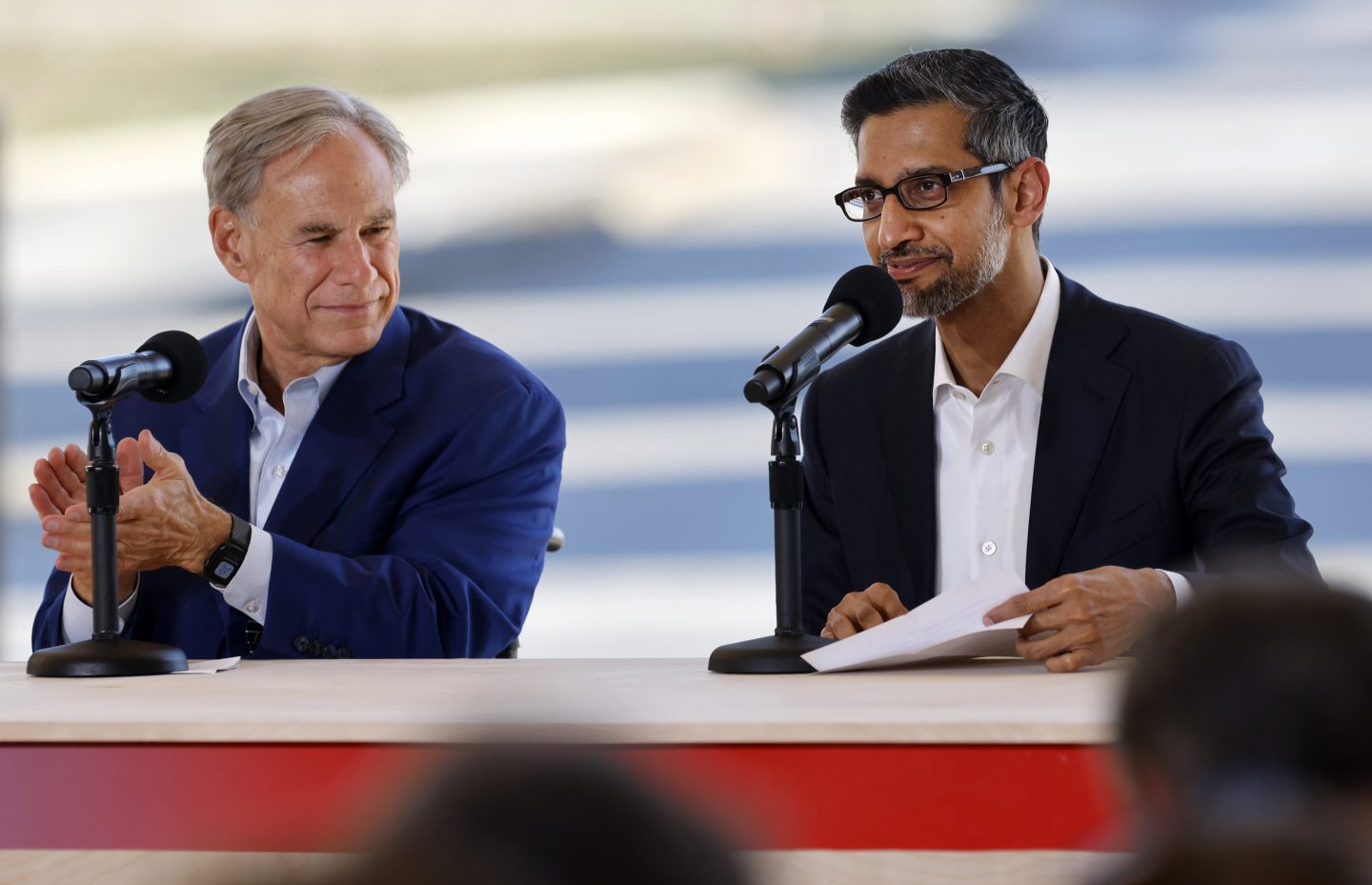
The continued capex push is also what has made analysts jittery about an AI air pocket. According to Bank of America, investors are right to be concerned with hyperscalers’ rising capex spending, particularly on data centers, which surged 53% year over year to $134 billion in just the first quarter of this year, Dell’Oro Group found. Google became the latest tech giant to expand its data center footprint last month, pledging $40 billion to growing its AI compute infrastructure in Texas.
However, “capex funded by operating cash flow is running out,” Subramanian noted, with hyperscalers increasingly funding operations through debt. She noted the supply of AI infrastructure has increased by more than 1,000% from 2024 to 2025.
Indeed, BofA analyst Yuri Seliger wrote in a research note last month that the five hyperscalers—Amazon, Google, Meta, Microsoft, and Oracle—issued $121 billion in debt this year alone, a whopping four times the average debt the companies issued annually in the past five years. Seliger added that he expected an additional $100 million in debt raised in 2026.
By IBM CEO Arvind Krishna’s back-of-the-napkin math, these hyperscalers’ big bets on growing AI supply won’t be worth it, as they will be unable to turn a profit from the steep investment in data centers. They will be made vulnerable by AI’s rapidly advancing technology, which would render today’s infrastructure obsolete.
“It’s my view that there’s no way you’re going to get a return on that, because $8 trillion of capex means you need roughly $800 billion of profit just to pay for the interest,” Krishna said on a Monday episode of the Decoder podcast. “You’ve got to use it all in five years because at that point, you’ve got to throw it away and refill it.”