• Home
  • Latest
  • Fortune 500
  • Finance
  • Tech
  • Leadership
  • Lifestyle
  • Rankings
  • Multimedia

Trendingnow

1

Jeff Bezos wants the bottom half of earners to pay zero income tax—he says nurses making just $75K should save $12K a year

2

Indeed chief economist says we’re entering an era of ‘great mismatch’ thanks to a generational imbalance of workers

3

Microsoft reports are exposing AI's real cost problem: Using the tech is more expensive than paying human employees

1

Jeff Bezos wants the bottom half of earners to pay zero income tax—he says nurses making just $75K should save $12K a year

2

Indeed chief economist says we’re entering an era of ‘great mismatch’ thanks to a generational imbalance of workers

3

Microsoft reports are exposing AI's real cost problem: Using the tech is more expensive than paying human employees
EconomyRecession

‘Dr. Doom’ Nouriel Roubini breaks with the crowd on the AI bubble, saying the U.S. is headed for a ‘growth recession’ and not a market crash

By
Eva Roytburg
Eva Roytburg
and
Nick Lichtenberg
Nick Lichtenberg
Down Arrow Button Icon
By
Eva Roytburg
Eva Roytburg
and
Nick Lichtenberg
Nick Lichtenberg
Down Arrow Button Icon
November 25, 2025, 3:24 PM ET
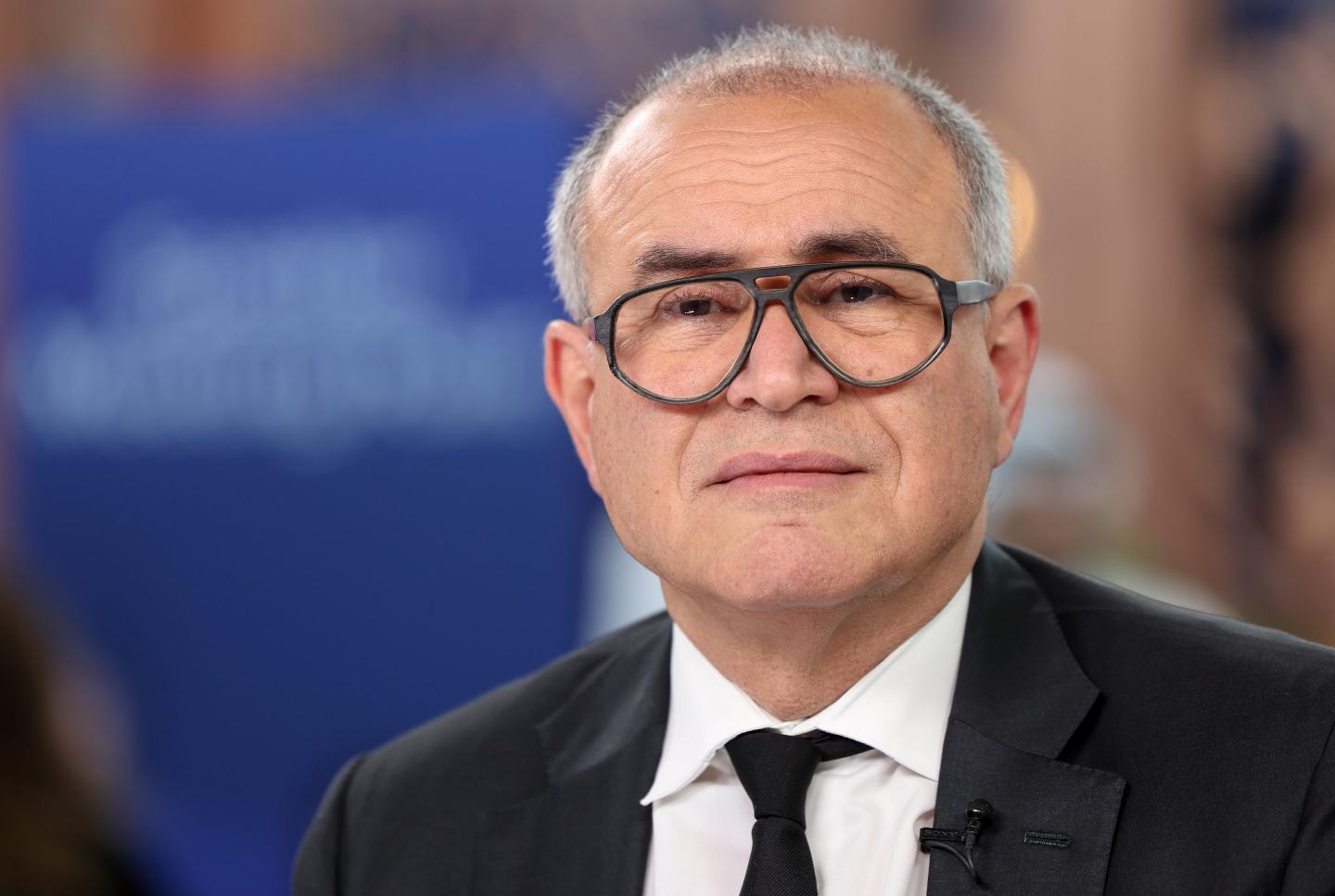
Nouriel Roubini, chief executive officer of Roubini Macro Associates Inc., during a Bloomberg Television interview on the sidelines of the Qatar Economic Forum (QEF) in Doha, Qatar, on Wednesday, May 24, 2023.
Nouriel Roubini, CEO of Roubini Macro Associates, in May 2023. Christopher Pike—Bloomberg/Getty Images

For nearly two decades, esteemed economist Nouriel Roubini has worn the nickname “Dr. Doom” with honor. He earned it in the mid-2000s for warning of a housing crash that Wall Street dismissed, until he was proven catastrophically right. 

Recommended Video

Since then, the NYU Stern School of Business professor emeritus has become one of the most recognizable bears in global finance, regularly sounding alarms about debt spirals, geopolitical shocks, pandemics, AI disruptions, and what he once called “the mother of all crises.”

So it’s perhaps surprising, even disorienting, that in the midst of investors teetering on the edge of a bear market, Roubini is breaking with his cohort—including fellow 2008-financial-crisis-prophet Michael Burry—to dismiss their pessimism about the U.S. economy as misplaced.

In a new essay for the Financial Times, the economist argues that the conventional view—that America’s “Liberation Day” tariffs would trigger stagflation, tank the stock market, kneecap the dollar, and end U.S. exceptionalism—is simply wrong. Instead, he sees something close to the opposite: a short period of cooling growth, followed by a powerful rebound led by technology and capital spending that keeps the U.S. firmly in the top spot.

“The now common view that the U.S. stock market is in a massive bubble and bound to crash is incorrect over the medium term,” he wrote. On the other hand, what he predicted isn’t necessarily the rosiest. The near-term picture looks like a “growth recession,’ he said, meaning slower, below-potential GDP. It’s not the hard landing or 1970s-style stagflation many have predicted, and it isn’t a bubble popping, but it’s a lopsided economy, as many Wall Street analysts have also noticed.

Tariffs won’t topple the recovery

Roubini, who once warned of a “mega-threatened age”—the era where AI, aging populations, and global instability threatened our prosperity—now argues the most extreme fears about tariffs and policy missteps haven’t materialized. That’s partly because, he says, this administration is responsive to market reactions. When asset prices slumped immediately after the tariff announcement, the administration “blinked,” softening policy and opening the door to more conventional trade negotiations.

By next year, he says, growth will reaccelerate. The Fed is undergoing a period of monetary easing, fiscal stimulus is still flowing, and—critically—AI-related capital expenditure continues to surge.

Roubini’s arguments align closely with two of Wall Street’s top analysts: Torsten Slok of Apollo Global Management and Mike Wilson of Morgan Stanley. Slok, known for his “Daily Spark,” combining insightful charts with brevity, argued on Nov. 20 that the economy is “likely to reaccelerate in 2026.” Just days earlier, he had warned of inequality, saying: “It is a K-shaped economy for U.S. consumers.” He has also flagged extreme concentration and valuations in the stock market, with the Magnificent Seven running far ahead of the rest of the market. 

Wilson, chief equity strategist for Morgan Stanley, has been predicting a “rolling recession” for years, arguing that different sectors of the economy shrank at different times, resulting in something that felt like a recession, but unevenly distributed. This changed in April 2022, when a “rolling recovery” set in, he has argued since then, forecasting an economic boom ahead. Wilson has argued for the possibility of a correction in stocks but, like Roubini, does not see a crash as imminent. 

Tech > tariffs

The core of Roubini’s argument rests on a simple hierarchy: Tariffs and policy noise are temporary, but technological leadership that results in innovation compounding over decades is not.

“Tech trumps tariffs,” he writes.

He estimates U.S. potential growth could double from 2% to 4% by the end of the decade, powered by innovation in AI and machine learning, robotics, quantum computing, commercial space, and defense technology. While this agrees with many Wall Street predictions (Goldman Sachs sees real potential growth reaching 2.3% in the early 2030s, for instance), the prediction of 4% blows most others out of the water. 

However, those industries, Roubini argues, will continue to deliver the “exceptionalism” that has set the U.S. apart for the past 20 years—to the extent that productivity will boost the economy by double digits. 

If potential growth rises, he says, equity returns should, too. When growth averaged only 2% over the past two decades, annual returns still hovered in the double digits. Faster growth means even faster earnings expansion, and valuations that look elevated today may be supported rather than speculative.

Roubini has been striking a more positive tone for about a year now—in August 2024, while everyone feared a downturn was coming and grew frustrated that the Fed wouldn’t ease, he calmed market fears again. 

Debt—and the dollar—look less dangerous than feared

One of the most persistent fears around AI-driven spending is debt sustainability. But Roubini argues that this math would change if growth rises even modestly.

The Congressional Budget Office projects debt-to-GDP soaring under 1.6% real growth assumptions. But if growth averages 2.3% or higher, the ratio stabilizes. At 3% or more, it falls, meaning that we could potentially grow ourselves out of debt; an argument President Donald Trump has also used. 

A tech-driven “supply shock” could also push inflation lower over time as production costs drop while productivity booms, meaning higher real rates may not translate into higher nominal yields. Even external liabilities look manageable, he argues, because rising tech investment tends to attract foreign equity inflows, similar to how “emerging-market” economies finance growth during a resource boom.

Roubini also dismisses the widely discussed decline of the dollar, since he believes that the U.S. will accelerate while Europe stagnates, and thus the dollar will ultimately strengthen. 

Notably, “Dr. Doom” admitted that the U.S.’s top adversary, China, is at least on par with the U.S. in innovating in the “most important industries of the future,” such as AI and robotics. However, he doesn’t seem too concerned with the AI arms race. 

“The U.S. economy and markets are best positioned among advanced economies,” Roubini wrote. “They will continue to benefit from the U.S. being the most innovative advanced country.”

Subscribe to Fortune Gulf Brief. Every Tuesday, this new newsletter will deliver clear-eyed, authoritative intelligence on the deals, decisions, policies, and power shifts shaping one of the world’s most consequential regions, written for the people who need to act on it. Sign up here.
About the Authors
By Eva RoytburgFellow, News
Instagram iconLinkedIn icon

Eva covers macroeconomics, market-moving news, and the forces shaping the global economy.

See full bioRight Arrow Button Icon
Nick Lichtenberg
By Nick LichtenbergBusiness Editor
LinkedIn icon

Nick Lichtenberg is business editor and was formerly Fortune's executive editor of global news.

See full bioRight Arrow Button Icon

Latest in Economy

Finance
Lorem ipsum dolor sit amet, consectetur adipiscing elit, sed do eiusmod tempor incididunt ut labore et dolore magna aliqua. Ut enim ad minim veniam
By Fortune Editors
October 20, 2025
Finance
Lorem ipsum dolor sit amet, consectetur adipiscing elit, sed do eiusmod tempor incididunt ut labore et dolore magna aliqua. Ut enim ad minim veniam
By Fortune Editors
October 20, 2025
Finance
Lorem ipsum dolor sit amet, consectetur adipiscing elit, sed do eiusmod tempor incididunt ut labore et dolore magna aliqua. Ut enim ad minim veniam
By Fortune Editors
October 20, 2025
Finance
Lorem ipsum dolor sit amet, consectetur adipiscing elit, sed do eiusmod tempor incididunt ut labore et dolore magna aliqua. Ut enim ad minim veniam
By Fortune Editors
October 20, 2025
Finance
Lorem ipsum dolor sit amet, consectetur adipiscing elit, sed do eiusmod tempor incididunt ut labore et dolore magna aliqua. Ut enim ad minim veniam
By Fortune Editors
October 20, 2025
Finance
Lorem ipsum dolor sit amet, consectetur adipiscing elit, sed do eiusmod tempor incididunt ut labore et dolore magna aliqua. Ut enim ad minim veniam
By Fortune Editors
October 20, 2025

Most Popular

Finance
Lorem ipsum dolor sit amet, consectetur adipiscing elit, sed do eiusmod tempor incididunt ut labore et dolore magna aliqua. Ut enim ad minim veniam
By Fortune Editors
October 20, 2025
Finance
Lorem ipsum dolor sit amet, consectetur adipiscing elit, sed do eiusmod tempor incididunt ut labore et dolore magna aliqua. Ut enim ad minim veniam
By Fortune Editors
October 20, 2025
Finance
Lorem ipsum dolor sit amet, consectetur adipiscing elit, sed do eiusmod tempor incididunt ut labore et dolore magna aliqua. Ut enim ad minim veniam
By Fortune Editors
October 20, 2025
Finance
Lorem ipsum dolor sit amet, consectetur adipiscing elit, sed do eiusmod tempor incididunt ut labore et dolore magna aliqua. Ut enim ad minim veniam
By Fortune Editors
October 20, 2025
Finance
Lorem ipsum dolor sit amet, consectetur adipiscing elit, sed do eiusmod tempor incididunt ut labore et dolore magna aliqua. Ut enim ad minim veniam
By Fortune Editors
October 20, 2025
Finance
Lorem ipsum dolor sit amet, consectetur adipiscing elit, sed do eiusmod tempor incididunt ut labore et dolore magna aliqua. Ut enim ad minim veniam
By Fortune Editors
October 20, 2025
Fortune Secondary Logo
Rankings
  • 100 Best Companies
  • Fortune 500
  • Global 500
  • Fortune 500 Europe
  • Most Powerful Women
  • World's Most Admired Companies
  • See All Rankings
  • Lists Calendar
Sections
  • Finance
  • Fortune Crypto
  • Features
  • Leadership
  • Health
  • Commentary
  • Success
  • Retail
  • Mpw
  • Tech
  • Lifestyle
  • CEO Initiative
  • Asia
  • Politics
  • Conferences
  • Europe
  • Newsletters
  • Personal Finance
  • Environment
  • Magazine
  • Education
Customer Support
  • Frequently Asked Questions
  • Customer Service Portal
  • Privacy Policy
  • Terms Of Use
  • Single Issues For Purchase
  • International Print
Commercial Services
  • Advertising
  • Fortune Brand Studio
  • Fortune Analytics
  • Fortune Conferences
  • Business Development
  • Group Subscriptions
About Us
  • About Us
  • Press Center
  • Work At Fortune
  • Terms And Conditions
  • Site Map
  • About Us
  • Press Center
  • Work At Fortune
  • Terms And Conditions
  • Site Map
  • Facebook icon
  • Twitter icon
  • LinkedIn icon
  • Instagram icon
  • Pinterest icon

Latest in Economy

c
EconomyEuropean Union
Europe Just admitted the Iran War’s price shock isn’t going away
By Menelaos Hadjicostis and The Associated PressMay 23, 2026
15 minutes ago
w
BankingFederal Reserve
Trump on new Fed Chair Kevin Warsh: ‘Do your own thing’ but don’t lose your way like Jerome Powell did
By Will Weissert, Michelle L. Price and The Associated PressMay 23, 2026
55 minutes ago
Mel Robbins
SuccessGen Z
Millionaire podcaster Mel Robbins hits back at Gen Z’s lazy label—she says they’re stuck in a world their baby boomer parents wouldn’t even recognize
By Emma BurleighMay 23, 2026
2 hours ago
employees
CommentarySuccession
Millions of business owners are about to retire. They should sell to their employees
By Matt Helmer and Maxwell JohnsonMay 23, 2026
4 hours ago
Kevin Warsh, chairman of the US Federal Reserve nominee for US President Donald Trump, is sworn in during a Senate Banking, Housing, and Urban Affairs Committee confirmation hearing on April 21, 2026 in Washington, DC.
EconomyKevin Warsh
‘I almost fell out of my chair’: Fed stalwart Claudia Sahm fears Kevin Warsh’s policies could undo 20 years of policy progress
By Eleanor PringleMay 23, 2026
5 hours ago
A construction worker wearing a yellow helmet wipes his nose with his hand.
North AmericaImmigration
America is suffering a shortage of construction workers and sabotaging its ability to fill vacancies by wiping out the industry’s immigrant backbone
By Sasha RogelbergMay 23, 2026
5 hours ago

Most Popular

Jeff Bezos wants the bottom half of earners to pay zero income tax—he says nurses making just $75K should save $12K a year
Success
Jeff Bezos wants the bottom half of earners to pay zero income tax—he says nurses making just $75K should save $12K a year
By Preston ForeMay 21, 2026
2 days ago
Indeed chief economist says we’re entering an era of ‘great mismatch’ thanks to a generational imbalance of workers
Success
Indeed chief economist says we’re entering an era of ‘great mismatch’ thanks to a generational imbalance of workers
By Emma BurleighMay 22, 2026
1 day ago
Microsoft reports are exposing AI's real cost problem: Using the tech is more expensive than paying human employees
AI
Microsoft reports are exposing AI's real cost problem: Using the tech is more expensive than paying human employees
By Jake AngeloMay 22, 2026
23 hours ago
Apple’s Steve Wozniak says he cofounded the tech giant after 5 rejections from HP—not to ‘make money.’ For years, his paycheck was just $50
Success
Apple’s Steve Wozniak says he cofounded the tech giant after 5 rejections from HP—not to ‘make money.’ For years, his paycheck was just $50
By Preston ForeMay 22, 2026
1 day ago
Despite a $500 million net worth, Shaq just finished his fourth degree. He warns graduates: 'Your character will take you further than your resume'
Success
Despite a $500 million net worth, Shaq just finished his fourth degree. He warns graduates: 'Your character will take you further than your resume'
By Preston ForeMay 20, 2026
3 days ago
Bolt CEO says he let go of his entire HR team for creating problems that didn’t exist: ‘Those problems disappeared when I let them go’ 
Workplace Culture
Bolt CEO says he let go of his entire HR team for creating problems that didn’t exist: ‘Those problems disappeared when I let them go’ 
By Preston ForeMay 19, 2026
4 days ago

© 2026 Fortune Media IP Limited. All Rights Reserved. Use of this site constitutes acceptance of our Terms of Use and Privacy Policy | CA Notice at Collection and Privacy Notice | Do Not Sell/Share My Personal Information
FORTUNE is a trademark of Fortune Media IP Limited, registered in the U.S. and other countries. FORTUNE may receive compensation for some links to products and services on this website. Offers may be subject to change without notice.