• Home
  • Latest
  • Fortune 500
  • Finance
  • Tech
  • Leadership
  • Lifestyle
  • Rankings
  • Multimedia
EconomyTariffs and trade

Trump’s retreats on tariffs have already wiped out $800 billion of expected deficit reduction, CBO estimates

Nick Lichtenberg
By
Nick Lichtenberg
Nick Lichtenberg
Business Editor
Down Arrow Button Icon
Nick Lichtenberg
By
Nick Lichtenberg
Nick Lichtenberg
Business Editor
Down Arrow Button Icon
November 20, 2025, 5:20 PM ET
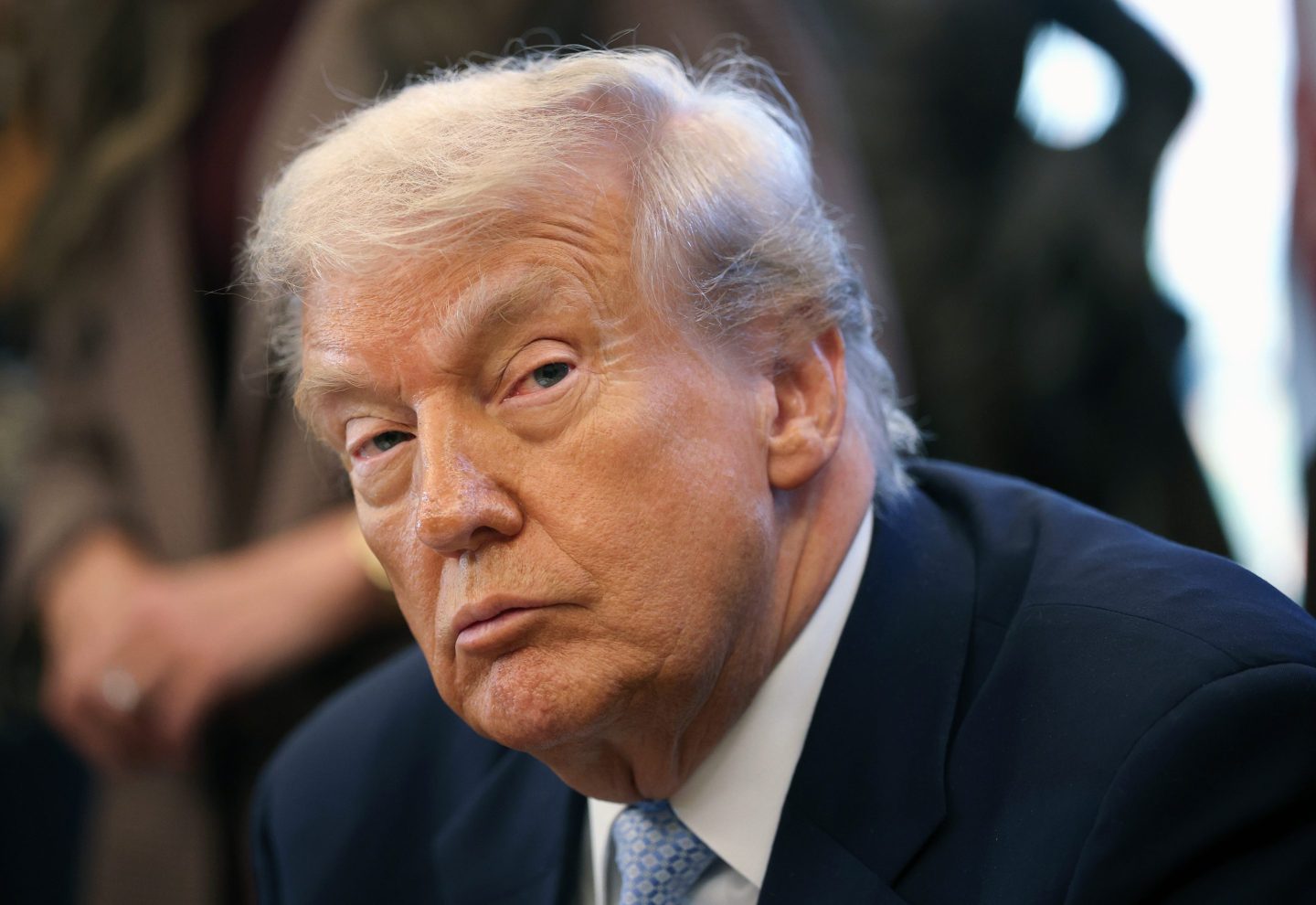
Donald Trump
President Donald Trump.Win McNamee/Getty Images

The Congressional Budget Office (CBO) has released new projections showing that recent rollbacks of President Donald Trump’s aggressive tariff strategy have wiped out roughly $800 billion in expected debt reduction over the next decade. This revision comes even as tariffs remain a central point of debate in U.S. fiscal policy, particularly with the national debt exceeding $38 trillion and deficit reduction an urgent concern for lawmakers and economists alike.​

Recommended Video

According to the CBO’s updated baseline budget projections, the expected impact of tariff policy on U.S. deficits has fallen sharply since its last projections on tariff revenue in August. At that point, an effective tariff rate of 20.5% implied future deficit reduction of $3.3 trillion through 2035, and about $700 billion in interest savings.​

However, since June, the scope and magnitude of these tariffs have shifted significantly. The administration’s decision to pull back or soften tariffs on a range of imports—particularly with key trading partners like China and the European Union—in response to mounting trade tensions and retaliatory measures has dramatically altered the fiscal outlook. The CBO now estimates that the resulting fiscal benefits of tariffs have been substantially eroded, as an effective tariff rate of 16.5% implies $2.5 trillion in deficit reduction and $500 billion in interest savings.​

Political and economic forces drive shifts

The CBO points out that these substantial debt-reduction projections are highly sensitive to the fate of tariff policy—a policy area marked by political volatility and economic uncertainty. Trump initially touted tariffs as a tool to bring down the ballooning federal debt and, as recently as August, claimed that the policies would generate revenue far exceeding government projections. ​

The CBO calculated reduced tariffs from five separate announcements with various trading partners, announced between early September and early November. They consisted of tweaks to the agreement with Japan, with the EU, on auto vehicles and parts, with India, and with China. The CBO didn’t even include another pending tariff reduction important to Americans’ pocketbooks.

After stinging off-year election losses for Republicans in early November, when Democrats won 18 out of 18 races nationwide in which they were on the ballot, Trump moved in the middle of the month to scrap several tariffs linked to affordability concerns. “We just did a little bit of a rollback on some foods like coffee,” Trump told reporters aboard Air Force One, hours after the tariff rollback was announced. Trump had signed an executive order hours earlier, removing tariffs on tea, fruit juice, cocoa, spices, bananas, oranges, tomatoes, and certain fertilizers.

At the same time, Trump has struggled to admit that Democrats’ affordability arguments are real. The day after his tariff rollback, he said on social media that “Affordability is a lie when used by the Dems. It is a complete CON JOB. Thanksgiving costs are 25% lower this year than last, under Crooked Joe! We are the Party of Affordability!” That seemed to be a reference to a particular Walmart meal deal that has half as many items as 2024.

Stubborn debt and lingering risks

The erosion of tariff-driven deficit reduction comes amid worsening Congressional gridlock over broader fiscal policy. The Treasury Department reports the U.S. national debt currently exceeds $38 trillion, a figure that continues to grow despite years of political promises to rein it in. The CBO notes that even the most ambitious tariff projections would have barely dented the debt’s steep trajectory—but now, even those incremental benefits are slipping away.​

Economists caution that while tariffs can generate significant government revenue in the short term, their wider economic effects—such as higher consumer prices, supply chain disruptions, and lower growth—could ultimately offset the initial fiscal gains. Indeed, some independent analysts contend that the CBO’s calculations may not fully account for longer-term economic headwinds caused by ongoing trade disputes.​

Join us at the Fortune Workplace Innovation Summit May 19–20, 2026, in Atlanta. The next era of workplace innovation is here—and the old playbook is being rewritten. At this exclusive, high-energy event, the world’s most innovative leaders will convene to explore how AI, humanity, and strategy converge to redefine, again, the future of work. Register now.
About the Author
Nick Lichtenberg
By Nick LichtenbergBusiness Editor
LinkedIn icon

Nick Lichtenberg is business editor and was formerly Fortune's executive editor of global news.

See full bioRight Arrow Button Icon

Latest in Economy

US Federal Reserve Board Chairman Jerome Powell speaks during a news conference following a Federal Open Market Committee (FOMC) meeting in Washington, DC, on December 10, 2025.
Bankingjerome powell
Top economist Diane Swonk: Jerome Powell risks losing the Fed’s credibility on a gamble over AI and immigration
By Eva RoytburgDecember 10, 2025
6 hours ago
Jerome Powell, chairman of the US Federal Reserve, during a news conference following a Federal Open Market Committee (FOMC) meeting in Washington, DC, US, on Wednesday, Dec. 10, 2025. Federal Reserve officials delivered a third consecutive interest-rate reduction and maintained their outlook for just one cut in 2026.
EconomyFederal Reserve
Powell warns of a ‘very unusual’ economy as tariffs keep goods inflation high amid a weakening labor market
By Eva RoytburgDecember 10, 2025
6 hours ago
Federal Reserve Bank Chair Jerome Powell speaks during the George P. Shultz Memorial Lecture Series at Stanford University on December 01, 2025 in Stanford, California.
EconomyFederal Reserve
The Fed delivers a rare ‘hawkish cut’ as Powell tries to steady a softening job market
By Eva RoytburgDecember 10, 2025
8 hours ago
Jerome Powell, chairman of the US Federal Reserve, during the Hoover Institution's George P. Shultz Memorial Lecture Series in Stanford, California, US, on Monday, Dec. 1, 2025. The Federal Reserve said it was monitoring community and regional banks' commercial real estate loan portfolios amid concerns over "elevated interest rates, tighter underwriting standards, and lower commercial property values." Photographer: Jason Henry/Bloomberg via Getty Images
EconomyFederal Reserve
‘Be careful what you wish for’: Top economist warns any additional interest rate cuts after today would signal the economy is slipping into danger
By Eva RoytburgDecember 10, 2025
10 hours ago
RetailGrocery
Instacart may be jacking up your grocery prices using AI, study shows—a practice called ‘smart rounding’
By Dave Lozo and Morning BrewDecember 10, 2025
11 hours ago
cracker barrel
EconomyRestaurants
Cracker Barrel slashes forecast as Uncle Herschel fallout continues despite logo reinstatement
By Dee-Ann Durbin, Nick Lichtenberg and The Associated PressDecember 10, 2025
11 hours ago

Most Popular

placeholder alt text
Success
At 18, doctors gave him three hours to live. He played video games from his hospital bed—and now, he’s built a $10 million-a-year video game studio
By Preston ForeDecember 10, 2025
18 hours ago
placeholder alt text
Politics
Exclusive: U.S. businesses are getting throttled by the drop in tourism from Canada: ‘I can count the number of Canadian visitors on one hand’
By Dave SmithDecember 10, 2025
16 hours ago
placeholder alt text
Economy
‘Fodder for a recession’: Top economist Mark Zandi warns about so many Americans ‘already living on the financial edge’ in a K-shaped economy 
By Eva RoytburgDecember 9, 2025
1 day ago
placeholder alt text
Economy
‘Be careful what you wish for’: Top economist warns any additional interest rate cuts after today would signal the economy is slipping into danger
By Eva RoytburgDecember 10, 2025
10 hours ago
placeholder alt text
Uncategorized
Transforming customer support through intelligent AI operations
By Lauren ChomiukNovember 26, 2025
14 days ago
placeholder alt text
Economy
The 'forever layoffs' era hits a recession trigger as corporates sack 1.1 million workers through November
By Nick Lichtenberg and Eva RoytburgDecember 9, 2025
2 days ago
Rankings
  • 100 Best Companies
  • Fortune 500
  • Global 500
  • Fortune 500 Europe
  • Most Powerful Women
  • Future 50
  • World’s Most Admired Companies
  • See All Rankings
Sections
  • Finance
  • Leadership
  • Success
  • Tech
  • Asia
  • Europe
  • Environment
  • Fortune Crypto
  • Health
  • Retail
  • Lifestyle
  • Politics
  • Newsletters
  • Magazine
  • Features
  • Commentary
  • Mpw
  • CEO Initiative
  • Conferences
  • Personal Finance
  • Education
Customer Support
  • Frequently Asked Questions
  • Customer Service Portal
  • Privacy Policy
  • Terms Of Use
  • Single Issues For Purchase
  • International Print
Commercial Services
  • Advertising
  • Fortune Brand Studio
  • Fortune Analytics
  • Fortune Conferences
  • Business Development
About Us
  • About Us
  • Editorial Calendar
  • Press Center
  • Work At Fortune
  • Diversity And Inclusion
  • Terms And Conditions
  • Site Map

© 2025 Fortune Media IP Limited. All Rights Reserved. Use of this site constitutes acceptance of our Terms of Use and Privacy Policy | CA Notice at Collection and Privacy Notice | Do Not Sell/Share My Personal Information
FORTUNE is a trademark of Fortune Media IP Limited, registered in the U.S. and other countries. FORTUNE may receive compensation for some links to products and services on this website. Offers may be subject to change without notice.