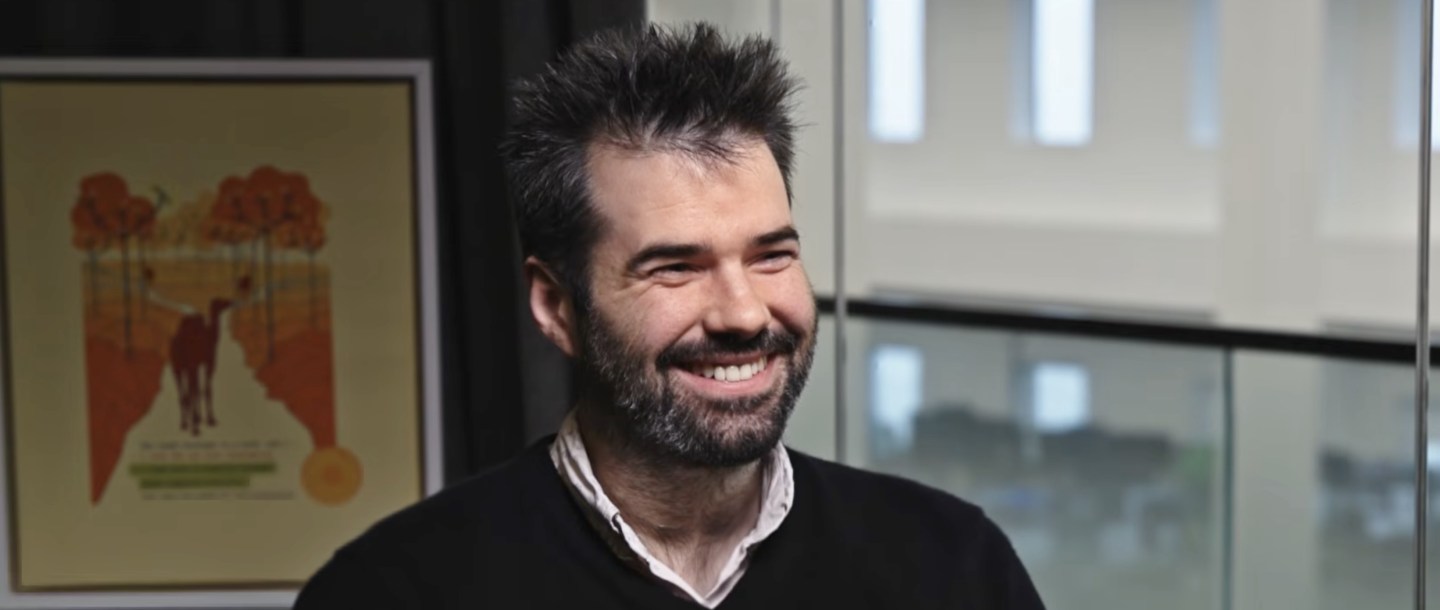
Tarek Alaruri asked me: Have you ever seen the TV show Dirty Jobs?
I absolutely have, but if you haven’t—it’s a rollicking reality TV jaunt through some of the messiest jobs out there. There are rattlesnake catchers, sure, but there are also a deluge of examples of industrial jobs like pipefitting, car crushing, and concrete chipping.
“Those are our customers,” Alaruri says proudly.
Alaruri’s startup, Stuut, is in a messy business of its own—accounts receivable, the money due to a company for goods or services that have been delivered, but not yet been paid for. And there’s a reason Stuut focuses on those companies.
In tech, companies tend to have “a big wad of cash in your bank account from VCs,” Alaruri said. But for many of Stuut’s customers, collecting payment is existential: “These companies actually need the revenue to pay bonuses. They actually need the revenue to pay holiday bonuses, and need to hire more people to scale their growth.”
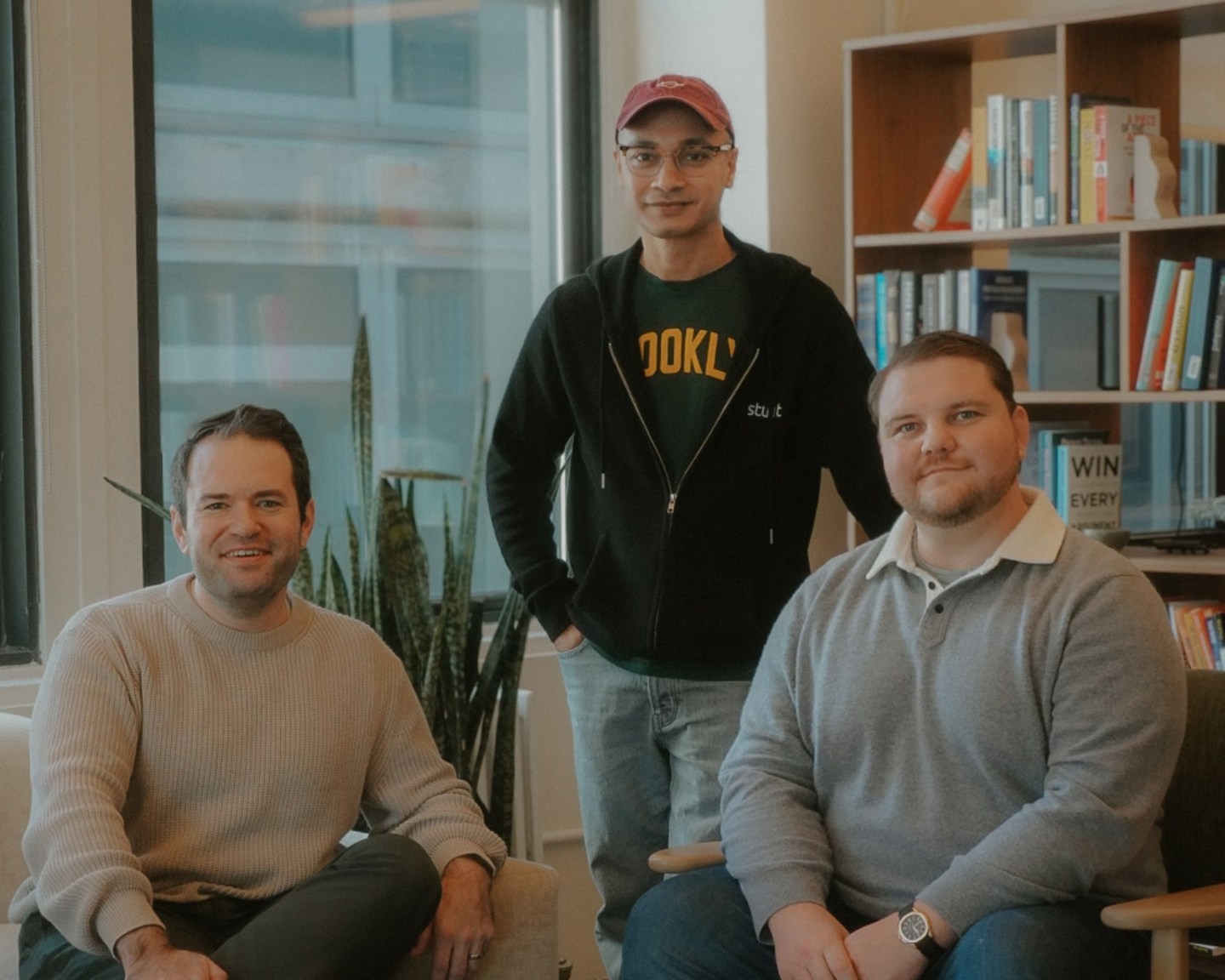
Alaruri cofounded Stuut (a name drawn from a South African rugby term meaning “prop” or “to hold up”) with Ben Winter and Miraj Mohsin in 2024. Stuut uses AI to automate accounts receivable, including invoice follow-up, tasks around payment reconciliation, and keeping human employees alerted. So far, Stuut’s customers have included Honeywell, PerkinElmer, Verifone, Wayfair, Active International, and Greenlight Guru. And to be abundantly clear: Alaruri is perfectly happy to work with tech companies, should they be interested.
Now, Stuut has raised a $29.5 million Series A, led by Andreessen Horowitz, Fortune has exclusively learned. Activant Capital, Khosla Ventures, 1984 Ventures, Carya Venture Partners, Page One Ventures, Vesey Ventures, and Valley Ventures participated in the round.
Stuut and its customers are trying to solve an effectively universal problem: Companies can lose as much as 5% of EBITDA by tracking down payments manually. Stuut’s customer acquisition so far has come primarily from cold calls and network effects. And, compared to other businesses, it’s been a pretty easy pitch: I can automatically collect your money that you’re owed. And the ramp-up has been fast.
“We technically started the business at the beginning of last year,” said Alaruri. “But I’d say Day One was really around November, December of last year…We started seeing impact. We had a company called CharterUp go live in two days, collect $3.4 million, and see a 20% increase in collection.”
These are also companies interested in their piece of the AI action—but need a product that fulfills its promises.
“You have to be able to prove you can do what you say you’re going to do [with AI],” said Alaruri. “You look at the older wave of software and you have people promising automation—and they take 12, 18, 24 months to deploy. So it matters if you say ‘hey, we can save you 40% in six months, and we’ll get up and running next week,’ and you then can execute.”
See you tomorrow,
Allie Garfinkle
X: @agarfinks
Email: alexandra.garfinkle@fortune.com
Submit a deal for the Term Sheet newsletter here.
Joey Abrams curated the deals section of today’s newsletter. Subscribe here.
Venture Deals
- Profluent Bio, an Emeryville, Calif.-based AI-powered protein design company, raised $106 million in funding. Altimeter Capital and Vezos Expeditions led the round and were joined by Spark Capital, Insight Partners, and Air Street Capital.
- Amperesand, a Singapore-based developer of next-generation power infrastructure for AI data centers and critical power applications, raised $80 million in Series A funding. Walden Catalyst Ventures and Temasek led the round.
- Arbiter, a New York City-based platform designed to connect health care patients, providers, and payers in one place, raised $52 million in funding. TriEdge Investment and MFO Ventures led the round and were joined by WindRose Health Investors and others.
- Modern Life, a New York City-based AI-powered life insurance brokerage, raised $20 million in Series A funding. Thrive Capital led the round and was joined by New York Life Ventures, Northwestern Mutual Future Ventures, and Allegis.
- Automat, a San Francisco-based workflow automation platform for enterprises, raised $15.5 million in Series A funding. Felicis led the round and was joined by Initialized, Khosla Ventures, and Y Combinator.
- onepot AI, a San Francisco-based developer of an AI chemistry platform designed to accelerate the synthesis of small molecules for drug discovery, raised $13 million in seed funding. Khosla Ventures, Fifty Years, and Speedinvest led the round and were joined by others.
- Poly, a San Francisco-based AI-powered cloud file browser company, raised $8 million in seed funding. Felicis led the round and was joined by Bloomberg Beta, NextView, Figma Ventures, AI Grant, Wind Ventures, and MVP Ventures.
- alphaXiv, a San Francisco-based platform that curates AI research, benchmarks, and models, raised $7 million in seed funding. Menlo Ventures and Haystack led the round and were joined by Shakti VC, Conviction Embed, Upfront Ventures, and angel investors.
- Pibit AI, a San Francisco-based developer of AI for underwriting, raised $7 million in Series A funding. Stellaris Venture Partners led the round and was joined by Y Combinator and Arali Ventures.
- Manta Cares, a San Francisco-based platform designed to help cancer patients and caregivers track symptoms, medications, and appointments, raised $5.4 million in seed funding. Pear VC and Sozo Ventures led the round and were joined by angel investors.
- Synthio Labs, a San Francisco-based conversational AI platform designed for customer engagement in life sciences, raised $5 million in seed funding. Elevation Capital led the round and was joined by 1984 Ventures, Peak XV Partners, Y Combinator, and angel investors.
- Ember, a San Francisco-based AI-powered revenue cycle management platform for health care, raised $4.3 million in seed funding. Nexus Venture Partners and Y Combinator led the round.
- Kaaj, a San Francisco-based AI platform designed to automate small business loan underwriting, raised $3.8 million in seed funding. Kindred Ventures led the round and was joined by Better Tomorrow Ventures and others.
- Orion, a Denver, Colo.-based AI-powered risk intelligence platform, raised $3.5 million in seed funding. Dynamo Ventures led the round and was joined by Techstars, BVVC, and Service Provider Capital.
- Big Rentals, a Los Angeles, Calif.-based equipment rental platform, raised $2.8 million in seed funding. SNAK Venture Partners led the round and was joined by Ironspring Ventures, Forum Ventures, and others.
- Deduction, a New York City-based developer of an AI-powered tax accountant, raised $2.8 million in pre-seed funding. One Way Ventures and Creator Ventures led the round and were joined by Alpine VC, Intuition, Charley Moore, and angel investors.
Private Equity
- GTCR agreed to acquire Fiduciary Trust Company, a Boston, Mass.-based private wealth manager and trust company. Financial terms were not disclosed.
- LawnPRO Partners, backed by HCI Equity Partners, acquired Total Lawn Care, an Indianapolis, Ind.-based lawn care company. Financial terms were not disclosed.
- Wafra acquired a minority stake in Ardian, a Paris, France-based private equity firm. Financial terms were not disclosed.
Funds + Funds of Funds
- DigitalBridge Group, a Boca Raton, Fla.-based private equity fund, raised $11.7 billion for its third fund focused on digital infrastructure companies.