
• Home
  • Latest
  • Fortune 500
  • Finance
  • Tech
  • Leadership
  • Lifestyle
  • Rankings
  • Multimedia
EconomyHousing

Trump blames ‘Too Late Powell’ for the housing crisis—but top analysts say low rates ‘snapped the trap shut’ on Millennial and Gen Z homeowners in the first place

Eleanor Pringle
By
Eleanor Pringle
Eleanor Pringle
Senior Reporter, Economics and Markets
Down Arrow Button Icon
Eleanor Pringle
By
Eleanor Pringle
Eleanor Pringle
Senior Reporter, Economics and Markets
Down Arrow Button Icon
November 15, 2025, 7:30 AM ET
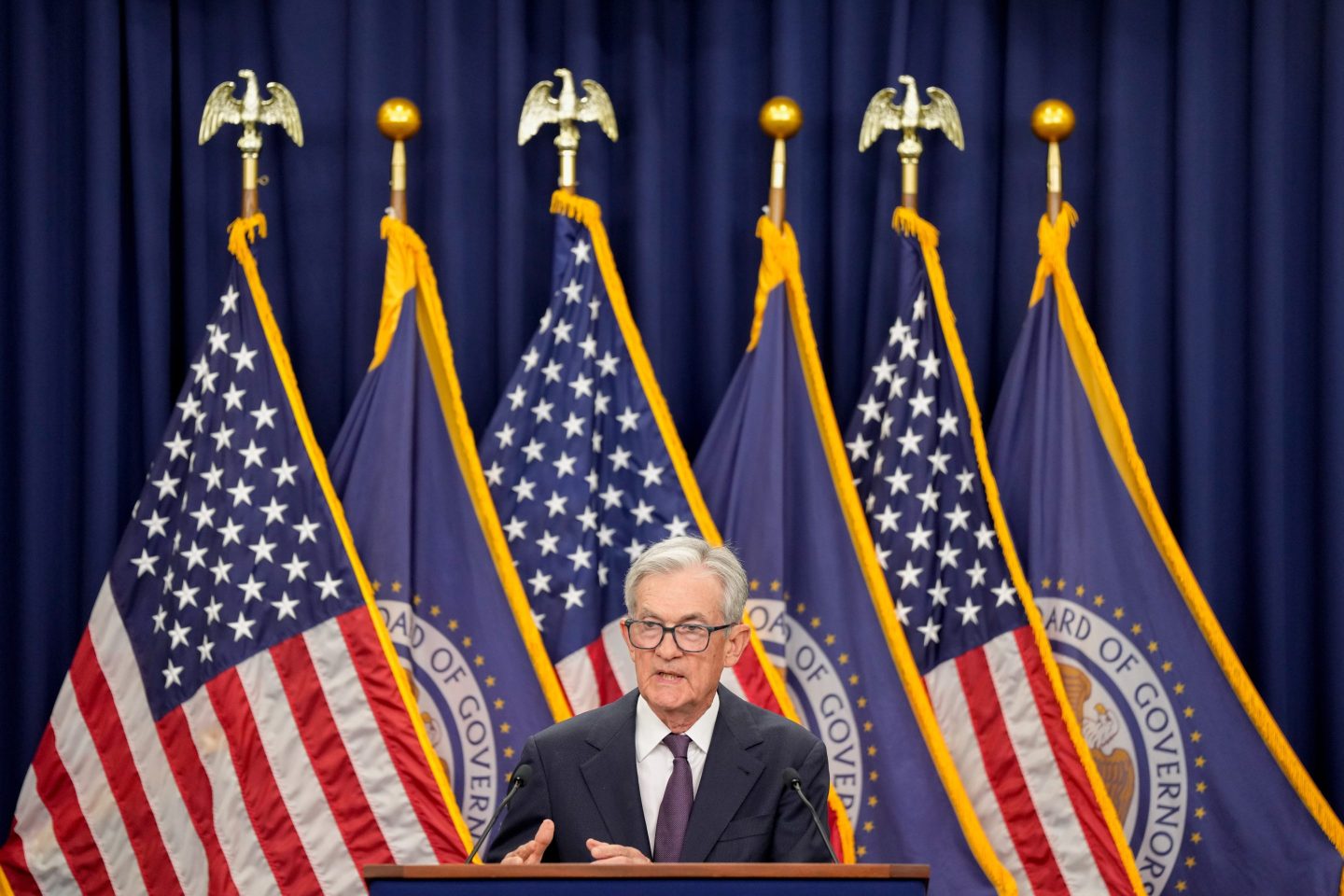
Jerome Powell, chairman of the US Federal Reserve
Jerome Powell, chairman of the US Federal Reserve, has been blamed for America's property crisis.Kent Nishimura/Bloomberg - Getty Images
  • ANALYSIS: President Trump blames Jerome Powell and the Fed for the housing downturn, but economists from JPMorgan and Morgan Stanley say today’s high mortgage rates aren’t the Fed’s doing—it’s the legacy of keeping rates ultra-low for years after the financial crisis, which inflated home prices to unaffordable levels. Despite multiple Fed cuts, mortgage rates remain elevated. The spread between policy rates and mortgage offers is at a 40-year high because lenders are largely ignoring monetary policy amid tight housing supply, pandemic-era buying.

The White House is using the housing crisis as a stick with which to beat Fed chairman Jerome Powell. “Could somebody please inform Jerome ‘Too Late’ Powell that he is hurting the housing industry, very badly?” the president wrote on Truth Social earlier this year. “People can’t get a mortgage because of him.”

Recommended Video

Elsewhere, Trump’s housing chief called Powell a “maniac,” and Treasury Secretary Scott Bessent argued: “The biggest hindrance for housing is mortgage rates. If the Fed brings down mortgage rates, then they can end this housing recession.”

If only it were that simple.

While the Fed is in control of short-term interest rates—which can influence mortgages in the longer run to some extent—the market demonstrates that lenders have rarely cared less about what the Federal Open Market Committee (FOMC) is doing.

“Despite 125 basis points of Fed cuts since September 2024, the spread between mortgage rates outstanding and new mortgage rates is over 2%, the highest in 40 years, indicating that more cuts may be necessary to spur housing activity,” Morgan Stanley wrote in a note at the end of October, before Powell delivered another cut.

Despite that, mortgage rates have barely wobbled, and still sit stubbornly at around 6.2%.

Powell’s—or his successor’s—influence over the property market won’t return any time soon, economists say. While the outcome of the FOMC’s cutting regime could spur spending, for savers desperately stockpiling for that all-important deposit, lower rates only add salt to the wound.

Housing was the Fed’s fault—but not right now

Fed policy at present can’t be blamed for the state of the housing market, argues David Kelly, chief global strategist and head of the global market insights strategy team for JPMorgan Asset Management. It’s the Fed’s actions in the past that are the problem.

“The Fed can be faulted for its behavior with regard to the housing market for many years, but the real fault is not that they are keeping rates too high today, it is that they kept rates way too low, for way too long, after the great financial crisis,” Kelly told Fortune in an exclusive interview.  

Between the end of 2008 and late 2015 the U.S. base rate was effectively zero, before climbing to approximately 2.4% in 2019, before being dramatically axed again because of the COVID pandemic. This resulted in “abnormally low mortgage rates” for a sustained period of time, Kelly added, “it encouraged everybody to buy a house and to bid up prices.”

He explained: “The question was never how much is this house worth, but how much can you afford? If mortgage rates are 3%, people could afford a lot. When the Federal Reserve normalized rates, they sort of snapped the trap shut.”

Buying a home has become increasingly unaffordable for first-time buyers. In 2022, the National Association of Realtors’ housing affordability index stood at 108 (a value of 100 represents a family with the median income having exactly enough income for a mortgage on a median-priced home). By 2025, this dropped to 97.4, meaning the average family doesn’t have the income to be eligible for a mortgage on a median-priced home.

The problem for many buyers isn’t necessarily paying the debt off over time; it’s gathering the deposit needed to secure a mortgage in the first place. While zero-down-payment mortgages are widely offered in markets like the U.K., in the U.S. they are typically reserved for buyers such as veterans and those purchasing in specific rural areas. For consumers who don’t qualify, it’s a big ask: One in three Americans have zero emergency savings, and the median is only $500, according to a November study from Empower.

Can the Fed help at all?

Under “normal” economic circumstances, a lower Fed rate should trickle through to lower mortgage lending rates, Morgan Stanley’s head of U.S. policy, Monica Guerra, told Fortune. But we are not in normal economic circumstances.

Current tightness in the property market stems from limited housing stock, and the lower rates that fuelled the appetite of buyers during the pandemic, she explained: “My belief behind all this is that we have a significant impact from the Millennials who ended up buying during COVID and picking up the last of that supply that was available at really low interest rates.”

A reduction of a further 50bps may get lenders’ attention, though “it may not be an immediate, full return to normal,” she said.

Guerra authored a note highlighting the decades-high spread between the Fed funds rate and current mortgage offers, showing how weak the FOMC’s influence is over the property market. But this could change, she said: “I think the spread is going to come down, it’s going to compress, meaning that the Fed will have—over time—more control. … We’re going to get more certainty as we close out this year of what that’s going to look like and what that could mean to term premiums.”

Is there a silver bullet?

Guerra argues that while the Fed controls a key lever in the mechanics of the property market, Washington policy isn’t the only factor at play. There are numerous real-world factors beyond the Fed’s control.

In a K-shaped economy, the fortunes of the wealthy and those on the lower end of the income spectrum diverge markedly. Income inequality is an “incredibly important issue,” Guerra said, and “the have-nots in this scenario … may feel the greatest pressure.”

The federal government has limited sway over state and local policy when it comes to red tape, be it zoning, affordable home quotas, code issues, tax frameworks and so on, all of which “drastically impact” where people can live, she said. “It’s important when we’re thinking about affordability to acknowledge that it’s not just the federal government … yes, they play a primary role in people’s access to leverage to getting that mortgage and to lever up to buy a home, but in order to make it affordable, it’s also what’s happening at the local level right from a zoning, tax, and policy angle,” she added.

Liam Bailey, global head of research at real estate consultancy Knight Frank, says Gen Z and Millennials are on the sharp end: “Anyone who’s entering the market for the first time is probably most affected,” he said.

The first problem is that all-important down payment, the savings rate on which drops every time the FOMC cuts rates. Another is the tight supply of housing stock. And the third is the increase in household income over the past 50 years, as more women entered the workforce, and families had more money to escalate prices, he said.

One factor that stops people from moving is that homeowners don’t want to lose the 30-year low mortgage deals they got during the period when the Fed kept rates near zero.

“The problem comes when you have an interest rate shock like we’ve had recently. The market just basically closes down because why would anyone move off their 3% fixed to a 7% mortgage by moving house?” Bailey explained. “They just wouldn’t, so they don’t move and then the whole thing just grinds to a halt.”


The Fortune 500 Innovation Forum will convene Fortune 500 executives, U.S. policy officials, top founders, and thought leaders to help define what’s next for the American economy, Nov. 16-17 in Detroit. Apply here.
About the Author
Eleanor Pringle
By Eleanor PringleSenior Reporter, Economics and Markets
LinkedIn icon

Eleanor Pringle is an award-winning senior reporter at Fortune covering news, the economy, and personal finance. Eleanor previously worked as a business correspondent and news editor in regional news in the U.K. She completed her journalism training with the Press Association after earning a degree from the University of East Anglia.

See full bioRight Arrow Button Icon

Latest in Economy

Finance
Lorem ipsum dolor sit amet, consectetur adipiscing elit, sed do eiusmod tempor incididunt ut labore et dolore magna aliqua. Ut enim ad minim veniam
By Fortune Editors
October 20, 2025
Finance
Lorem ipsum dolor sit amet, consectetur adipiscing elit, sed do eiusmod tempor incididunt ut labore et dolore magna aliqua. Ut enim ad minim veniam
By Fortune Editors
October 20, 2025
Finance
Lorem ipsum dolor sit amet, consectetur adipiscing elit, sed do eiusmod tempor incididunt ut labore et dolore magna aliqua. Ut enim ad minim veniam
By Fortune Editors
October 20, 2025
Finance
Lorem ipsum dolor sit amet, consectetur adipiscing elit, sed do eiusmod tempor incididunt ut labore et dolore magna aliqua. Ut enim ad minim veniam
By Fortune Editors
October 20, 2025
Finance
Lorem ipsum dolor sit amet, consectetur adipiscing elit, sed do eiusmod tempor incididunt ut labore et dolore magna aliqua. Ut enim ad minim veniam
By Fortune Editors
October 20, 2025
Finance
Lorem ipsum dolor sit amet, consectetur adipiscing elit, sed do eiusmod tempor incididunt ut labore et dolore magna aliqua. Ut enim ad minim veniam
By Fortune Editors
October 20, 2025

Most Popular

Finance
Lorem ipsum dolor sit amet, consectetur adipiscing elit, sed do eiusmod tempor incididunt ut labore et dolore magna aliqua. Ut enim ad minim veniam
By Fortune Editors
October 20, 2025
Finance
Lorem ipsum dolor sit amet, consectetur adipiscing elit, sed do eiusmod tempor incididunt ut labore et dolore magna aliqua. Ut enim ad minim veniam
By Fortune Editors
October 20, 2025
Finance
Lorem ipsum dolor sit amet, consectetur adipiscing elit, sed do eiusmod tempor incididunt ut labore et dolore magna aliqua. Ut enim ad minim veniam
By Fortune Editors
October 20, 2025
Finance
Lorem ipsum dolor sit amet, consectetur adipiscing elit, sed do eiusmod tempor incididunt ut labore et dolore magna aliqua. Ut enim ad minim veniam
By Fortune Editors
October 20, 2025
Finance
Lorem ipsum dolor sit amet, consectetur adipiscing elit, sed do eiusmod tempor incididunt ut labore et dolore magna aliqua. Ut enim ad minim veniam
By Fortune Editors
October 20, 2025
Finance
Lorem ipsum dolor sit amet, consectetur adipiscing elit, sed do eiusmod tempor incididunt ut labore et dolore magna aliqua. Ut enim ad minim veniam
By Fortune Editors
October 20, 2025
Fortune Secondary Logo
Rankings
  • 100 Best Companies
  • Fortune 500
  • Global 500
  • Fortune 500 Europe
  • Most Powerful Women
  • Future 50
  • World’s Most Admired Companies
  • See All Rankings
Sections
  • Finance
  • Fortune Crypto
  • Features
  • Leadership
  • Health
  • Commentary
  • Success
  • Retail
  • Mpw
  • Tech
  • Lifestyle
  • CEO Initiative
  • Asia
  • Politics
  • Conferences
  • Europe
  • Newsletters
  • Personal Finance
  • Environment
  • Magazine
  • Education
Customer Support
  • Frequently Asked Questions
  • Customer Service Portal
  • Privacy Policy
  • Terms Of Use
  • Single Issues For Purchase
  • International Print
Commercial Services
  • Advertising
  • Fortune Brand Studio
  • Fortune Analytics
  • Fortune Conferences
  • Business Development
  • Group Subscriptions
About Us
  • About Us
  • Editorial Calendar
  • Press Center
  • Work At Fortune
  • Diversity And Inclusion
  • Terms And Conditions
  • Site Map
  • About Us
  • Editorial Calendar
  • Press Center
  • Work At Fortune
  • Diversity And Inclusion
  • Terms And Conditions
  • Site Map
  • Facebook icon
  • Twitter icon
  • LinkedIn icon
  • Instagram icon
  • Pinterest icon

Latest in Economy

Covid gave us hybrid work. The Iran War might give us a four-day week—and this time, experts say it could stick
SuccessFour day work week
Covid gave us hybrid work. The Iran War might give us a four-day week—and this time, experts say it could stick
By Orianna Rosa RoyleApril 1, 2026
1 hour ago
trump
CommentaryEPA
The EPA just valued a human life at $0. That’s not just a moral crisis — it’s a market crisis
By Andrew BeharApril 1, 2026
2 hours ago
Photo: Donald and Melania Trump.
PoliticsMarkets
Trump has no good options in Iran—here are 5 of them ahead of his speech to the nation tonight
By Jim EdwardsApril 1, 2026
4 hours ago
The more women earn, the more housework they do: inside the paradox a Wharton economist calls ‘an existential problem for men’
SuccessLabor
The more women earn, the more housework they do: inside the paradox a Wharton economist calls ‘an existential problem for men’
By Catherina GioinoApril 1, 2026
6 hours ago
MUSCAT, OMAN - MARCH 22: The Albina Bulk carrier sits anchored on March 22, 2026 at Sultan Qaboos Port in Muscat, Oman.President Donald Trump had threatened to attack Iran's energy infrastructure if it did not end its de facto blockade of the Strait of Hormuz by just before midnight GMT of March 23. A subsequent statement from President Trump said the U.S. and Iran had held "very good and productive conversations regarding a complete and total resolution of our hostilities in the Middle East," and that he would postpone any attacks on Iranian energy infrastructure for five days. Maritime traffic through the strait, which conveys about 20% of the world's oil and gas, has mostly come to a halt after the joint U.S.-Israeli war with Iran that began on February 28.
EnergyIran
Trump has a labyrinth of bad options in the Strait of Hormuz. Here’s why some warn that walking away could transcend ‘our defeat in Vietnam’
By Jordan BlumMarch 31, 2026
16 hours ago
Wall Street just had its best day in nearly a year over a rumor
EconomyMarkets
Wall Street just had its best day in nearly a year over a rumor
By Eva RoytburgMarch 31, 2026
17 hours ago

Most Popular

Jerome Powell says the $39 trillion national debt is ‘not unsustainable,’ but warns the trajectory ‘will not end well’
Economy
Jerome Powell says the $39 trillion national debt is ‘not unsustainable,’ but warns the trajectory ‘will not end well’
By Fortune EditorsMarch 30, 2026
2 days ago
Markets cheer as Trump threatens to abandon Iran war, but Jamie Dimon sides with allies: ‘Win this thing and clean up the straits’
Energy
Markets cheer as Trump threatens to abandon Iran war, but Jamie Dimon sides with allies: ‘Win this thing and clean up the straits’
By Fortune EditorsMarch 31, 2026
23 hours ago
A man used AI to call 3,000 Irish bartenders to track the cost of Guinness. Now pubs are lowering their prices to compete
AI
A man used AI to call 3,000 Irish bartenders to track the cost of Guinness. Now pubs are lowering their prices to compete
By Fortune EditorsMarch 30, 2026
2 days ago
Kevin O'Leary says if you earn $68,000 a year and follow this rule, you'll retire a millionaire
Personal Finance
Kevin O'Leary says if you earn $68,000 a year and follow this rule, you'll retire a millionaire
By Fortune EditorsMarch 31, 2026
22 hours ago
The federal government shed 385,000 employees last year. Now the Trump administration is on a blitz to hire Gen Z workers
Politics
The federal government shed 385,000 employees last year. Now the Trump administration is on a blitz to hire Gen Z workers
By Fortune EditorsMarch 31, 2026
1 day ago
Two-thirds of parents say their adult Gen Z kids still rely on them financially  for support—even though it's putting them under strain
Success
Two-thirds of parents say their adult Gen Z kids still rely on them financially  for support—even though it's putting them under strain
By Fortune EditorsMarch 31, 2026
22 hours ago

© 2026 Fortune Media IP Limited. All Rights Reserved. Use of this site constitutes acceptance of our Terms of Use and Privacy Policy | CA Notice at Collection and Privacy Notice | Do Not Sell/Share My Personal Information
FORTUNE is a trademark of Fortune Media IP Limited, registered in the U.S. and other countries. FORTUNE may receive compensation for some links to products and services on this website. Offers may be subject to change without notice.