• Home
  • Latest
  • Fortune 500
  • Finance
  • Tech
  • Leadership
  • Lifestyle
  • Rankings
  • Multimedia
EconomyTariffs and trade

‘The tariffs are a big tax increase’: Top bank crunches the numbers on how much Americans are paying for Trump’s trade regime

By
Nick Lichtenberg
Nick Lichtenberg
and
Eva Roytburg
Eva Roytburg
Down Arrow Button Icon
By
Nick Lichtenberg
Nick Lichtenberg
and
Eva Roytburg
Eva Roytburg
Down Arrow Button Icon
November 12, 2025, 5:39 PM ET
Donald Trump
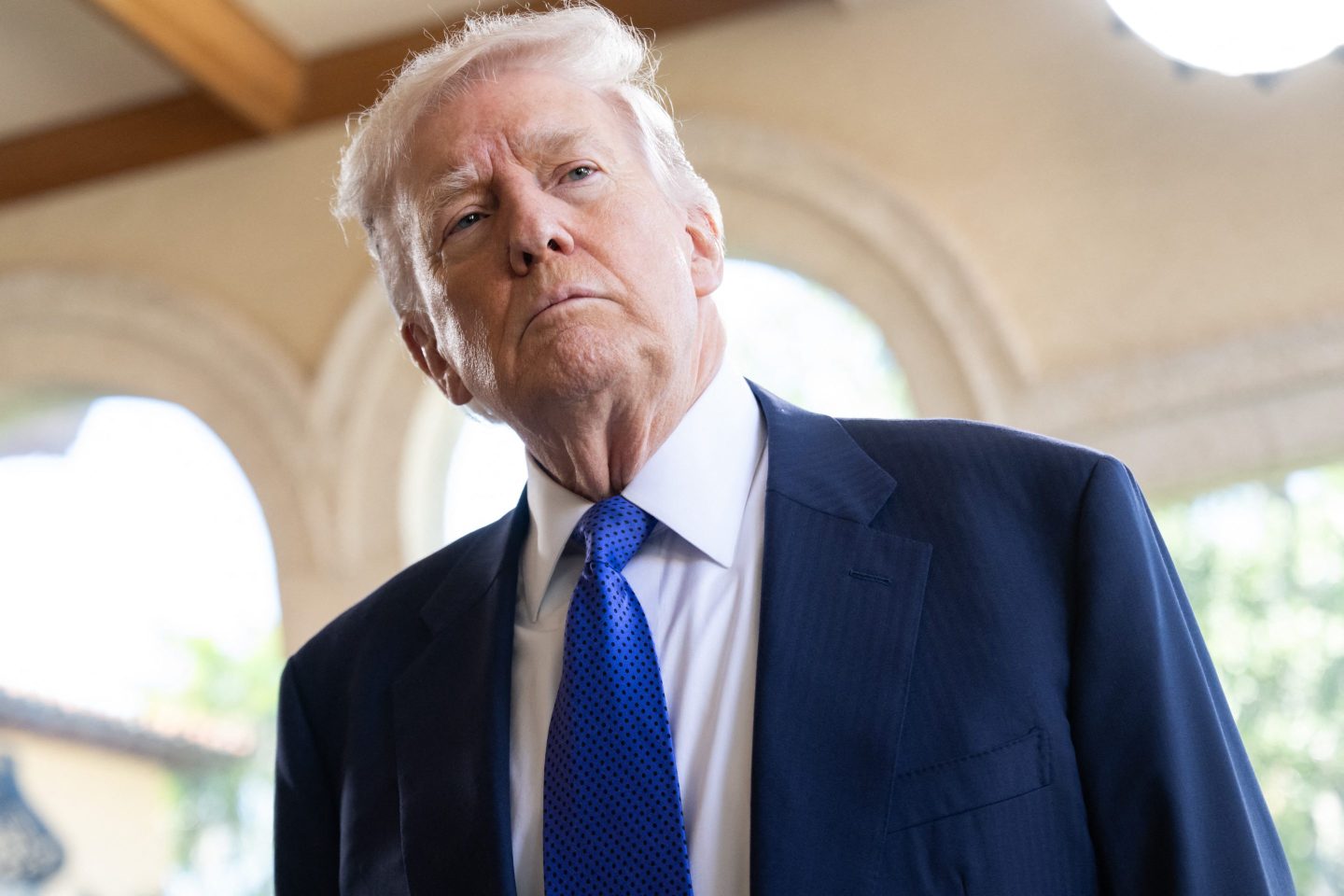
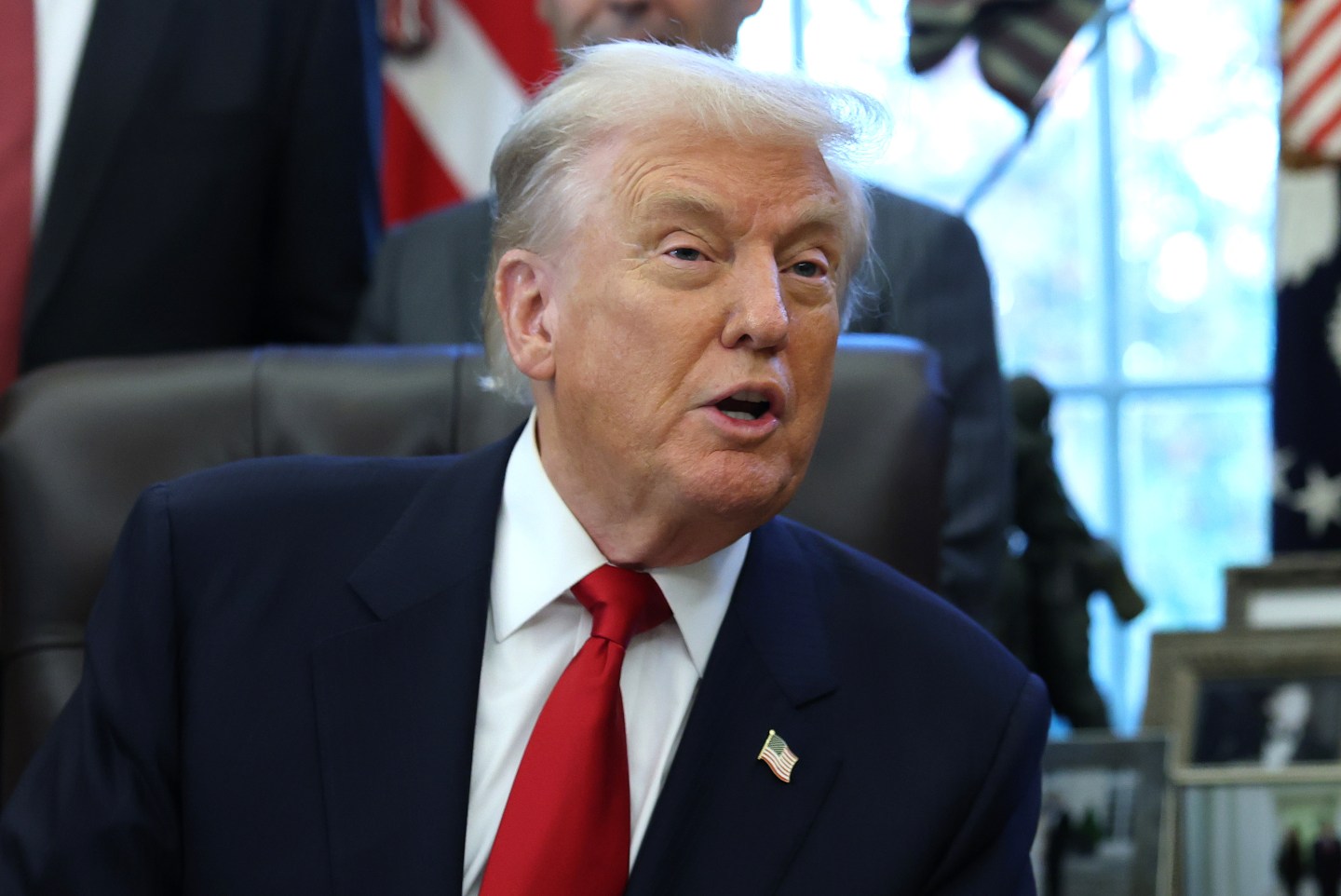
President Donald Trump.Anna Moneymaker/Getty Images

“Bust or boom?” That’s the big question at the heart of UBS’ big forecast for the U.S. economy for 2026 through 2028. But the team led by economist Jonathan Pingle also tackles a question that economists have been raising throughout 2025: the fact that tariffs amount to a large tax increase in all but name. Their analysis finds that the tariffs are acting as a substantial drag on growth and are actively contributing to persistent inflation, eroding real income gains for consumers.

Recommended Video

“The tariffs are a big tax increase,” the report states simply. According to UBS, the current tariff policies imply a weighted-average tariff rate of 13.6%, based on 2024 import shares, a fivefold jump from just 2.5% at the beginning of the year. This steep rate effectively translates to a tax on imports representing 1.2% of GDP.

The most immediate impact of the trade regime is felt in rising prices, which are “keeping things elevated.” UBS estimates that the new trade regime will add 0.8 percentage points to core PCE inflation in 2026, enough to erase a year’s worth of disinflation progress and keep prices climbing at roughly 3.5% even if other pressures like housing or energy ease.

Over the longer term, UBS expects the tariffs to have a cumulative direct impact of 1.4 percentage points on the level of core PCE through 2028, rising to nearly 1.9 points once knock-on effects like supply chain rerouting and domestic producers raising prices under tariff protection are factored in. Simply: tariffs alone could account for nearly two-thirds of the remaining gap between current inflation and the Fed’s 2% target.

Inflationary Headwinds Hit Households

This tariff-related price pass-through is already translating into pressure on American households. With average hourly earnings growth having slowed to roughly 3.5% annualized over the past six months, and aggregate payroll income running at about 3.25% annualized, this inflationary surge is proving costly. Economists expect quarterly annualized PCE inflation to run between 3% and 4% over the next two quarters, effectively wiping out those income gains.

The report highlights that most households are less able to weather inflation now than they were two years ago. While upper-income households are supported by AI-driven equity market wealth, households below the top 20% of the income distribution suffer from historically low liquid assets. Rising costs, coupled with a slowing labor market, are diminishing consumer perceptions of future prospects.

This headwind is particularly concerning because the U.S. economic expansion is already characterized as “narrowly driven” and “precarious.” The current economic outlook is essentially described as “a big bet on AI,” where the only obvious areas of growth are investment in software and computers (AI-driven) and consumption supported by upper-income equity market wealth. “A decent chunk of the US economy is in recession,” UBS adds, including real residential investment and non-residential construction, is in recession or declining outright.

Returning money back to the people?

As inflation pressures mount, President Donald Trump is touting his tariffs not only as a shield for American industry but also as a new source of household income. He has floated the idea of a “tariff dividend”—a payout of “at least $2,000 a person (not including high-income people!)”—claiming the surge in tariff revenue is big enough to share directly with Americans.

The headline numbers are certainly striking. The Treasury took in $195 billion in tariff revenue in fiscal 2025, up 153% from $77 billion the year before. The Committee for a Responsible Federal Budget projects that Trump’s broad “reciprocal tariffs” could raise $1.3 trillion through 2029 and $2.8 trillion by 2034. That would lift tariffs from about 2.7% of total federal revenue to nearly 5%, roughly comparable to imposing a new payroll tax or trimming one-fifth of the defense budget.

But analysts say the math behind Trump’s proposed dividend doesn’t hold up. John Ricco of Yale’s Budget Lab estimates a $2,000 payment for every American would cost around $600 billion, far more than the government’s tariff take.

“The revenue coming in would not be adequate,” Ricco told the Associated Press. Even Treasury Secretary Scott Bessent appeared caught off guard, telling ABC’s This Week that he hadn’t discussed the idea with Trump and suggesting any “rebate” would more likely appear as a future tax cut.

Economists also warn that while tariffs generate revenue, they do so by driving up prices. Importers typically pass those costs to consumers, making the policy function more like a regressive tax than a dividend.

Economists find that what’s emerging is a feedback loop: tariffs designed to revive industrial strength are now helping to sustain inflation, which in turn weakens real income growth and constrains the very consumers meant to benefit from the policy. UBS calls it a “narrow expansion,” but it may be narrower still: an economy whose growth depends on circular AI investments and government revenue creation schemes as opposed to the broad spending power of its citizens.

Join us at the Fortune Workplace Innovation Summit May 19–20, 2026, in Atlanta. The next era of workplace innovation is here—and the old playbook is being rewritten. At this exclusive, high-energy event, the world’s most innovative leaders will convene to explore how AI, humanity, and strategy converge to redefine, again, the future of work. Register now.
About the Authors
Nick Lichtenberg
By Nick LichtenbergBusiness Editor
LinkedIn icon

Nick Lichtenberg is business editor and was formerly Fortune's executive editor of global news.

See full bioRight Arrow Button Icon
By Eva RoytburgFellow, News

Eva is a fellow on Fortune's news desk.

See full bioRight Arrow Button Icon

Latest in Economy

Finance
Lorem ipsum dolor sit amet, consectetur adipiscing elit, sed do eiusmod tempor incididunt ut labore et dolore magna aliqua. Ut enim ad minim veniam
By Fortune Editors
October 20, 2025
Finance
Lorem ipsum dolor sit amet, consectetur adipiscing elit, sed do eiusmod tempor incididunt ut labore et dolore magna aliqua. Ut enim ad minim veniam
By Fortune Editors
October 20, 2025
Finance
Lorem ipsum dolor sit amet, consectetur adipiscing elit, sed do eiusmod tempor incididunt ut labore et dolore magna aliqua. Ut enim ad minim veniam
By Fortune Editors
October 20, 2025
Finance
Lorem ipsum dolor sit amet, consectetur adipiscing elit, sed do eiusmod tempor incididunt ut labore et dolore magna aliqua. Ut enim ad minim veniam
By Fortune Editors
October 20, 2025
Finance
Lorem ipsum dolor sit amet, consectetur adipiscing elit, sed do eiusmod tempor incididunt ut labore et dolore magna aliqua. Ut enim ad minim veniam
By Fortune Editors
October 20, 2025
Finance
Lorem ipsum dolor sit amet, consectetur adipiscing elit, sed do eiusmod tempor incididunt ut labore et dolore magna aliqua. Ut enim ad minim veniam
By Fortune Editors
October 20, 2025

Most Popular

Finance
Lorem ipsum dolor sit amet, consectetur adipiscing elit, sed do eiusmod tempor incididunt ut labore et dolore magna aliqua. Ut enim ad minim veniam
By Fortune Editors
October 20, 2025
Finance
Lorem ipsum dolor sit amet, consectetur adipiscing elit, sed do eiusmod tempor incididunt ut labore et dolore magna aliqua. Ut enim ad minim veniam
By Fortune Editors
October 20, 2025
Finance
Lorem ipsum dolor sit amet, consectetur adipiscing elit, sed do eiusmod tempor incididunt ut labore et dolore magna aliqua. Ut enim ad minim veniam
By Fortune Editors
October 20, 2025
Finance
Lorem ipsum dolor sit amet, consectetur adipiscing elit, sed do eiusmod tempor incididunt ut labore et dolore magna aliqua. Ut enim ad minim veniam
By Fortune Editors
October 20, 2025
Finance
Lorem ipsum dolor sit amet, consectetur adipiscing elit, sed do eiusmod tempor incididunt ut labore et dolore magna aliqua. Ut enim ad minim veniam
By Fortune Editors
October 20, 2025
Finance
Lorem ipsum dolor sit amet, consectetur adipiscing elit, sed do eiusmod tempor incididunt ut labore et dolore magna aliqua. Ut enim ad minim veniam
By Fortune Editors
October 20, 2025
Rankings
  • 100 Best Companies
  • Fortune 500
  • Global 500
  • Fortune 500 Europe
  • Most Powerful Women
  • Future 50
  • World’s Most Admired Companies
  • See All Rankings
Sections
  • Finance
  • Leadership
  • Success
  • Tech
  • Asia
  • Europe
  • Environment
  • Fortune Crypto
  • Health
  • Retail
  • Lifestyle
  • Politics
  • Newsletters
  • Magazine
  • Features
  • Commentary
  • Mpw
  • CEO Initiative
  • Conferences
  • Personal Finance
  • Education
Customer Support
  • Frequently Asked Questions
  • Customer Service Portal
  • Privacy Policy
  • Terms Of Use
  • Single Issues For Purchase
  • International Print
Commercial Services
  • Advertising
  • Fortune Brand Studio
  • Fortune Analytics
  • Fortune Conferences
  • Business Development
About Us
  • About Us
  • Editorial Calendar
  • Press Center
  • Work At Fortune
  • Diversity And Inclusion
  • Terms And Conditions
  • Site Map
  • Facebook icon
  • Twitter icon
  • LinkedIn icon
  • Instagram icon
  • Pinterest icon

Latest in Economy

trump
Economygovernment debt
America’s national debt borrowing binge means interest payments will rocket to $2 trillion a year by 2036, CBO says
By Eleanor Pringle and Nick LichtenbergFebruary 11, 2026
35 minutes ago
trump
Economynational debt
‘The fiscal trajectory is not sustainable’: CBO warns about the highest debt in U.S. history as Trump adds $1.4 trillion to 10-year deficit
By Tristan Bove and Nick LichtenbergFebruary 11, 2026
44 minutes ago
Fed Chair Jerome Powell testifies before the Senate Committee on Banking, Housing, and Urban Affairs during a hearing to "examine the Semiannual Monetary Policy Report to the Congress" on Capitol Hill on June 25, 2025 in Washington, DC. Powell says that the central bank will wait for clearer economic signals on the effects of President Donald Trump's tariffs on the economy before cutting interest rates, despite pressure from the President and divisions among Fed officials.
EconomyJobs
Nightmarish labor market finally shows signs of letting up—and some ‘vindication’ for Jerome Powell
By Eva RoytburgFebruary 11, 2026
1 hour ago
Federal Reserve Chair Jerome Powell pauses while speaking during a press conference following the Federal Open Markets Committee meeting at the Federal Reserve on January 28, 2026 in Washington, DC.
Economyjerome powell
Powell’s parting gift from the Fed may be more rate cuts than expected, courtesy of deteriorating data
By Eleanor PringleFebruary 11, 2026
4 hours ago
argentina
EconomyArgentina
Argentina’s 5 straight months of surging inflation undercount the severity, economists say
By Isabel Debre and The Associated PressFebruary 11, 2026
4 hours ago
InvestingMarkets
American unexceptionalism: Foreign markets leave U.S. stocks in the dust
By Jim EdwardsFebruary 11, 2026
5 hours ago

Most Popular

placeholder alt text
Economy
America borrowed $43.5 billion a week in the first four months of the fiscal year, with debt interest on track to be over $1 trillion for 2026
By Eleanor PringleFebruary 10, 2026
1 day ago
placeholder alt text
Economy
It turns out that Joe Biden really did crush Americans' dreams for the future. Just look at how the vibe changed 5 years ago
By Jake AngeloFebruary 10, 2026
19 hours ago
placeholder alt text
C-Suite
Meet Jody Allen, the billionaire owner of the Seattle Seahawks, who plans to sell the team and donate the proceeds to charity
By Jake AngeloFebruary 9, 2026
2 days ago
placeholder alt text
AI
As billionaires bail, Mark Zuckerberg doubles down on California with $50 million donation
By Sydney LakeFebruary 9, 2026
2 days ago
placeholder alt text
Economy
China might be beginning to back away from U.S. debt as investors get nervous about overexposure to American assets
By Eleanor PringleFebruary 9, 2026
2 days ago
placeholder alt text
C-Suite
'Don't look at the résumé': Elon Musk admits he's 'fallen prey' to flashy credentials but says conversation matters most when hiring
By Jacqueline MunisFebruary 9, 2026
2 days ago

© 2026 Fortune Media IP Limited. All Rights Reserved. Use of this site constitutes acceptance of our Terms of Use and Privacy Policy | CA Notice at Collection and Privacy Notice | Do Not Sell/Share My Personal Information
FORTUNE is a trademark of Fortune Media IP Limited, registered in the U.S. and other countries. FORTUNE may receive compensation for some links to products and services on this website. Offers may be subject to change without notice.