• Home
  • News
  • Fortune 500
  • Tech
  • Finance
  • Leadership
  • Lifestyle
  • Rankings
  • Multimedia
EconomyFederal Reserve

The Fed just lost a key data feed on the job market days before its next rate meeting. A former BLS chief warns it’s ‘very concerning’ as Powell is left ‘flying blind’

By
Eva Roytburg
Eva Roytburg
Fellow, News
Down Arrow Button Icon
By
Eva Roytburg
Eva Roytburg
Fellow, News
Down Arrow Button Icon
October 23, 2025, 2:25 PM ET
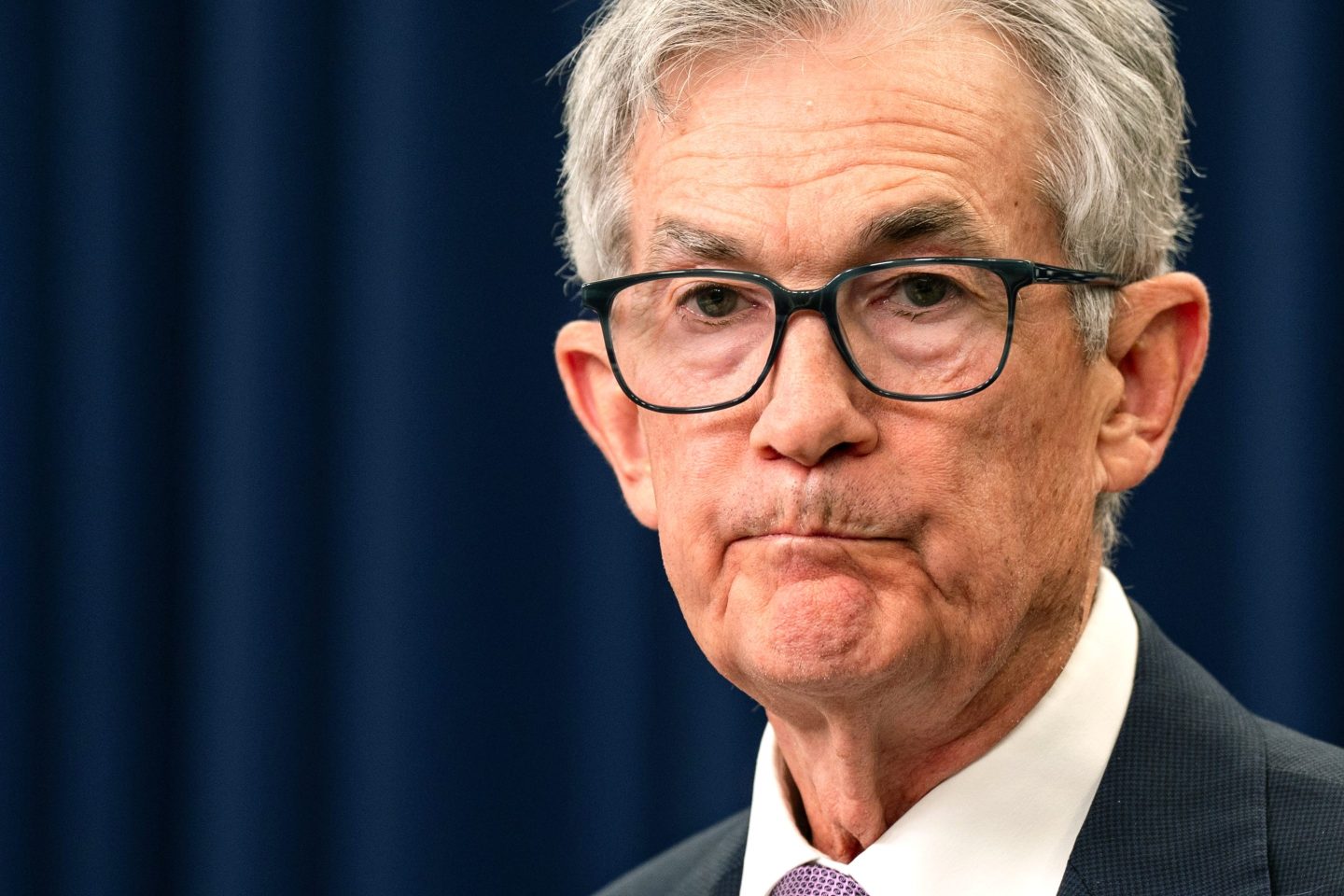
Federal Reserve Chairman Jerome Powell speaks during a news conference following a Federal Open Market Committee meeting in Washington on November 07, 2024 in Washington, DC.
Federal Reserve Chairman Jerome Powell speaks during a news conference following a Federal Open Market Committee meeting in Washington on Nov. 7, 2024, in Washington, D.C. Kent Nishimura—Getty Images

The Federal Reserve faces an unprecedented challenge as it prepares to set interest rates next week—making its decision with almost no economic data available.

Recommended Video

The government shutdown has halted the release of most U.S. economic statistics, including the monthly jobs report. However, the Fed also recently lost access to one of its main private sources of backup data. 

Payroll-processing giant ADP quietly stopped sharing its internal data with the central bank in late August, leaving Fed economists without a real-time measure that had covered about one-fifth of the nation’s private workforce. For years, the feed had served as a real-time check on job-market conditions between the Bureau of Labor Statistics’ monthly reports. Its sudden disappearance, first reported bythe Wall Street Journal, could leave the Fed “flying blind,” former Bureau of Labor Statistics commissioner Erica Groshen said.

Groshen told Fortune that, in her decades working at the BLS and inside the Fed, the loss of ADP data is “very concerning for monetary policy.”

The economist warned that at a moment when policymakers are already navigating a fragile economy—Fed Chair Jerome Powell has said multiple times that there is no current “risk-free path” to avoid recession or stagflation—the data blackout raises the risk of serious missteps. 

“The Fed could overtighten or under-tighten,” Groshen said. “Those actions are often taken too little and too late, but with less information, they’d be even more likely to be taken too little too late.” 

Rupture after years of collaboration

Since at least 2018, ADP has provided anonymized payroll and earnings data to the Fed for free, allowing staff economists to construct a weekly measure of employment trends. The partnership is well-known to both Fed insiders and casual market watchers. However, according to The American Prospect, ADP suspended access shortly after Fed Governor Christopher Waller cited the data in an Aug. 28 speech about the cooling labor market.

Powell has since asked ADP to restore the arrangement, according to The American Prospect. 

Representatives at ADP did not respond to Fortune’srequest for comment. The Fed declined to comment.

Groshen said there are several plausible reasons why ADP might have pulled the plug. One possibility, she said, is that the company found a methodological issue in its data and wanted to fix it before continuing to share information used in monetary policy. 

“That would actually be a responsible decision,” she told Fortune, noting that private firms have more flexibility than federal agencies but less institutional obligation to be transparent about errors.

Another explanation, Groshen said, could be internal or reputational pressure. After Waller mentioned the collaboration publicly, ADP may have worried about how it looked to clients or shareholders. 

“You could imagine investors saying, ‘Why are we giving this away for free? The Fed has money,’” she said. The company might also have wanted to avoid being seen as influencing central-bank decisions, especially in a politically charged environment.

Whatever the motivation, Groshen said the episode underscores how fragile public-private data relationships remain. Without clear frameworks or long-term agreements, companies can withdraw at any time.

“If policymakers build systems around data that can vanish overnight,” she said, “that’s a real vulnerability for economic governance.”

A data blackout at a critical moment

The timing could hardly be worse. 

On Thursday next week, the Federal Open Market Committee meets to decide whether to lower interest rates again, following a long-awaited quarter-point cut in September. With the BLS pausing most releases under its shutdown contingency plan, official figures on employment, joblessness, and wages have been delayed—starting with the September report and possibly extending into October.

In the absence of real-time data, Fed economists are relying on a patchwork of alternatives: state unemployment filings, regional bank surveys, and anecdotal reports from business contacts. Groshen called those “useful but incomplete,” adding that the lack of consistent statistical baselines makes monetary policy far more error-prone.

She advocated for the BLS to receive “multiyear funding” from Congress so that it could stay open even during government shutdowns. 

“I hope that one silver lining to all these difficulties will be a realization on the part of all the stakeholders, including Congress and the public, that our statistical system is essential infrastructure that needs some loving care at the moment,” Groshen said.


About the Author
By Eva RoytburgFellow, News

Eva is a fellow on Fortune's news desk.

See full bioRight Arrow Button Icon

Latest in Economy

Trump
PoliticsWhite House
‘We fixed inflation, and we fixed almost everything’: Trump travels to Pennsylvania to talk affordability while denying it’s a problem
By Josh Boak and The Associated PressDecember 4, 2025
7 hours ago
Bear
RetailTariffs and trade
Build-A-Bear stock falls 15% as it reveals the real hit from tariffs, at last
By Michelle Chapman and The Associated PressDecember 4, 2025
7 hours ago
Gen Z
EconomyGen Z
America, meet your alienated youth: ‘Gold standard’ Harvard survey reveals Gen Z’s anxiety and distrust, defined by economic insecurity
By Nick LichtenbergDecember 4, 2025
7 hours ago
The outside of a Dollar General store, at night
Retaildollar stores
Rich people are flooding dollar stores as Americans navigate a crushing affordability crisis
By Dave SmithDecember 4, 2025
9 hours ago
Zohran Mamdani, in front of a brick building, smiles as he holds a press conference.
Real EstateHousing
‘There is no Mamdani effect’: Manhattan luxury home sales surge after mayoral election, undercutting predictions of doom and escape to Florida
By Sasha RogelbergDecember 4, 2025
9 hours ago
Hassett, Bessent
EconomyTariffs and trade
Tariffs and the $38 trillion national debt: Kevin Hassett sees ’big reductions’ in deficit while Scott Bessent sees a ‘shrinking ice cube’
By Nick LichtenbergDecember 4, 2025
10 hours ago

Most Popular

placeholder alt text
Economy
Two months into the new fiscal year and the U.S. government is already spending more than $10 billion a week servicing national debt
By Eleanor PringleDecember 4, 2025
16 hours ago
placeholder alt text
Success
‘Godfather of AI’ says Bill Gates and Elon Musk are right about the future of work—but he predicts mass unemployment is on its way
By Preston ForeDecember 4, 2025
12 hours ago
placeholder alt text
North America
Jeff Bezos and Lauren Sánchez Bezos commit $102.5 million to organizations combating homelessness across the U.S.: ‘This is just the beginning’
By Sydney LakeDecember 2, 2025
3 days ago
placeholder alt text
Success
Nearly 4 million new manufacturing jobs are coming to America as boomers retire—but it's the one trade job Gen Z doesn't want
By Emma BurleighDecember 4, 2025
12 hours ago
placeholder alt text
Success
Nvidia CEO Jensen Huang admits he works 7 days a week, including holidays, in a constant 'state of anxiety' out of fear of going bankrupt
By Jessica CoacciDecember 4, 2025
11 hours ago
placeholder alt text
Health
Bill Gates decries ‘significant reversal in child deaths’ as nearly 5 million kids will die before they turn 5 this year
By Nick LichtenbergDecember 4, 2025
23 hours ago
Rankings
  • 100 Best Companies
  • Fortune 500
  • Global 500
  • Fortune 500 Europe
  • Most Powerful Women
  • Future 50
  • World’s Most Admired Companies
  • See All Rankings
Sections
  • Finance
  • Leadership
  • Success
  • Tech
  • Asia
  • Europe
  • Environment
  • Fortune Crypto
  • Health
  • Retail
  • Lifestyle
  • Politics
  • Newsletters
  • Magazine
  • Features
  • Commentary
  • Mpw
  • CEO Initiative
  • Conferences
  • Personal Finance
  • Education
Customer Support
  • Frequently Asked Questions
  • Customer Service Portal
  • Privacy Policy
  • Terms Of Use
  • Single Issues For Purchase
  • International Print
Commercial Services
  • Advertising
  • Fortune Brand Studio
  • Fortune Analytics
  • Fortune Conferences
  • Business Development
About Us
  • About Us
  • Editorial Calendar
  • Press Center
  • Work At Fortune
  • Diversity And Inclusion
  • Terms And Conditions
  • Site Map

© 2025 Fortune Media IP Limited. All Rights Reserved. Use of this site constitutes acceptance of our Terms of Use and Privacy Policy | CA Notice at Collection and Privacy Notice | Do Not Sell/Share My Personal Information
FORTUNE is a trademark of Fortune Media IP Limited, registered in the U.S. and other countries. FORTUNE may receive compensation for some links to products and services on this website. Offers may be subject to change without notice.