• Home
  • Latest
  • Fortune 500
  • Finance
  • Tech
  • Leadership
  • Lifestyle
  • Rankings
  • Multimedia
EconomyTariffs
Asia

Trump bet China would face ‘tremendous difficulties’ without U.S. consumers—Beijing just focused on the rest of the world instead

Eleanor Pringle
By
Eleanor Pringle
Eleanor Pringle
Senior Reporter, Economics and Markets
Down Arrow Button Icon
Eleanor Pringle
By
Eleanor Pringle
Eleanor Pringle
Senior Reporter, Economics and Markets
Down Arrow Button Icon
October 13, 2025, 6:48 AM ET
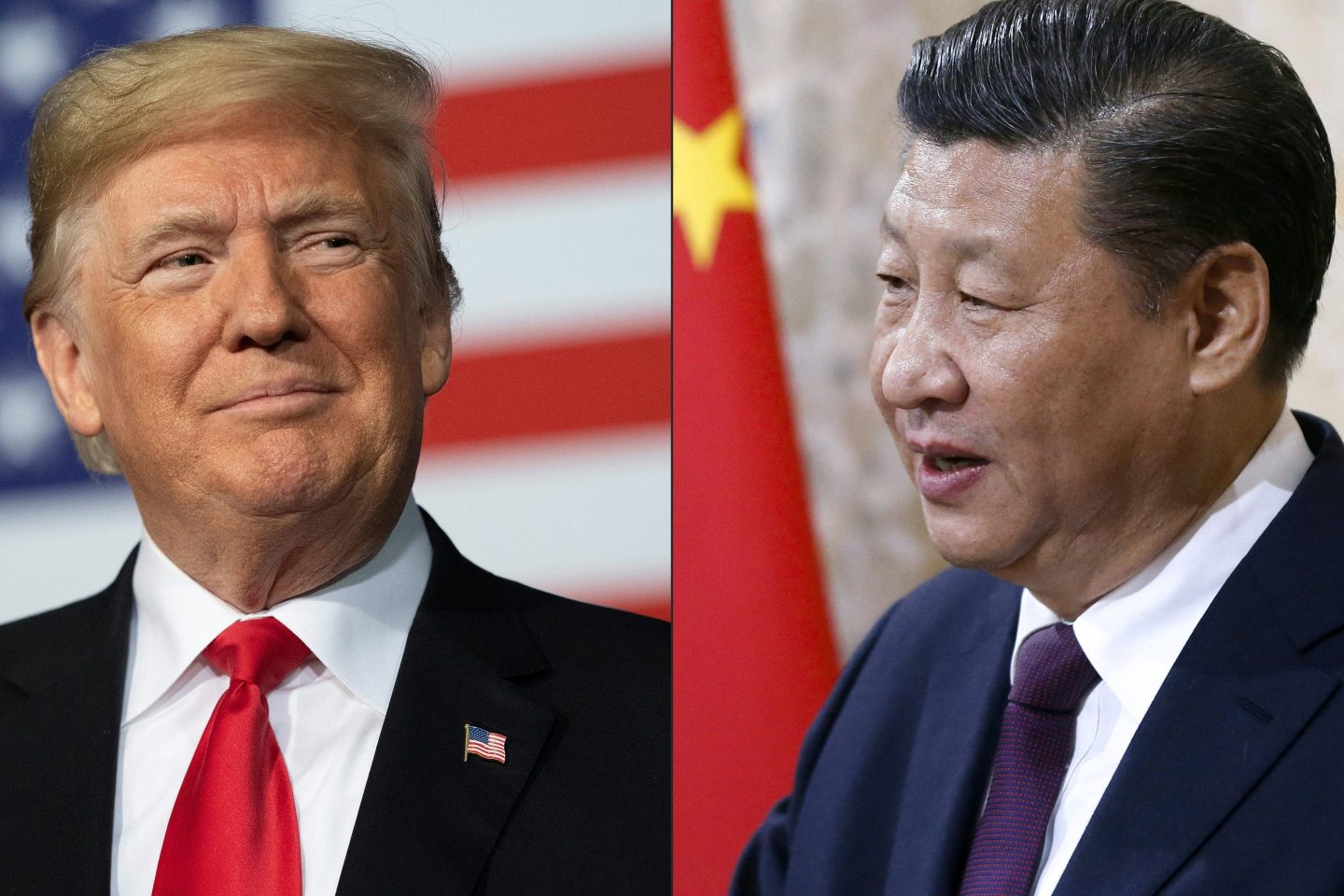
This combination of pictures created on May 14, 2020 shows recent portraits of China's President Xi Jinping (R) and US President Donald Trump.
Chinese President Xi Jinping (right) and U.S. President Donald TrumpJim WATSON, PETER KLAUNZER—various sources/AFP/Getty Images; JIM WATSON, PETER KLAUNZER—AFP/POOL/AFP/Getty Images
  • President Trump’s tariff offensive against China appears to be backfiring as Beijing sidesteps U.S. consumers and boosts exports elsewhere. Chinese shipments to the U.S. plunged 27% in September, but overall exports rose 8.3%—their highest total this year—driven by strong demand from Europe and other markets. The World Bank now expects China’s economy to grow 4.8% in 2025, while it downgraded U.S. growth to 1.4%. Despite Trump’s renewed threat of 100% tariffs, analysts at UBS and Deutsche Bank say both sides appear open to compromise, with markets betting negotiations will resume soon.

At the beginning of his tariff standoff with Beijing, President Trump was confident in his strong hand. China’s economy was reliant on U.S. consumers, he said, and so it would have to make some compromises or risk losing them.

Recommended Video

“China has been hit much harder than the USA, not even close,” Trump wrote on Truth Social, the social media site he owns, in April. Later that month, he admitted that while American shoppers may have to cut back on Chinese-produced consumption, the White House’s tariff plan meant the Chinese government was “having tremendous difficulty because their factories are not doing business.”

Six months later and it seems Beijing has simply circumnavigated the U.S. by focusing on increasing its exports to the rest of the world. The diversification has been so successful that China’s export market is actually tracking significant growth despite the trade war.

According to data released by the General Administration of Customs, China’s shipments to the U.S. fell 27% in September, the sixth month of double-digit declines to its once most valuable customer. Meanwhile it charted strong growth to areas like the European Union (currently operating under a 15% tariff rate from the White House), leading to export growth to non-U.S. countries of 14.8%.

The shift away from the U.S. means exports are actually up 8.3% in September compared with a year ago, raking in $328.6 billion—its highest total for 2025 so far.

China’s economy is faring better than expectations outlined back in April, when President Trump first made his tariff plans known. Earlier in the year the World Bank speculated China’s economy would grow 4% in 2025, but last week revised this up to 4.8%. Likewise, it upped its expectations for 2026 from 4% to 4.2%.

Conversely, in June the World Bank cut its expectations for U.S. growth by 0.9 percentage points to 1.4% for 2025.

This backdrop means Trump’s threat last week to impose 100% tariffs on China may not have the potency it once did. Having been relatively successful in sidestepping Trump’s tariffs so far, Beijing responded forcefully to the Oval Office’s threat, blasting it as a “double standard.”

A spokesman for the Ministry of Commerce said: “Frequently threatening high tariffs is not the right approach to engaging with China. China’s position on a tariff war is consistent: We do not want one, but we are not afraid of one.”

Room for compromise

Having issued the warning—and with both sides still operating under a pause on reciprocal tariffs until Nov. 10—President Trump did then seek to strike a more reasoned tone, and sent futures climbing as a result.

“I think we’re going to be fine with China,” Trump told reporters on board Air Force One yesterday afternoon. “I have a great relationship with President Xi; he’s a very tough man, a very smart man; he’s a great leader for their country, and I have a great relationship with him.

“I think we’ll get it set. I know what happened, I really understand what happened, and I’m not even saying he’s wrong. But then we met him with something much tougher than what he did to us.”

The back-and-forth may simply boil down to showmanship, wrote Deutsche Bank’s Jim Reid in a note to clients this morning: “There’s still plenty of time for negotiations, and I suspect the market will begin to price in a reasonable probability of a deal once the initial shock fades.

“For what it’s worth, Polymarket has the probabilities of the two Presidents meeting by Oct. 31st at 62% this morning, down from a peak of 88% last week but up from around 35% at the lows on Friday night. So there is a belief emerging that this is mostly negotiating tactics on both sides.”

UBS’s Paul Donovan also noted the Oval Office’s appetite for negotiation, telling clients this morning: “Both Trump and U.S. Vice President Vance have made conciliatory noises, which suggests that there may be some kind of retreat from the original threat.

“While the U.S. is obviously not able to publish data at the moment, the trend recently has the two countries’ data showing China selling U.S. more than the U.S. was buying from China,” he added. “That anomaly hints very strongly at rerouting by China to enable U.S. importers to avoid some of the tariffs.”

Join us at the Fortune Workplace Innovation Summit May 19–20, 2026, in Atlanta. The next era of workplace innovation is here—and the old playbook is being rewritten. At this exclusive, high-energy event, the world’s most innovative leaders will convene to explore how AI, humanity, and strategy converge to redefine, again, the future of work. Register now.
About the Author
Eleanor Pringle
By Eleanor PringleSenior Reporter, Economics and Markets
LinkedIn icon

Eleanor Pringle is an award-winning senior reporter at Fortune covering news, the economy, and personal finance. Eleanor previously worked as a business correspondent and news editor in regional news in the U.K. She completed her journalism training with the Press Association after earning a degree from the University of East Anglia.

See full bioRight Arrow Button Icon

Latest in Economy

EconomyFederal Reserve
Trump names Warsh, Hassett as top Fed contenders, WSJ says
By Jennifer A. Dlouhy and BloombergDecember 12, 2025
7 hours ago
EconomyFederal Reserve
The Fed just ‘Trump-proofed’ itself with a unanimous move to preempt a potential leadership shake-up
By Jason MaDecember 12, 2025
10 hours ago
Donald Trump, sitting in the Roosevelt Room, looks forward and frowns.
EconomyTariffs and trade
For the first time since Trump’s tariff rollout, import tax revenue has fallen, threatening his lofty plans to slash the $38 trillion national debt
By Sasha RogelbergDecember 12, 2025
11 hours ago
Real EstateGen Z
Gen Z is defiantly ‘giving up’ on ever owning a home and is spending more than saving, working less, and making risky investments, study shows
By Sydney LakeDecember 12, 2025
14 hours ago
Donald Trump
AIElections
AI is powering Trump’s economy, but American voters are getting worried
By Mark Niquette, Nancy Cook and BloombergDecember 12, 2025
16 hours ago
Amtrak
PoliticsAmtrak
Amtrak is slashing executive bonuses to give out $900 apiece to over 18,000 rank-and-file workers
By Safiyah Riddle and The Associated PressDecember 12, 2025
17 hours ago

Most Popular

placeholder alt text
Economy
Tariffs are taxes and they were used to finance the federal government until the 1913 income tax. A top economist breaks it down
By Kent JonesDecember 12, 2025
20 hours ago
placeholder alt text
Success
Apple cofounder Ronald Wayne sold his 10% stake for $800 in 1976—today it’d be worth up to $400 billion
By Preston ForeDecember 12, 2025
16 hours ago
placeholder alt text
Success
At 18, doctors gave him three hours to live. He played video games from his hospital bed—and now, he’s built a $10 million-a-year video game studio
By Preston ForeDecember 10, 2025
3 days ago
placeholder alt text
Success
40% of Stanford undergrads receive disability accommodations—but it’s become a college-wide phenomenon as Gen Z try to succeed in the current climate
By Preston ForeDecember 12, 2025
15 hours ago
placeholder alt text
Success
Palantir cofounder calls elite college undergrads a ‘loser generation’ as data reveals rise in students seeking support for disabilities, like ADHD
By Preston ForeDecember 11, 2025
2 days ago
placeholder alt text
Economy
For the first time since Trump’s tariff rollout, import tax revenue has fallen, threatening his lofty plans to slash the $38 trillion national debt
By Sasha RogelbergDecember 12, 2025
11 hours ago
Rankings
  • 100 Best Companies
  • Fortune 500
  • Global 500
  • Fortune 500 Europe
  • Most Powerful Women
  • Future 50
  • World’s Most Admired Companies
  • See All Rankings
Sections
  • Finance
  • Leadership
  • Success
  • Tech
  • Asia
  • Europe
  • Environment
  • Fortune Crypto
  • Health
  • Retail
  • Lifestyle
  • Politics
  • Newsletters
  • Magazine
  • Features
  • Commentary
  • Mpw
  • CEO Initiative
  • Conferences
  • Personal Finance
  • Education
Customer Support
  • Frequently Asked Questions
  • Customer Service Portal
  • Privacy Policy
  • Terms Of Use
  • Single Issues For Purchase
  • International Print
Commercial Services
  • Advertising
  • Fortune Brand Studio
  • Fortune Analytics
  • Fortune Conferences
  • Business Development
About Us
  • About Us
  • Editorial Calendar
  • Press Center
  • Work At Fortune
  • Diversity And Inclusion
  • Terms And Conditions
  • Site Map

© 2025 Fortune Media IP Limited. All Rights Reserved. Use of this site constitutes acceptance of our Terms of Use and Privacy Policy | CA Notice at Collection and Privacy Notice | Do Not Sell/Share My Personal Information
FORTUNE is a trademark of Fortune Media IP Limited, registered in the U.S. and other countries. FORTUNE may receive compensation for some links to products and services on this website. Offers may be subject to change without notice.