
• Home
  • Latest
  • Fortune 500
  • Finance
  • Tech
  • Leadership
  • Lifestyle
  • Rankings
  • Multimedia
SuccessEntrepreneurs

How the cofounder of Chess.com went from being a child prodigy in a religious cult to building a 225 million player empire

Emma Burleigh
By
Emma Burleigh
Emma Burleigh
Reporter, Success
Down Arrow Button Icon
Emma Burleigh
By
Emma Burleigh
Emma Burleigh
Reporter, Success
Down Arrow Button Icon
October 5, 2025, 6:41 AM ET
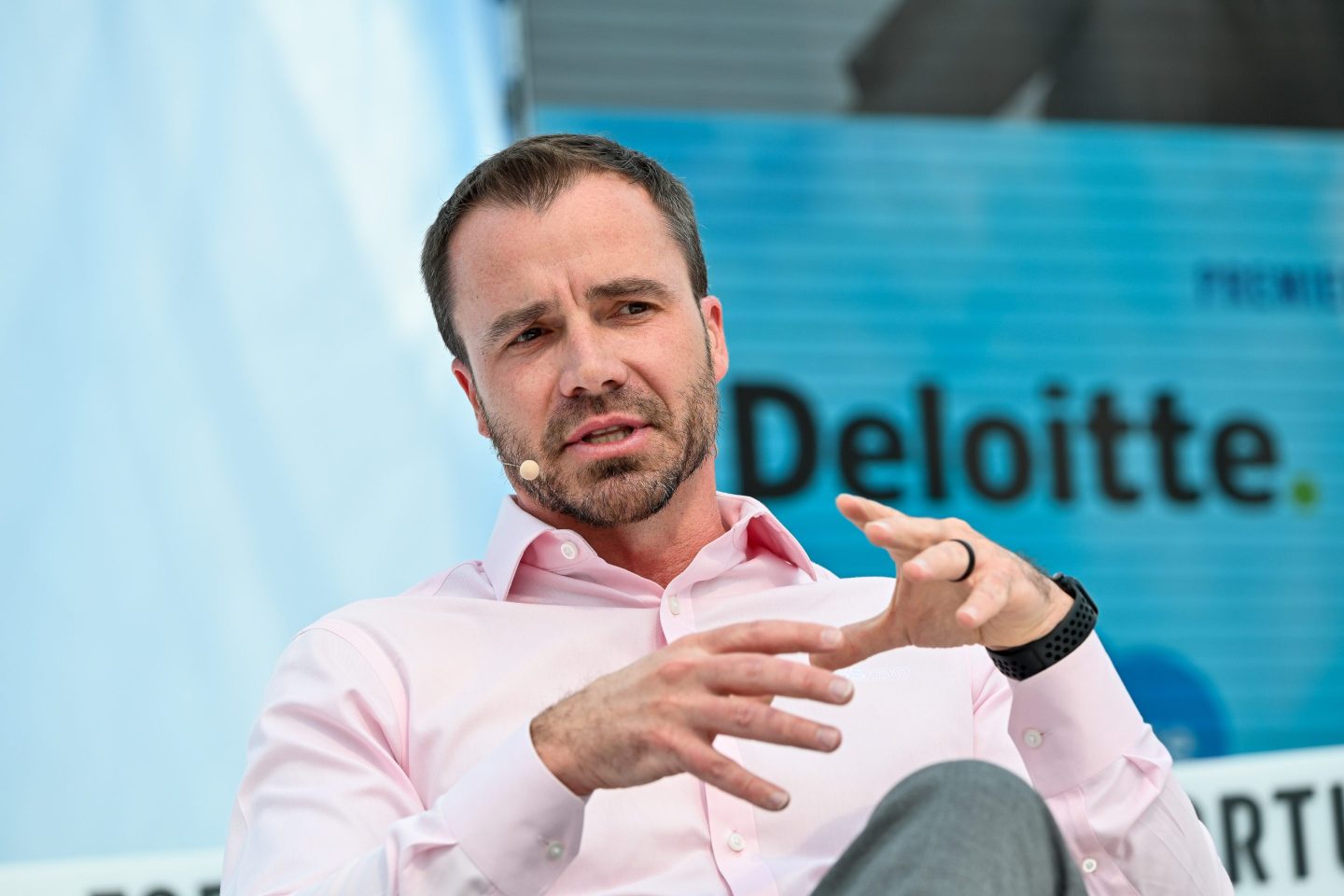
Chess.com cofounder and chief chess officer Danny Rensch
Danny Rensch grew up in the Church of Immortal Consciousness, running around barefoot and living off food stamps. But he left and bootstrapped the legendary chess platform despite being “laughed out of VC rooms.” Stuart Isett/Fortune

Entrepreneurs are first pulled toward their passion in all sorts of ways—whether that be through an overbearing parent, chasing a childhood dream career, or realization that a hobby can bring in millions. But Danny Rensch, chess champion and cofounder of Chess.com, initially strived for greatness during his unconventional childhood growing up in a cult.

Recommended Video

Today, Rensch helms one of the largest online chess platforms in the world with more than 225 million registered members and 40 million active monthly users. As one of the company’s three cofounders and chief chess officer, he’s an American entrepreneur leading a gaming site beloved by millions. Chess.com says it surpassed a $1 billion valuation in 2023 without any venture backers, entirely bootstrapped by the entrepreneurs who were “laughed out of VC rooms” at the company’s inception. Rensch’s superstar status as a teen and international platform success has made him one of the most powerful figures in the industry. But his entry into the world of chess was anything but usual. 

Rensch tells Fortune he first encountered the historic game while watching the movie Searching for Bobby Fischer, which explores the American chess genius who became the youngest U.S. Champion in history at age of 14. Rensch romanticized the idea of a child prodigy finding himself inside the game, and with his life circumstances, the board could serve as a tool for his survival. 

As detailed in Rensch’s recent book release Dark Squares: How Chess Saved My Life, the wunderkid spent his early years in the Church of Immortal Consciousness: a cult run by Trina and Steven Kamp in Arizona. The group, dubbed the “Collective,” attracted those in need of help, including people with alcohol and drug abuse disorders and victims of abuse. Rensch’s parents were pulled into the group, where the young chess wiz spent his childhood running around barefoot in a remote forest village. His childhood was largely in flux, living off food stamps, playing in the woods, and being tossed between the supervision of his mother and the cult’s other members. 

But when Rensch first discovered the game as a nine-year old, chess became only the opportunity for him to gain approval in his abusive living situation, but to also pave a path for success once he left. 

Chess as his mentor and tormentor—a way to leave the cult

The cult’s leader, Steven Kamp, was obsessed with chess, and Rensch was quickly pulled into his orbit. Recognizing the potential of his religious pupils, Kamp set up a chess team at an elementary school near the Collective’s setup in Tonto Village. Rensch was told chess was his life’s purpose—and he was alienated from his family in the pursuit of greatness. 

“As he saw what we were capable of doing—me and my peer group, the Shelby School chess team—we all got good very fast. I became the best, but the truth is they were all amazing players. We were winning championships left, right, and center,” Rensch says. “Chess became a way to climb the hierarchical ladder of the Collective.”

In 1997, the Shelby School won the Super Nationals chess tournament—and one year later, Rensch took home his first individual national championship title. But when his success sputtered at the age of 14, he was separated from living with his mother in order to sharpen his gameplay in the house of Kamp’s close confidant, who Rensch found out was also his biological father. Chess was not only his passion, but a buoy in those difficult times; as the cofounder explained in his book, “to be special in the eyes of Steven Kamp is to be special in the eyes of God.” Rensch continued to rise through the ranks, becoming the youngest national master in Arizona history, and eventually winning the national high-school chess championship at the age of 18. 

The Church of Immortal Consciousness has since disbanded, but now 39-year-old Rensch says reconciling the abuse and stress he experienced for the bulk of his early life is still an ongoing process. He explains—like many who grew up in a cult—he’s on a journey of “unpacking and learning to interrogate those feelings.” Rensch says he has no hard feelings about what happened to him, but the love and attachment he once felt within the cult is now gone.

“Growing into the life that I have, and being an adult now, and many years of therapy, I’m fully aware of what it was,” Rensch says. “With time, the pain got worse, and the success got better, so it became its own very meshy web.”

“Where to pull on the string was hard to really figure out: where my healthy enjoyment as a kid could have began for the game, and where my performance, based on what was expected of me, ended,” he continues. “It was very, very hard to untie those.”

From being the ‘laughing stock’ to bootstrapping Chess.com 

Soon after Rensch was hitting his teenage chess highs, he experienced a serious medical emergency. His eardrums burst on a plane ride, which forced him to be “sidelined and bedridden,” taking him out of the running in competitive chess competitions just as he was hitting his stride. While undergoing surgeries, he spent a lot of time surfing the internet, which was still in its early days at the time. 

YouTube’s popularity was quickly rising. Sensing the potential of other community-building platforms, inspiration struck—what if there was a way to bring chess online? 

Rensch had the chess brains to bring competitive gameplay to the platform, but didn’t have the technical or business wherewithal to launch the idea by himself. That’s when Chess.com’s former CTO Jay Severson and current CEO Erik Allebest came into the picture; Severson leveraged his coding skills to power the earliest version of the platform, while Allebest brought his Stanford MBA expertise to flesh out the business side. However, when it came to securing investors for the site, their pitch was largely dismissed as a pipe dream. 

“We were laughed out of VC rooms who said that chess would never be anything,” Rensch recalls. “Nobody invested early on, and it became the biggest blessing in disguise.” 

But those early rejections didn’t destroy their confidence. The three cofounders bootstrapped their own company in 2009 with Allebest’s money earned from earlier chess ventures that he had sold, and borrowed $70,000 from a mother’s friend (which Rensch says they paid back very quickly). They had to keep their jobs for the first couple of years while Chess.com was still the “laughing stock of the online chess community,” who doubted it could become mainstream. But today, it’s a staple for chess champions and budding players alike. 

Chess.com’s success was only bolstered by the pandemic and the game’s boom in pop culture relevancy as hit Netflix show The Queen’s Gambit brought new players into the fold. The miniseries attracted 62 million pairs of eyes in its first 28 days, dominating the streaming site as a top show across dozens of countries. Released in October 2020, during the thick of the COVID-19 pandemic, it came at an opportune moment while viewers were quarantined at home. Chess.com was already adding one million new accounts every month since March 2020, and in the month following The Queen’s Gambit’s release, the server exploded with a 2.8 million increase in new users. Rensch says riding the natural momentum of the pop-culture machine with no backers and minimal advertisers is what sets Chess.com apart as a business. 

“We got lucky in that we did not pay for The Queen’s Gambit…That was awesome and great for the game that has inspired millions,” Rensch says. “If we had taken a different approach and tried to throttle our customers versus allowing them to do chess however they want to do chess, I think it would have been a different outcome for us.”


Join us at the Fortune Workplace Innovation Summit May 19–20, 2026, in Atlanta. The next era of workplace innovation is here—and the old playbook is being rewritten. At this exclusive, high-energy event, the world’s most innovative leaders will convene to explore how AI, humanity, and strategy converge to redefine, again, the future of work. Register now.
About the Author
Emma Burleigh
By Emma BurleighReporter, Success

Emma Burleigh is a reporter at Fortune, covering success, careers, entrepreneurship, and personal finance. Before joining the Success desk, she co-authored Fortune’s CHRO Daily newsletter, extensively covering the workplace and the future of jobs. Emma has also written for publications including the Observer and The China Project, publishing long-form stories on culture, entertainment, and geopolitics. She has a joint-master’s degree from New York University in Global Journalism and East Asian Studies.

See full bioRight Arrow Button Icon

Latest in Success

Finance
Lorem ipsum dolor sit amet, consectetur adipiscing elit, sed do eiusmod tempor incididunt ut labore et dolore magna aliqua. Ut enim ad minim veniam
By Fortune Editors
October 20, 2025
Finance
Lorem ipsum dolor sit amet, consectetur adipiscing elit, sed do eiusmod tempor incididunt ut labore et dolore magna aliqua. Ut enim ad minim veniam
By Fortune Editors
October 20, 2025
Finance
Lorem ipsum dolor sit amet, consectetur adipiscing elit, sed do eiusmod tempor incididunt ut labore et dolore magna aliqua. Ut enim ad minim veniam
By Fortune Editors
October 20, 2025
Finance
Lorem ipsum dolor sit amet, consectetur adipiscing elit, sed do eiusmod tempor incididunt ut labore et dolore magna aliqua. Ut enim ad minim veniam
By Fortune Editors
October 20, 2025
Finance
Lorem ipsum dolor sit amet, consectetur adipiscing elit, sed do eiusmod tempor incididunt ut labore et dolore magna aliqua. Ut enim ad minim veniam
By Fortune Editors
October 20, 2025
Finance
Lorem ipsum dolor sit amet, consectetur adipiscing elit, sed do eiusmod tempor incididunt ut labore et dolore magna aliqua. Ut enim ad minim veniam
By Fortune Editors
October 20, 2025

Most Popular

Finance
Lorem ipsum dolor sit amet, consectetur adipiscing elit, sed do eiusmod tempor incididunt ut labore et dolore magna aliqua. Ut enim ad minim veniam
By Fortune Editors
October 20, 2025
Finance
Lorem ipsum dolor sit amet, consectetur adipiscing elit, sed do eiusmod tempor incididunt ut labore et dolore magna aliqua. Ut enim ad minim veniam
By Fortune Editors
October 20, 2025
Finance
Lorem ipsum dolor sit amet, consectetur adipiscing elit, sed do eiusmod tempor incididunt ut labore et dolore magna aliqua. Ut enim ad minim veniam
By Fortune Editors
October 20, 2025
Finance
Lorem ipsum dolor sit amet, consectetur adipiscing elit, sed do eiusmod tempor incididunt ut labore et dolore magna aliqua. Ut enim ad minim veniam
By Fortune Editors
October 20, 2025
Finance
Lorem ipsum dolor sit amet, consectetur adipiscing elit, sed do eiusmod tempor incididunt ut labore et dolore magna aliqua. Ut enim ad minim veniam
By Fortune Editors
October 20, 2025
Finance
Lorem ipsum dolor sit amet, consectetur adipiscing elit, sed do eiusmod tempor incididunt ut labore et dolore magna aliqua. Ut enim ad minim veniam
By Fortune Editors
October 20, 2025
Rankings
  • 100 Best Companies
  • Fortune 500
  • Global 500
  • Fortune 500 Europe
  • Most Powerful Women
  • Future 50
  • World’s Most Admired Companies
  • See All Rankings
Sections
  • Finance
  • Leadership
  • Success
  • Tech
  • Asia
  • Europe
  • Environment
  • Fortune Crypto
  • Health
  • Retail
  • Lifestyle
  • Politics
  • Newsletters
  • Magazine
  • Features
  • Commentary
  • Mpw
  • CEO Initiative
  • Conferences
  • Personal Finance
  • Education
Customer Support
  • Frequently Asked Questions
  • Customer Service Portal
  • Privacy Policy
  • Terms Of Use
  • Single Issues For Purchase
  • International Print
Commercial Services
  • Advertising
  • Fortune Brand Studio
  • Fortune Analytics
  • Fortune Conferences
  • Business Development
About Us
  • About Us
  • Editorial Calendar
  • Press Center
  • Work At Fortune
  • Diversity And Inclusion
  • Terms And Conditions
  • Site Map
  • Facebook icon
  • Twitter icon
  • LinkedIn icon
  • Instagram icon
  • Pinterest icon

Latest in Success

Head coach Mike MacDonald
SuccessCareers
Seahawks head coach turned down a job offer at KPMG for a football internship—12 years later, he just won the Super Bowl at 38
By Emma BurleighFebruary 10, 2026
3 hours ago
Chuck Robbins
SuccessThe Promotion Playbook
Cisco CEO Chuck Robbins slams ‘stupid’ interviews for internal promotions: He cares more about whether your peers think you deserve it
By Preston ForeFebruary 10, 2026
3 hours ago
SuccessOlympics
U.S. Olympians earn just 5% of what Singapore pays—many are forced to juggle jobs as baristas, brokers, and dentists just to get by
By Sydney LakeFebruary 10, 2026
5 hours ago
chapman
CommentaryGender Issues
Sam Altman told me AI should be ‘an equalizing force in society.’ That’s why I’m working on the $1.6 trillion AI gender gap
By Valerie ChapmanFebruary 10, 2026
5 hours ago
Photo of Colin Kaepernick
SuccessCareers
A decade after his NFL kneeling controversy, Colin Kaepernick has a message for Gen Z: Don’t let the fear of backlash silence you
By Orianna Rosa RoyleFebruary 10, 2026
5 hours ago
trump
CommentaryInequality
The economy isn’t K-shaped. For 87 million, people, it’s desperate and for another 46 million it’s elite
By Josh TanenbaumFebruary 10, 2026
6 hours ago

Most Popular

placeholder alt text
C-Suite
Meet Jody Allen, the billionaire owner of the Seattle Seahawks, who plans to sell the team and donate the proceeds to charity
By Jake AngeloFebruary 9, 2026
1 day ago
placeholder alt text
AI
As billionaires bail, Mark Zuckerberg doubles down on California with $50 million donation
By Sydney LakeFebruary 9, 2026
1 day ago
placeholder alt text
Economy
China might be beginning to back away from U.S. debt as investors get nervous about overexposure to American assets
By Eleanor PringleFebruary 9, 2026
1 day ago
placeholder alt text
Economy
Elon Musk warns the U.S. is '1,000% going to go bankrupt' unless AI and robotics save the economy from crushing debt
By Jason MaFebruary 7, 2026
3 days ago
placeholder alt text
Economy
America borrowed $43.5 billion a week in the first four months of the fiscal year, with debt interest on track to be over $1 trillion for 2026
By Eleanor PringleFebruary 10, 2026
8 hours ago
placeholder alt text
Personal Finance
Current price of silver as of Monday, February 9, 2026
By Joseph HostetlerFebruary 9, 2026
1 day ago

© 2026 Fortune Media IP Limited. All Rights Reserved. Use of this site constitutes acceptance of our Terms of Use and Privacy Policy | CA Notice at Collection and Privacy Notice | Do Not Sell/Share My Personal Information
FORTUNE is a trademark of Fortune Media IP Limited, registered in the U.S. and other countries. FORTUNE may receive compensation for some links to products and services on this website. Offers may be subject to change without notice.