• Home
  • Latest
  • Fortune 500
  • Finance
  • Tech
  • Leadership
  • Lifestyle
  • Rankings
  • Multimedia
EconomyDonald Trump

‘A different shock to the system’: De minimis tariff dodge ending means less purchasing power for Americans 

By
Nino Paoli
Nino Paoli
News Fellow
Down Arrow Button Icon
By
Nino Paoli
Nino Paoli
News Fellow
Down Arrow Button Icon
August 30, 2025, 8:33 AM ET
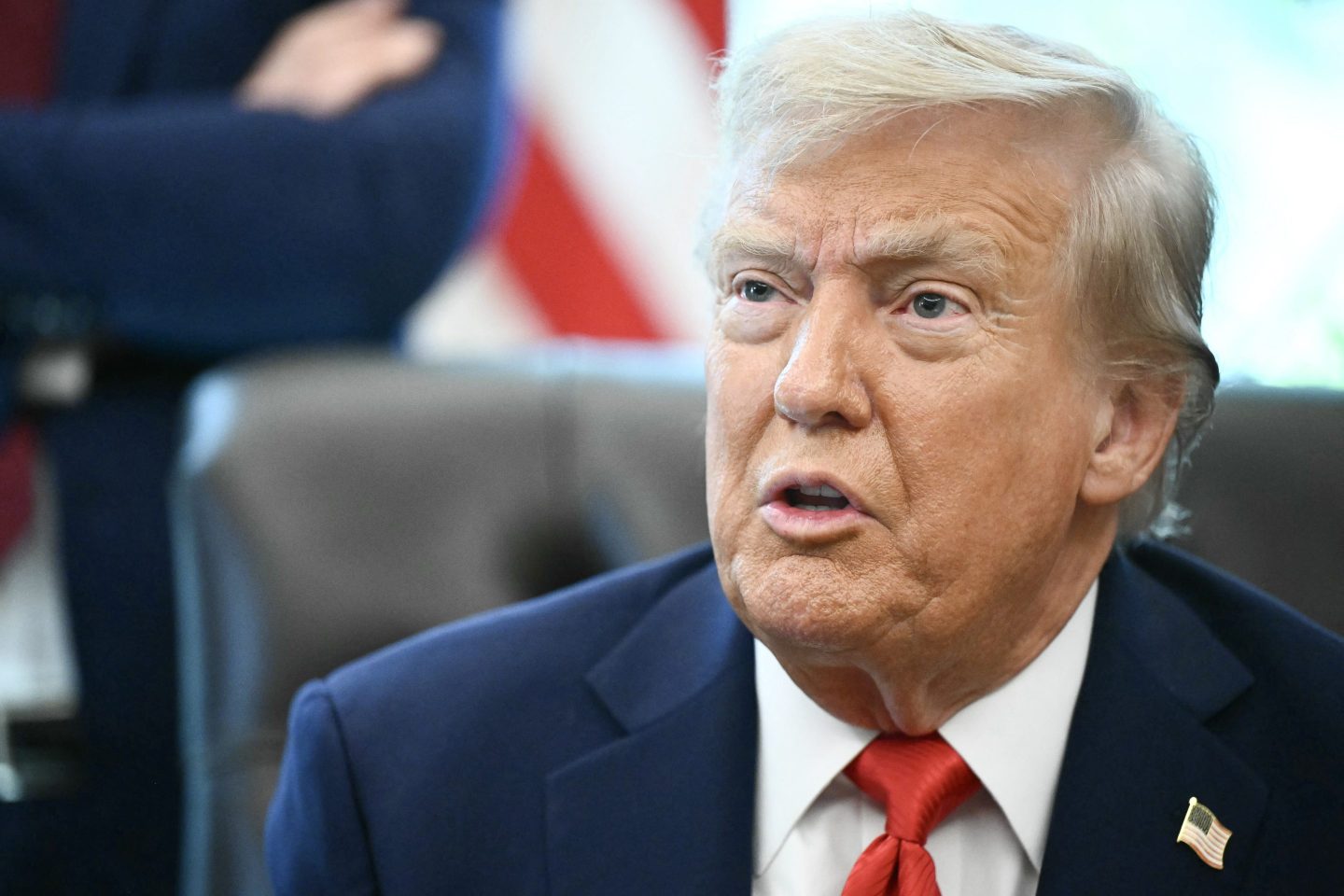
US President Donald Trump speaks to the press in the Oval Office of the White House in Washington, DC on August 25, 2025.
The Trump administration ended the de minimis tariff loophole on Friday, Aug. 29.MANDEL NGAN/AFP via Getty Images
  • The de minimis exemption, which allowed overseas orders under $800 to come into the U.S. duty-free, ended Friday. In effect, American consumers will experience less purchasing power for goods produced or sourced from other countries.

The de minimis exemption—a tariff loophole that for years made millions of direct-to-consumer imports duty free—is gone, and its end marks a structural shift for American shoppers and logistics providers. 

Recommended Video

Up until Friday, U.S. consumers could order up to $800 in goods per package from overseas without paying any tariffs or taxes. Now, this landscape is changing, adding to inflationary pressures that will squeeze everyday purchasing power, particularly for low- and middle-income Americans, experts tell Fortune.

“It’s a different shock to the system at a different level than what we’ve seen with the tariffs on large industrial goods,” Rob Haworth, senior investment strategy director at U.S. Bank, told Fortune. “It does start up another near-term challenge for consumers and for businesses and spending overall.”

The de minimis exemption ended in May for imports from China, where an estimated three-quarters of goods under the $800 threshold came from, with a large share coming from e-commerce companies Shein and Temu. The de minimis suspension for parcels from all other countries implemented Friday now means the American dollar won’t buy as much as it used to, when it comes to shoppers purchasing goods made overseas.

“Categories like footwear and apparel will see some of the highest impacts, estimated at 15%-25% increased end consumer pricing, given the manufacturing origin often being China,” Sean Henry, CEO of Stord, an e-commerce and fulfillment company, told Fortune.

A senior Trump administration official said that the U.S. Customs and Border Protection agency has collected more than $492 million in additional duties on packages shipped from China and Hong Kong since ending the exemption.

And tariffs on goods that previously fell under de minimis could raise as much as $10 billion a year, U.S. trade advisor Peter Navarro told reporters Thursday. Putting that into perspective, the 2024 trade deficit in goods was $1.2 trillion.

“The net number (of tariff revenue without de minimis) is not all that meaningful in terms of how big the deficit is,” Baird Investment Strategist Ross Mayfield told Fortune. “The bigger difference is going to be the extent to which the government is levying these bigger, kind of broader swaths of tariffs.”

Over the past decade, the number of shipments entering the U.S. de minimis surged by more than 600%, from approximately 139 million in 2015 to almost 1.4 billion, according to U.S. Customs and Border Protection. However, the amount of revenue generated by these new tariffs depends on whether consumers are willing to continue to purchase cheap products from abroad.

“Nearly 40% of online shoppers abandon their carts when faced with these extra tariff and duty surcharges at checkout,” Stord CEO Henry said.

Lee Klaskow, a senior analyst of transportation and logistics at Bloomberg Intelligence, told Fortune he expects spending on these largely “discretionary” purchases to decrease.

“That Shein shirt that you really want that’s $5—maybe you’ll think twice about getting it because it’s going to be more expensive,” Klaskow said.

Prior to the pandemic, consumers had a “huge appetite for cheap things,” but Klaskow expects consumer behavior to flip in response to the change. 

U.S. Bank’s Haworth said he’s more focused on how the government will implement the change, as it will require new systems, investment, and infrastructure to collect on small purchases. 

He added the whole purpose of de minimis was to streamline the process of bringing small imports into the country, since they are more complex to track. The government has previously said this allowed illicit substances like fentanyl to cross into the U.S. more easily. Still, the system will need to recalibrate to adhere to the new rules.

“Originally why you had a de minimis exemption is so that you weren’t spending a lot of time on small transactions that didn’t net anything,” Haworth said. “So that’s kind of an interesting or challenging cost that is going to come into the business system.”

Join us at the Fortune Workplace Innovation Summit May 19–20, 2026, in Atlanta. The next era of workplace innovation is here—and the old playbook is being rewritten. At this exclusive, high-energy event, the world’s most innovative leaders will convene to explore how AI, humanity, and strategy converge to redefine, again, the future of work. Register now.
About the Author
By Nino PaoliNews Fellow

Nino Paoli is a Dow Jones News Fund fellow at Fortune on the News desk.

See full bioRight Arrow Button Icon

Latest in Economy

student
CommentaryEducation
International students skipped campus this fall — and local economies lost $1 billion because of it
By Bjorn MarkesonDecember 10, 2025
1 hour ago
EconomyFederal Reserve
If the Fed cuts interest rates today, it may be the last one until June 2026
By Jim EdwardsDecember 10, 2025
3 hours ago
Jerome Powell, chairman of the US Federal Reserve
EconomyFed interest rates
Fed’s expected rate cut today is less about stimulating the economy and more about protecting the job market from ‘shattering’
By Eleanor PringleDecember 10, 2025
4 hours ago
Jerome Powell, chairman of the US Federal Reserve, during the Hoover Institution's George P. Shultz Memorial Lecture Series in Stanford, California, US, on Monday, Dec. 1, 2025.
EconomyJobs
‘Fodder for a recession’: Top economist Mark Zandi warns about so many Americans ‘already living on the financial edge’ in a K-shaped economy 
By Eva RoytburgDecember 9, 2025
18 hours ago
Photo of Jamie Dimon
BankingJPMorgan Chase
Jamie Dimon taps Jeff Bezos, Michael Dell, and Ford CEO Jim Farley to advise JPMorgan’s $1.5 trillion national security initiative
By Nino PaoliDecember 9, 2025
20 hours ago
An older man with a wide-brimmed hat stands in a corn field
EconomyAgriculture
Trump’s $12 billion farmer bailout is a ‘Band-Aid on a bigger wound’ the American agriculture industry is still reeling from
By Sasha RogelbergDecember 9, 2025
22 hours ago

Most Popular

placeholder alt text
Economy
‘Fodder for a recession’: Top economist Mark Zandi warns about so many Americans ‘already living on the financial edge’ in a K-shaped economy 
By Eva RoytburgDecember 9, 2025
18 hours ago
placeholder alt text
Success
When David Ellison was 13, his billionaire father Larry bought him a plane. He competed in air shows before leaving it to become a Hollywood executive
By Dave SmithDecember 9, 2025
1 day ago
placeholder alt text
Banking
Jamie Dimon taps Jeff Bezos, Michael Dell, and Ford CEO Jim Farley to advise JPMorgan's $1.5 trillion national security initiative
By Nino PaoliDecember 9, 2025
20 hours ago
placeholder alt text
Uncategorized
Transforming customer support through intelligent AI operations
By Lauren ChomiukNovember 26, 2025
14 days ago
placeholder alt text
Politics
Exclusive: U.S. businesses are getting throttled by the drop in tourism from Canada: 'I can count the number of Canadian visitors on one hand'
By Dave SmithDecember 10, 2025
4 hours ago
placeholder alt text
Economy
The 'forever layoffs' era hits a recession trigger as corporates sack 1.1 million workers through November
By Nick Lichtenberg and Eva RoytburgDecember 9, 2025
1 day ago
Rankings
  • 100 Best Companies
  • Fortune 500
  • Global 500
  • Fortune 500 Europe
  • Most Powerful Women
  • Future 50
  • World’s Most Admired Companies
  • See All Rankings
Sections
  • Finance
  • Leadership
  • Success
  • Tech
  • Asia
  • Europe
  • Environment
  • Fortune Crypto
  • Health
  • Retail
  • Lifestyle
  • Politics
  • Newsletters
  • Magazine
  • Features
  • Commentary
  • Mpw
  • CEO Initiative
  • Conferences
  • Personal Finance
  • Education
Customer Support
  • Frequently Asked Questions
  • Customer Service Portal
  • Privacy Policy
  • Terms Of Use
  • Single Issues For Purchase
  • International Print
Commercial Services
  • Advertising
  • Fortune Brand Studio
  • Fortune Analytics
  • Fortune Conferences
  • Business Development
About Us
  • About Us
  • Editorial Calendar
  • Press Center
  • Work At Fortune
  • Diversity And Inclusion
  • Terms And Conditions
  • Site Map

© 2025 Fortune Media IP Limited. All Rights Reserved. Use of this site constitutes acceptance of our Terms of Use and Privacy Policy | CA Notice at Collection and Privacy Notice | Do Not Sell/Share My Personal Information
FORTUNE is a trademark of Fortune Media IP Limited, registered in the U.S. and other countries. FORTUNE may receive compensation for some links to products and services on this website. Offers may be subject to change without notice.