• Home
  • News
  • Fortune 500
  • Tech
  • Finance
  • Leadership
  • Lifestyle
  • Rankings
  • Multimedia
CybersecurityCryptocurrency

China’s secret weapon against the dollar is a yuan stablecoin

By
Elaine Kurtenbach
Elaine Kurtenbach
and
The Associated Press
Down Arrow Button Icon
By
Elaine Kurtenbach
Elaine Kurtenbach
and
The Associated Press
Down Arrow Button Icon
August 21, 2025, 9:59 AM ET
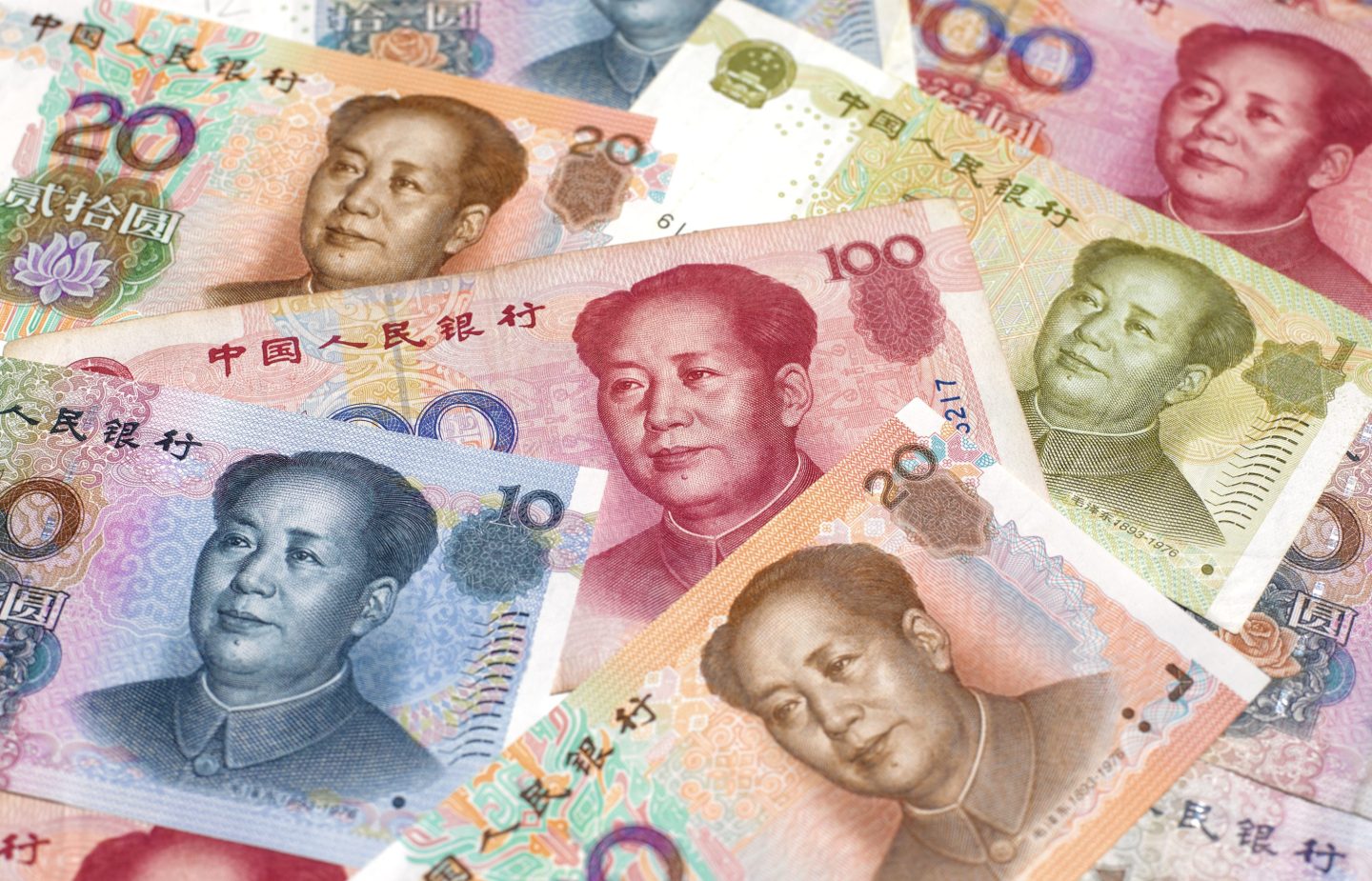
Close up of Chinese Yuan notes, with Mao Tse-tung.
China's currency is not freely convertible in world financial markets. (Peter Dazeley/ Getty Images)

China has been expanding use of digital currencies as it promotes wider use of its yuan, or renminbi, to reflect its status as the world’s second-largest economy and challenge the overwhelming sway of the U.S. dollar in international trade and finance.

Recommended Video

However, restrictions on access to Chinese financial markets and limits on convertibility of the yuan, or “people’s money,” are big obstacles blocking its global use.

Still, Hong Kong already has stablecoin regulations and some Chinese experts are pushing for regulations to prepare for a possible stablecoin pegged to the yuan.

Officials at the People’s Bank of China and State Council Information Office in Beijing did not immediately respond to requests for comment on a Reuters report that the State Council, or Cabinet, is preparing to issue a plan for internationalizing the yuan that might include a yuan stablecoin.

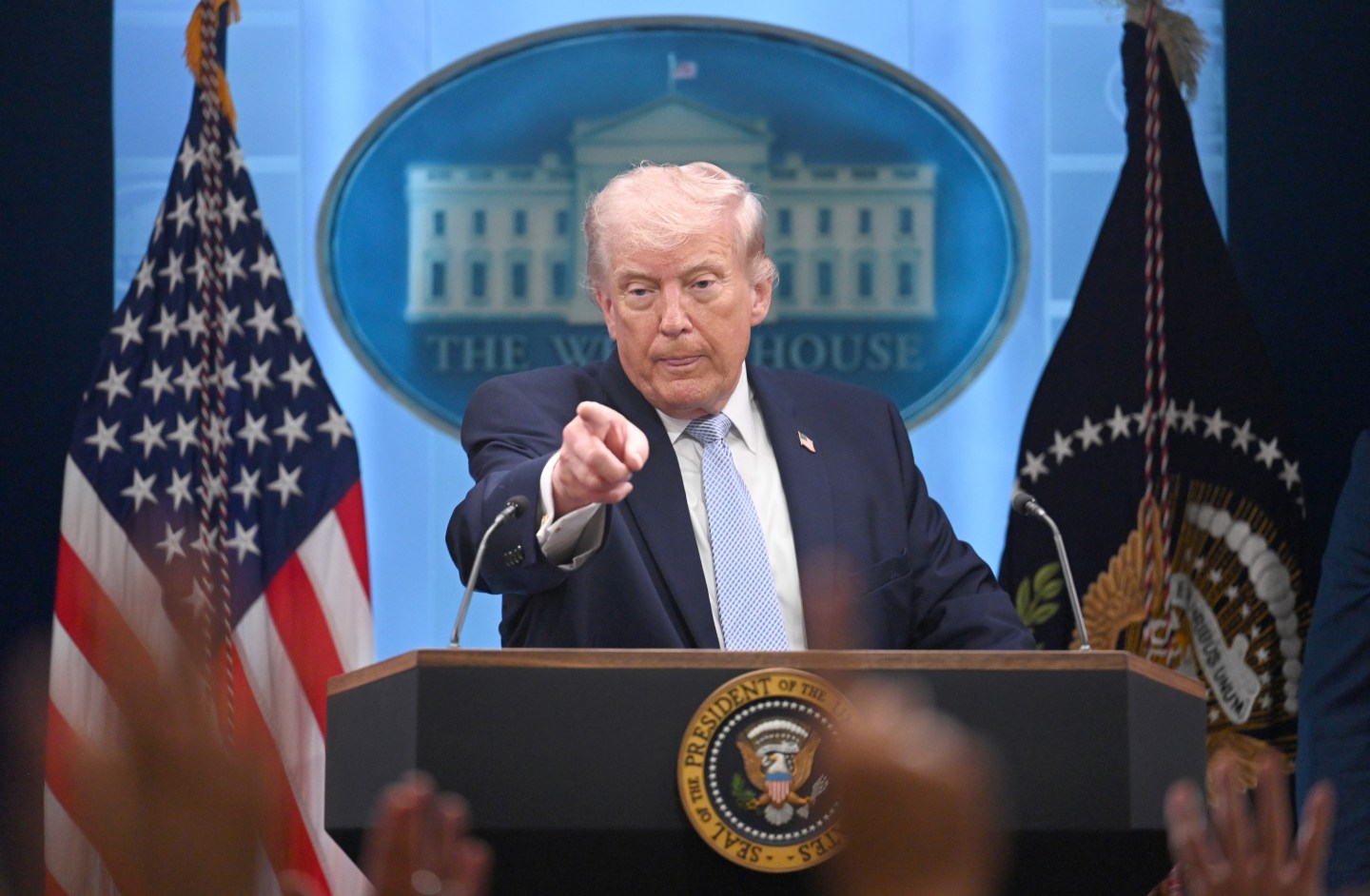
In the U.S., President Donald Trump has made cryptofriendly policies a priority for his administration. He signed a law, the GENIUS Act, last month regulating stablecoins.

How stablecoins work

Stablecoins are digital currencies whose value is linked to a specific currency such as the U.S. dollar. They can be used as a substitute in situations where currency transactions might be difficult or costly. They are different from cryptocurrencies like Bitcoin in that their only purpose is to be a means of payment, not an investment meant to be traded to gain value.

Dollar stablecoins are typically bought and sold for $1 each. They are based on a reserve equal to their value, but are issued by private institutions, not central banks like the U.S. Federal Reserve.

Stablecoins are not Digital Central Bank Currencies, which are digital versions of currencies issued by central banks. They are based on blockchain-based distributed ledgers. They are “stable” in the sense that their value is anchored to the currency they are based on.

Critics of stablecoins say that since they are essentially a proxy for ordinary currencies that can bypass banking systems and safeguards set up to manage traditional financial transactions they may be most useful for illegal purposes.

China inches toward using digital currencies

China launched its own digital yuan, the e-CNY issued by its central bank, on a trial basis in 2019, and McDonalds was an early participant in that project. Chinese regulators have banned mining, trading and other dealings in private, decentralized digital currencies like Bitcoin, while encouraging use of the digital yuan.

The nearly universal use of electronic payments has facilitated use of the e-CNY in the Chinese mainland, with some cities using it to pay wages of civil servants. State media reported that as of July 2024, there were 7.3 trillion yuan worth of transactions using the currency in areas where it is being used on a trial basis.

China has also been promoting use of e-CNY in Africa, as it expands business dealings on the continent.

But e-CNY are not stablecoins. Experts say regulations are needed to safely manage use of stablecoins and to ensure they could be used smoothly with bank accounts and payment systems.

Hong Kong’s role in digital currencies

Hong Kong, a former British colony that has its own financial markets, currency and partly autonomous legal system, enacted a stablecoin law that took effect on Aug. 1.

Aimed at attracting wealthy investors who want to use digital currencies and other financial products, it requires that a stablecoin linked to the Hong Kong dollar must be equal to the Hong Kong dollar reserves for that digital currency.

As a global duty-free port and financial hub, Hong Kong has often served as a base for trying out paths toward liberalizing Chinese financial markets. But new regulations specifically governing yuan stablecoin would be needed if such a digital currency were issued for use in Hong Kong, Liu Xiaochun, deputy director of the Shanghai Institute of New Finance, recently wrote in a report on the Chinese financial website Yicai.com.

China’s limits on cross-border dealings

China’s currency is not freely convertible in world financial markets and its stringent controls on foreign exchange are the biggest hindrance toward making the yuan a global currency, experts say.

According to the Society for Worldwide Interbank Financial Telecommunication, or SWIFT, as of June, the yuan was the sixth most active currency for global payments by value, with a share of 2.88%. Its use peaked in July 2024 at about 4.7%.

It’s used more often in trade financing, where it accounts for nearly 6% of such dealings, according to that report.

The lion’s share of yuan transactions take place in Hong Kong.

The U.S. dollar’s share as a global payment currency was over 47% as of June, followed by the euro, the British pound, the Canadian dollar and the Japanese yen, the report said.

___

AP Researcher Shihuan Chen contributed from Beijing.

Fortune Brainstorm AI returns to San Francisco Dec. 8–9 to convene the smartest people we know—technologists, entrepreneurs, Fortune Global 500 executives, investors, policymakers, and the brilliant minds in between—to explore and interrogate the most pressing questions about AI at another pivotal moment. Register here.
About the Authors
By Elaine Kurtenbach
See full bioRight Arrow Button Icon
By The Associated Press
See full bioRight Arrow Button Icon

Latest in Cybersecurity

LawInternet
A Supreme Court decision could put your internet access at risk. Here’s who could be affected
By Dave Lozo and Morning BrewDecember 2, 2025
14 hours ago
AITikTok
China’s ByteDance could be forced to sell TikTok U.S., but its quiet lead in AI will help it survive—and maybe even thrive
By Nicholas GordonDecember 2, 2025
15 hours ago
United Nations
AIUnited Nations
UN warns about AI becoming another ‘Great Divergence’ between rich and poor countries like the Industrial Revolution
By Elaine Kurtenbach and The Associated PressDecember 2, 2025
17 hours ago
Passengers wait in line at All Nippon Airways' counter at Haneda airport in Tokyo on Saturday. A sign, right, reads "Flight cancellation counter."
AsiaAirline industry
Even the Pope couldn’t avoid the Airbus software fix that disrupted flights across the world
By Audrey McAvoy and The Associated PressNovember 29, 2025
4 days ago
the outside of a mcdonald's restaurant
CryptoBitcoin
Crypto bros trade Lambo dreams for McDonald’s memes in latest bear market sign
By Carlos GarciaNovember 29, 2025
4 days ago
Meredith Whittaker Signal President
AISignal
AI agents are an ‘existential threat’ to secure messaging, Signal’s president Whittaker says
By Beatrice NolanNovember 27, 2025
6 days ago

Most Popular

placeholder alt text
Economy
Ford workers told their CEO 'none of the young people want to work here.' So Jim Farley took a page out of the founder's playbook
By Sasha RogelbergNovember 28, 2025
5 days ago
placeholder alt text
Success
Warren Buffett used to give his family $10,000 each at Christmas—but when he saw how fast they were spending it, he started buying them shares instead
By Eleanor PringleDecember 2, 2025
1 day ago
placeholder alt text
North America
Jeff Bezos and Lauren Sánchez Bezos commit $102.5 million to organizations combating homelessness across the U.S.: ‘This is just the beginning’
By Sydney LakeDecember 2, 2025
21 hours ago
placeholder alt text
Economy
Elon Musk says he warned Trump against tariffs, which U.S. manufacturers blame for a turn to more offshoring and diminishing American factory jobs
By Sasha RogelbergDecember 2, 2025
19 hours ago
placeholder alt text
C-Suite
MacKenzie Scott's $19 billion donations have turned philanthropy on its head—why her style of giving actually works
By Sydney LakeDecember 2, 2025
1 day ago
placeholder alt text
North America
Anonymous $50 million donation helps cover the next 50 years of tuition for medical lab science students at University of Washington
By The Associated PressDecember 2, 2025
23 hours ago
Rankings
  • 100 Best Companies
  • Fortune 500
  • Global 500
  • Fortune 500 Europe
  • Most Powerful Women
  • Future 50
  • World’s Most Admired Companies
  • See All Rankings
Sections
  • Finance
  • Leadership
  • Success
  • Tech
  • Asia
  • Europe
  • Environment
  • Fortune Crypto
  • Health
  • Retail
  • Lifestyle
  • Politics
  • Newsletters
  • Magazine
  • Features
  • Commentary
  • Mpw
  • CEO Initiative
  • Conferences
  • Personal Finance
  • Education
Customer Support
  • Frequently Asked Questions
  • Customer Service Portal
  • Privacy Policy
  • Terms Of Use
  • Single Issues For Purchase
  • International Print
Commercial Services
  • Advertising
  • Fortune Brand Studio
  • Fortune Analytics
  • Fortune Conferences
  • Business Development
About Us
  • About Us
  • Editorial Calendar
  • Press Center
  • Work At Fortune
  • Diversity And Inclusion
  • Terms And Conditions
  • Site Map

© 2025 Fortune Media IP Limited. All Rights Reserved. Use of this site constitutes acceptance of our Terms of Use and Privacy Policy | CA Notice at Collection and Privacy Notice | Do Not Sell/Share My Personal Information
FORTUNE is a trademark of Fortune Media IP Limited, registered in the U.S. and other countries. FORTUNE may receive compensation for some links to products and services on this website. Offers may be subject to change without notice.