
• Home
  • Latest
  • Fortune 500
  • Finance
  • Tech
  • Leadership
  • Lifestyle
  • Rankings
  • Multimedia
SuccessBillionaires

Ray Dalio was so broke early in his career he had to borrow $4,000 from his dad—and learned 2 key lessons that set him on the road to billionaire status

Nick Lichtenberg
By
Nick Lichtenberg
Nick Lichtenberg
Business Editor
Down Arrow Button Icon
Nick Lichtenberg
By
Nick Lichtenberg
Nick Lichtenberg
Business Editor
Down Arrow Button Icon
August 13, 2025, 2:28 PM ET
Ray Dalio
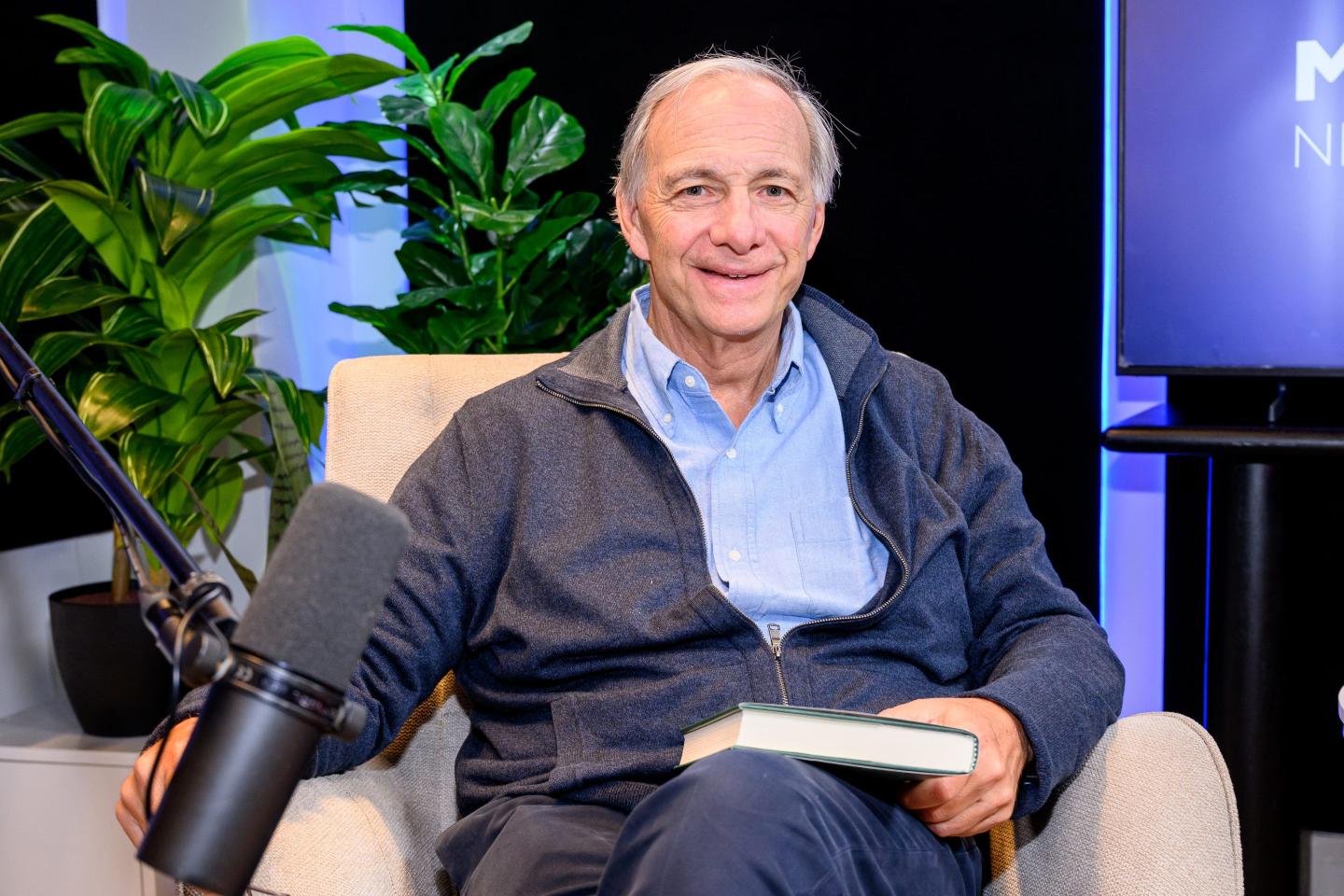
Ray DalioRoy Rochlin—Getty Images for Nicole Lapin

Before becoming the founder of Bridgewater Associates, not to mention a celebrated author, Ray Dalio faced a moment of financial distress that reshaped his entire approach to investing and life. After being fired early in his career, Dalio founded what would become the world’s largest hedge fund as an independent operation, run out of his two-bedroom apartment in New York City. Within a few years, he found himself “so broke” he had to borrow $4,000 from his father just to cover family bills.

Recommended Video

“This was painful,” Dalio told a fellow billionaire, Carlyle Group cofounder David Rubenstein, in a conversation at New York’s 92nd Street Y in July. But it also had a deep impact, he continued.

“That changed my approach to everything,” Dalio said, adding he learned two key lessons from this episode.

After striking out on his own to found Bridgewater in 1975, Dalio said he hit his lowest point around 1980 to ’81, when he calculated the U.S. had lent more money to countries than it could ever repay and predicted a major debt crisis. When Mexico defaulted on its debt in 1982, Dalio believed his position would pay off, even in the face of the severe economic crisis that he anticipated. However, he “couldn’t have been more wrong.” Instead of a downturn, the stock market went up, and monetary policy was eased, costing him dearly. This miscalculation left him financially devastated, forcing him to borrow $4,000 from his father to meet family expenses.

“Nobody does everything perfectly, not even Warren Buffett,” Dalio told Rubenstein, but this episode gave him the “humility” to go along with his “audacity,” he said, along with a very simple lesson in “the power of diversification.”

Dalio’s lessons

This humbling episode fundamentally changed Dalio’s perspective, he said, leading to two transformative insights:

• Lesson 1: Cultivating humility and questioning one’s own certainty. The experience made Dalio reflect deeply on how he could truly know if he was right. This new approach led him to a practice he began roughly 35 to 40 years ago: pausing to reflect and write down the specific criteria he would use to make a decision. This act of documentation forced deeper thought, and he later realized these criteria could be coded and back-tested to evaluate their effectiveness over time. This systematic approach to decision-making, which he calls “principles” (having written down thousands of them), became the bedrock upon which Bridgewater Associates was built. It’s also the title of Dalio’s New York Times bestseller.

• Lesson 2: Embracing the power of diversification. The crisis also led Dalio to appreciate diversification could reduce risk by up to 80% without diminishing returns. This revelation became the “bottom of Bridgewater,” he said, from which point the firm saw consistent positive returns, averaging roughly 11.8% over the subsequent 30-plus years, with only minimal annual declines. His investment mantra became “15 good uncorrelated return streams,” engineered to have similar expected returns, which he found dramatically lowers risk and boosts the return-to-risk ratio by a factor of five.

For Dalio, this near-ruinous period was not merely a setback but a profound educational experience that redefined his investment strategy and personal philosophy. Now that he’s at a “stage in life where you’re passing things along,” Dalio said he finds “great joy” in sharing these learned mechanics and cause-effect relationships with others. His goal isn’t to scare people but to provide understanding, operating on the principle that “if you worry you don’t have to worry, and if you don’t worry you need to worry,” as worry can prevent what one fears. His personal financial rock bottom ultimately became the foundation for his enduring success and his commitment to teaching others how to navigate complex financial landscapes.

Dalio’s new book on how countries go broke

Going broke was on Dalio’s mind because of the subject of his new book: How Countries Go Broke: The Big Cycle. Dalio, who often issues warnings on social media about America’s record $37 trillion national debt, wrote on LinkedIn he wanted to write this book because he sees the U.S. and other countries “headed toward having the equivalent of economic heart attacks.” He said he wanted to explain the mechanics and principles he uses, ever since he learned those key lessons in the early 1980s.

He likens the credit/market system to the human circulatory system, “bringing nutrients to all parts of the body that make up the markets and economy.” If this doesn’t produce enough income to service debt and interest, then “debt service will build up like plaque that squeezes out other spending.”

In a statement, Dalio said one of his principles relates to recognition of big cycles and patterns.

“The same basic big cycles that drive these systems to change have happened thousands of times before for the same reasons,” he said, noting that he described the “Overall Big Debt Cycle” in this book because he believes the world is “on the brink of very big changes.”

It‘s the product of years of audacity, sprinkled with a dose of humility and constant diversification.

At the Fortune Workplace Innovation Summit, Fortune 500 leaders will convene to explore the defining questions shaping the workforce of the future—delivering bold ideas, powerful connections, and actionable insights for building resilient organizations for the decade ahead. Join Fortune May 19–20 in Atlanta. Register now.
About the Author
Nick Lichtenberg
By Nick LichtenbergBusiness Editor
LinkedIn icon

Nick Lichtenberg is business editor and was formerly Fortune's executive editor of global news.

See full bioRight Arrow Button Icon

Latest in Success

Finance
Lorem ipsum dolor sit amet, consectetur adipiscing elit, sed do eiusmod tempor incididunt ut labore et dolore magna aliqua. Ut enim ad minim veniam
By Fortune Editors
October 20, 2025
Finance
Lorem ipsum dolor sit amet, consectetur adipiscing elit, sed do eiusmod tempor incididunt ut labore et dolore magna aliqua. Ut enim ad minim veniam
By Fortune Editors
October 20, 2025
Finance
Lorem ipsum dolor sit amet, consectetur adipiscing elit, sed do eiusmod tempor incididunt ut labore et dolore magna aliqua. Ut enim ad minim veniam
By Fortune Editors
October 20, 2025
Finance
Lorem ipsum dolor sit amet, consectetur adipiscing elit, sed do eiusmod tempor incididunt ut labore et dolore magna aliqua. Ut enim ad minim veniam
By Fortune Editors
October 20, 2025
Finance
Lorem ipsum dolor sit amet, consectetur adipiscing elit, sed do eiusmod tempor incididunt ut labore et dolore magna aliqua. Ut enim ad minim veniam
By Fortune Editors
October 20, 2025
Finance
Lorem ipsum dolor sit amet, consectetur adipiscing elit, sed do eiusmod tempor incididunt ut labore et dolore magna aliqua. Ut enim ad minim veniam
By Fortune Editors
October 20, 2025

Most Popular

Finance
Lorem ipsum dolor sit amet, consectetur adipiscing elit, sed do eiusmod tempor incididunt ut labore et dolore magna aliqua. Ut enim ad minim veniam
By Fortune Editors
October 20, 2025
Finance
Lorem ipsum dolor sit amet, consectetur adipiscing elit, sed do eiusmod tempor incididunt ut labore et dolore magna aliqua. Ut enim ad minim veniam
By Fortune Editors
October 20, 2025
Finance
Lorem ipsum dolor sit amet, consectetur adipiscing elit, sed do eiusmod tempor incididunt ut labore et dolore magna aliqua. Ut enim ad minim veniam
By Fortune Editors
October 20, 2025
Finance
Lorem ipsum dolor sit amet, consectetur adipiscing elit, sed do eiusmod tempor incididunt ut labore et dolore magna aliqua. Ut enim ad minim veniam
By Fortune Editors
October 20, 2025
Finance
Lorem ipsum dolor sit amet, consectetur adipiscing elit, sed do eiusmod tempor incididunt ut labore et dolore magna aliqua. Ut enim ad minim veniam
By Fortune Editors
October 20, 2025
Finance
Lorem ipsum dolor sit amet, consectetur adipiscing elit, sed do eiusmod tempor incididunt ut labore et dolore magna aliqua. Ut enim ad minim veniam
By Fortune Editors
October 20, 2025
Fortune Secondary Logo
Rankings
  • 100 Best Companies
  • Fortune 500
  • Global 500
  • Fortune 500 Europe
  • Most Powerful Women
  • World's Most Admired Companies
  • See All Rankings
  • Lists Calendar
Sections
  • Finance
  • Fortune Crypto
  • Features
  • Leadership
  • Health
  • Commentary
  • Success
  • Retail
  • Mpw
  • Tech
  • Lifestyle
  • CEO Initiative
  • Asia
  • Politics
  • Conferences
  • Europe
  • Newsletters
  • Personal Finance
  • Environment
  • Magazine
  • Education
Customer Support
  • Frequently Asked Questions
  • Customer Service Portal
  • Privacy Policy
  • Terms Of Use
  • Single Issues For Purchase
  • International Print
Commercial Services
  • Advertising
  • Fortune Brand Studio
  • Fortune Analytics
  • Fortune Conferences
  • Business Development
  • Group Subscriptions
About Us
  • About Us
  • Press Center
  • Work At Fortune
  • Terms And Conditions
  • Site Map
  • About Us
  • Press Center
  • Work At Fortune
  • Terms And Conditions
  • Site Map
  • Facebook icon
  • Twitter icon
  • LinkedIn icon
  • Instagram icon
  • Pinterest icon

Latest in Success

How the next CDC director could reshape America’s $5.3 trillion health care industry
HealthCDC
How the next CDC director could reshape America’s $5.3 trillion health care industry
By Cassie McGrath and Healthcare BrewMay 5, 2026
5 hours ago
rios
Success250 Years of Innovation
America 250 Chair: Americans are giving less. July 4th can be a day to change that
By Rosie RiosMay 5, 2026
6 hours ago
Dating has gotten so expensive that nearly half of U.S. singles say it’s no longer worth it, as the average night out approaches $200
Personal Financedating
Dating has gotten so expensive that nearly half of U.S. singles say it’s no longer worth it, as the average night out approaches $200
By Sydney LakeMay 5, 2026
8 hours ago
Japanese workers commuting to the office
Successcorporate culture
Tokyo is throwing out its strict office dress code and asking workers to wear shorts amid the war in Iran energy crisis
By Emma BurleighMay 5, 2026
8 hours ago
Young woman talking on her phone while walking
SuccessGen Z
Gen Z workers say showing up 10 minutes late to work is as good as on time—but baby boomer bosses have zero tolerance for tardiness, research reveals
By Orianna Rosa RoyleMay 5, 2026
11 hours ago
Actor Hugh Jackman
SuccessCareers
Hugh Jackman advises new grads that the most powerful career cues are ‘often disguised as failure’
By Emma BurleighMay 4, 2026
1 day ago

Most Popular

Diary of a CEO founder says he hired someone with 'zero' work experience because she 'thanked the security guard by name' before the interview
Success
Diary of a CEO founder says he hired someone with 'zero' work experience because she 'thanked the security guard by name' before the interview
By Emma BurleighMay 3, 2026
2 days ago
Clean energy's winning argument is the one it refuses to make
Commentary
Clean energy's winning argument is the one it refuses to make
By David CraneMay 5, 2026
13 hours ago
Current price of silver as of Monday, May 4, 2026
Personal Finance
Current price of silver as of Monday, May 4, 2026
By Joseph HostetlerMay 4, 2026
1 day ago
Current price of oil as of May 5, 2026
Personal Finance
Current price of oil as of May 5, 2026
By Joseph HostetlerMay 5, 2026
11 hours ago
China stopped issuing new robotaxi licenses over a glitch. America can't stop them from rolling into active shooter situations
Law
China stopped issuing new robotaxi licenses over a glitch. America can't stop them from rolling into active shooter situations
By Catherina GioinoMay 4, 2026
1 day ago
America got rich and got sad. A top economist says 2020 broke something that hasn't healed
Economy
America got rich and got sad. A top economist says 2020 broke something that hasn't healed
By Nick LichtenbergMay 3, 2026
3 days ago

© 2026 Fortune Media IP Limited. All Rights Reserved. Use of this site constitutes acceptance of our Terms of Use and Privacy Policy | CA Notice at Collection and Privacy Notice | Do Not Sell/Share My Personal Information
FORTUNE is a trademark of Fortune Media IP Limited, registered in the U.S. and other countries. FORTUNE may receive compensation for some links to products and services on this website. Offers may be subject to change without notice.