• Home
  • Latest
  • Fortune 500
  • Finance
  • Tech
  • Leadership
  • Lifestyle
  • Rankings
  • Multimedia
AIOpenAI

GPT-5’s model router ignited a user backlash against OpenAI—but it might be the future of AI

Sharon Goldman
By
Sharon Goldman
Sharon Goldman
AI Reporter
Down Arrow Button Icon
Sharon Goldman
By
Sharon Goldman
Sharon Goldman
AI Reporter
Down Arrow Button Icon
August 12, 2025, 3:30 PM ET
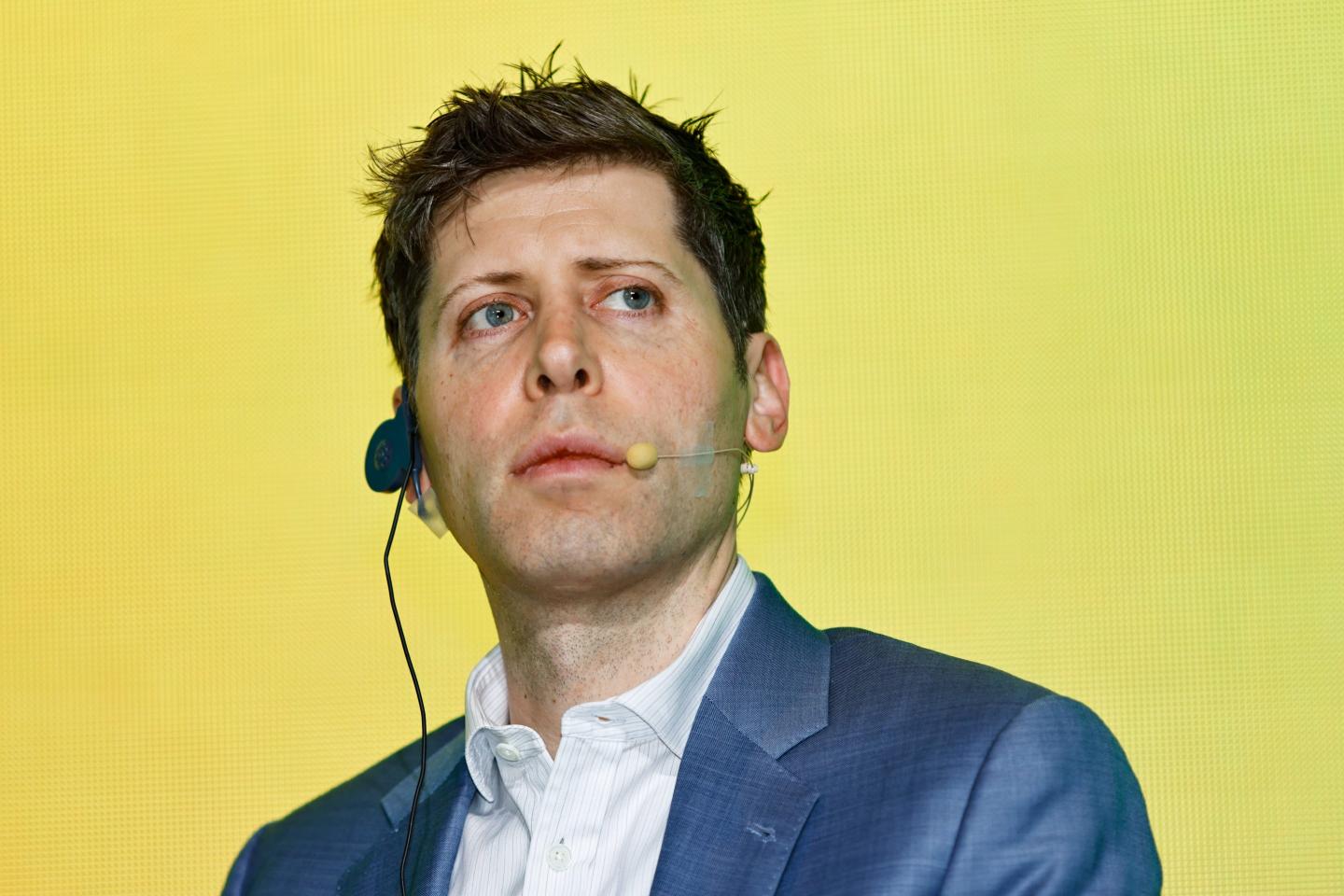
Photo of Sam Altman
OpenAI CEO Sam Altman.Chris Jung/NurPhoto via Getty Images

OpenAI’s GPT-5 announcement last week was meant to be a triumph—proof that the company was still the undisputed leader in AI—until it wasn’t. Over the weekend, a groundswell of pushback from customers turned the rollout into more than a PR firestorm: It became a product and trust crisis. Users lamented the loss of their favorite models, which had doubled as therapists, friends, and romantic partners. Developers complained of degraded performance. Industry critic Gary Marcus predictably called GPT-5 “overdue, overhyped, and underwhelming.”

Recommended Video

The culprit, many argued, was hiding in plain sight: a new real-time model “router” that automatically decides which one of GPT-5’s several variants to spin up for every job. Many users assumed GPT-5 was a single model trained from scratch; in reality, it’s a network of models—some weaker and cheaper, others stronger and more expensive—stitched together. Experts say that approach could be the future of AI as large language models advance and become more resource-intensive. But in GPT-5’s debut, OpenAI demonstrated some of the inherent challenges in the approach and learned some important lessons about how user expectations are evolving in the AI era.

For all the benefits promised by model routing, many users of GPT-5 bristled at what they perceived as a lack of control. Some even suggested OpenAI might purposefully be trying to pull the wool over their eyes.  

In response to the GPT-5 uproar, OpenAI moved quickly to bring back the main earlier model, GPT-4o, for pro users. It also said it fixed buggy routing, increased usage limits, and promised continual updates to regain user trust and stability.

Anand Chowdhary, cofounder of AI sales platform FirstQuadrant, summed the situation up bluntly: “When routing hits, it feels like magic. When it whiffs, it feels broken.”

The promise and inconsistency of model routing

Jiaxuan You, an assistant professor of computer science at the University of Illinois Urbana-Champaign, told Fortune his lab has studied both the promise—and the inconsistency—of model routing. In GPT-5’s case, he said, he believes (though he can’t confirm) that the model router sometimes sends parts of the same query to different models. A cheaper, faster model might give one answer while a slower, reasoning-focused model gives another, and when the system stitches those responses together, subtle contradictions slip through. 

The model routing idea is intuitive, he explained, but “making it really work is very nontrivial.” Perfecting a router, he added, can be as challenging as building Amazon-grade recommendation systems, which take years and many domain experts to refine. “GPT-5 is supposed to be built with maybe orders of magnitude more resources,” he explained, pointing out that even if the router picks a smaller model, it shouldn’t produce inconsistent answers.

Still, You believes routing is here to stay. “The community also believes model routing is promising,” he said, pointing to both technical and economic reasons. Technically, single-model performance appears to be hitting a plateau: You pointed to the commonly cited scaling laws, which says when we have more data and compute, the model gets better. “But we all know that the model wouldn’t get infinitely better,” he said. “Over the past year, we have all witnessed that the capacity of a single model is actually saturating.” 

Economically, routing lets AI providers keep using older models rather than discarding them when a new one launches. Current events require frequent updates, but static facts remain accurate for years. Directing certain queries to older models avoids wasting the enormous time, compute, and money already spent on training them.

There are hard physical limits, too. GPU memory has become a bottleneck for training ever-larger models, and chip technology is approaching the maximum memory that can be packed onto a single die. In practice, You explained, physical limits mean the next model can’t be 10 times bigger. 

An older idea that is now being hyped

William Falcon, founder and CEO of AI platform Lightning AI, points out that the idea of using an ensemble of models is not new—it has been around since around 2018—and since OpenAI’s models are a black box, we don’t know that GPT-4 did not also use a model routing system. 

“I think maybe they’re being more explicit about it now, potentially,” he said. Either way, the GPT-5 launch was heavily hyped up—including the model routing system. The blog post introducing the model called it the “smartest, fastest, and most useful model yet, with thinking built in.” In the official ChatGPT blog post, OpenAI confirmed that GPT‑5 within ChatGPT runs on a system of models coordinated by a behind-the-scenes router that switches to deeper reasoning when needed. The GPT‑5 System Card went further, clearly outlining multiple model variants—gpt‑5‑main, gpt‑5‑main‑mini for speed, and gpt‑5‑thinking, gpt‑5‑thinking‑mini, plus a thinking‑pro version—and explains how the unified system automatically routes between them.

In a press pre-briefing, OpenAI CEO Sam Altman touted the model router as a way to tackle what had been a hard-to-decipher list of models to choose from. Altman called the previous model picker interface a “very confusing mess.”

But Falcon said the core problem was that GPT-5 simply didn’t feel like a leap. “GPT-1 to 2 to 3 to 4—each time was a massive jump. Four to five was not noticeably better. That’s what people are upset about.”

Will multiple models add up to AGI? 

The debate over model routing led some to call out the ongoing hype over the possibility of artificial general intelligence, or AGI, being developed soon. OpenAI officially defines AGI as “highly autonomous systems that outperform humans at most economically valuable work,” but Altman notably said last week that it is “not a super useful term.”

“What about the promised AGI?” wrote Aiden Chaoyang He, an AI researcher and cofounder of TensorOpera, on X, criticizing the GPT-5 rollout. “Even a powerful company like OpenAI lacks the ability to train a super-large model, forcing them to resort to the Real-time Model Router.” 

Robert Nishihara, co-founder of AI production platform Anyscale, says scaling is still progressing in AI, but the idea of one all-powerful AI model remains elusive. “It’s hard to build one model that is the best at everything,” he said. That’s why GPT-5 currently runs on a network of models linked by a router, not a single monolith.

OpenAI has said it hopes to unify these into one model in the future, but Nishihara points out that hybrid systems have real advantages: You can upgrade one piece at a time without disrupting the rest, and you get most of the benefits without the cost and complexity of retraining an entire giant model. As a result, Nishihara thinks routing will stick around. 

Aiden Chaoyang He agrees. In theory, scaling laws still hold—more data and compute make models better—but in practice, he believes development will “spiral” between two approaches: routing specialized models together, then trying to consolidate them into one. The deciding factors will be engineering costs, compute and energy limits, and business pressures.

The hyped-up AGI narrative may need to adjust, too. “If anyone does anything that’s close to AGI, I don’t know if it’ll literally be one set of weights doing it,” Falcon said, referring to the “brains” behind LLMs. “If it’s a collection of models that feels like AGI, that’s fine. No one’s a purist here.”

In 2001, Fortune first convened “The Smartest People We Know,” bringing together CEOs and founders, builders and investors, thinkers and doers. Since then, Fortune Brainstorm Tech has been the place where bold ideas collide. From June 8–10, we will return to Aspen—where it all began—to mark 25 years of Brainstorm. Register now.
About the Author
Sharon Goldman
By Sharon GoldmanAI Reporter
LinkedIn icon

Sharon Goldman is an AI reporter at Fortune and co-authors Eye on AI, Fortune’s flagship AI newsletter. She has written about digital and enterprise tech for over a decade.

See full bioRight Arrow Button Icon

Latest in AI

Finance
Lorem ipsum dolor sit amet, consectetur adipiscing elit, sed do eiusmod tempor incididunt ut labore et dolore magna aliqua. Ut enim ad minim veniam
By Fortune Editors
October 20, 2025
Finance
Lorem ipsum dolor sit amet, consectetur adipiscing elit, sed do eiusmod tempor incididunt ut labore et dolore magna aliqua. Ut enim ad minim veniam
By Fortune Editors
October 20, 2025
Finance
Lorem ipsum dolor sit amet, consectetur adipiscing elit, sed do eiusmod tempor incididunt ut labore et dolore magna aliqua. Ut enim ad minim veniam
By Fortune Editors
October 20, 2025
Finance
Lorem ipsum dolor sit amet, consectetur adipiscing elit, sed do eiusmod tempor incididunt ut labore et dolore magna aliqua. Ut enim ad minim veniam
By Fortune Editors
October 20, 2025
Finance
Lorem ipsum dolor sit amet, consectetur adipiscing elit, sed do eiusmod tempor incididunt ut labore et dolore magna aliqua. Ut enim ad minim veniam
By Fortune Editors
October 20, 2025
Finance
Lorem ipsum dolor sit amet, consectetur adipiscing elit, sed do eiusmod tempor incididunt ut labore et dolore magna aliqua. Ut enim ad minim veniam
By Fortune Editors
October 20, 2025

Most Popular

Finance
Lorem ipsum dolor sit amet, consectetur adipiscing elit, sed do eiusmod tempor incididunt ut labore et dolore magna aliqua. Ut enim ad minim veniam
By Fortune Editors
October 20, 2025
Finance
Lorem ipsum dolor sit amet, consectetur adipiscing elit, sed do eiusmod tempor incididunt ut labore et dolore magna aliqua. Ut enim ad minim veniam
By Fortune Editors
October 20, 2025
Finance
Lorem ipsum dolor sit amet, consectetur adipiscing elit, sed do eiusmod tempor incididunt ut labore et dolore magna aliqua. Ut enim ad minim veniam
By Fortune Editors
October 20, 2025
Finance
Lorem ipsum dolor sit amet, consectetur adipiscing elit, sed do eiusmod tempor incididunt ut labore et dolore magna aliqua. Ut enim ad minim veniam
By Fortune Editors
October 20, 2025
Finance
Lorem ipsum dolor sit amet, consectetur adipiscing elit, sed do eiusmod tempor incididunt ut labore et dolore magna aliqua. Ut enim ad minim veniam
By Fortune Editors
October 20, 2025
Finance
Lorem ipsum dolor sit amet, consectetur adipiscing elit, sed do eiusmod tempor incididunt ut labore et dolore magna aliqua. Ut enim ad minim veniam
By Fortune Editors
October 20, 2025
Fortune Secondary Logo
Rankings
  • 100 Best Companies
  • Fortune 500
  • Global 500
  • Fortune 500 Europe
  • Most Powerful Women
  • Future 50
  • World’s Most Admired Companies
  • See All Rankings
Sections
  • Finance
  • Fortune Crypto
  • Features
  • Leadership
  • Health
  • Commentary
  • Success
  • Retail
  • Mpw
  • Tech
  • Lifestyle
  • CEO Initiative
  • Asia
  • Politics
  • Conferences
  • Europe
  • Newsletters
  • Personal Finance
  • Environment
  • Magazine
  • Education
Customer Support
  • Frequently Asked Questions
  • Customer Service Portal
  • Privacy Policy
  • Terms Of Use
  • Single Issues For Purchase
  • International Print
Commercial Services
  • Advertising
  • Fortune Brand Studio
  • Fortune Analytics
  • Fortune Conferences
  • Business Development
  • Group Subscriptions
About Us
  • About Us
  • Editorial Calendar
  • Press Center
  • Work At Fortune
  • Diversity And Inclusion
  • Terms And Conditions
  • Site Map
  • About Us
  • Editorial Calendar
  • Press Center
  • Work At Fortune
  • Diversity And Inclusion
  • Terms And Conditions
  • Site Map
  • Facebook icon
  • Twitter icon
  • LinkedIn icon
  • Instagram icon
  • Pinterest icon

Latest in AI

broker
CommentarySoftware
The 3 forces quietly dismantling the business model that made enterprise software fabulously profitable
By Michael Jacobides and Stefano PuntoniApril 17, 2026
2 hours ago
The world holds its breath: Trump says Iran war will end ‘pretty soon’ as uranium deal is in sight
EconomyMarkets
The world holds its breath: Trump says Iran war will end ‘pretty soon’ as uranium deal is in sight
By Jim EdwardsApril 17, 2026
4 hours ago
The startup Blackstone just backed to turn any exec’s data question into instant answers
NewslettersTerm Sheet
The startup Blackstone just backed to turn any exec’s data question into instant answers
By Allie GarfinkleApril 17, 2026
5 hours ago
Teen boys are dating their AI chatbot—and experts warn their future bosses they won’t be able to read a room or have coffee with clients
SuccessThe Promotion Playbook
Teen boys are dating their AI chatbot—and experts warn their future bosses they won’t be able to read a room or have coffee with clients
By Orianna Rosa RoyleApril 17, 2026
8 hours ago
Manycore, the first of the Hangzhou ‘Little Dragons’ to go public, pushes ‘spatial intelligence’ as the next wave of AI development
AsiaHong Kong
Manycore, the first of the Hangzhou ‘Little Dragons’ to go public, pushes ‘spatial intelligence’ as the next wave of AI development
By Nicholas GordonApril 16, 2026
18 hours ago
A group of young girls look at a robot.
AIChina
China has ‘nearly erased’ America’s lead in AI—and the flow of tech experts moving to the U.S. is slowing to a trickle, Stanford report says
By Sasha RogelbergApril 16, 2026
20 hours ago

Most Popular

Jeff Bezos pledged $10 billion for climate change. With the 2030 clock ticking, his wife, Lauren Sánchez Bezos, is leading the charge to spend it
Environment
Jeff Bezos pledged $10 billion for climate change. With the 2030 clock ticking, his wife, Lauren Sánchez Bezos, is leading the charge to spend it
By Sydney LakeApril 15, 2026
2 days ago
A world going broke: IMF says America's $39 trillion national debt is actually a global problem—and AI may be the only rescue
Economy
A world going broke: IMF says America's $39 trillion national debt is actually a global problem—and AI may be the only rescue
By Nick LichtenbergApril 16, 2026
19 hours ago
Germany already told its workers to ditch four-day weeks and work-life balance. Now the government wants to cut their pay for calling in sick, too
Success
Germany already told its workers to ditch four-day weeks and work-life balance. Now the government wants to cut their pay for calling in sick, too
By Orianna Rosa RoyleApril 16, 2026
1 day ago
MacKenzie Scott is bypassing the Ivy League and rewriting the $79 billion higher ed playbook by giving to HBCUs and community colleges
Politics
MacKenzie Scott is bypassing the Ivy League and rewriting the $79 billion higher ed playbook by giving to HBCUs and community colleges
By Sydney LakeApril 16, 2026
23 hours ago
Current price of oil as of April 16, 2026
Personal Finance
Current price of oil as of April 16, 2026
By Joseph HostetlerApril 16, 2026
1 day ago
Pope Leo warned the world is in ‘big trouble’ if Elon Musk becomes the first trillionaire
Success
Pope Leo warned the world is in ‘big trouble’ if Elon Musk becomes the first trillionaire
By Preston ForeApril 17, 2026
5 hours ago

© 2026 Fortune Media IP Limited. All Rights Reserved. Use of this site constitutes acceptance of our Terms of Use and Privacy Policy | CA Notice at Collection and Privacy Notice | Do Not Sell/Share My Personal Information
FORTUNE is a trademark of Fortune Media IP Limited, registered in the U.S. and other countries. FORTUNE may receive compensation for some links to products and services on this website. Offers may be subject to change without notice.