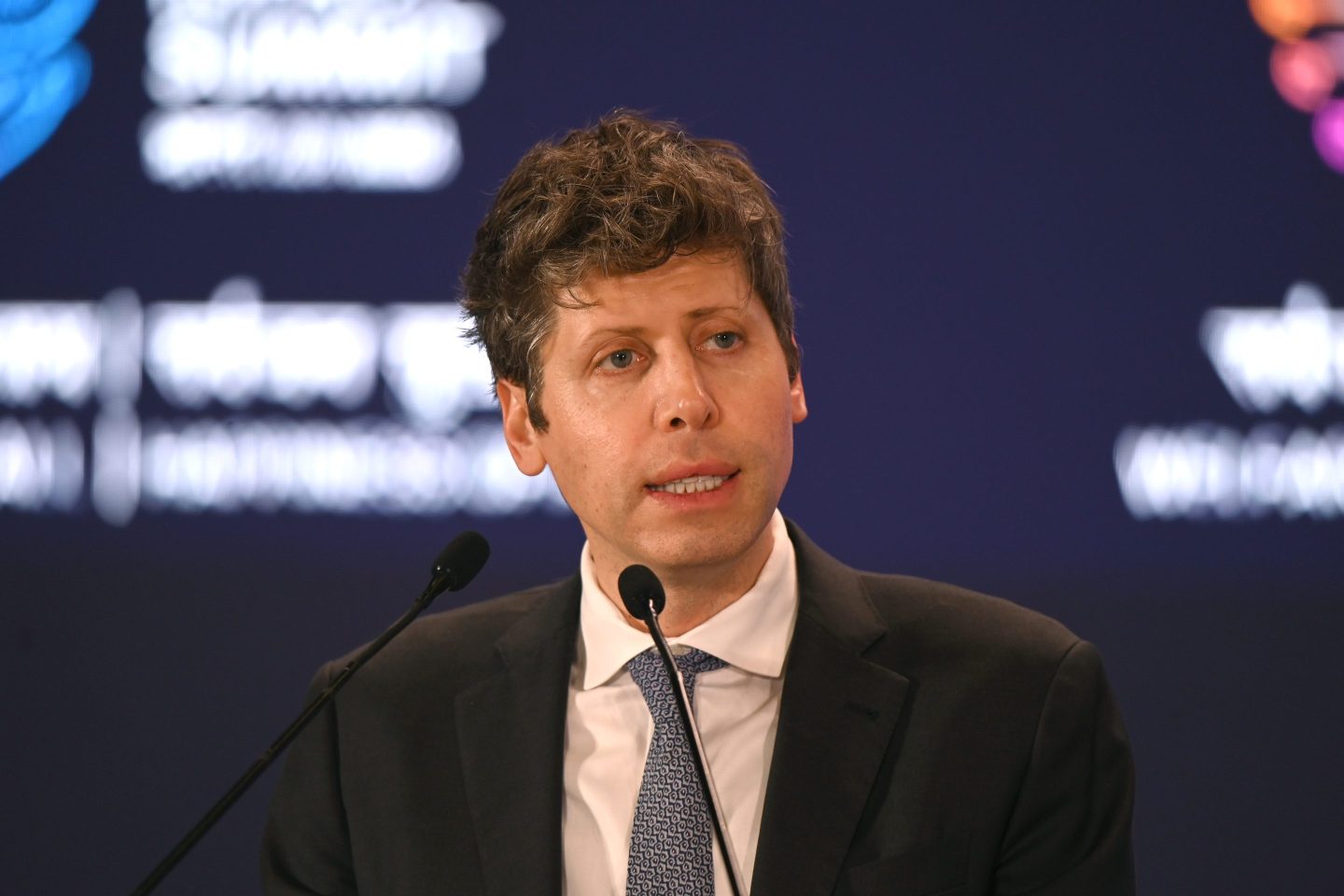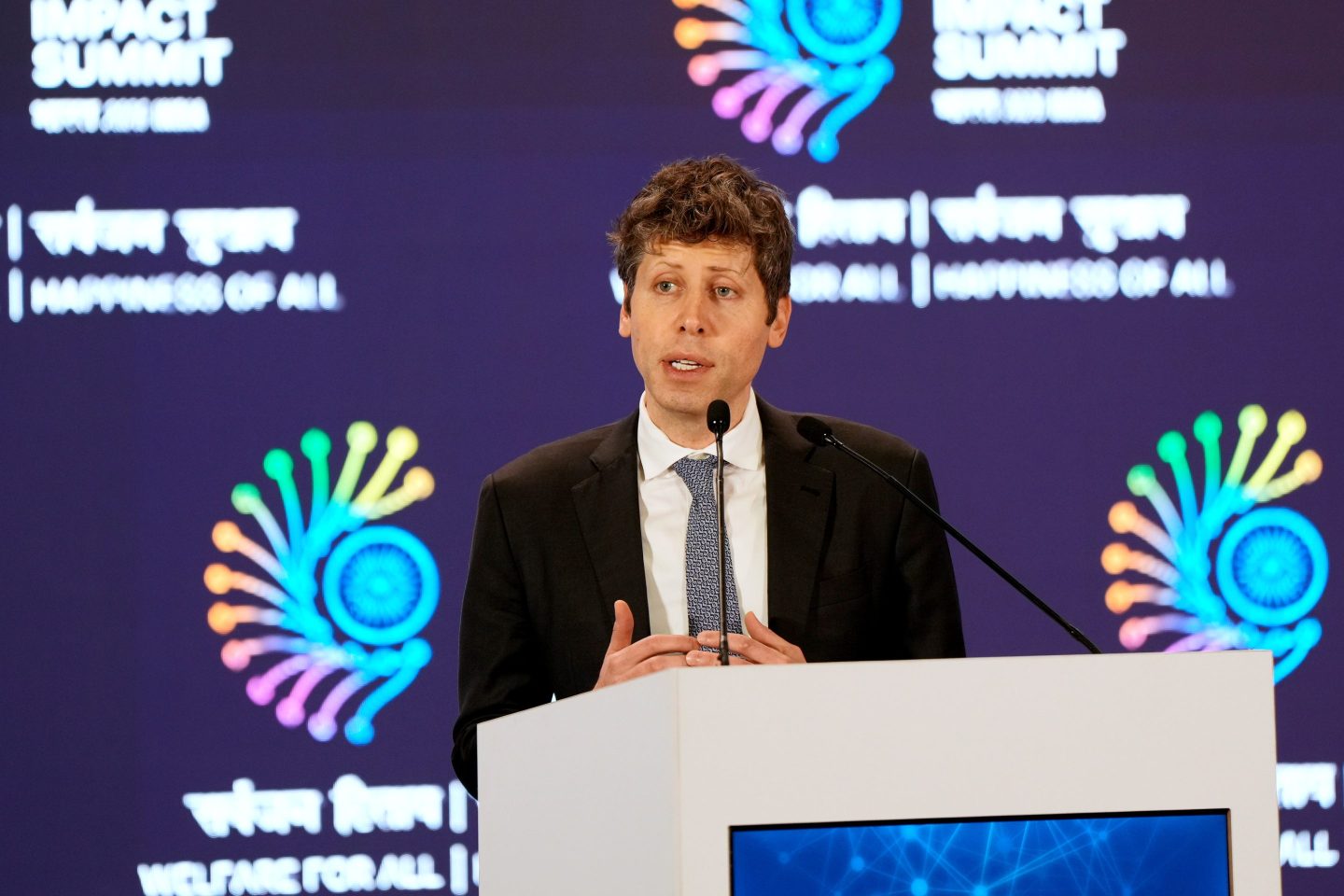
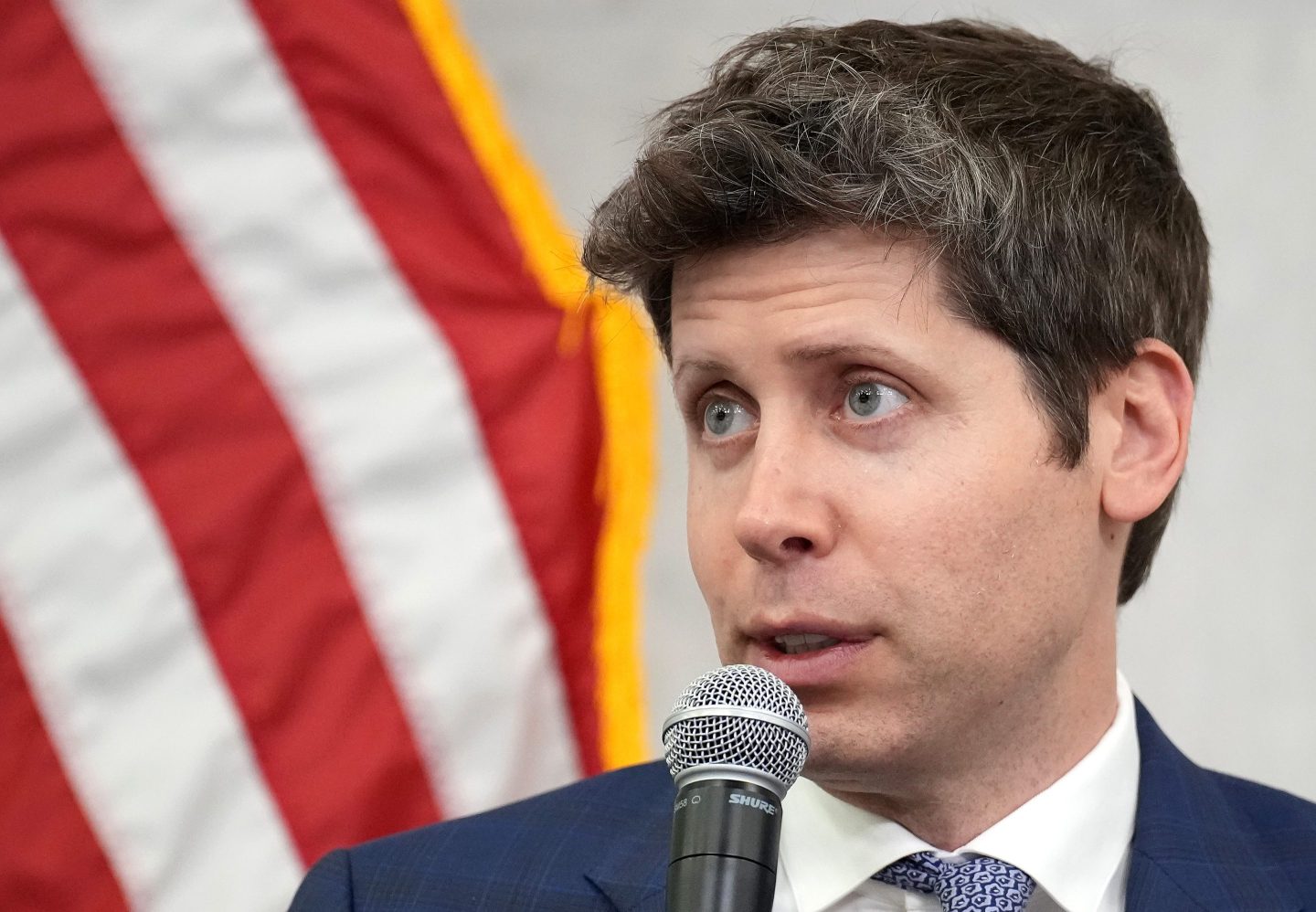
In a recent podcast appearance, OpenAI CEO Sam Altman presented a strikingly optimistic vision for Generation Z, asserting that if he was graduating college at this exact moment, “I would feel like the luckiest kid in all of history.” He made this bold claim even as he acknowledged the potential for significant job displacement due to artificial intelligence, hinting at a future where “some classes of jobs will totally go away.”
Altman, whose company is at the forefront of building superintelligence that could “far exceed humans in almost every field,” told host Cleo Abram of the “Huge If True” podcast that he believes the transformative power of AI offers unprecedented opportunities for young people. Regarding the mounting dread over potential job displacement, Altman said “this always happens, and young people are the best at adapting to this. I’m more worried about what it means, not for the 22-year-old, but for the 62-year-old that doesn’t want to go retrain or reskill or whatever the politicians call it.”
A canvas for creation and entrepreneurship
Altman’s optimism stems from the unparalleled access to powerful tools that AI, particularly models like the newly launched GPT-5, provides. He envisions a world where an individual can launch a company that achieves billion-dollar valuations and delivers amazing products, a feat that once required “teams of hundreds.” He said this capability is underpinned by the remarkable advancements in the recently released GPT-5.
Altman suggested this new era will empower young creators immensely, allowing them to bring ideas to life with unprecedented speed. Still, he didn’t shy away from the disruptive potential of AI on the job market. He acknowledged predictions that “half of the entry-level white-collar workforce will be replaced by AI” in as little as five years. However, beyond his belief that young people will adapt better to this, he said he anticipates the emergence of “completely new, exciting, super well-paid, super interesting job[s].” A college student 10 years from now could be leaving on some kind of mission to explore the solar system on a spaceship, he said.
He said he believes society has proven “quite resilient” to such shifts throughout history. The rapid evolution of technology, however, means predicting the future even 10 years out is “very hard to imagine at this point” and even AI leaders like himself have no idea where the technology could go from here.
As previously reported by Fortune Intelligence, Goldman Sachs chief economist Jan Hatzius has crunched data on the labor market and found that the college degree “safety premium” is mostly gone. “Recent data suggests that the labor market for recent college graduates has weakened at a time when the broader labor market has appeared healthy.” Academics Brad Delong and Peter Turchin have separately criticized the disappearing value of the college degree in their own writings and interviews with Fortune. Goldman Sachs also found that since 1997, young workers without a college degree have become much less likely to even look for work, with their participation rate dropping by seven percentage points. Data from employment consulting firm Challenger, Gray and Christmas shows a surge in layoffs in July 2025, shortly before Altman’s remarks, with nearly half of them related to AI and “technological updates.”
Altman has been brutally critical of AI in recent weeks on matters totally separate from higher education. In his interview with the Federal Reserve in Washington DC, he warned of a “fraud crisis” around the corner from voice-mimicking software. He also talked about his fears for humanity and the next frontier of AI: “intelligence too cheap to meter.” Some cybersecurity experts have said Altman was actually underselling the matter, and the fraud crisis has already arrived.
Adaptation, humility, and the future of truth
Altman and Abram’s conversation also touched on how society will adapt to a world saturated with AI-generated content. When asked how people in 2030 will discern “what’s real and what’s not real” in a media landscape filled with viral, AI-generated videos—like how bunnies jumping on a trampoline captivated the internet this summer, for example—Altman suggested a gradual convergence in the sense that even iPhone photos now involve AI processing. Society has historically “accepted some gradual move” away from purely unaltered media. He believes the “threshold for how real does it have to be to consider to be real will just keep moving … media is always a little bit real and a little bit not real.”
Altman stressed that navigating this future will require a great degree of humility and openness to new solutions. He speculated that fundamental changes to the social contract may be necessary. His primary tactical advice for anyone preparing for this future is simple: “Just using the tools really helps.” He urged people to integrate AI tools into their lives, moving beyond basic searches.
OpenAI declined to comment.
For this story, Fortune used generative AI to help with an initial draft. An editor verified the accuracy of the information before publishing.