
• Home
  • Latest
  • Fortune 500
  • Finance
  • Tech
  • Leadership
  • Lifestyle
  • Rankings
  • Multimedia
FinanceWall Street

Private credit has Jamie Dimon worried about the next financial crisis. But the biggest swath of this hot market is less risky than some believe

Shawn Tully
By
Shawn Tully
Shawn Tully
Senior Editor-at-Large
Down Arrow Button Icon
Shawn Tully
By
Shawn Tully
Shawn Tully
Senior Editor-at-Large
Down Arrow Button Icon
July 17, 2025, 5:00 AM ET
Jamie Dimon is worried about risky lenders—but also wants in on this lucrative sector.
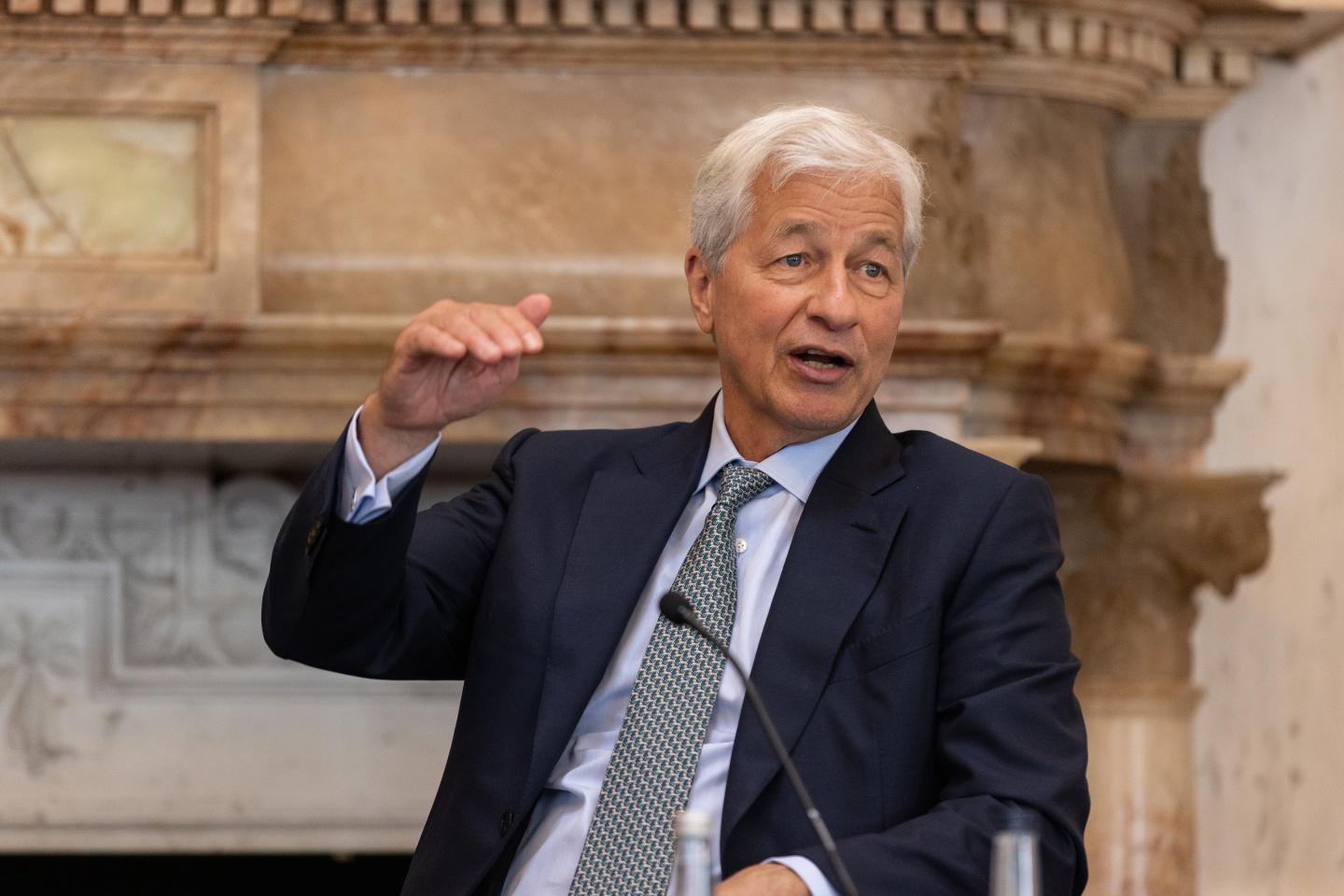
Jamie Dimon is worried about risky lenders—but also wants in on this lucrative sector.Patrick Bolger/Bloomberg via Getty Images

In mid July, Jamie Dimon cautioned that the explosion in private credit could trigger the next financial crisis. The JPMorgan CEO and America’s most respected banker cited the wild lending sprees two decades ago where the likes of Lehman Bros. and Bear Stearns funded highly indebted weaklings, a misadventure that sank those firms and ignited the Global Financial Crisis. Dimon’s comments followed earlier his warnings in May that “I think credit risk is bad,” noting that the surge in non-bank lending “hasn’t been tested in a downturn,” implying that if a recession hits, a deluge of defaults could accelerate the economy’s decline.

Recommended Video

Yet on both occasions, Dimon emphasized that JPMorgan’s moving heavily into the field that he views as so fraught with risk for others, stating in May that, “There’s a huge opportunity for this company.” In fact, Dimon recently dedicated $50 billion in the investment bank’s capital towards providing debt financing for clients doing acquisitions and other deals, effectively starting a private credit operation inside JPMorgan.

Dimon’s indeed correct in warning that if unregulated, non-bank lending grows too fast, the trend could flood the economy with easy credit—specifically, an excess of high-yield debt granted to risky borrowers on loose terms. But for the biggest part of the burgeoning private credit market, the sector dominated by the PE giants, the business isn’t primarily about taking flyers on less-than-best-in-class borrowers in exchange for fat interest payments. Instead, the Big Guys such as Apollo, Ares and KKR are pioneering a highly original strategy by extending credit they originate independently, often backed by high-earning assets from rail cars to data centers, that lock in borrowers for a number of years. In exchange for tying up that money for, say, nearly a decade, the borrowers are willing to pay a lot more in interest than if they had to get the money from a network banks via a long, expensive syndication process that required securing ratings from S&P and Fitch, facing tough covenants, and oftentimes enduring long waits for the funding.

And while those loans, based on their credit quality, are the equivalent of investment grade bonds, because of the “illiquidity premium,” they merit higher rates. And the PE giants have sundry customers with extremely long horizons—from pension funds to insurers to family offices—who don’t need the dollars for a decade or so, and are happy to set it aside for long periods in exchange for the extra yield.

Where private credit came from and how it works

Prior to the meltdown from the housing collapse in 2009, banks were eager to pile loans on their balance sheets, and held a high proportion of mortgages, auto loans, aircraft financings and other interest-earning assets versus their capital. But the Dodd-Frank legislation designed to protect depositors from bank failures such as the Washington Mutual and Wachovia disasters severely restricted the volumes of credit the banks could hold. The big lenders shifted to mostly “syndicated” financings, dividing the loans among a club of banks that then sold them off to institutions, generating fees in the process. Retail banks’ focus has shifted heavily from lending to cross-selling consumer products, wealth management, and capital markets and investment banking for corporate clients in the years since the GFC.

Into this void jumped the PE firms that had previously specialized in leveraging up private companies through LBOs, fixing them, then selling off these portfolio holdings at generally super-high returns.

So vast were the opportunities in private credit, however, that it grew into the main business at many of the players, including Apollo, accounts for the spectacular growth at Aries, and it’s become a staple for Blackstone, KKR, Carlyle and other major players. Since 2006, the cumulative investments in private credit have mushroomed 1,000%. Over the same period, the annual amounts raised by PE firms for these financings jumped from around $6 billion to $700 billion. Today, the industry’s global AUM stands at around $2 trillion, and industry experts predict the figure will reach $2.8 trillion by 2028.

Still, despite the sorcerous growth, private credit remains a relatively small corner of the debt universe. For example, the size of the U.S. corporate bond market is over 20 times that of private debt at $46 trillion. And for the CEOs of the big private equity firms, shrinking that gap represents a vast field for expansion going forward.

The companies dominating private credit aren’t banks

To be sure, the PE leaders have funds that specialize in distress debt offering extremely high yields, but also shouldering substantial risks—that, too, is part of private debt. They also have branches that finance mid-sized companies and such small operations as Burger King franchises. But here’s the big shift: They increasingly get big, steady flows of money from super-long-term investors. For example, both Apollo and KKR now own in-house insurers, and Blackstone’s forged a strategic partnership with a big carrier. The insurers that send the PE owners and partners with a constant stream of new premiums, including from annuities, a business that’s boomed with the rise interest rates that’s hugely boosted their future payouts. The firms put that money to work in high-grade corporate bonds, but also place part of it safe private credit deals that they originate in-house. The PE firms own or partner with numerous origination platforms, often bought from big banks in retreat, that specialize in different areas of asset-backed financings, including for aircraft and inventories, as well as loans on fully rented apartment complexes in areas with extremely low vacancy rates.

On these investment-grade quality credits, the firms’ funds that hold the loans, and the captive insurers whose profits go to their PE parents, typically garner between 150 and 200 basis points more than on corporate bonds of the same duration. As their surging stocks, revenues and AUM are showing, Big PE’s developed a practically new template, mostly in the last ten years: Matching ultra-reliable, long-term loans with the the investors such as endowments, pension funds and insurers, who have an extremely long horizon, and relish getting paid more for waiting.

Jamie Dimon’s right to fret about the next crisis. But the biggest swath of the private debt revolution isn’t running on big risks, it’s simply matched two parts of the market, investors that seek safety and borrowers that need to tie up capital in airplanes or data centers or apartment buildings for a long time––and are willing to pay extra for the privilege.

Join us at the Fortune Workplace Innovation Summit May 19–20, 2026, in Atlanta. The next era of workplace innovation is here—and the old playbook is being rewritten. At this exclusive, high-energy event, the world’s most innovative leaders will convene to explore how AI, humanity, and strategy converge to redefine, again, the future of work. Register now.
About the Author
Shawn Tully
By Shawn TullySenior Editor-at-Large

Shawn Tully is a senior editor-at-large at Fortune, covering the biggest trends in business, aviation, politics, and leadership.

See full bioRight Arrow Button Icon

Latest in Finance

Finance
Lorem ipsum dolor sit amet, consectetur adipiscing elit, sed do eiusmod tempor incididunt ut labore et dolore magna aliqua. Ut enim ad minim veniam
By Fortune Editors
October 20, 2025
Finance
Lorem ipsum dolor sit amet, consectetur adipiscing elit, sed do eiusmod tempor incididunt ut labore et dolore magna aliqua. Ut enim ad minim veniam
By Fortune Editors
October 20, 2025
Finance
Lorem ipsum dolor sit amet, consectetur adipiscing elit, sed do eiusmod tempor incididunt ut labore et dolore magna aliqua. Ut enim ad minim veniam
By Fortune Editors
October 20, 2025
Finance
Lorem ipsum dolor sit amet, consectetur adipiscing elit, sed do eiusmod tempor incididunt ut labore et dolore magna aliqua. Ut enim ad minim veniam
By Fortune Editors
October 20, 2025
Finance
Lorem ipsum dolor sit amet, consectetur adipiscing elit, sed do eiusmod tempor incididunt ut labore et dolore magna aliqua. Ut enim ad minim veniam
By Fortune Editors
October 20, 2025
Finance
Lorem ipsum dolor sit amet, consectetur adipiscing elit, sed do eiusmod tempor incididunt ut labore et dolore magna aliqua. Ut enim ad minim veniam
By Fortune Editors
October 20, 2025

Most Popular

Finance
Lorem ipsum dolor sit amet, consectetur adipiscing elit, sed do eiusmod tempor incididunt ut labore et dolore magna aliqua. Ut enim ad minim veniam
By Fortune Editors
October 20, 2025
Finance
Lorem ipsum dolor sit amet, consectetur adipiscing elit, sed do eiusmod tempor incididunt ut labore et dolore magna aliqua. Ut enim ad minim veniam
By Fortune Editors
October 20, 2025
Finance
Lorem ipsum dolor sit amet, consectetur adipiscing elit, sed do eiusmod tempor incididunt ut labore et dolore magna aliqua. Ut enim ad minim veniam
By Fortune Editors
October 20, 2025
Finance
Lorem ipsum dolor sit amet, consectetur adipiscing elit, sed do eiusmod tempor incididunt ut labore et dolore magna aliqua. Ut enim ad minim veniam
By Fortune Editors
October 20, 2025
Finance
Lorem ipsum dolor sit amet, consectetur adipiscing elit, sed do eiusmod tempor incididunt ut labore et dolore magna aliqua. Ut enim ad minim veniam
By Fortune Editors
October 20, 2025
Finance
Lorem ipsum dolor sit amet, consectetur adipiscing elit, sed do eiusmod tempor incididunt ut labore et dolore magna aliqua. Ut enim ad minim veniam
By Fortune Editors
October 20, 2025
Fortune Secondary Logo
Rankings
  • 100 Best Companies
  • Fortune 500
  • Global 500
  • Fortune 500 Europe
  • Most Powerful Women
  • Future 50
  • World’s Most Admired Companies
  • See All Rankings
Sections
  • Finance
  • Fortune Crypto
  • Features
  • Leadership
  • Health
  • Commentary
  • Success
  • Retail
  • Mpw
  • Tech
  • Lifestyle
  • CEO Initiative
  • Asia
  • Politics
  • Conferences
  • Europe
  • Newsletters
  • Personal Finance
  • Environment
  • Magazine
  • Education
Customer Support
  • Frequently Asked Questions
  • Customer Service Portal
  • Privacy Policy
  • Terms Of Use
  • Single Issues For Purchase
  • International Print
Commercial Services
  • Advertising
  • Fortune Brand Studio
  • Fortune Analytics
  • Fortune Conferences
  • Business Development
  • Group Subscriptions
About Us
  • About Us
  • Editorial Calendar
  • Press Center
  • Work At Fortune
  • Diversity And Inclusion
  • Terms And Conditions
  • Site Map
  • About Us
  • Editorial Calendar
  • Press Center
  • Work At Fortune
  • Diversity And Inclusion
  • Terms And Conditions
  • Site Map
  • Facebook icon
  • Twitter icon
  • LinkedIn icon
  • Instagram icon
  • Pinterest icon

Latest in Finance

Yoshua Bengio seated on a stage.
AIcyber
Anthropic’s Mythos cybersecurity capabilities require urgent international cooperation, AI godfather Yoshua Bengio says
By Beatrice NolanApril 17, 2026
58 minutes ago
hormuz
CommentaryIran
With Hormuz under strain, a trade corridor built for resilience faces a real-world test
By Angela Chitkara and Samantha SuttonApril 17, 2026
2 hours ago
A stack of gold bars.
Personal Financegold prices
Current price of gold as of April 17, 2026
By Danny BakstApril 17, 2026
3 hours ago
Meet the crypto guru to the Fortune 500
NewslettersCFO Daily
Meet the crypto guru to the Fortune 500
By Sheryl EstradaApril 17, 2026
3 hours ago
Top CD rates from major banks on April 17, 2026: Chase CDs, Bank of America CDs, Citibank CDs, and more
Personal FinanceCertificates of Deposit (CDs)
Top CD rates from major banks on April 17, 2026: Chase CDs, Bank of America CDs, Citibank CDs, and more
By Joseph HostetlerApril 17, 2026
3 hours ago
Current price of Ethereum for April 17, 2026
Personal FinanceEthereum
Current price of Ethereum for April 17, 2026
By Joseph HostetlerApril 17, 2026
3 hours ago

Most Popular

A world going broke: IMF says America's $39 trillion national debt is actually a global problem—and AI may be the only rescue
Economy
A world going broke: IMF says America's $39 trillion national debt is actually a global problem—and AI may be the only rescue
By Nick LichtenbergApril 16, 2026
20 hours ago
Jeff Bezos pledged $10 billion for climate change. With the 2030 clock ticking, his wife, Lauren Sánchez Bezos, is leading the charge to spend it
Environment
Jeff Bezos pledged $10 billion for climate change. With the 2030 clock ticking, his wife, Lauren Sánchez Bezos, is leading the charge to spend it
By Sydney LakeApril 15, 2026
2 days ago
Pope Leo warned the world is in ‘big trouble’ if Elon Musk becomes the first trillionaire
Success
Pope Leo warned the world is in ‘big trouble’ if Elon Musk becomes the first trillionaire
By Preston ForeApril 17, 2026
6 hours ago
Germany already told its workers to ditch four-day weeks and work-life balance. Now the government wants to cut their pay for calling in sick, too
Success
Germany already told its workers to ditch four-day weeks and work-life balance. Now the government wants to cut their pay for calling in sick, too
By Orianna Rosa RoyleApril 16, 2026
1 day ago
MacKenzie Scott is bypassing the Ivy League and rewriting the $79 billion higher ed playbook by giving to HBCUs and community colleges
Politics
MacKenzie Scott is bypassing the Ivy League and rewriting the $79 billion higher ed playbook by giving to HBCUs and community colleges
By Sydney LakeApril 16, 2026
1 day ago
Current price of oil as of April 16, 2026
Personal Finance
Current price of oil as of April 16, 2026
By Joseph HostetlerApril 16, 2026
1 day ago

© 2026 Fortune Media IP Limited. All Rights Reserved. Use of this site constitutes acceptance of our Terms of Use and Privacy Policy | CA Notice at Collection and Privacy Notice | Do Not Sell/Share My Personal Information
FORTUNE is a trademark of Fortune Media IP Limited, registered in the U.S. and other countries. FORTUNE may receive compensation for some links to products and services on this website. Offers may be subject to change without notice.