• Home
  • Latest
  • Fortune 500
  • Finance
  • Tech
  • Leadership
  • Lifestyle
  • Rankings
  • Multimedia
Environmentcarbon capture

Conservatives and environmentalists say carbon capture is unnecessarily expensive and fails to curb pollution effectively. Here’s what the science says

By
Tammy Webber
Tammy Webber
and
The Associated Press
Down Arrow Button Icon
By
Tammy Webber
Tammy Webber
and
The Associated Press
Down Arrow Button Icon
June 26, 2025, 1:34 PM ET
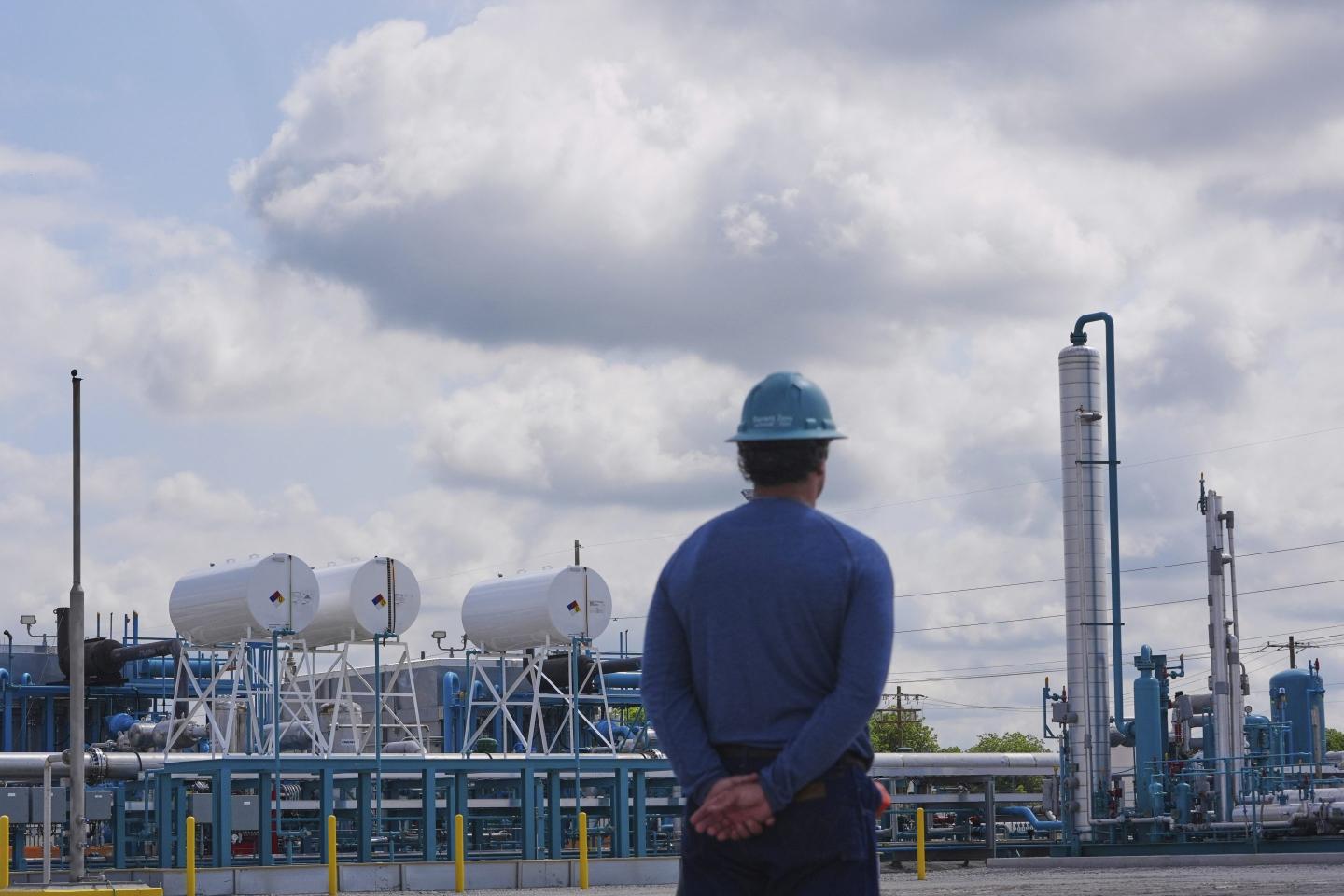
A man working on carbon capture
BKV Carbon Ventures health and safety advisor Adam Pope looks on at a compression station that is part of a carbon capture and sequestration process in Bridgeport, Texas, Thursday, May 29, 2025.LM Otero—AP Photo

Power plants and industrial facilities that emit carbon dioxide, the primary driver of global warming, are hopeful that Congress will keep tax credits for capturing the gas and storing it deep underground.

Recommended Video

The process, called carbon capture and sequestration, is seen by many as an important way to reduce pollution during a transition to renewable energy.

But it faces criticism from some conservatives, who say it is expensive and unnecessary, and from environmentalists, who say it has consistently failed to capture as much pollution as promised and is simply a way for producers of fossil fuels like oil, gas and coal to continue their use.

Here’s a closer look:How does the process work?

Carbon dioxide is a gas produced by burning of fossil fuels. It traps heat close to the ground when released to the atmosphere, where it persists for hundreds of years and raises global temperatures.

Industries and power plants can install equipment to separate carbon dioxide from other gases before it leaves the smokestack. The carbon then is compressed and shipped — usually through a pipeline — to a location where it’s injected deep underground for long-term storage.

Carbon also can be captured directly from the atmosphere using giant vacuums. Once captured, it is dissolved by chemicals or trapped by solid material.

Lauren Read, a senior vice president at BKV Corp., which built a carbon capture facility in Texas, said the company injects carbon at high pressure, forcing it almost two miles below the surface and into geological formations that can hold it for thousands of years.

The carbon can be stored in deep saline or basalt formations and unmineable coal seams. But about three-fourths of captured carbon dioxide is pumped back into oil fields to build up pressure that helps extract harder-to-reach reserves — meaning it’s not stored permanently, according to the International Energy Agency and the U.S. Environmental Protection Agency.How much carbon dioxide is captured?

The most commonly used technology allows facilities to capture and store around 60% of their carbon dioxide emissions during the production process. Anything above that rate is much more difficult and expensive, according to the IEA.

Some companies have forecast carbon capture rates of 90% or more, “in practice, that has never happened,” said Alexandra Shaykevich, research manager at the Environmental Integrity Project’s Oil & Gas Watch.

That’s because it’s difficult to capture carbon dioxide from every point where it’s emitted, said Grant Hauber, a strategic adviser on energy and financial markets at the Institute for Energy Economics and Financial Analysis.

Environmentalists also cite potential problems keeping it in the ground. For example, last year, agribusiness company Archer-Daniels-Midland discovered a leak about a mile underground at its Illinois carbon capture and storage site, prompting the state legislature this year to ban carbon sequestration above or below the Mahomet Aquifer, an important source of drinking water for about a million people.

Carbon capture can be used to help reduce emissions from hard-to-abate industries like cement and steel, but many environmentalists contend it’s less helpful when it extends the use of coal, oil and gas.

A 2021 study also found the carbon capture process emits significant amounts of methane, a potent greenhouse gas that’s shorter-lived than carbon dioxide but traps over 80 times more heat. That happens through leaks when the gas is brought to the surface and transported to plants.

About 45 carbon-capture facilities operated on a commercial scale last year, capturing a combined 50 million metric tons of carbon dioxide — a tiny fraction of the 37.8 gigatonnes of carbon dioxide emissions from the energy sector alone, according to the IEA.

It’s an even smaller share of all greenhouse gas emissions, which amounted to 53 gigatonnes for 2023, according to the latest report from the European Commission’s Emissions Database for Global Atmospheric Research.

The Institute for Energy Economics and Financial Analysis says one of the world’s largest carbon capture utilization and storage projects, ExxonMobil’s Shute Creek facility in Wyoming, captures only about half its carbon dioxide, and most of that is sold to oil and gas companies to pump back into oil fields.Future of US tax credits is unclear

Even so, carbon capture is an important tool to reduce carbon dioxide emissions, particularly in heavy industries, said Sangeet Nepal, a technology specialist at the Carbon Capture Coalition.

“It’s not a substitution for renewables … it’s just a complementary technology,” Nepal said. “It’s one piece of a puzzle in this broad fight against the climate change.”

Experts say many projects, including proposed ammonia and hydrogen plants on the U.S. Gulf Coast, likely won’t be built without the tax credits, which Carbon Capture Coalition Executive Director Jessie Stolark says already have driven significant investment and are crucial U.S. global competitiveness.

They remain in the Senate Finance Committee’s draft reconciliation bill, after another version passed the House, though the Carbon Capture Coalition said inflation has already slashed their value and could limit projects.

The Fortune 500 Innovation Forum will convene Fortune 500 executives, U.S. policy officials, top founders, and thought leaders to help define what’s next for the American economy, Nov. 16-17 in Detroit. Apply here.
About the Authors
By Tammy Webber
See full bioRight Arrow Button Icon
By The Associated Press
See full bioRight Arrow Button Icon

Latest in Environment

Finance
Lorem ipsum dolor sit amet, consectetur adipiscing elit, sed do eiusmod tempor incididunt ut labore et dolore magna aliqua. Ut enim ad minim veniam
By Fortune Editors
October 20, 2025
Finance
Lorem ipsum dolor sit amet, consectetur adipiscing elit, sed do eiusmod tempor incididunt ut labore et dolore magna aliqua. Ut enim ad minim veniam
By Fortune Editors
October 20, 2025
Finance
Lorem ipsum dolor sit amet, consectetur adipiscing elit, sed do eiusmod tempor incididunt ut labore et dolore magna aliqua. Ut enim ad minim veniam
By Fortune Editors
October 20, 2025
Finance
Lorem ipsum dolor sit amet, consectetur adipiscing elit, sed do eiusmod tempor incididunt ut labore et dolore magna aliqua. Ut enim ad minim veniam
By Fortune Editors
October 20, 2025
Finance
Lorem ipsum dolor sit amet, consectetur adipiscing elit, sed do eiusmod tempor incididunt ut labore et dolore magna aliqua. Ut enim ad minim veniam
By Fortune Editors
October 20, 2025
Finance
Lorem ipsum dolor sit amet, consectetur adipiscing elit, sed do eiusmod tempor incididunt ut labore et dolore magna aliqua. Ut enim ad minim veniam
By Fortune Editors
October 20, 2025

Most Popular

Finance
Lorem ipsum dolor sit amet, consectetur adipiscing elit, sed do eiusmod tempor incididunt ut labore et dolore magna aliqua. Ut enim ad minim veniam
By Fortune Editors
October 20, 2025
Finance
Lorem ipsum dolor sit amet, consectetur adipiscing elit, sed do eiusmod tempor incididunt ut labore et dolore magna aliqua. Ut enim ad minim veniam
By Fortune Editors
October 20, 2025
Finance
Lorem ipsum dolor sit amet, consectetur adipiscing elit, sed do eiusmod tempor incididunt ut labore et dolore magna aliqua. Ut enim ad minim veniam
By Fortune Editors
October 20, 2025
Finance
Lorem ipsum dolor sit amet, consectetur adipiscing elit, sed do eiusmod tempor incididunt ut labore et dolore magna aliqua. Ut enim ad minim veniam
By Fortune Editors
October 20, 2025
Finance
Lorem ipsum dolor sit amet, consectetur adipiscing elit, sed do eiusmod tempor incididunt ut labore et dolore magna aliqua. Ut enim ad minim veniam
By Fortune Editors
October 20, 2025
Finance
Lorem ipsum dolor sit amet, consectetur adipiscing elit, sed do eiusmod tempor incididunt ut labore et dolore magna aliqua. Ut enim ad minim veniam
By Fortune Editors
October 20, 2025
Fortune Secondary Logo
Rankings
  • 100 Best Companies
  • Fortune 500
  • Global 500
  • Fortune 500 Europe
  • Most Powerful Women
  • World's Most Admired Companies
  • See All Rankings
  • Lists Calendar
Sections
  • Finance
  • Fortune Crypto
  • Features
  • Leadership
  • Health
  • Commentary
  • Success
  • Retail
  • Mpw
  • Tech
  • Lifestyle
  • CEO Initiative
  • Asia
  • Politics
  • Conferences
  • Europe
  • Newsletters
  • Personal Finance
  • Environment
  • Magazine
  • Education
Customer Support
  • Frequently Asked Questions
  • Customer Service Portal
  • Privacy Policy
  • Terms Of Use
  • Single Issues For Purchase
  • International Print
Commercial Services
  • Advertising
  • Fortune Brand Studio
  • Fortune Analytics
  • Fortune Conferences
  • Business Development
  • Group Subscriptions
About Us
  • About Us
  • Press Center
  • Work At Fortune
  • Terms And Conditions
  • Site Map
  • About Us
  • Press Center
  • Work At Fortune
  • Terms And Conditions
  • Site Map
  • Facebook icon
  • Twitter icon
  • LinkedIn icon
  • Instagram icon
  • Pinterest icon

Latest in Environment

trump
Energywind energy
Trump spent nearly $2 billion of taxpayer money to undo wind projects already underway. Dems demand answers
By Jennifer McDermott and The Associated PressApril 29, 2026
9 hours ago
steyer
PoliticsCalifornia
Tom Steyer runs for California governor on class traitor platform: ‘I’m the billionaire who wants to tax other billionaires’
By Sophie Austin and The Associated PressApril 29, 2026
10 hours ago
cobalt
EnvironmentData centers
The AI boom is built on the backs of the world’s poorest, most exploited people, UN researchers find
By Abraham Nunbogu, Kaveh Madani and The ConversationApril 29, 2026
15 hours ago
Islamic finance aligns naturally with ESG, says Maybank’s first-ever chief sustainability officer
EnvironmentSustainability
Islamic finance aligns naturally with ESG, says Maybank’s first-ever chief sustainability officer
By Angelica AngApril 29, 2026
22 hours ago
national park
EnvironmentDonald Trump
White House withdraws hospitality executive as nominee to lead National Park Service as Trump slashes the department’s size
By The Associated Press and Matthew BrownApril 28, 2026
1 day ago
quesada
Commentaryfertilizer
Former president of Costa Rica on de-risking fertilizer shocks: how $700 billion in subsidies can do more
By Carlos Alvarado QuesadaApril 27, 2026
2 days ago

Most Popular

Apple cofounder Ronald Wayne—whose stake would be worth up to $400 billion had he not sold it in 1976—says that at 91, he has no regrets
Success
Apple cofounder Ronald Wayne—whose stake would be worth up to $400 billion had he not sold it in 1976—says that at 91, he has no regrets
By Preston ForeApril 27, 2026
3 days ago
‘Take the money and run’: Johns Hopkins economist Steve Hanke on why the UAE quit OPEC
Energy
‘Take the money and run’: Johns Hopkins economist Steve Hanke on why the UAE quit OPEC
By Shawn TullyApril 29, 2026
22 hours ago
‘The cost of compute is far beyond the costs of the employees’: Nvidia executive says right now AI is more expensive than paying human workers
AI
‘The cost of compute is far beyond the costs of the employees’: Nvidia executive says right now AI is more expensive than paying human workers
By Sasha RogelbergApril 28, 2026
2 days ago
Jamie Dimon gets candid about national debt: ‘There will be a bond crisis, and then we’ll have to deal with it’
Economy
Jamie Dimon gets candid about national debt: ‘There will be a bond crisis, and then we’ll have to deal with it’
By Eleanor PringleApril 29, 2026
18 hours ago
‘They left me no choice’: Powell isn’t going anywhere—blocking Trump from another Fed appointee
Banking
‘They left me no choice’: Powell isn’t going anywhere—blocking Trump from another Fed appointee
By Eva RoytburgApril 29, 2026
10 hours ago
More than two-thirds of U.S. schools say they’re unable to afford the cost of student free lunch—and MAHA’s dietary guidelines may make it worse
Economy
More than two-thirds of U.S. schools say they’re unable to afford the cost of student free lunch—and MAHA’s dietary guidelines may make it worse
By Sasha RogelbergApril 29, 2026
20 hours ago

© 2026 Fortune Media IP Limited. All Rights Reserved. Use of this site constitutes acceptance of our Terms of Use and Privacy Policy | CA Notice at Collection and Privacy Notice | Do Not Sell/Share My Personal Information
FORTUNE is a trademark of Fortune Media IP Limited, registered in the U.S. and other countries. FORTUNE may receive compensation for some links to products and services on this website. Offers may be subject to change without notice.