- President Donald Trump announced a ceasefire between Iran and Israel—easing oil market fears that Iran would close the Strait of Hormuz, a critical waterway to global oil trade. Analysts say even a slight disruption on the strait could shock a U.S. economy already preparing for a rise in inflation and force the Fed to hold interest rates throughout the end of the year. Later, Israel claimed that Iran had violated the ceasefire—and promised retaliation.
A ceasefire announced by President Donald Trump Monday evening and later confirmed by Israel has been put to the test as Israel’s defense minister claimed this morning that Iran had already broken the cessation of hostilities and said he had ordered new retaliatory strikes on Tehran.
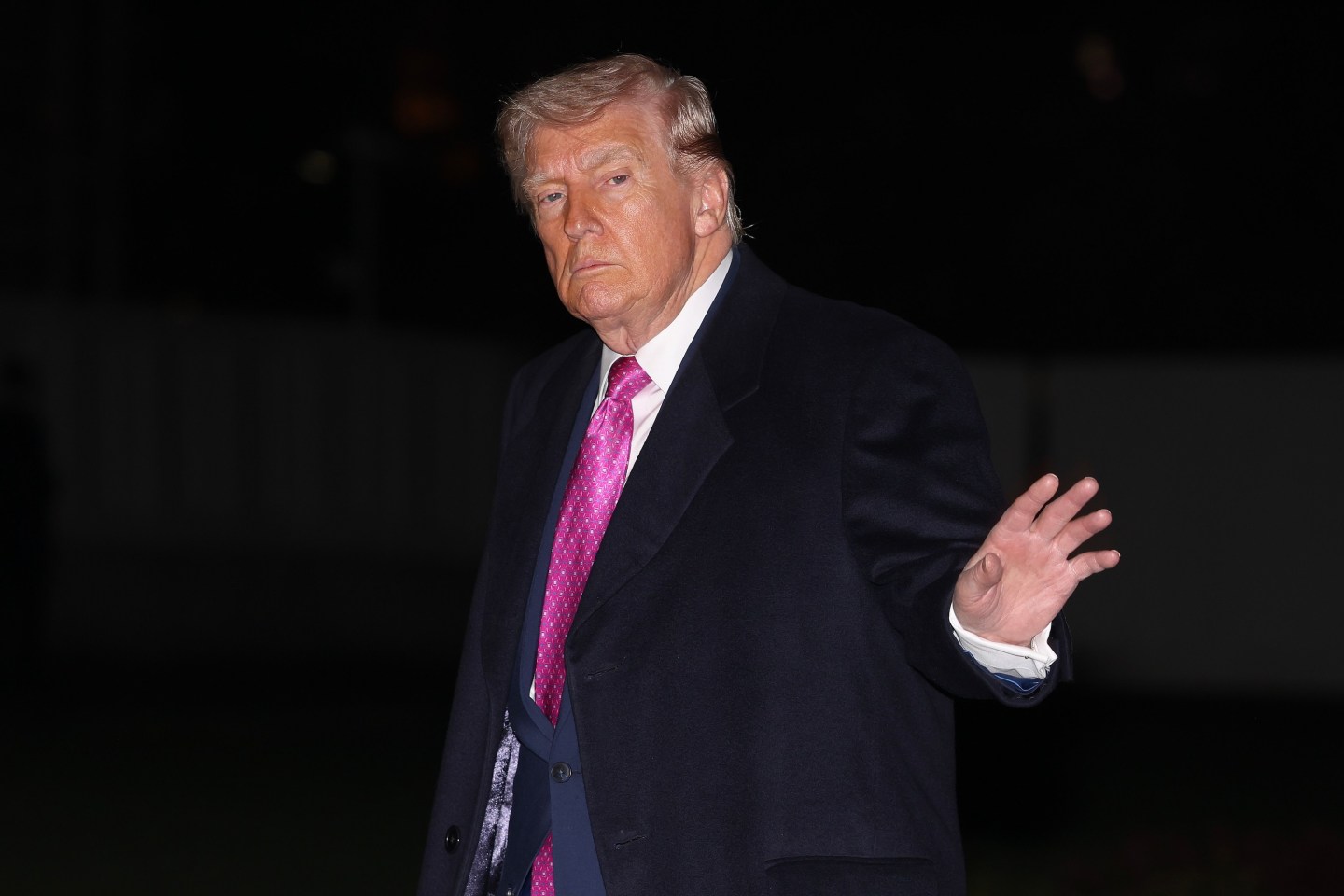
Hours after Trump announced on Truth Social around 6 p.m. ET that, “It has been fully agreed by and between Israel and Iran that there will be a Complete and Total CEASEFIRE,” Israel said in an official statement that it had achieved its twin war goals—eliminating Iran’s nuclear and ballistic-missile programs—and therefore had “agreed to the President’s offer for a bilateral ceasefire.”
But shortly thereafter, Israel’s Defence Minister Israel Katz issued a statement that he has ordered Israel’s armed forces to “respond forcefully to Iran’s violation of the ceasefire with intense strikes against regime targets in the heart of Tehran.”
The rapidly unfolding events whipsawed world markets that briefly appeared to have avoided an oil shock and the uncertainty of a wider Middle East conflict.
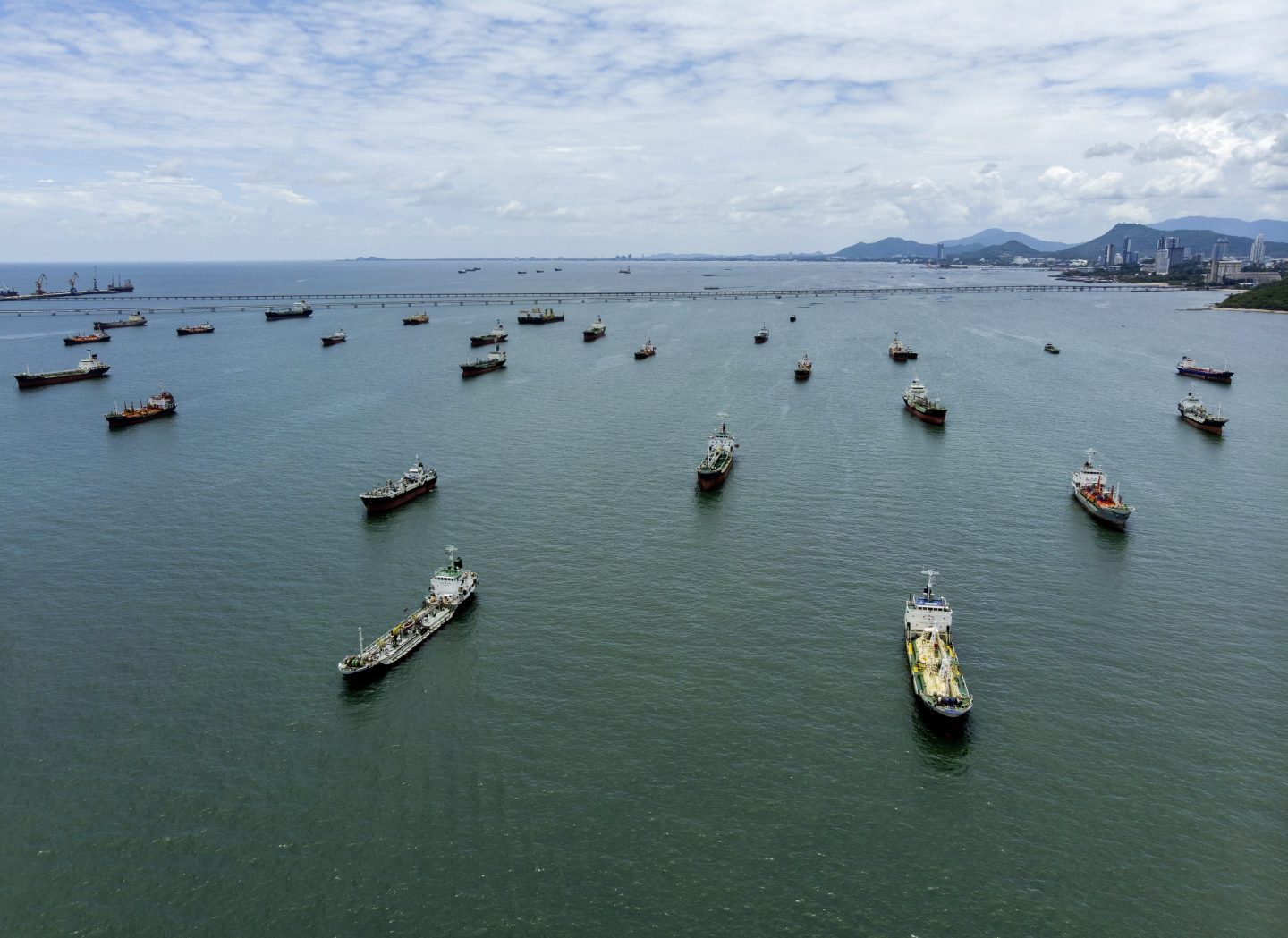
Iran’s parliament had voted on Sunday to close the Strait of Hormuz, a vital waterway to the global oil trade. (The Strait was not actually closed.) The surprise vote, and ensuing ceasefire, put in sharp relief the global importance of the narrow strait between Iran and the Arabian Peninsula, which carries 20% of global oil production.
The move, first reported by Iran’s state-run Press TV, comes after the U.S. struck Iranian nuclear sites on Sunday and before Iran retaliated by attacking the U.S. military base in Qatar on Monday. While oil markets slipped 4%, or $3 per barrel Monday, analysts anticipated a sharp price increase if the country’s Supreme National Security Council approved the closure of the strait.
Iran’s putative plans to shut the strait, which were seen by analysts as unlikely to actually happen even before the ceasefire announcement, would have profound effects on European and U.K. markets—and even a slight disruption on the waterway could shock a U.S. economy already preparing for a rise in inflation. Modest increases in oil prices due to Iranian retaliation in the region could even have effects on how the Federal Reserve navigates rate cuts for the remainder of the year, analysts say.
With new hostilities this morning, however, all bets are off and the closing of the Strait could be back on the agenda.
“[Closing the Strait of Hormuz] could turn into a stagflationary shock like the one we saw in 2022 after Russia’s invasion of Ukraine,” Susana Cruz, research analyst for Panmure Liberum, a U.K. investment banking firm, told Fortune.
If Iran were to close the waterway, Cruz expects the shock in oil prices to increase headline inflation in the U.S. 1%. Another, “more likely,” scenario where the strait doesn’t close but oil prices rise by 20% in the third quarter would increase headline inflation half a percentage point in the U.S., 0.4% in the Eurozone, and 0.3% in the U.K., Cruz and her research team predict. This could force the Fed to hold interest rates, a strategy they’ve employed since December despite Trump’s pressure to cut rates.
Unlikely close
Iran may not have the ability to back up its threat, even if they move to, experts say.
“[Iran is] making noise about closing the Strait of Hormuz,” Paul Tice, a senior fellow at the National Center for Energy Analytics, told Fortune. “It’s unclear if they have the capacity to do that.”
In line with Tice’s reasoning, Brent crude oil prices edged down from $78.97 at open, hovering around $70 by Monday afternoon, as traders see continued tanker flow on the Strait of Hormuz. Even after Israel’s claim that Iran had violated the ceasefire Tuesday morning, Brent crude was still trading below $69, suggesting that markets did not expect a return to major hostilities.
Still, even a transitory 20% increase in oil price could affect the outlook from central banks that brace for “an inflationary impact already building up from the tariffs,” Cruz warned.
“If you have an additional oil shock from oil prices, then we definitely wouldn’t see the Fed cutting rates for the rest of the year,” Cruz said. “[Central banks] need to make sure that this shock is actually transitory and to kind of not make the same mistake that they did in 2022: assuming that it will be a transitory effect on inflation.”
The scenario of a 20% increase in oil prices would peak in the third quarter of this year and disappear in the third quarter of 2026, Cruz said. The U.S. stock market would fall 5% to 10% in this scenario, according to Panmure Liberum estimates.
Despite the U.S. facing “a combination of sticky, high inflation and [a] slow growth economy” Ethan Harris, former chief economist at Bank of America, told Fortune, “I’m much more worried, frankly, about the trade war than I am about the oil price shock.”
Harris holds the view popular among economists that U.S. consumers will start to see the tariff-fueled price increases over the summer, and expects to start seeing inflated CPI reports in the upcoming months.
In his Monday newsletter, Harris wrote that people in the U.S. economy are “more willing” to see oil price shocks as transitory. He added that the U.S. is much less dependent on oil imports than it was during oil price shocks caused by flashpoints like the U.S.-Iraq war in 1990 and is less dependent on oil overall as the country has become more “service oriented.”
“As a result, most empirical work suggests a $10/bbl [per barrel] rise in the price of oil lowers GDP 0.1% or less,” Harris wrote.
Although Harris says there’s “no magic number” to predict an extreme oil shock, the price per barrel would have to reach “well above $100” to threaten a recession.