• Home
  • Latest
  • Fortune 500
  • Finance
  • Tech
  • Leadership
  • Lifestyle
  • Rankings
  • Multimedia
EconomyTariffs and trade

Port of LA imports fell nearly 20% in May, and it may mean higher prices and fewer choices on back-to-school and Halloween items

Sasha Rogelberg
By
Sasha Rogelberg
Sasha Rogelberg
Reporter
Down Arrow Button Icon
Sasha Rogelberg
By
Sasha Rogelberg
Sasha Rogelberg
Reporter
Down Arrow Button Icon
June 16, 2025, 1:59 PM ET
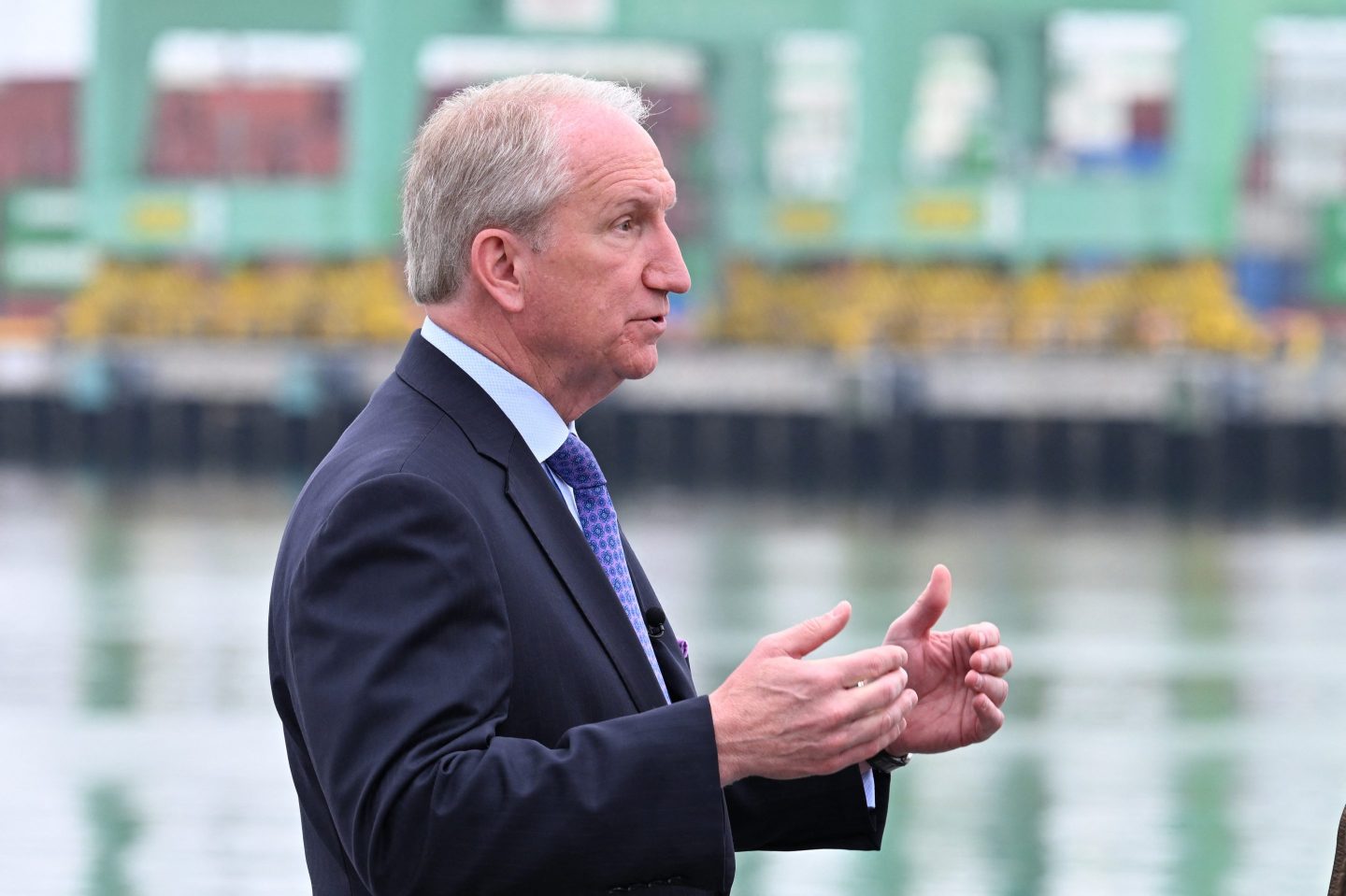
Gene Seroka stands in front of the Port of Los Angeles and looks to his left.
Port of Los Angeles Executive Director Gene Seroka warned of fewer items and higher prices as a result of tariff-induced import slowdowns.ROBYN BECK/AFP—Getty Images
  • As peak trade season approaches, import volumes at the Port of Los Angeles fell 19% in May compared to April and 9% from a year ago as a result of President Donald Trump’s tariffs. The Port of LA’s executive director warns fewer shipments may mean higher prices on fewer available goods, starting for back-to-school shopping and impacting even winter holiday products.

Steep tariffs have continued to slash the volume of U.S. imports, and consumers have yet to see the brunt of their impacts, according to new data from the Port of Los Angeles and Yale Budget Lab.

Recommended Video

Import volumes through the Port of Los Angeles, the country’s latest trade center, fell 19% in May compared to the month before and 9% from a year ago as a result of President Donald Trump’s trade policy. 

Port of Los Angeles Executive Director Gene Seroka told reporters on Friday the higher prices as a result of tariffs will likely mean fewer, and more expensive, goods for consumers toward the end of the year.

“Buying products out of China right now still costs one-and-a-half times more than it did earlier this year, making products of all types extremely expensive and creating a decision platform for companies that not necessarily is going to be in our best interest as consumers will likely see lower inventories, fewer selections on store shelves, and higher prices in some cases,” he said.

Last month’s import declines came despite Trump backing off some of his highest tariff rates.

In April, many of the goods leaving China for the U.S. were taxed at 145% before a May trade deal lowered tariffs by 115%. But economists have said that even returning the levies to pre-“Liberation Day” levels is still high enough to wipe out trade between the U.S. and China. 

The summer marks the beginning of peak trade season, a bustle of shipment activity in preparation for major shopping events later in the year. But as back-to-school and Halloween shipment periods come and go, Seroka said the port has been “very slow,” and warned of fewer goods and higher prices for not just the fall, but the winter as well.

“That cargo for those micro seasons needs to be here on the ground right now,” he said. “I don’t necessarily see that in inventory levels.”

He added: “Retailers are not telling me that they’re boosting inventory levels to have wide selections on products beginning that Thanksgiving week and running to the end of the year.”

Emptier shelves, higher prices

Beyond consumers facing emptier shelves in stores, they will feel the impact of tariffs on their wallets. Prices on items like shoes have jumped 31% in the short term as a result of 2025 tariffs, according to June data from the Yale Budget Lab. Apparel prices more broadly have increased 28% for consumers in the short-run.

For consumers, more expensive goods means an average 1.5% increase in price levels that cost a household on average $2,500 in disposable income, per the data. While most consumers will see steeper prices, lower-income shoppers will be feeling the biggest stretch: Consumers at the bottom end of the income scale will see a 2.5% increase in price levels.

Ernie Tedeschi, director of economics at the Budget Lab at Yale, argued the uncertainty surrounding tariffs, not just higher prices, has contributed to a consumer pullback.

“Consumers and businesses who don’t know what tariff policy will be at the end of this press conference—let alone a week, a month, an hour from now—[are] sitting on their hands and not making all of the long-run purchasing investment and hiring decisions that they would otherwise make if they had certainty about what policy would be,” he told reporters.

As shoppers raced to get ahead of tariffs, consumer spending rose in March, and first-quarter spending on durable goods increased 2.3% from the prior year to $2.2 trillion. 

“It’s very clear that the main thing driving that shift in durables was anticipation of tariffs,” Tedeschi said. In April, when tariffs increased, spending slowed.

If tariffs level off, he warned price increases will likely stick around as a result of businesses adapting to and making substitutions in their supply chains. Yale Budget Lab calculated a 15% increase in apparel prices and 10% increase in textile prices in the long run, for example.

“Even after the economy, consumers, and businesses have a chance to react,” Tedeschi said, “that is not going to be able to mitigate all of the price increase.”

Join us at the Fortune Workplace Innovation Summit May 19–20, 2026, in Atlanta. The next era of workplace innovation is here—and the old playbook is being rewritten. At this exclusive, high-energy event, the world’s most innovative leaders will convene to explore how AI, humanity, and strategy converge to redefine, again, the future of work. Register now.
About the Author
Sasha Rogelberg
By Sasha RogelbergReporter
LinkedIn iconTwitter icon

Sasha Rogelberg is a reporter and former editorial fellow on the news desk at Fortune, covering retail and the intersection of business and popular culture.

See full bioRight Arrow Button Icon

Latest in Economy

PoliticsAffordable Care Act (ACA)
With just days to go before ACA subsidies expire, Congress is about to wrap up its work with no consensus solution in sight
By Kevin Freking, Lisa Mascaro and The Associated PressDecember 13, 2025
4 hours ago
HealthAffordable Care Act (ACA)
A Wisconsin couple was paying $2 a month for an ACA health plan. But as subsidies expire, it’s soaring to $1,600, forcing them to downgrade
By Ali Swenson and The Associated PressDecember 13, 2025
5 hours ago
Julian Braithwaite is the Director General of the International Alliance for Responsible Drinking
CommentaryProductivity
Gen Z is drinking 20% less than Millennials. Productivity is rising. Coincidence? Not quite
By Julian BraithwaiteDecember 13, 2025
6 hours ago
EconomyFederal Reserve
Trump names Warsh, Hassett as top Fed contenders, WSJ says
By Jennifer A. Dlouhy and BloombergDecember 12, 2025
20 hours ago
EconomyFederal Reserve
The Fed just ‘Trump-proofed’ itself with a unanimous move to preempt a potential leadership shake-up
By Jason MaDecember 12, 2025
23 hours ago
Donald Trump, sitting in the Roosevelt Room, looks forward and frowns.
EconomyTariffs and trade
For the first time since Trump’s tariff rollout, import tax revenue has fallen, threatening his lofty plans to slash the $38 trillion national debt
By Sasha RogelbergDecember 12, 2025
1 day ago

Most Popular

placeholder alt text
Economy
Tariffs are taxes and they were used to finance the federal government until the 1913 income tax. A top economist breaks it down
By Kent JonesDecember 12, 2025
1 day ago
placeholder alt text
Success
Apple cofounder Ronald Wayne sold his 10% stake for $800 in 1976—today it’d be worth up to $400 billion
By Preston ForeDecember 12, 2025
1 day ago
placeholder alt text
Success
40% of Stanford undergrads receive disability accommodations—but it’s become a college-wide phenomenon as Gen Z try to succeed in the current climate
By Preston ForeDecember 12, 2025
1 day ago
placeholder alt text
Economy
The Fed just ‘Trump-proofed’ itself with a unanimous move to preempt a potential leadership shake-up
By Jason MaDecember 12, 2025
23 hours ago
placeholder alt text
Economy
For the first time since Trump’s tariff rollout, import tax revenue has fallen, threatening his lofty plans to slash the $38 trillion national debt
By Sasha RogelbergDecember 12, 2025
1 day ago
placeholder alt text
Success
Apple CEO Tim Cook out-earns the average American’s salary in just 7 hours—to put that into context, he could buy a new $439,000 home in just 2 days
By Emma BurleighDecember 12, 2025
1 day ago
Rankings
  • 100 Best Companies
  • Fortune 500
  • Global 500
  • Fortune 500 Europe
  • Most Powerful Women
  • Future 50
  • World’s Most Admired Companies
  • See All Rankings
Sections
  • Finance
  • Leadership
  • Success
  • Tech
  • Asia
  • Europe
  • Environment
  • Fortune Crypto
  • Health
  • Retail
  • Lifestyle
  • Politics
  • Newsletters
  • Magazine
  • Features
  • Commentary
  • Mpw
  • CEO Initiative
  • Conferences
  • Personal Finance
  • Education
Customer Support
  • Frequently Asked Questions
  • Customer Service Portal
  • Privacy Policy
  • Terms Of Use
  • Single Issues For Purchase
  • International Print
Commercial Services
  • Advertising
  • Fortune Brand Studio
  • Fortune Analytics
  • Fortune Conferences
  • Business Development
About Us
  • About Us
  • Editorial Calendar
  • Press Center
  • Work At Fortune
  • Diversity And Inclusion
  • Terms And Conditions
  • Site Map

© 2025 Fortune Media IP Limited. All Rights Reserved. Use of this site constitutes acceptance of our Terms of Use and Privacy Policy | CA Notice at Collection and Privacy Notice | Do Not Sell/Share My Personal Information
FORTUNE is a trademark of Fortune Media IP Limited, registered in the U.S. and other countries. FORTUNE may receive compensation for some links to products and services on this website. Offers may be subject to change without notice.