• Home
  • Latest
  • Fortune 500
  • Finance
  • Tech
  • Leadership
  • Lifestyle
  • Rankings
  • Multimedia
Environmentclean energy

Over $14 billion clean energy investments canceled or delayed so far in 2025, analysis finds

By
Alexa St. John
Alexa St. John
,
Isabella O'Malley
Isabella O'Malley
and
The Associated Press
Down Arrow Button Icon
By
Alexa St. John
Alexa St. John
,
Isabella O'Malley
Isabella O'Malley
and
The Associated Press
Down Arrow Button Icon
May 29, 2025, 8:06 AM ET
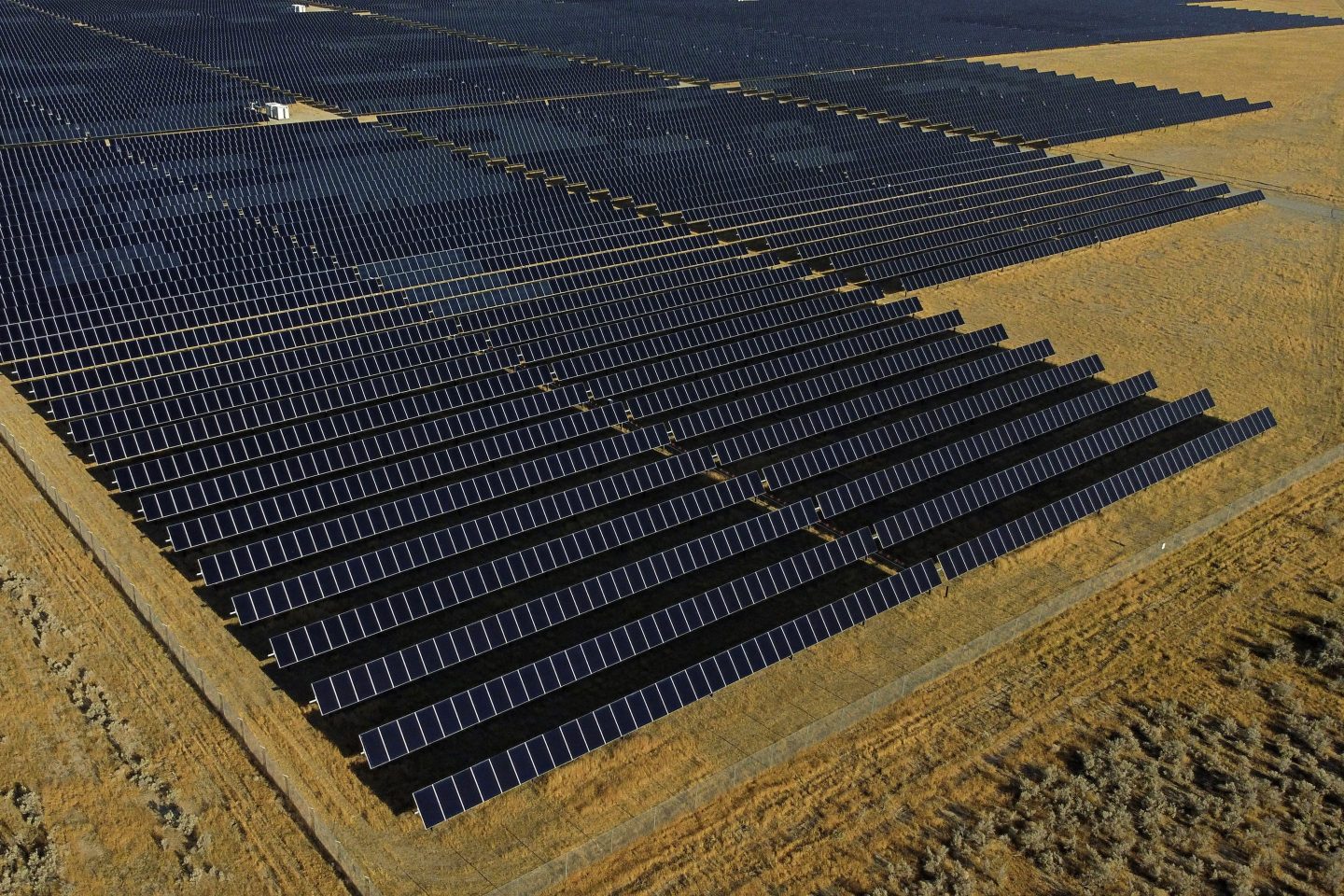
A solar farm in Mona, Utah, on Aug. 9, 2022.
A solar farm in Mona, Utah, on Aug. 9, 2022.Rick Bowmer—AP

More than $14 billion in clean energy investments in the U.S. have been canceled or delayed this year, according to an analysis released Thursday, as President Donald Trump’s pending megabill has raised fears over the future of domestic battery, electric vehicle and solar and wind energy development.

Recommended Video

Many companies are concerned that investments will be in jeopardy amid House Republicans’ passage of a tax bill that would gut clean energy credits, nonpartisan group E2 said in its analysis of projects that it and consultancy Atlas Public Policy tracked.

The groups estimate the losses since January have also cost 10,000 new clean energy jobs.

The tax credits, bolstered in the landmark climate bill passed under former President Joe Biden in 2022, are crucial for boosting renewable technologies key to the clean energy transition. E2 estimates that $132 billion in plans have been announced since the so-called Inflation Reduction Act passed, not counting the cancellations.

Last week’s House bill effectively renders moot many of the law’s incentives. Advocacy groups decried the potential impact that could have on the industry after the multitrillion-dollar tax breaks package passed.

“The House’s plan coupled with the administration’s focus on stomping out clean energy and returning us to a country powered by coal and gas guzzlers is causing businesses to cancel plans, delay their plans and take their money and jobs to other countries instead,” E2 executive director Bob Keefe said.

The Senate is now reviewing the bill with an informal July 4 deadline to get it to the president’s desk.

What has been canceled

Some of the most recent cancellations include the Kore Power battery factory in Arizona and BorgWarner’s closure of two EV manufacturing sites in Michigan. Bosch suspended a $200 million investment in a hydrogen fuel cell factory in South Carolina, citing changes within the market over the past year in a statement to The Associated Press.

Tariffs, inflationary pressures, nascent company struggles and low adoption rates for some technologies may also have been reasons for these companies’ plans changing. For instance, the battery storage and electric vehicle sectors have seen the most impact in 2025, with the latter especially having had had a difficult past few years. Several projects spurred by the IRA were also canceled prior to 2025.

Of the projects canceled this year, most — more than $12 billion worth — came in Republican-led states and congressional districts, the analysis said. Red districts have benefited more than blue ones from an influx of clean energy development and jobs, experts say.

Georgia and Tennessee are particularly at risk because they are highly invested in EV and battery production, said Marilyn Brown, an energy policy professor at the Georgia Institute of Technology who was not involved in the analysis.

“If all of a sudden these tax credits are removed, I’m not sure how these ongoing projects are going to continue,” said Fengqi You, an engineering professor at Cornell University who also was not involved.

A handful of Republican lawmakers have urged the continuation of energy tax credits, with some saying in an April letter to Senate Majority Leader John Thune, R-S.D. that a repeal could disrupt the American people and weaken the county’s position as a global energy leader.

The US and the global stage

The Trump administration has sought to dismantle much of Biden’s environmental and climate-related policy — what he calls the Democrats’ “green new scam” — withdrawing again from the Paris climate agreement, rolling back countless landmark pollution regulations and environmental initiatives, reconsidering scientific findings supporting climate action, blocking renewable energy sources and more in an effort to bolster a fossil fuel-led “American energy dominance” agenda.

Meanwhile other countries are proceeding with green investments. The European Parliament is committing to the European Union Carbon Border Adjustment Mechanism, a policy meant to prevent “carbon leakage,” or companies moving production to countries where climate policies are less strict. And the International Maritime Organization is moving toward a global carbon tax on shipping.

In a sign that not all hope is lost for the future of renewables in the U.S., April alone saw nearly $500 million in new development, with Japanese manufacturing company Hitachi’s energy arm building out transmission and electrification operations in Virginia and materials and technology company Corning investing in solar manufacturing in Michigan.

Still, $4.5 billion in development was canceled or delayed last month, according to E2’s tally.
Join us at the Fortune Workplace Innovation Summit May 19–20, 2026, in Atlanta. The next era of workplace innovation is here—and the old playbook is being rewritten. At this exclusive, high-energy event, the world’s most innovative leaders will convene to explore how AI, humanity, and strategy converge to redefine, again, the future of work. Register now.
About the Authors
By Alexa St. John
See full bioRight Arrow Button Icon
By Isabella O'Malley
See full bioRight Arrow Button Icon
By The Associated Press
See full bioRight Arrow Button Icon

Latest in Environment

North AmericaMexico
U.S., Mexico strike deal to settle Rio Grande water dispute
By Fabiola Zerpa and BloombergDecember 13, 2025
9 hours ago
carbon
Commentaryclimate change
Banking on carbon markets 2.0: why financial institutions should engage with carbon credits
By Usha Rao-MonariDecember 13, 2025
19 hours ago
mackenzie
Personal Financephilanthropy
‘This year, I really see education and climate’: Patterns in billionaire MacKenzie Scott’s massive giving emerge with time
By Thalia Beaty and The Associated PressDecember 11, 2025
3 days ago
Google DeepMind cofounder and CEO Demis Hassabis
AIU.K.
Google DeepMind agrees to sweeping partnership with U.K. government focused on science and clean energy
By Jeremy KahnDecember 10, 2025
3 days ago
InnovationBrainstorm AI
Rivian CEO says buying an EV isn’t a political choice, pointing out that R1 buyers are split evenly between Republicans and Democrats
By Jason MaDecember 10, 2025
3 days ago
AIBrainstorm AI
Google Cloud CEO lays out 3-part strategy to meet AI’s energy demands, after identifying it as ‘the most problematic thing’
By Jason MaDecember 8, 2025
5 days ago

Most Popular

placeholder alt text
Success
Apple cofounder Ronald Wayne sold his 10% stake for $800 in 1976—today it’d be worth up to $400 billion
By Preston ForeDecember 12, 2025
2 days ago
placeholder alt text
Economy
Tariffs are taxes and they were used to finance the federal government until the 1913 income tax. A top economist breaks it down
By Kent JonesDecember 12, 2025
2 days ago
placeholder alt text
Success
40% of Stanford undergrads receive disability accommodations—but it’s become a college-wide phenomenon as Gen Z try to succeed in the current climate
By Preston ForeDecember 12, 2025
2 days ago
placeholder alt text
Economy
The Fed just ‘Trump-proofed’ itself with a unanimous move to preempt a potential leadership shake-up
By Jason MaDecember 12, 2025
1 day ago
placeholder alt text
Success
Apple CEO Tim Cook out-earns the average American’s salary in just 7 hours—to put that into context, he could buy a new $439,000 home in just 2 days
By Emma BurleighDecember 12, 2025
2 days ago
placeholder alt text
Economy
For the first time since Trump’s tariff rollout, import tax revenue has fallen, threatening his lofty plans to slash the $38 trillion national debt
By Sasha RogelbergDecember 12, 2025
2 days ago
Rankings
  • 100 Best Companies
  • Fortune 500
  • Global 500
  • Fortune 500 Europe
  • Most Powerful Women
  • Future 50
  • World’s Most Admired Companies
  • See All Rankings
Sections
  • Finance
  • Leadership
  • Success
  • Tech
  • Asia
  • Europe
  • Environment
  • Fortune Crypto
  • Health
  • Retail
  • Lifestyle
  • Politics
  • Newsletters
  • Magazine
  • Features
  • Commentary
  • Mpw
  • CEO Initiative
  • Conferences
  • Personal Finance
  • Education
Customer Support
  • Frequently Asked Questions
  • Customer Service Portal
  • Privacy Policy
  • Terms Of Use
  • Single Issues For Purchase
  • International Print
Commercial Services
  • Advertising
  • Fortune Brand Studio
  • Fortune Analytics
  • Fortune Conferences
  • Business Development
About Us
  • About Us
  • Editorial Calendar
  • Press Center
  • Work At Fortune
  • Diversity And Inclusion
  • Terms And Conditions
  • Site Map

© 2025 Fortune Media IP Limited. All Rights Reserved. Use of this site constitutes acceptance of our Terms of Use and Privacy Policy | CA Notice at Collection and Privacy Notice | Do Not Sell/Share My Personal Information
FORTUNE is a trademark of Fortune Media IP Limited, registered in the U.S. and other countries. FORTUNE may receive compensation for some links to products and services on this website. Offers may be subject to change without notice.