• Home
  • News
  • Fortune 500
  • Tech
  • Finance
  • Leadership
  • Lifestyle
  • Rankings
  • Multimedia
PoliticsTariffs and trade

The U.S. doesn’t want ‘generalized decoupling’ from China, but a strategic break instead, Treasury secretary says

Jason Ma
By
Jason Ma
Jason Ma
Weekend Editor
Down Arrow Button Icon
Jason Ma
By
Jason Ma
Jason Ma
Weekend Editor
Down Arrow Button Icon
May 12, 2025, 12:54 PM ET
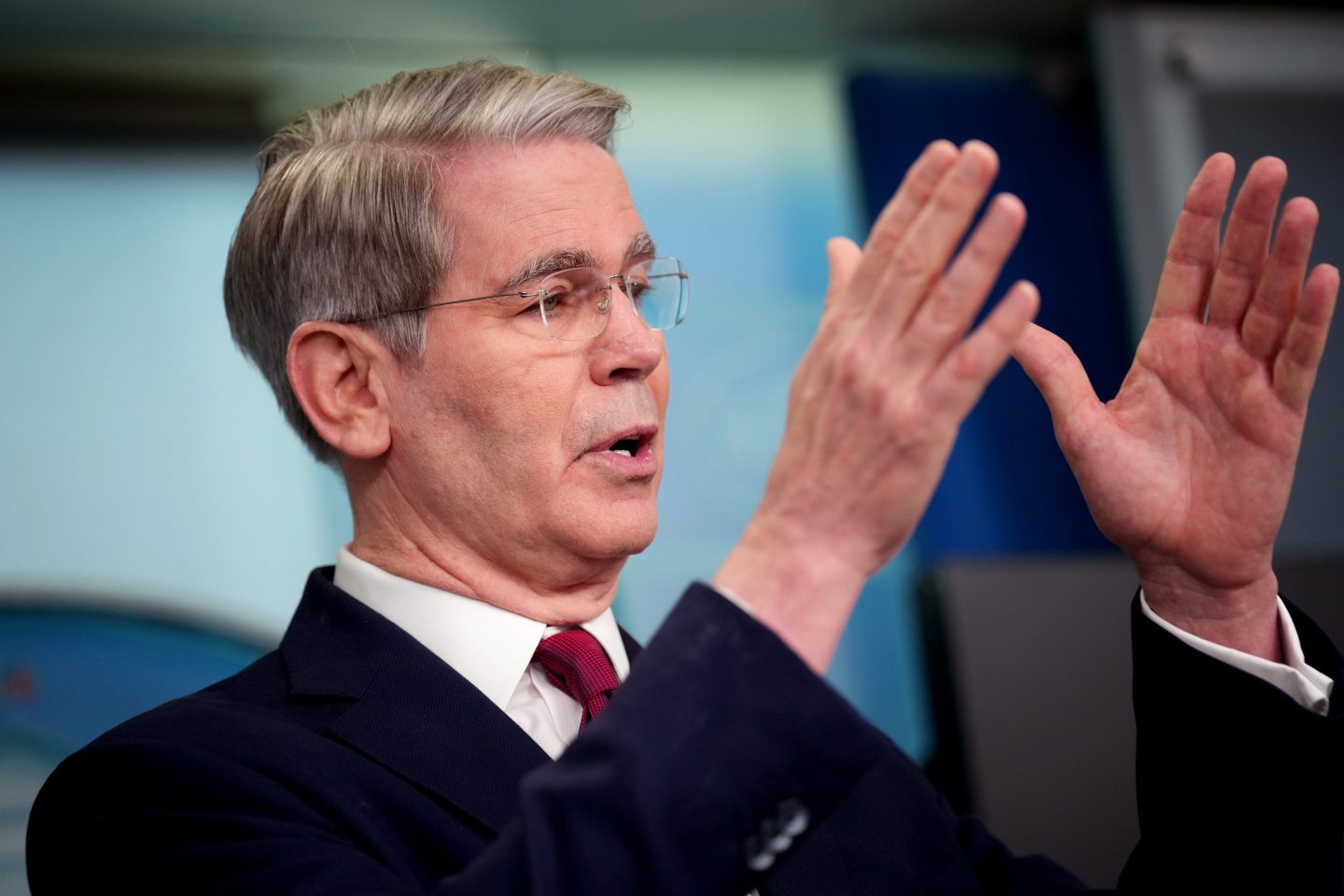
Treasury Secretary Scott Bessent at a press briefing in the White House on April 29.
Treasury Secretary Scott Bessent at a press briefing in the White House on April 29.Andrew Harnik—Getty Images
  • Treasury Secretary Scott Bessent tried to put a finer point on the Trump administration’s goals in its tariff talks with Beijing. While the U.S. wants to avoid a “generalized decoupling” from China, it still seeks to decouple for “strategic necessities,” he told CNBC. Meanwhile, the U.S. slashed its duties on China to 30% from 145%, and China cut its retaliatory levies to 10% from 125%.

The world’s two largest economies shouldn’t totally cut themselves off from each other, but the U.S. still needs self-sufficiency in key areas, according to Treasury Secretary Scott Bessent.

Recommended Video

After concluding an initial round of tariff talks with Beijing over the weekend that resulted in duties from both sides coming down drastically for 90 days, he sought to put a finer point on the Trump administration’s goals.

Speaking in Geneva, Switzerland, on Sunday immediately following negotiations with his Chinese counterparts, Bessent said “neither side wants to decouple.” But he later clarified that some decoupling is desired.

“We do not want a generalized decoupling from China. But what we do want is a decoupling for strategic necessities, which we were unable to obtain during COVID,” Bessent told CNBC on Monday, alluding to America’s reliance on Chinese medical supplies during the pandemic. “And we realized that efficient supply chains were not resilient supply chains.”

That means protecting the steel industry as well as sources of “critical medicines” and semiconductors, he added.

In fact, separate U.S. tariffs on imported steel, aluminum and autos will remain in place—on China as well as most other trading partners. President Donald Trump has also threatened tariffs on pharmaceuticals and chips.

Last month, he put a temporary hold on “reciprocal” tariffs that applied to individual countries, but it doesn’t apply to industry tariffs. On Monday, Bessent emphasized that point when it comes to China, saying “the reciprocal tariffs have nothing to do with the specific industry tariffs.”

In addition, a 20% U.S. tariff on China that’s predicated on its role as a source of fentanyl-related supplies also remains in place.

That means Trump’s tariffs on China are coming down to 30% from 145% for 90 days, while China is cutting its retaliatory levies to 10% from 125%.

Both countries also agreed to create a “consultation mechanism” for future discussions on trade and economic issues. Trump said Monday that tariffs on China will go up again if a long-term deal isn’t reached, but they won’t go all the way to 145%.

Meanwhile, Bessent told CNBC that during the 90-day period, the two sides will also work on non-tariff trade barriers, adding that the U.S. seeks to open up China’s economy further to give American businesses greater access.

“I would imagine that in the next few weeks we will be meeting again to get rolling on a more fulsome agreement,” he predicted.

Fortune Brainstorm AI returns to San Francisco Dec. 8–9 to convene the smartest people we know—technologists, entrepreneurs, Fortune Global 500 executives, investors, policymakers, and the brilliant minds in between—to explore and interrogate the most pressing questions about AI at another pivotal moment. Register here.
About the Author
Jason Ma
By Jason MaWeekend Editor

Jason Ma is the weekend editor at Fortune, where he covers markets, the economy, finance, and housing.

See full bioRight Arrow Button Icon

Latest in Politics

Isaacman
PoliticsNASA
Billionaire spacewalker pleads his case to lead NASA, again, in Senate hearing
By Marcia Dunn and The Associated PressDecember 3, 2025
15 hours ago
Hegseth
PoliticsWhite House
As Democrats cry ‘war crimes,’ Hegseth claims ‘fog of war’ over Latin America boat strikes
By Stephen Groves, Nick Lichtenberg, Lisa Mascaro and The Associated PressDecember 3, 2025
15 hours ago
Trump
PoliticsWhite House
Trump insists ‘Trump is sharp’ despite cabinet meeting appearing to show him struggling to stay awake
By Will Weissert, Michelle L. Price and The Associated PressDecember 3, 2025
16 hours ago
Bessent
BankingFederal Reserve
‘We’re going to veto them’: Bessent backs new rules to give White House more power over Federal Reserve
By Christopher Rugaber and The Associated PressDecember 3, 2025
16 hours ago
Bessent
Economyphilanthropy
Scott Bessent calls the Giving Pledge well-intentioned but ‘very amorphous,’ growing from ‘a panic among the billionaire class’
By Nick LichtenbergDecember 3, 2025
16 hours ago
Scott Bessent
EconomyTariffs and trade
Scott Bessent is defiant on whether tariffs are a tax, demands Democrats work to cut actual taxes instead
By Nick LichtenbergDecember 3, 2025
17 hours ago

Most Popular

placeholder alt text
North America
Jeff Bezos and Lauren Sánchez Bezos commit $102.5 million to organizations combating homelessness across the U.S.: ‘This is just the beginning’
By Sydney LakeDecember 2, 2025
2 days ago
placeholder alt text
Economy
Ford workers told their CEO 'none of the young people want to work here.' So Jim Farley took a page out of the founder's playbook
By Sasha RogelbergNovember 28, 2025
6 days ago
placeholder alt text
North America
Anonymous $50 million donation helps cover the next 50 years of tuition for medical lab science students at University of Washington
By The Associated PressDecember 2, 2025
2 days ago
placeholder alt text
C-Suite
MacKenzie Scott's $19 billion donations have turned philanthropy on its head—why her style of giving actually works
By Sydney LakeDecember 2, 2025
2 days ago
placeholder alt text
Innovation
Google CEO Sundar Pichai says we’re just a decade away from a new normal of extraterrestrial data centers
By Sasha RogelbergDecember 1, 2025
3 days ago
placeholder alt text
Economy
Scott Bessent calls the Giving Pledge well-intentioned but ‘very amorphous,’ growing from ‘a panic among the billionaire class’
By Nick LichtenbergDecember 3, 2025
16 hours ago
Rankings
  • 100 Best Companies
  • Fortune 500
  • Global 500
  • Fortune 500 Europe
  • Most Powerful Women
  • Future 50
  • World’s Most Admired Companies
  • See All Rankings
Sections
  • Finance
  • Leadership
  • Success
  • Tech
  • Asia
  • Europe
  • Environment
  • Fortune Crypto
  • Health
  • Retail
  • Lifestyle
  • Politics
  • Newsletters
  • Magazine
  • Features
  • Commentary
  • Mpw
  • CEO Initiative
  • Conferences
  • Personal Finance
  • Education
Customer Support
  • Frequently Asked Questions
  • Customer Service Portal
  • Privacy Policy
  • Terms Of Use
  • Single Issues For Purchase
  • International Print
Commercial Services
  • Advertising
  • Fortune Brand Studio
  • Fortune Analytics
  • Fortune Conferences
  • Business Development
About Us
  • About Us
  • Editorial Calendar
  • Press Center
  • Work At Fortune
  • Diversity And Inclusion
  • Terms And Conditions
  • Site Map

© 2025 Fortune Media IP Limited. All Rights Reserved. Use of this site constitutes acceptance of our Terms of Use and Privacy Policy | CA Notice at Collection and Privacy Notice | Do Not Sell/Share My Personal Information
FORTUNE is a trademark of Fortune Media IP Limited, registered in the U.S. and other countries. FORTUNE may receive compensation for some links to products and services on this website. Offers may be subject to change without notice.