
- Gen Z and young millennials are stepping into money only to give it all away—and they’re not doing it alone. Money coaches are guiding wealthy young people in redistributing their millions to philanthropic causes to offset their guilt. “A lot of them are just like, ‘Get it off, get it away,’” one inheritance advisor tells Fortune.
Receiving a mountain of cold hard cash might be a dream come true for most. But for others, it’s a crushing responsibility that comes with a lot of shame. Rich young inheritors are grappling with newfound wealth by banding together to give it away.
“For some people, it’s such a scandalous idea and a horrifying idea to think that you would give away a third of your wealth,” Iris Brilliant, a money coach for inheritors, tells Fortune. “And for others, it’s so wrong to not do that. It brings up so many feelings of guilt about privilege, and the knowledge that more money does not equal more satisfaction in life.”
That’s as the “great transfer of wealth” is on everyone’s mind, as $84 trillion is expected to be passed down from seniors and baby boomers to Gen X, millennials, and Gen Z by 2045.
One of the largest forces driving this money towards good is Resource Generation—with 18 chapters across the U.S., the organization gathers young people aged 18 to 35 with access to wealth. Through group sessions and its annual Making Money Make Change conference, these high net-worth members have the ultimate goal to distribute their wealth, land, and power to causes promoting racial and economic justice.
Money coaches have also entered the fold; part-financial advisor and part-therapist, these experts guide clients through their feelings and create a plan of action to redistribute their money meaningfully. Exposed to extreme wealth inequality, “eat the rich” sloganing, and billionaire hoarding, Gen Z and millennial inheritors are looking to money coaches to also lighten their emotional load.
The money coaches helping rich people redistribute millions
Brilliant is one of many money coaches out there helping to redistribute the 1%’s wealth to meaningful causes. Her job may sound like a financial advisor on paper—but her work goes a lot deeper than bank accounts.
“There’s more support that’s needed logistically and emotionally,” she says. “Logistically, what it takes to give away $3 million is very different than what you need to give away $10,000. The stakes are higher, it’s a lot more labor to make those decisions, and at a certain point you need more in-depth support.”
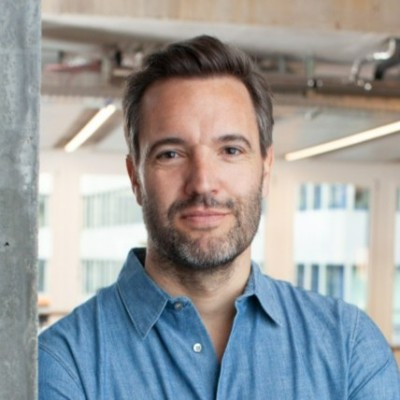
After having worked at Resource Generation for five years, Brilliant became a certified coach through the Co-Active Training Institute, and has been running her own practice for nearly seven years. She works with millionaire couples and individuals to unpack their newfound money and where it came from.
This year, Brilliant is even coaching descendents of Nazis whose wealth came from the Third Reich—confronting the difficult truths of their inheritance, and how to redistribute it equitably.
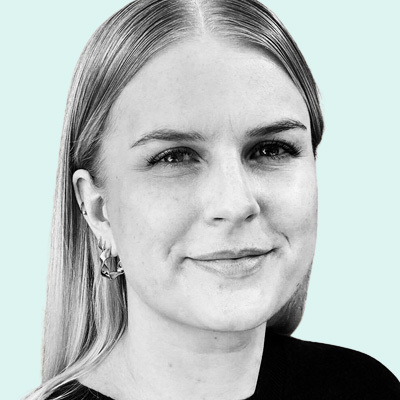
Vermont-based money coach Jo Lum is also helping rich clients find a meaningful way to offload wealth via monthly two-hour sessions aimed at addressing the stigma of being rich. Lum is also a young inheritor whose grandfather was an early employee at $146 billion pharmaceutical giant Pfizer, and draws upon their own conflicted feelings to help clients.
“Wealthy people are often the villain, [but] at the same time that wealth is valorized or idealized,” they tell Fortune. “There becomes this internal battle.”
Who’s taking the charge on wealth redistribution
Money coaches tell Fortune that high net-worth people who want to redistribute can come in all shapes and sizes. But a few patterns emerge: their clients tend to skew progressive, young, female, and queer. Lum says marginalized groups may have had life experiences that compel them to act for the betterment of others.
“Because this is really sensitive, vulnerable work, it takes a really open heart to decide to swim upstream. The choices that my clients are making are the hard choices,” they say. “The easy choice is to hoard, retain the money, and just let it do nothing.”
Lum has also noticed that Gen Zers are more anxious about stepping into wealth than other generations, saying young people are exposed to intense wealth disparity on social media. They don’t want to be lumped in with power-hungry billionaires.
“For my younger clients, I tend to have to support them more in thinking about themselves. A lot of them are just like, ‘Get it off, get it away,’” Lum says. “And for some older clients, I’ve experienced more coaxing to open the hand.”
An $84 trillion wealth transfer and shift in the culture of money
This movement falls in line with some billionaires sticking their necks out. Microsoft billionaire Bill Gates recently vowed to give $200 billion to charity over the next 20 years, redistributing most of his fortune. He and Melinda French-Gates have also joined forces with investing mogul Warren Buffett in creating the Giving Pledge.
But the actions of a few don’t represent the majority; instead of erecting libraries and building schools, many billionaires are hoarding their wealth in droves. And this isn’t lost on many Americans struggling to get by, rationing money for groceries and rent.
Brilliant says demand for her coaching rises in times of geopolitical distress; when Donald Trump was first elected as U.S. president, she got four times as many coaching requests than she had in the past. The COVID-19 pandemic—when people were quarantined at home and sucked into social media—was another driving force.
“We saw an even bigger gap in the wealth disparity around that time. And there was just a lot more media [content] as well about how much money the 1% was profiting every year. All of that impacts people,” Brilliant explains.
“There’s collectively a lot more class rage, which I think is really healthy, ultimately.”