An expansive new Global Flourishing Study found that you don’t need to live in the richest countries to “flourish,” with that concept defined as “the relative attainment of a state in which all aspects of a person’s life are good, including the contexts in which that person lives.”
To determine where people are flourishing, researchers at Harvard and Baylor universities analyzed data collected by Gallup and survey responses from more than 200,000 people in 22 countries over five years. The flourishing index takes into account residents’ happiness and life satisfaction, mental and physical health, meaning and purpose, character and virtue, and close social relationships.
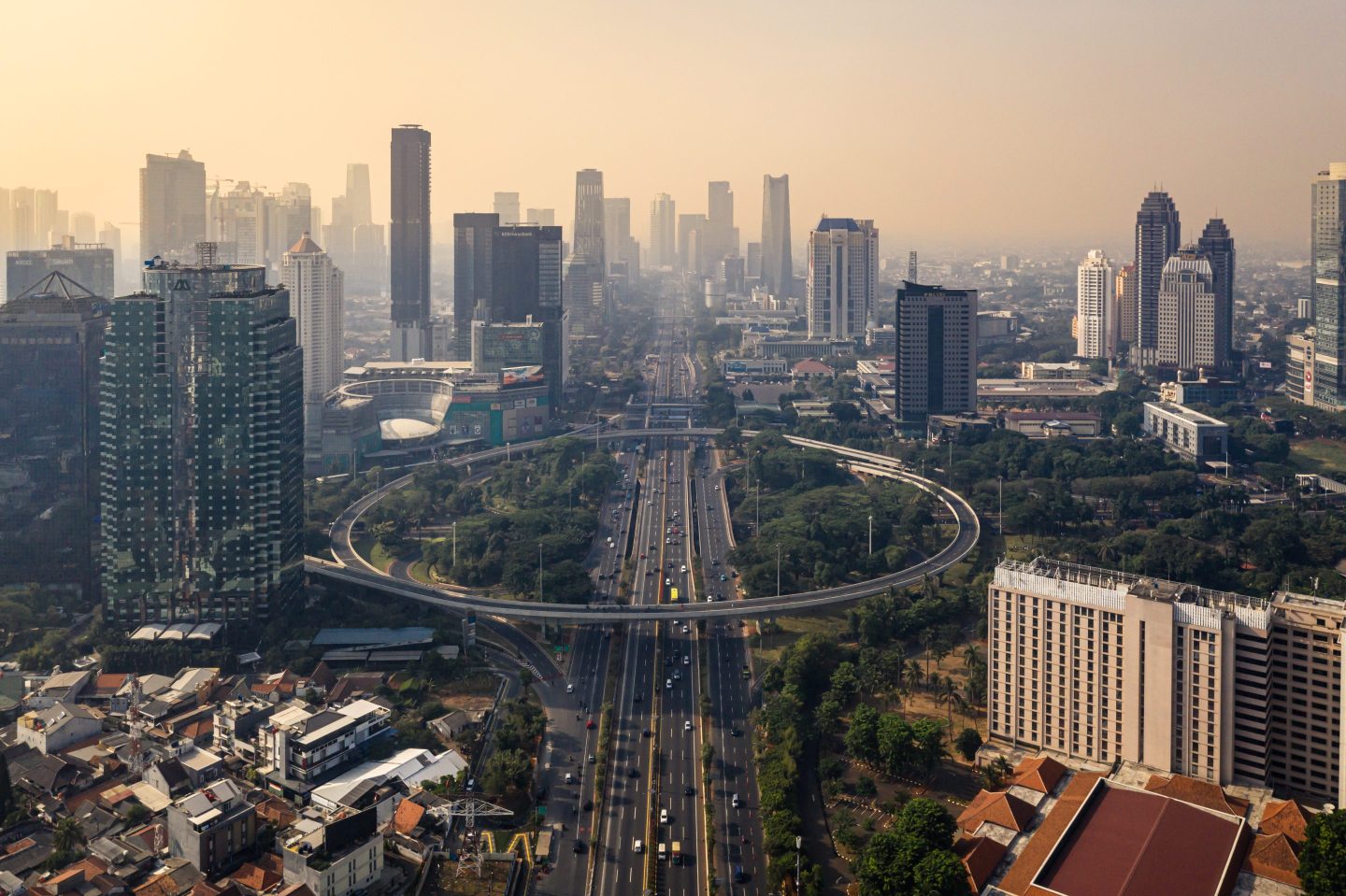
Indonesia, a middle-income country, topped the list with the highest composite flourishing score, followed by Israel, the Philippines, and Mexico.
“While many developed nations report comparatively higher levels of financial security and life evaluation, these same nations are not flourishing in other ways, often reporting lower meaning, pro-sociality, and relationship quality,” the researchers write.
Three-fourths of the participants in Indonesia reported going to religious services at least once a week, for example, providing context for why their social connectedness ranks higher than in other countries.
“Indonesia is often contrasted unfavorably with Japan in discussions of international development, cited as an example of the so-called middle-income trap, in which economic growth stalls before reaching high-income levels,” the researchers wrote in a New York Times opinion piece. “This is true, so far as it goes, but our study suggests that the focus on economic growth tells only part of the story.”
While the annual World Happiness Report considers whether people are living the best possible life they can imagine, the flourishing study looks beyond individual happiness to consider the well-being of someone’s environment.
“While the terms ‘flourishing’ and ‘well-being’ are often used interchangeably, flourishing arguably has a connotation of also having the environment itself being conducive to growth and being a part of one’s flourishing,” the authors explain. They found that a country’s wealth factors less into residents’ perception of flourishing.
“The claim being made here is not a causal assertion about gross domestic product lowering meaning,” the authors write. “Rather, the desired outcome of a society is presumably one with both high levels of economic development and high levels of meaning, and the question is then how to attain this.”
The study also found that the U-shaped curve of happiness—illustrating how life satisfaction peaks when you’re young, then dips, and peaks again when you’re older—is becoming less pronounced. In fact, people aged 18 to 29 were flourishing less than previously thought. Past research has pointed to contributors such as social isolation, financial worries, social and political unrest, and a lack of meaning and direction, among others.
For more on happiness:
- Gen Z’s angst is dismantling the long-established happiness curve and confounding researchers
- Researchers have followed over 700 people since 1938 to find the keys to happiness. Here’s what they discovered
- Happier parents tap into this 1 emotion
- Americans under 30 are so miserable that the U.S. just fell to a historic low ranking in the annual World Happiness Report