• Home
  • Latest
  • Fortune 500
  • Finance
  • Tech
  • Leadership
  • Lifestyle
  • Rankings
  • Multimedia
FinanceEconomy

Ray Dalio says Trump’s ever-changing tariff policy could contribute to a problem ‘worse than recession’ 

Eleanor Pringle
By
Eleanor Pringle
Eleanor Pringle
Senior Reporter, Economics and Markets
Down Arrow Button Icon
Eleanor Pringle
By
Eleanor Pringle
Eleanor Pringle
Senior Reporter, Economics and Markets
Down Arrow Button Icon
April 14, 2025, 7:13 AM ET
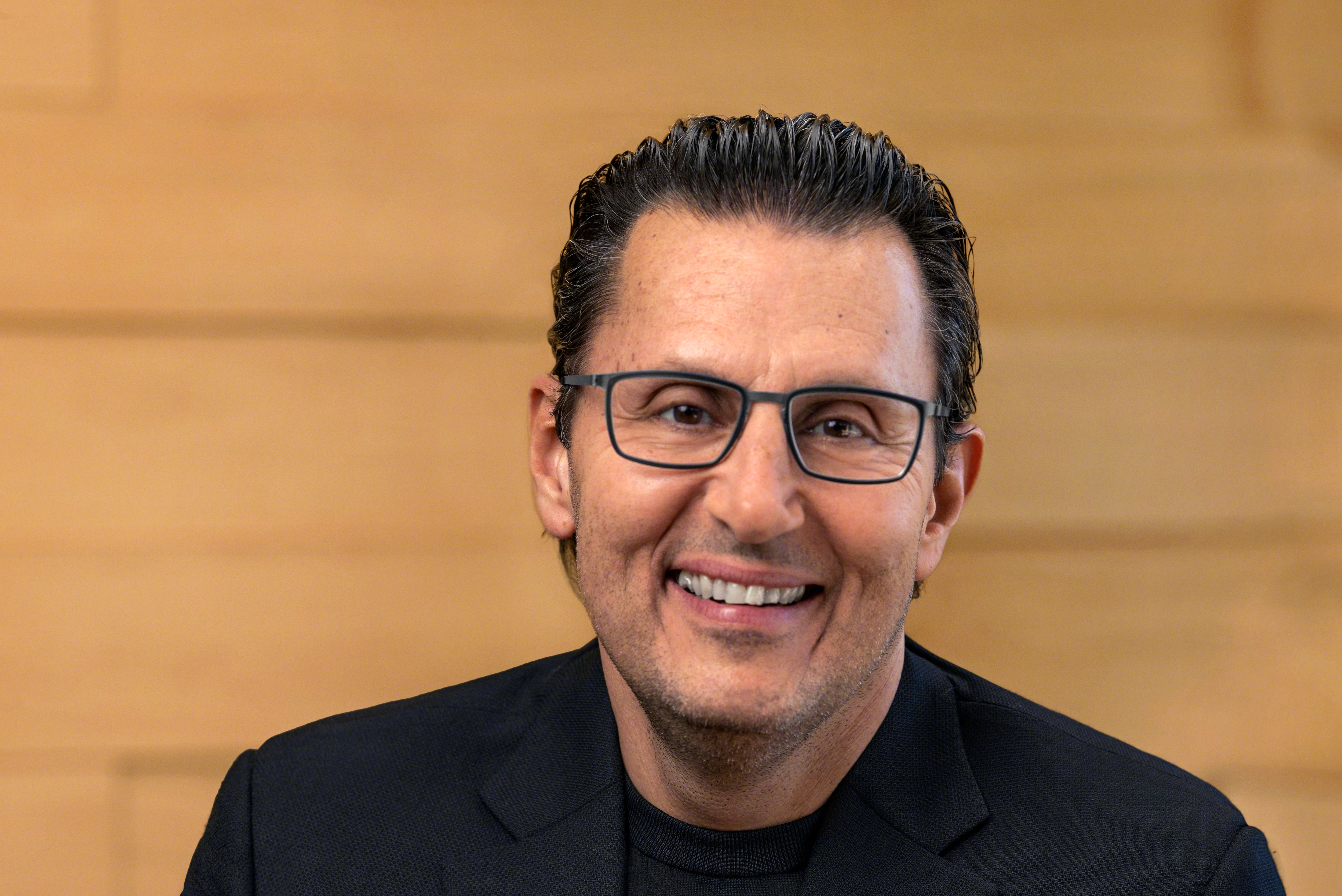
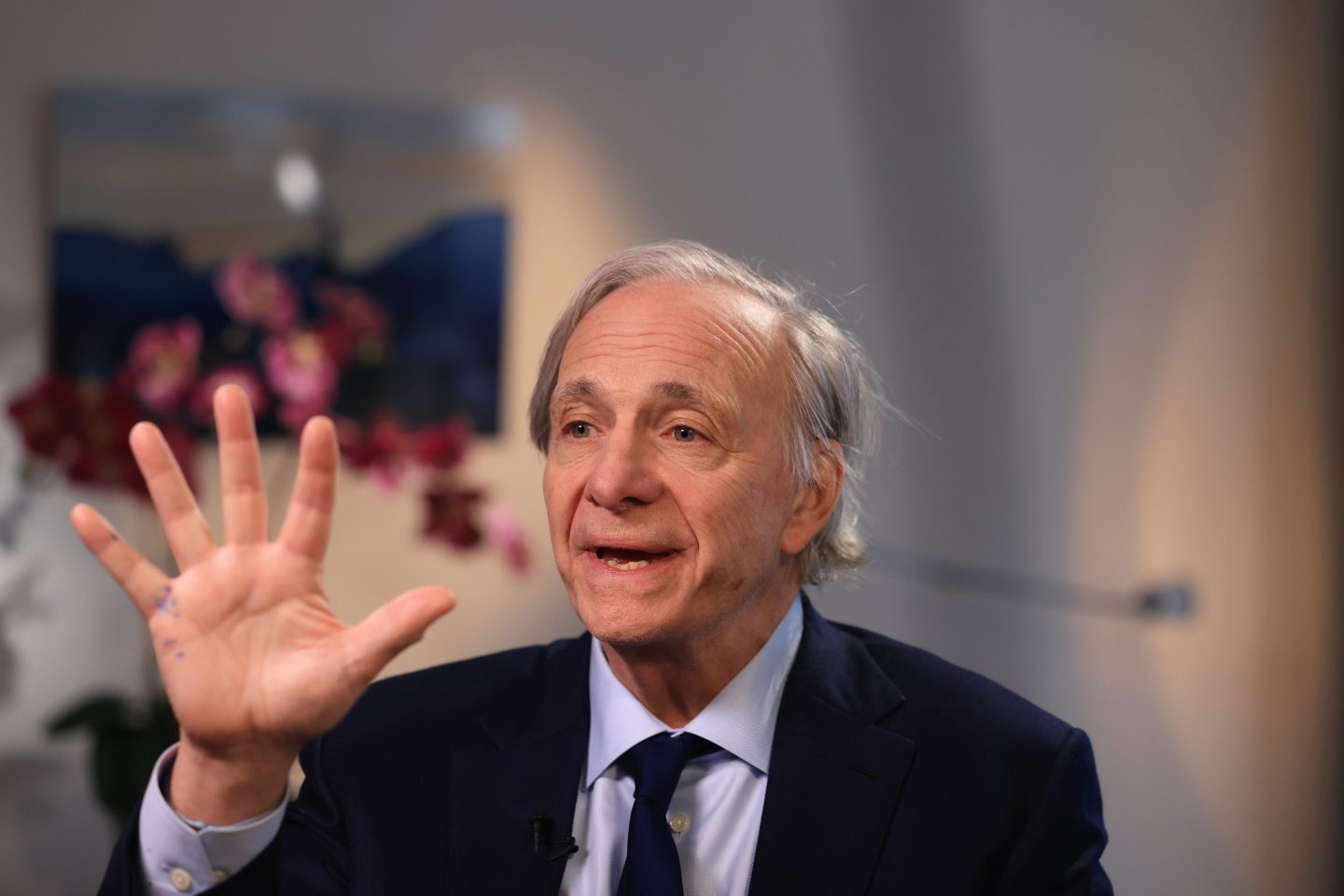
Ray Dalio, billionaire and founder of Bridgewater Associates LP
Ray Dalio, billionaire and founder of Bridgewater Associates, is concerned tariffs may contribute to a meltdown of the global economy.Chris Ratcliffe/Bloomberg - Getty Images
  • Ray Dalio warns that President Trump’s tariff policies, combined with rising debt and global tensions, could lead to a breakdown of the U.S. “monetary order,” causing disruptions far more severe than a typical recession. He compares current conditions to those of the 1930s, citing risks of internal political conflict, international power shifts, and economic instability that could escalate into a global crisis if poorly managed.

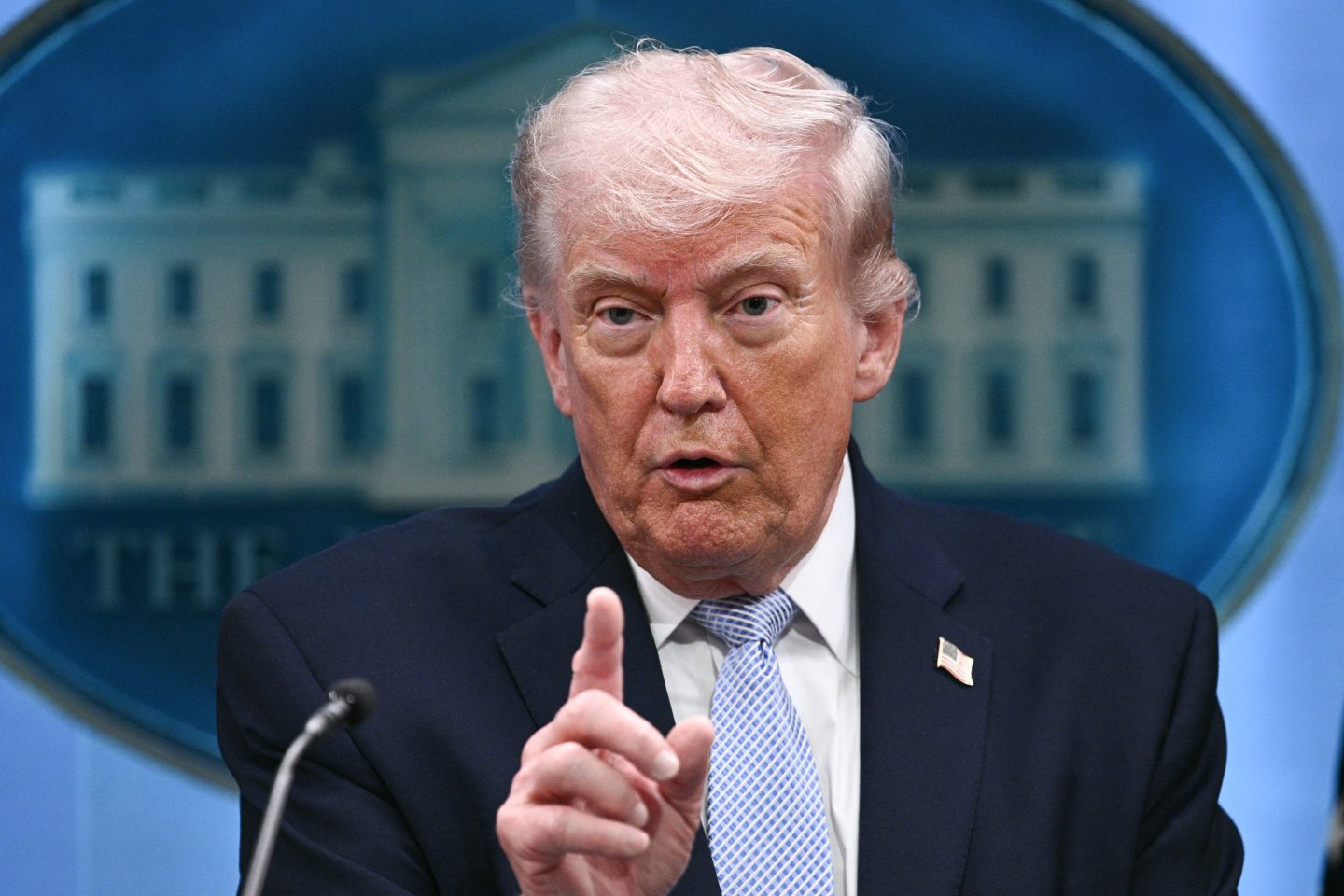
President Trump’s shifting tariff policy is part of a broader set of economic and geopolitical pressures that could trigger a crisis “worse than a recession,” according to Bridgewater Associates founder Ray Dalio.

Recommended Video

Dalio, whose net worth is estimated at $16 billion, said in an interview with NBC’s Meet the Press that the foundation of the American economy—the “monetary order”—is under threat. He warned that the breakdown of this system could have far deeper consequences for consumers and businesses than a standard economic contraction.

Dalio said history is shaped by five major forces: monetary cycles like credit and debt; internal political conflict; shifting global power dynamics; technological change; and natural disasters such as pandemics. In his view, all five are currently in play.

He sees the Trump administration’s tariff agenda—marked by sudden announcements, reversals, and exceptions—as symptomatic of policymakers’ struggle to manage these broader shifts.

Initial tariffs targeting China were followed by delayed actions against Mexico and Canada, aimed at curbing fentanyl traffic and slowing immigration.

Additional duties on industries such as autos and steel were unveiled as part of a campaign dubbed Liberation Day, with blanket 10% tariffs introduced on April 2.

Higher rates were imposed on select trading partners like the EU, Japan, and India, though they were granted a 90-day delay. China, which imposed retaliatory tariffs, was excluded from the pause.

On April 5, the White House moved to exempt smartphones and computers imported from China, following concerns over the ballooning U.S. trade deficit.

A history lesson with stark warnings for the future

Dalio criticized the chaotic rollout.

He said: “What was put there [in the April 2 tariff announcement] was like throwing rocks into the production system and those impacts would be enormous in terms of the efficiency of the whole world.

“Right now, we are at a decision-making point and very close to a recession. I’m worried about something worse than a recession if this isn’t handled well.

“A recession is two negative quarters of GDO and whether it goes there? We always have those things. We have something that’s much more profound, we have a breaking down of the monetary order—we are going to change the monetary order because we cannot send the amounts of money.”

The 75-year-old economic expert may be referring to the government debt issue, which he has highlighted before.

Many—including JPMorgan Chase CEO Jamie Dimon and Fed chairman Jerome Powell—fear that America may continue to amass public debt to the point it cannot repay it, prompting a situation where foreign nations hike their rates for Uncle Sam or simply refuse to buy its debt.

But Dalio added tariffs and changes to the domestic and world order compound the government debt issue.

“Such times are very much like the 1930s,” he continued. “I’ve studied history, and history repeats over and over again. If you take tariffs, if you take debt, if you take the rising power challenging the existing power… Those changes in the orders—the systems are very, very disruptive. How that’s handled could produce something that’s much wore than a recession or it can be handled well.”

Worst-case scenario

Dalio’s worst-case scenario includes a collapse in the value of money, internal political conflict “not like the democracy we know,” and global tensions that could escalate into military conflict.

“These breakdowns have occurred before,” he said. “The existing monetary and geopolitical order began in 1945. These systems go in cycles, and I worry about the breakdown—particularly because it doesn’t have to happen.”
Join us at the Fortune Workplace Innovation Summit May 19–20, 2026, in Atlanta. The next era of workplace innovation is here—and the old playbook is being rewritten. At this exclusive, high-energy event, the world’s most innovative leaders will convene to explore how AI, humanity, and strategy converge to redefine, again, the future of work. Register now.
About the Author
Eleanor Pringle
By Eleanor PringleSenior Reporter, Economics and Markets
LinkedIn icon

Eleanor Pringle is an award-winning senior reporter at Fortune covering news, the economy, and personal finance. Eleanor previously worked as a business correspondent and news editor in regional news in the U.K. She completed her journalism training with the Press Association after earning a degree from the University of East Anglia.

See full bioRight Arrow Button Icon

Latest in Finance

InvestingStock
There have been head fakes before, but this time may be different as the latest stock rotation out of AI is just getting started, analysts say
By Jason MaDecember 13, 2025
29 minutes ago
Politicsdavid sacks
Can there be competency without conflict in Washington?
By Alyson ShontellDecember 13, 2025
58 minutes ago
Investingspace
SpaceX sets $800 billion valuation, confirms 2026 IPO plans
By Loren Grush, Edward Ludlow and BloombergDecember 13, 2025
2 hours ago
PoliticsAffordable Care Act (ACA)
With just days to go before ACA subsidies expire, Congress is about to wrap up its work with no consensus solution in sight
By Kevin Freking, Lisa Mascaro and The Associated PressDecember 13, 2025
2 hours ago
InnovationRobots
Even in Silicon Valley, skepticism looms over robots, while ‘China has certainly a lot more momentum on humanoids’
By Matt O'Brien and The Associated PressDecember 13, 2025
3 hours ago
HealthAffordable Care Act (ACA)
A Wisconsin couple was paying $2 a month for an ACA health plan. But as subsidies expire, it’s soaring to $1,600, forcing them to downgrade
By Ali Swenson and The Associated PressDecember 13, 2025
3 hours ago

Most Popular

placeholder alt text
Economy
Tariffs are taxes and they were used to finance the federal government until the 1913 income tax. A top economist breaks it down
By Kent JonesDecember 12, 2025
1 day ago
placeholder alt text
Success
Apple cofounder Ronald Wayne sold his 10% stake for $800 in 1976—today it’d be worth up to $400 billion
By Preston ForeDecember 12, 2025
1 day ago
placeholder alt text
Success
40% of Stanford undergrads receive disability accommodations—but it’s become a college-wide phenomenon as Gen Z try to succeed in the current climate
By Preston ForeDecember 12, 2025
1 day ago
placeholder alt text
Economy
For the first time since Trump’s tariff rollout, import tax revenue has fallen, threatening his lofty plans to slash the $38 trillion national debt
By Sasha RogelbergDecember 12, 2025
22 hours ago
placeholder alt text
Economy
The Fed just ‘Trump-proofed’ itself with a unanimous move to preempt a potential leadership shake-up
By Jason MaDecember 12, 2025
21 hours ago
placeholder alt text
Success
At 18, doctors gave him three hours to live. He played video games from his hospital bed—and now, he’s built a $10 million-a-year video game studio
By Preston ForeDecember 10, 2025
3 days ago
Rankings
  • 100 Best Companies
  • Fortune 500
  • Global 500
  • Fortune 500 Europe
  • Most Powerful Women
  • Future 50
  • World’s Most Admired Companies
  • See All Rankings
Sections
  • Finance
  • Leadership
  • Success
  • Tech
  • Asia
  • Europe
  • Environment
  • Fortune Crypto
  • Health
  • Retail
  • Lifestyle
  • Politics
  • Newsletters
  • Magazine
  • Features
  • Commentary
  • Mpw
  • CEO Initiative
  • Conferences
  • Personal Finance
  • Education
Customer Support
  • Frequently Asked Questions
  • Customer Service Portal
  • Privacy Policy
  • Terms Of Use
  • Single Issues For Purchase
  • International Print
Commercial Services
  • Advertising
  • Fortune Brand Studio
  • Fortune Analytics
  • Fortune Conferences
  • Business Development
About Us
  • About Us
  • Editorial Calendar
  • Press Center
  • Work At Fortune
  • Diversity And Inclusion
  • Terms And Conditions
  • Site Map

© 2025 Fortune Media IP Limited. All Rights Reserved. Use of this site constitutes acceptance of our Terms of Use and Privacy Policy | CA Notice at Collection and Privacy Notice | Do Not Sell/Share My Personal Information
FORTUNE is a trademark of Fortune Media IP Limited, registered in the U.S. and other countries. FORTUNE may receive compensation for some links to products and services on this website. Offers may be subject to change without notice.