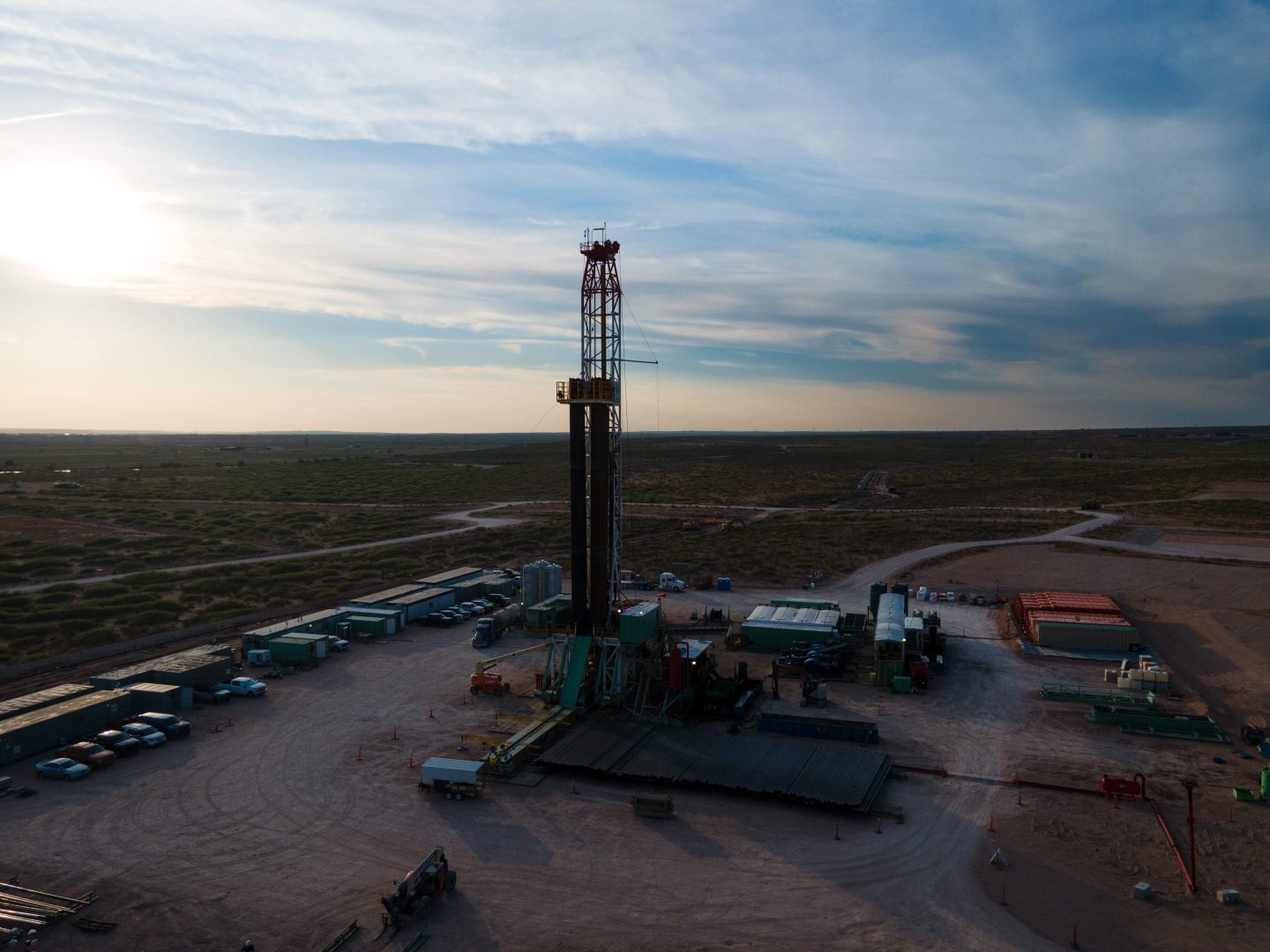
The U.S. crude oil benchmark temporarily plunged below the stress-inducing $60 per barrel threshold on Monday amid tariff and economic slowdown fears, putting the nation’s record-high volumes of oil production at risk.
The dip below $60 for front-month NYMEX WTI oil for the first time in four years was its lowest since April 2021 when the pandemic was still in full swing. Prices rebounded to a settlement price of $60.70 per barrel in the afternoon. Trump administration tariff concerns are leading the drop, but global demand concerns were already rising in recent months. OPEC exacerbated the situation last week with an unexpected announcement to increase volumes.
Energy analysts see the $60 per barrel price as a key threshold when oil producers scale back activity and, eventually, cut back on production. Prices started April above $70.
“At $60, the U.S. is going to slow down. There’s no question,” said Marshall Adkins, head of energy for Raymond James. “Production is going to go down. It just won’t happen overnight.
“We just got hit over the heads by a bat. We’re just trying to get off the ground to see what to do,” he added. “The word of the day is uncertainty.”
The U.S. currently churns out nearly 13.6 million barrels of crude daily, up from about 11.3 million barrels a day in April 2021, according to the U.S. Energy Information Administration. The U.S. oil industry has essentially fluctuated between growth and stability—maintenance mode—since the pandemic without any major setbacks until now.
To put oil pricing into context, the industry cuts back at $60 per barrel. “But $50 is a disaster for everyone,” Adkins said. “And you’re not going to get ‘Drill, baby, drill’ or meaningful activity growth unless it’s $85 or above.”
Research firm Rystad Energy estimated the average breakeven price for profitability in the U.S. oil sector is $62 per barrel.
“With Lower 48 production growth already unlikely outside the Permian [Basin], a downshift in the country’s most prolific oil basin would decelerate the rate of production growth in 2025, should prices remain subdued,” said Matthew Bernstein, Rystad vice president for North American oil and gas.
Gabriele Sorbara, managing director at Siebert Williams Shank & Co., said most oil producers will take a wait-and-see approach with the tariffs to see if they stick and how markets continue to react.
So, the industry is not coming to a standstill unless prices continue to plummet. One strategy companies will take, Sorbara said, is continuing to drill wells—maybe at a slower pace—but not completing them or bringing them online unless prices recover.
“You want to keep that organizational momentum,” he said. “I think they’ll hold onto stuff as long as they can because they don’t want to let go of a [drilling] rig or [fracking] crew if they’re really efficient.”
Companies with any extra cash may be more likely to use those dollars on stock buybacks rather than drilling additional wells, he said. And those struggling more will pull back on buybacks and dividends, as well as drilling activity.
Natural gas and gasoline
While oil markets are showing panicked signs and pricing fluctuations, natural gas prices are more stable. “You’re not going to turn the lights off, but you are going to drive less,” Sorbara said, comparing the difference between the two commodities.
The biggest concern for natural-gas producers is whether the tariffs hurt the technology sector to the point it causes a notable slowdown in the data-center construction boom, which is expected to trigger greater natural-gas demand, he said.
As for gasoline and fuel prices, they typically peak in April amid refinery maintenance season in preparation for the busy summer driving months.
Due to the selloff in oil prices, it looks like that’s about to change, said Patrick DeHaan, head of petroleum fuel analysis at GasBuddy.
“There are plenty of drops to come,” DeHaan said. “Tariffs are really the biggest driver for fuel prices right now.”
The national average for regular unleaded gasoline was $3.21 per gallon before markets opened April 7.
If crude prices remain low or fall further, the average fuel price could sink below the $3 per gallon threshold as early as May, DeHaan said. The last time the average was below $3 for more than two days was May 2021, according to GasBuddy.
President Trump has advocated for lower fuel prices, including citing the $3 per gallon level multiple times. In reaction to the markets falling on Monday, Trump posted on social media: “Oil prices are down, interest rates are down (the slow moving Fed should cut rates!), food prices are down, there is NO INFLATION, and the longtime abused USA is bringing in Billions of Dollars a week from the abusing countries on Tariffs that are already in place.”
DeHaan said sometimes, you need to be careful what you wish for.
“Trump wants cheap gasoline, but cheap gasoline usually means the economy is under pressure.” he said.