• Home
  • News
  • Fortune 500
  • Tech
  • Finance
  • Leadership
  • Lifestyle
  • Rankings
  • Multimedia
FinanceMarkets

Growth expectations have plummeted as global fund managers pour out of U.S. equities and pile in to cash like Warren Buffett 

By
Greg McKenna
Greg McKenna
News Fellow
Down Arrow Button Icon
By
Greg McKenna
Greg McKenna
News Fellow
Down Arrow Button Icon
March 24, 2025, 2:41 PM ET
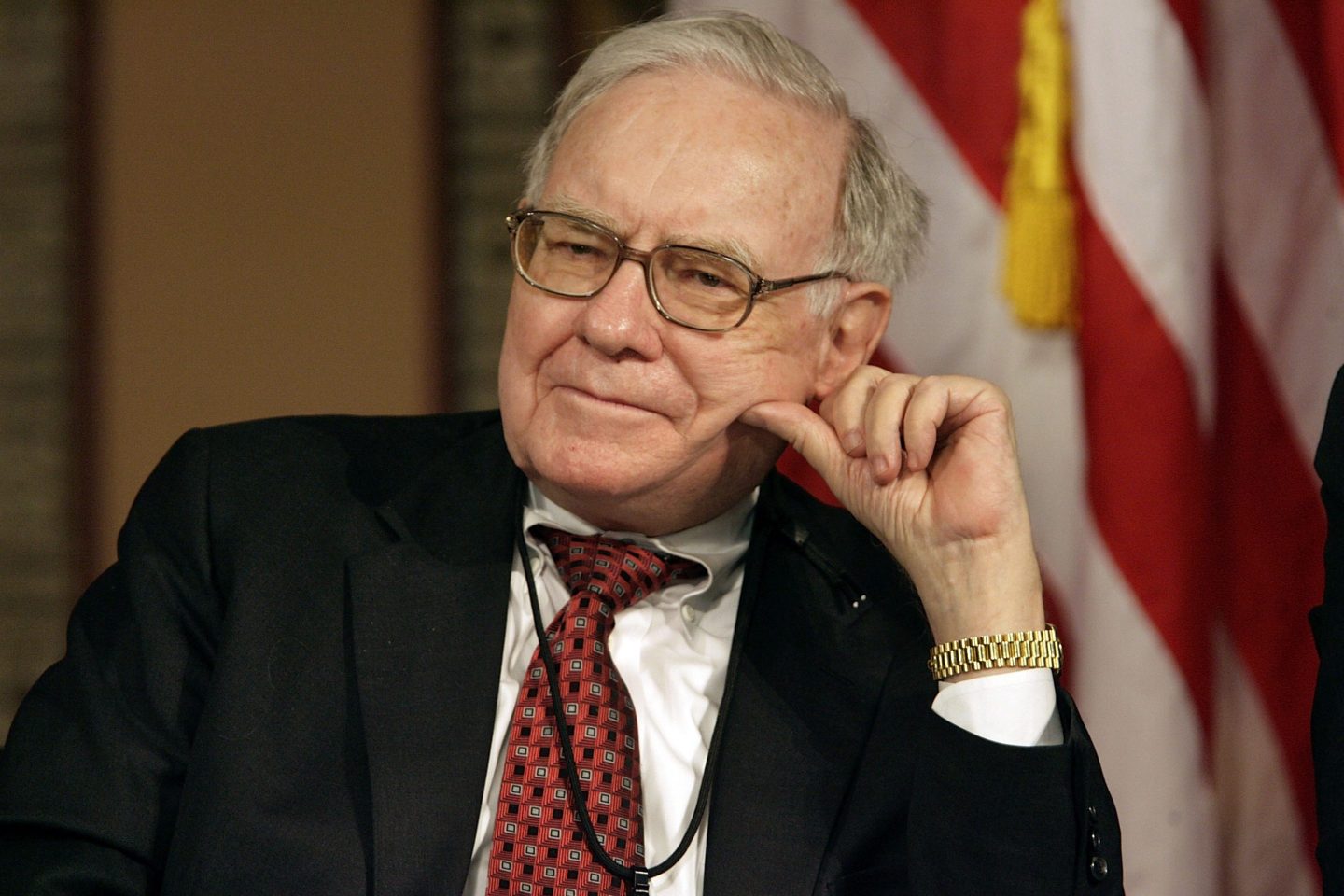
Warren Buffett sits and leans his head on his left hand as he listens with an American flag in the background.
"Be fearful when others are greedy, and greedy when others are fearful," Warren Buffett famously said. Chip Somodevilla—Getty Images
  • Fund manager sentiment has been highly correlated with the performance of the S&P 500. BofA analysts led by chief investment strategist Michael Hartnett said dimming views about American stocks have driven a “bull crash” in sentiment, but they indicated the speed and scale of the correction bodes well for the market going forward.

Money managers’ optimism has faded fast in the early days of Trump 2.0. Bank of America’s monthly global fund manager survey revealed sentiment nosedived in March, resulting in the second-worst plunge in global growth expectations and biggest drop in U.S. equity allocation since BofA began conducting the survey in 1994. 

Recommended Video

Respondents signaled their selling spree helped fuel the stock market’s recent correction as they parked their money on the sidelines—mirroring Warren Buffett’s record $334 billion cash pile.

America’s most revered investor, however, gave a famous piece of advice in a letter to Berkshire Hathaway shareholders in 1968: “Be fearful when others are greedy, and greedy when others are fearful.”  Indeed, while BofA analysts led by chief investment strategist Michael Hartnett said dimming views about American stocks had driven a “bull crash” in sentiment, they indicated the speed and scale of the correction bodes well for the market going forward.

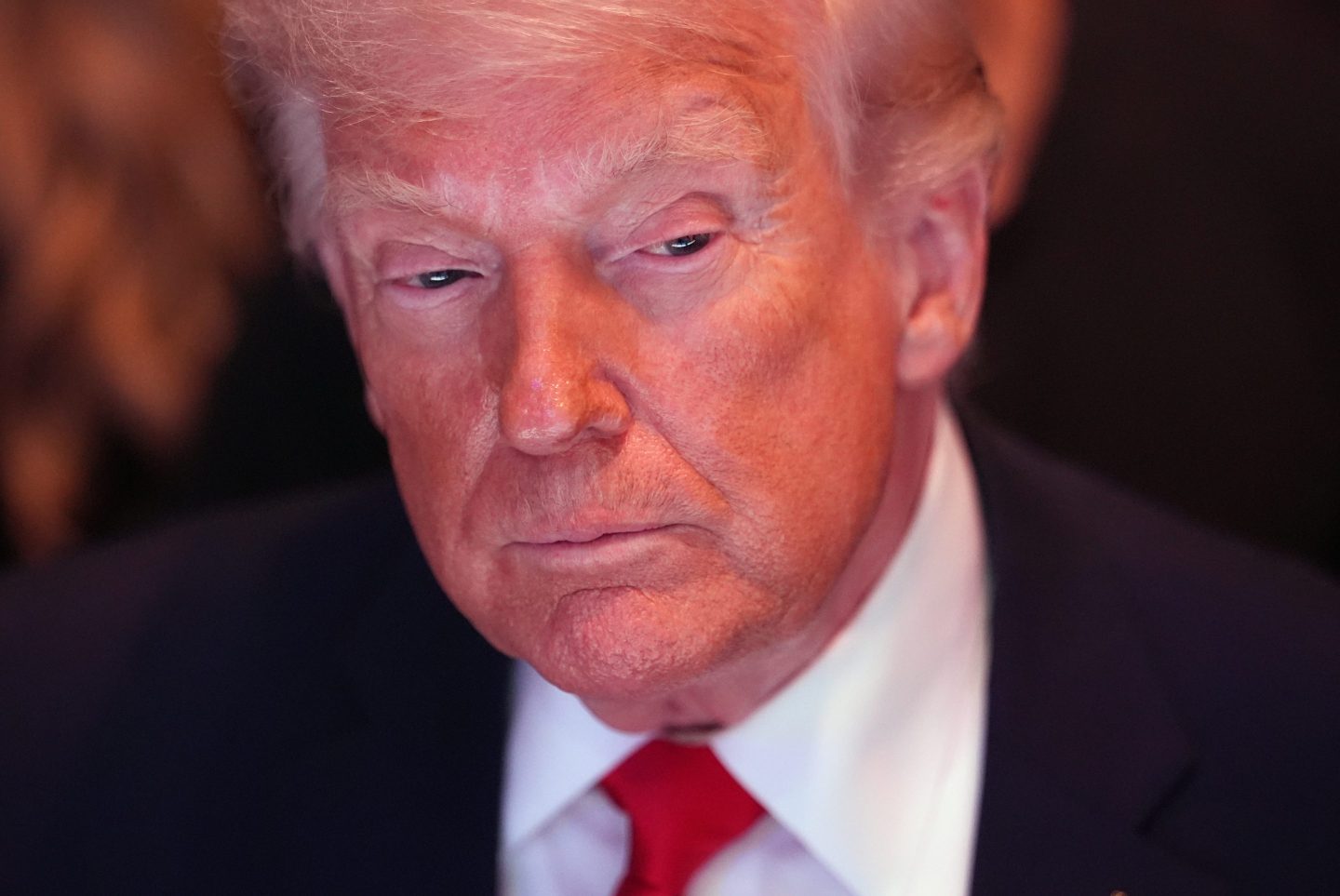
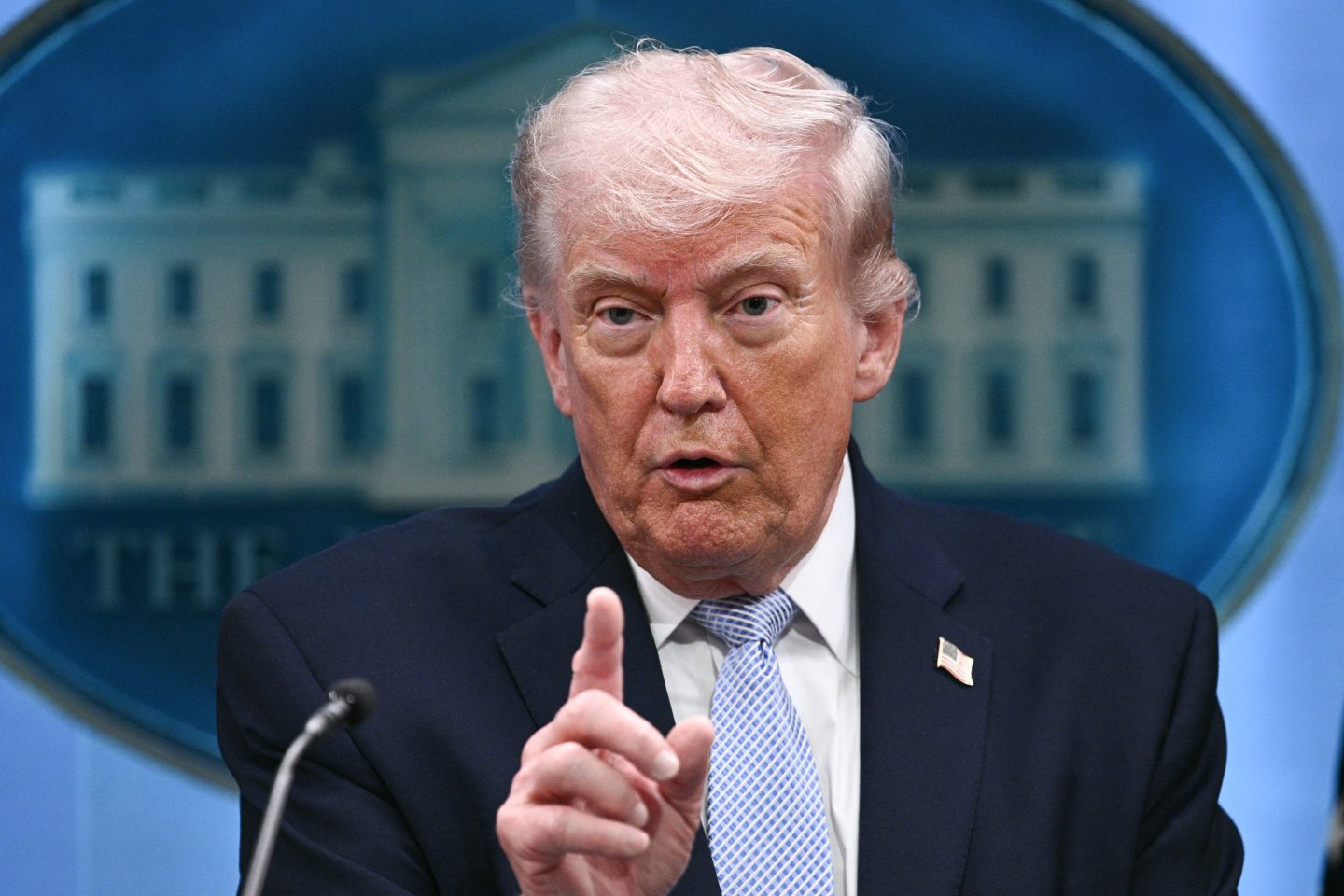
Nonetheless, there’s no doubt the 171 survey respondents, who manage roughly $425 billion in assets combined, have been spooked by President Donald Trump’s on-again, off-again tariff threats. In February, a net 2% of investors expected a weaker global economy over the next 12 months, meaning that a small majority of respondents were pessimistic at the time. That number has since ballooned to 44%—the worst single-month plunge in growth expectations aside from March 2020, or the onset of the COVID-19 pandemic in the U.S.  

Fund manager sentiment, BofA said, has been highly correlated with the performance of the S&P 500.

“Pessimism on global growth outlook is bad news for stocks,” the team wrote when the survey, conducted during the second week of the month, was released last week. 

After Trump’s election win in November, hopes the new administration would prioritize tax cuts and deregulation fueled a big rally for stocks. Instead, Trump has appeared fixated on the use of tariffs not only as a bargaining chip but also as a tool to address America’s trade deficit, resulting in massive uncertainty about U.S. trade policy.

In the BofA survey, 55% of fund managers said a trade war-induced recession is the biggest “tail risk” faced by the market—the most-cited factor since “COVID resurgence” in April 2020—followed by inflation forcing rate hikes by the Federal Reserve and concerns about the impact of Elon Musk’s Department of Government Efficiency, also known as DOGE.

Over 70% of respondents, meanwhile, said they expect a form of dreaded “stagflation,” or slowing growth and an uptick in inflation. None of the fund managers surveyed, however, are currently forecasting a true recession.

Investors get reason to cheer

It’s important to note, too, that surveys of investor sentiment may much better explain why stocks have recently sold off than signal where the market is headed. In one month, the average cash position of fund managers surveyed jumped 60 basis points to 4.1%. That marks the end of BofA’s contrarian “sell signal,” or a metric that suggests an opportunity to buy low when other investors are selling, and vice versa. 

That signal had initially been triggered in December, when the cash allocation of respondents fell below BofA’s 4% threshold. Since then, the Nasdaq Composite and S&P 500 have both entered correction territory by dropping 10% or more before recovering slightly. 

Clearly, managers have decided to rotate out of U.S. stocks, with a net 23% of investors going underweight, compared to a net 17% being overweight last month. The 40-point drop is the biggest in the history of the survey, and 69% of respondents said the theme of “U.S. exceptionalism“—or American equities outpacing the rest of the world—had peaked. Bullish expectations about the Chinese economy, meanwhile, have become the norm.

Still, BofA’s survey indicated investors still expect the Fed is on track to achieve a so-called “soft landing,” or lower inflation without inducing a recession, and believe the central bank will slash interest rates two to three times this year.

On Friday, the S&P ended a week in the green for the first time in a month. Investors received more good news over the weekend, with reports suggesting so-called reciprocal tariffs being announced on Apr. 2, which Trump ordered economic officials to custom design to basically every U.S. trading partner, will be relatively narrow in scope. The market cheered the news, with the S&P 500 rising 1.5% as of Monday afternoon.

Fortune Brainstorm AI returns to San Francisco Dec. 8–9 to convene the smartest people we know—technologists, entrepreneurs, Fortune Global 500 executives, investors, policymakers, and the brilliant minds in between—to explore and interrogate the most pressing questions about AI at another pivotal moment. Register here.
About the Author
By Greg McKennaNews Fellow
LinkedIn icon

Greg McKenna is a news fellow at Fortune.

See full bioRight Arrow Button Icon

Latest in Finance

A computer screen with the Vanguard logo on it
CryptoBlockchain
Vanguard has a change of heart on crypto, lists Bitcoin and other ETFs
By Carlos GarciaDecember 2, 2025
7 hours ago
Anthropic cofounder and CEO Dario Amodei
AIEye on AI
How Anthropic’s safety first approach won over big business—and how its own engineers are using its Claude AI
By Jeremy KahnDecember 2, 2025
9 hours ago
Costco
BankingTariffs and trade
Costco sues Trump, demanding refunds on tariffs already paid
By Paul Wiseman and The Associated PressDecember 2, 2025
9 hours ago
Man on private jet
SuccessWealth
CEO of $5.6 billion Swiss bank says country is still the ‘No. 1 location’ for wealth after voters reject a tax on the ultrarich
By Jessica CoacciDecember 2, 2025
11 hours ago
Elon Musk, standing with his arms crossed, looks down at Donald Trump sitting at his desk in the Oval Office
EconomyTariffs and trade
Elon Musk says he warned Trump against tariffs, which U.S. manufacturers blame for a turn to more offshoring and diminishing American factory jobs
By Sasha RogelbergDecember 2, 2025
11 hours ago
layoffs
EconomyLayoffs
What CEOs say about AI and what they mean about layoffs and job cuts: Goldman Sachs peels the onion
By Nick LichtenbergDecember 2, 2025
11 hours ago

Most Popular

placeholder alt text
Economy
Ford workers told their CEO 'none of the young people want to work here.' So Jim Farley took a page out of the founder's playbook
By Sasha RogelbergNovember 28, 2025
4 days ago
placeholder alt text
Success
Warren Buffett used to give his family $10,000 each at Christmas—but when he saw how fast they were spending it, he started buying them shares instead
By Eleanor PringleDecember 2, 2025
18 hours ago
placeholder alt text
Economy
Elon Musk says he warned Trump against tariffs, which U.S. manufacturers blame for a turn to more offshoring and diminishing American factory jobs
By Sasha RogelbergDecember 2, 2025
11 hours ago
placeholder alt text
C-Suite
MacKenzie Scott's $19 billion donations have turned philanthropy on its head—why her style of giving actually works
By Sydney LakeDecember 2, 2025
18 hours ago
placeholder alt text
Success
Forget the four-day workweek, Elon Musk predicts you won't have to work at all in ‘less than 20 years'
By Jessica CoacciDecember 1, 2025
1 day ago
placeholder alt text
AI
More than 1,000 Amazon employees sign open letter warning the company's AI 'will do staggering damage to democracy, our jobs, and the earth’
By Nino PaoliDecember 2, 2025
20 hours ago
Rankings
  • 100 Best Companies
  • Fortune 500
  • Global 500
  • Fortune 500 Europe
  • Most Powerful Women
  • Future 50
  • World’s Most Admired Companies
  • See All Rankings
Sections
  • Finance
  • Leadership
  • Success
  • Tech
  • Asia
  • Europe
  • Environment
  • Fortune Crypto
  • Health
  • Retail
  • Lifestyle
  • Politics
  • Newsletters
  • Magazine
  • Features
  • Commentary
  • Mpw
  • CEO Initiative
  • Conferences
  • Personal Finance
  • Education
Customer Support
  • Frequently Asked Questions
  • Customer Service Portal
  • Privacy Policy
  • Terms Of Use
  • Single Issues For Purchase
  • International Print
Commercial Services
  • Advertising
  • Fortune Brand Studio
  • Fortune Analytics
  • Fortune Conferences
  • Business Development
About Us
  • About Us
  • Editorial Calendar
  • Press Center
  • Work At Fortune
  • Diversity And Inclusion
  • Terms And Conditions
  • Site Map

© 2025 Fortune Media IP Limited. All Rights Reserved. Use of this site constitutes acceptance of our Terms of Use and Privacy Policy | CA Notice at Collection and Privacy Notice | Do Not Sell/Share My Personal Information
FORTUNE is a trademark of Fortune Media IP Limited, registered in the U.S. and other countries. FORTUNE may receive compensation for some links to products and services on this website. Offers may be subject to change without notice.