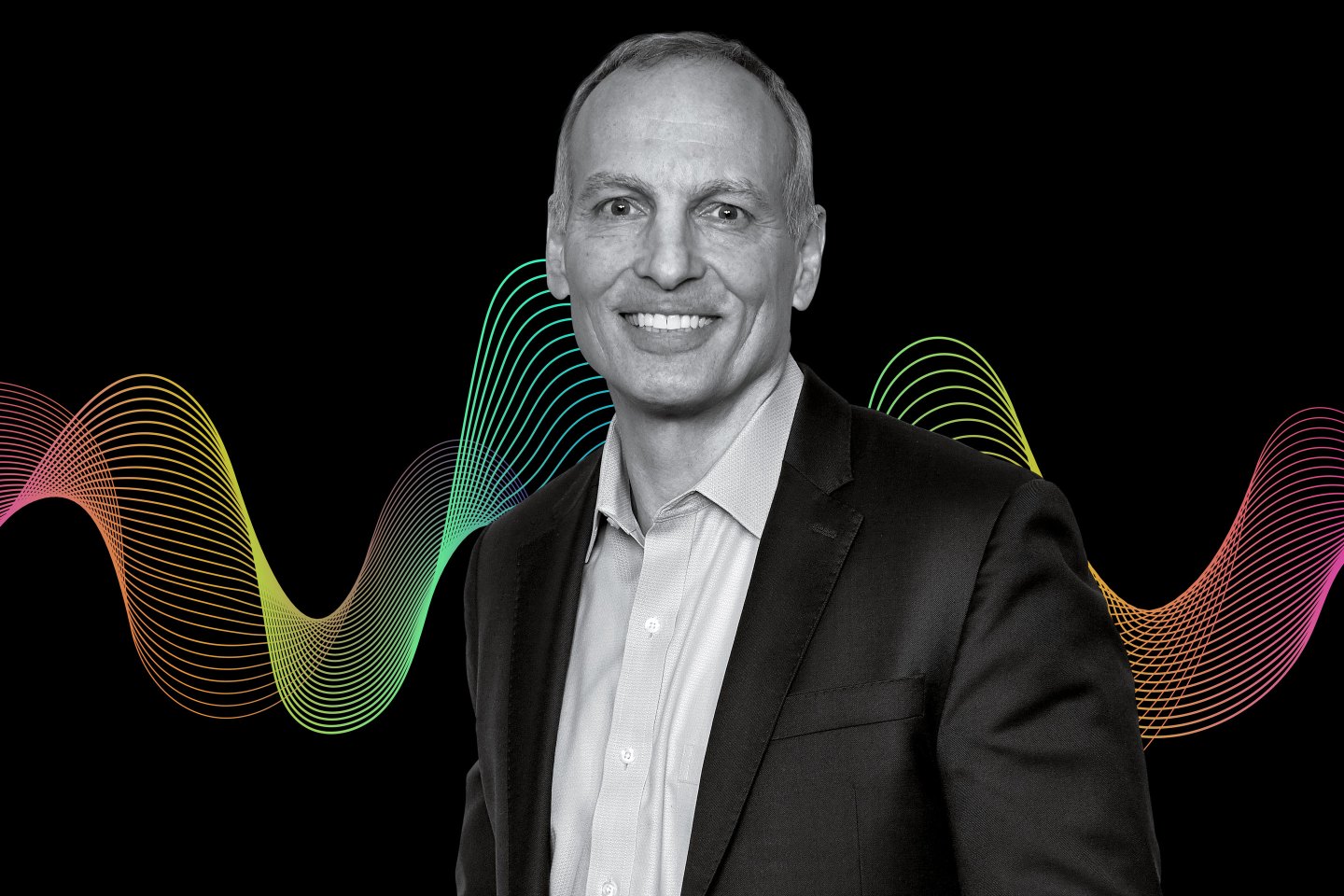
On this episode of Fortune’s Leadership Next podcast, cohosts Diane Brady, executive editorial director of the Fortune CEO Initiative and Fortune Live Media, and editorial director Kristin Stoller talk to Glenn Fogel, the CEO of Booking Holdings. They talk about the future of AI in the travel industry; how Booking Holdings is working toward an all-in-one travel platform; and how Fogel went from an investment banker to a C-suite success.
Listen to the episode or read the transcript below.
Glenn Fogel: What we want is we want, well, our vision, this connected-trip vision, is we should be able to handle everything for you, but there’s got to be an easier way to do that. And that’s why we’re having conversations, as are, I’m sure, our competitors too. Everybody is trying to figure out what is the best way to use these new technologies to make it easier for everybody to experience the world, which, of course, is our mission: making it easier for everybody to experience the world. And gen AI absolutely is going to do it.
Diane Brady: Hi everyone. Welcome to Leadership Next, the podcast about the people…
Kristin Stoller: … and trends…
Brady: …that are shaping the future of business. I’m Diane Brady.
Stoller: And I’m Kristin Stoller.
Brady: This week, we are speaking with Glenn Fogel of Booking Holdings.
Stoller: Booking Holdings! I’m so excited to talk with Glenn because I just got back from a trip from Japan, and I’m all about the travel industry now, and I—my funny story for you, Diane, is I, actually, I was so stressed about the trip, I used ChatGPT to to do my entire itinerary for me.
Brady: Was it good?
Stoller: It was really good. It had the perfect itinerary, perfect amount of days in each, but it reminded me of Glenn because he came in, sat with us and the Fortune editors in November, and was talking about how he wants to turn his company, kind of into the AI travel agent—is that the future? Are we no longer going to have to book our own trip?
Brady: Disrupt or be disrupted?
Stoller: Yeah.
Brady: I used to cover travel, aviation, arts, and leisure for the Asia Pacific region…
Stoller: Ooh, tell me more.
Brady: …when I was with the Wall Street Journal. And these are issues that people have been dealing with for a long time, which is, who needs a travel agent or a booking site when you can go direct? But what’s fascinating to me about Booking Holdings is: They have created a brand in themselves. They’ve created loyalty programs, and in a way, they both partner with the hotels, the airlines. They also, of course, are competitors, and as we get ChatGPT and some of these other forces, they’re trying to also change the relationship they have with the consumer. So there’s lots to talk about.
Stoller: There is and I think, you know, it’s also interesting that they own OpenTable, which, here in New York, the Resy versus OpenTable debate is, is hot.
Brady: Which do you use?
Stoller: Okay, I used to use Resy. I used to be all about Resy. And now OpenTable. I think I’m able to get more because all these bots are trying to take up reservations. What do you use?
Brady: OpenTable.
Stoller: Okay, wow.
Brady: For the points, I’m a loyalty person.
Stoller: The points are good.
Brady: Everybody knows I’m very good at loyalty. Well, lots to talk about. Glenn is always very thoughtful. We’ve both spoken to him in the past, and I think listeners are in for a treat.
Stoller: Yeah, he’s very, very candid. When he was here with the Fortune editors, I asked him, I said, “What made you want to catapult yourself to be CEO of a company?” And he was super candid and said, “Well, you know, I wouldn’t be CEO if the former CEO wasn’t fired.” And he became it in 2017 so it was…
Brady: Doesn’t matter how you got here, it’s what you do when you get through the door, right?
Stoller: Exactly.
Brady: Well, we’ll be right back with Glenn after the break.
Brady: We’re seeing an erosion of trust in institutions, which is being made worse amid the rise of AI and polarization. And yet, trust in business remains relatively strong. We spoke with Jason Girzadas, the CEO of Deloitte U.S., which is the longtime sponsor of this podcast. Here’s what he had to say:
Jason Girzadas: Trust is a function of businesses meeting their stakeholders’ expectations and creating value. And that’s true for customers, that’s true for the workforce, that’s true for society at large. And I think given the challenges that other key pillars of the economy and society have faced in terms of trust, businesses have an opportunity to actually rise above that set of concerns and forge new levels of trust with all their stakeholders. This is an opportunity for businesses to really lead around trust, creating experiences that are reliable and resilient, as well as fulfilling their expectations to those stakeholders. And over time, I think trust will be a function of—are businesses actually meeting the human needs that are resident, whether it’s around health and well-being, or contributing to the environment, or to worker satisfaction and engagement.
Brady: So Glenn, since we’re talking about travel, it’s so important in my life. You just came back from a big trip…
Stoller: Yep, a big trip to Japan. I was very excited, but very jet-lagged right now, so give me grace.
Brady: I’m curious, was there a trip in your life early on that you think was formative for you? There was for me, so I’m just curious, what was the first big trip you took on your own that changed you?
Fogel: Absolutely, so, I was not on a plane until, I think, maybe third grade, and maybe, I don’t know, four or five plane trips before I went to college, but after my sophomore year in college, I went to study in Santander in Spain in the summer. And I was like, wow, this is cool. And then what I did is the next winter at Penn, they had a six-week interbreak, and I went and studied in the Soviet Union.
Brady: Oh!
Fogel: And that was pretty cool.
Brady: When it was the Soviet Union?
Fogel: When it was the Soviet Union, exactly. And then came—and then that next summer, a best friend of mine, we went, instead of getting jobs that summer, it was our junior year, we went off to Europe, just with, you know, rail pass. It was great.
Stoller: I did that too, back in college.
Fogel: Exactly, exactly, and that’s just wonderful. And then after my first year of law school, instead of going—everyone else gets a job; I went off to Asia for three months on my own. I just got a one-way ticket…
Brady: Travel buff.
Fogel: Absolutely. Just went everywhere, all throughout. I mean, this is the summer of 1986 and I’m in China. There weren’t a lot of people who were American who were in China at that point. And I was in…
Brady: That was pre–Tiananmen Square.
Fogel: Oh, yeah, ’89 was Tiananmen Square, right? And I was also in what now, of course, is Myanmar. It was not Myanmar back then. And I was just wild—I was up in Bagan at the temples. And I just ever since, like, travel is cool, I’m doing it.
Brady: I always think of that Mame quote, life is a banquet, and most poor suckers are starving. I mean, I feel like travel is both: It’s a delight for people, but it’s also a source of fear. And one of the things we were talking about before the show is: What do you think the state, the mindset is right now around travel? I mean, is it a scarier time for people to travel? Is there more demand? I’m thinking most right now, from an American point of view. Obviously there’s burgeoning demand in China and other places.
Fogel: Well globally, obviously, demand for travel is much—growing faster outside. And that’s purely an economic thing. When you have people are going from poverty to lower middle class, the first thing they want to do is travel. Which, obviously, you’re gonna get bigger growth there. But I don’t know. It’s interesting. I’ve never asked anybody that question, and I don’t know if we could even measure it, because, were people scared back then or not? But I remember the difference when I first started traveling: There was no mobile phone. There were no phones at all.
Stoller: Google Translate did my entire trip in Japan, by the way.
Fogel: There was no Google. There was nothing, I went off on my own. My folks said, “Enjoy, hope it works out okay for you, hope we see you back.” And that was it. And, yeah, I remember from my Asia trip I mentioned, I remember once in Singapore, saying “Ah, this is cool. I can definitely make a phone call from here.” It was like, you know, one phone call I made over three months. “Hey, how’s everybody going back there?” Yeah they’d get postcards every so often, but I wouldn’t get anything from them, of course. Now you have all these ways to have instant communication, instant translation, Google Maps, no problem where to go. And I would like say places like Booking.com, that can help you find a great accommodation, anywhere in…
Stoller: There you go…
Fogel: I got the plug-in. And the thing is, back then, you know, “where are you gonna stay.” “I don’t know. We’ll figure it out.” You talk to other people, and it’s—why would people be scared now, with all that information?
Stoller: Are there any places you wouldn’t travel today?
Fogel: Yeah, there are a lot of places I wouldn’t travel today.
Brady: Yeah, like North Korea.
Fogel: Well, first of all, first of all, there are places that you’re not allowed to travel, right? You’re an American, you can’t go to Cuba, you can’t go to North Korea. I mean, there are a bunch of places. I wouldn’t be going to Iran. There are a whole bunch of places I don’t go. But there are also some places even in the U.S., sometime at night, I’m a little bit scared to go visit, so it’s not the countries, you know, the exact location.
Stoller: Yeah. Well, I was telling Diane, when you were last here in November, you were telling me about all the AI agents and what you’re trying to do. And it inspired me, because for my Japan trip, I plugged in to ChatGPT: “Make me an itinerary for Japan.” And you totally inspired me, but I want you to tell Diane a little bit more about what you’re doing.
Brady: That should be a cautionary tale. She did not use you guys.
Fogel: I am incredibly disappointed right now.
Stoller: But you inspired it!
Fogel: I inspire you to use the Booking.com AI trip planner.
Stoller: Well tell me how it works, maybe next time I will.
Fogel: If you’d just gone to the Booking.com app it’s right on the front.
Brady: Well, let’s clarify for people. Booking Holdings, it’s not just Booking.com, and all AI embedded throughout. I use Priceline a lot.
Fogel: Thank you.
Brady: OpenTable.
Fogel: Sure. Thank you. Thank you. Thank you very much on that too. And of course, we mentioned Booking.com already, and Kayak you mentioned. And we also have things like Rentalcars.com, but that is now part of Booking.com; the big ones really are: You have OpenTable for restaurants. You have Booking.com, you got Priceline you got to go to for normal travel reservations, et cetera. You got your Kayak for a meta search. That’s kind of the core of the business. We have a lot of other ones too. We have you covered, no matter which way you want to do it. And I cannot tell you how disappointed I am…
Stoller: …I know…
Fogel: …but I hope you at least booked with us.
Stoller: I did, so you can rest easy.
Fogel: Okay, that’s good, okay, because that’s actually better, because where we actually get paid is the booking, not…
Brady: But Kristin raises a good point. Why do we need you in an era where we can sit down on our computer and just say, you know, Claude, ChatGPT, “Plan my trip for me,” and at some point soon, obviously, book it. My agent will talk to your agent, and off it goes.
Fogel: Right, and that will happen, we believe, at some point, which, of course, we are having these conversations with everybody in the Valley, throughout the world, actually, in terms of how we work together. Because what you wouldn’t have happen is, you go and use a large language model to plan it out, and then what? Now are you going to go to each one of those individual suggestions they gave you? Are you going to go to each direct site, or you can clunk over to us, but there’s got to be an easier way to do that, and that’s why we’re having conversations, as are, I’m sure, our competitors too. Everybody’s trying to figure out what is the best way to use these new technologies to make it easier for everybody to experience the world, which, of course, is our mission, making it easier for everybody to experience the world. And gen AI absolutely is going to do it.
Stoller: Walk me through a scenario, then, of what I could have done with you, or on your site, or a futuristic one that you want to get to.
Fogel: What you could have done is either, let’s go with Booking.com for the heck of it. You could have gone to our AI trip planner on the thing and just typed in “I’m thinking of going to Japan. Not sure yet. These are the dates I’m thinking of going, and I’m not really sure where I want to go yet, but…” Here’s a but. And you could have had an interactive conversation going back and forth. And eventually, eventually it would have come up with property suggested to you based on you, based on all the things we were just talking about. And then, with the properties right there, you could just click on the one you liked, and it would have gone straight into the booking process, and we could have had it all done like that. Instead, what you did is you had that whole list. Now, what did you do with that list from ChatGPT? Did you just save it and then you’re going back and forth, and then you’re going back, forth, or maybe a copy and paste, and then you put in something else?
Stoller: Retyped it all into Google, yeah.
Fogel: Not as easy, no. But what we want is we want, well, our vision, this connected-trip vision, is we should be able to handle everything for you, so that from start to finish, from beginning to plan it out, till the time you actually book, to then actually going and doing it, and then when you’re there experiencing it, and then coming back and, God forbid anything goes wrong, anything at all, we want to be sure that we’re there to fix it. But even more, is, I want to be fixing problems before they happen. I want it as if you are walking around with a human travel agent in your pocket. What you have instead is your phone, and you have the app, and that app is aware. It knows everything about you that you want it to know about. It knows where you are, knows what you’re doing. So, for example, let’s say instead of Japan, you’re going to, say, Amsterdam, okay? And you’ve booked, because most people do, you want to have a boat ride, a canal ride. It’s a very nice thing to see. And book that and that’s done. And we did, you did, we did it with you and got it for you Thursday. But you also like museums, so you can go to the Rijksmuseum. You got that one on Friday. On Tuesday, we let you know, “We noticed that Thursday is supposed to rain. Friday is going to be a beautiful day. Why don’t we change your boat ticket and your museum ticket, and we’ll swap them.”
Brady: So it’s proactive. Will it know us enough to know that I went for a psilocybin trip, and she’s in museums. You want it to almost know your personality enough to predict…
Fogel: You wanted the way it was, you know you and I…
Brady: yeah.
Fogel: We’re young people.
Brady: Yeah.
Fogel: But we’re old enough to remember a human travel agent. And that human travel agent knew a lot about you. She kind of knew what you could afford. She kind of knew what you liked in general, and she suggests things for you. That’s what we want, that personalization, that’s what we want to do. And we can do it. We will do it. And the more you work with our services, the more we know about you.
Brady: You know, one of the things—I used to cover travel when I lived in Asia, I covered the travel industry for a couple of years, and I was always fascinated by the cultural nuances, not just of where you go, but the nature of travelers. And you’ve got a global footprint. I’m really interested to hear some of your observations of: what do we underappreciate in the way people travel? I mean, you were in the Soviet Union, now Russia, do Russians travel differently than Chinese or Americans? Or is it really about what stage of income you’re at and your familiarity with the world.
Fogel: Isn’t that interesting? Again, how we classify people. We start off with…
Brady: Geographic is one way, women…
Fogel: …and then we do gender, income, or ethnicity, unfortunately, all sorts of things, right? The way we like to classify, and certainly our marketers do that too, with cohorts that you try and match up with: “young person.” So those are things. There are some things that are, you do see some similarities, and that is how we market to different groups and such. But what we really want to do is become one-to-one marketing, really treat people as individuals, not as part of a large class. So that’s the great thing about the way we use data nowadays, and the way we now have the compute power to do that. And that’s really what I want. I don’t want to be offered the same thing everybody else who’s similar, you know, who’s my age and my…I want something that’s actually to me.
Brady: Everybody wants that now, we’re hearing a lot about revenge travel after the pandemic. Everybody wants to get out and have experiences. Give us a lay of the land. What are you seeing right now?
Fogel: Well, I think the revenge travel is done. They say, you know, it’s best served cold. Well, I think it’s past cold, right, to the freezer, it’s done.
Brady: Okay.
Fogel: I think now it is really a question of how people are feeling about their income, the expectations of their future possibilities. But one thing I think people will not give up is that desire to travel because they couldn’t. And people may have just taken advantage that “I could always go somewhere.” And now it’s kind of like, “Wait a minute. No, let’s go, because we don’t know what’s going to happen next.” So that’s helped countering that.
Brady: There could be a war, there could be three wars.
Fogel: There could be an economic problem. Who knows?
Stoller: How do you plan for those crises, though, like, you know, a war, a pandemic?
Fogel: So, it’s very difficult to do that, and you can do your scenario planning, et cetera. And unfortunately, you may have already been through that situation before which we had been. So, SARS I came out in the early part of the turn of the century, and we, of course, had business in Asia, so we are well familiar with what could happen. Then, of course, SARS II, COVID comes out, well 15, 17 years later or so, and that all of a sudden, like, uh-oh. Now, the question, though, is because you know what could happen, but you don’t know–is it going to end as quickly as COVID I did, or is it going to be much worse? And that thing you really can’t, you know, you’re making as good a guess as anybody else’s. So you try and react, you try and be agile and adapt and make your changes as events are happening. Same thing with a war. Russia invaded Ukraine right after we did our earnings call, and we’re giving out what we believe was going to happen in the upcoming quarter. Of course, it did not happen like that at all. We were the biggest player in Russia before we pulled out. So there’s a lot you really can’t plan for in the near term. But what I know for the long term, and that makes life a lot easier, is travel is always going to go faster than GDP is going to grow. That’s just the nature over decade after decade because people want to do it, one. Two, because the shift from offline buying of things or services, like travel, to buying things digitally, online—we have that as a tailwind, which is nice. Then I think, well, we have good people. We’re smart, we’re coming with better ways to do things. So if we improve a service, we’re going to be able to get people to come to our service versus another service. So we’ll get share shift. So I have three ways that I know, with a high level of certainty, that we’ll do okay over the next decade or so. But when an analyst comes up to me and says to me, “So, what are you thinking about this year? How are we going to do?” I’m like, “I don’t know.”
Brady: There are some more existential headwinds. I’m curious how you think about dealing with them. And I’m thinking of airport infrastructure keeping up. You know, when people say the word “air travel” now, it doesn’t necessarily evoke luxury. It evokes something—rage as much as anything. When you think about some of the challenges of the travel industry, what are you doing? Especially even the hotel partners. I know Airbnb was banned in New York. I mean, there’s all these different changes.
Fogel: Airbnb was not banned; what was banned was short-term rentals. Because this is really important. So, a lot of people in America, as opposed to other parts like Europe, a lot of people in America don’t realize how big our alternative accommodations is…
Stoller: I didn’t until you told me, yeah.
Fogel: Right, the fact is that our home or alternative combinations, where our room nights, the number done in the year, are about two-thirds, a little more than two-thirds of Airbnb’s entire business, where over the last 15 quarters, that area has grown faster than their business 14 of the last 15 quarters. That’s pretty good. But it’s interesting, you went for Airbnb, because in your mindset…
Brady: I have booked homes through Booking, so I should’ve—shame on me…
Fogel: But your mind was set that that’s something that we need to work on. We need to get the awareness up so that, when that question or something like it comes up, people don’t say Airbnb. They say a home or apartment or something.
Stoller: What’s your plan? How do you want to overcome that?
Fogel: Well, the first thing we’re working on right now is, make sure that our product is absolutely as good as anybody else’s. So, before I’m willing to spend a huge amount of marketing to increase that awareness, I want to make sure the product is really up to where the level I want it to be. It’s a good product. But there are some areas I know we can make some improvements. And it’s not just on the traveler side. See, we have two customers. We got the traveler, but we also have the people who are supplying us with the service, whether it be somebody who’s renting out their home or it’s a hotel or an airline. That’s also a customer for us. And we do not have that side as well as I’d like it to be, especially in the area of alternative accommodations. There’s things we can improve on.
Brady: And let me go back to travel infrastructure. What frustrates you, because you’re selling this inventory, and what would you like to see change?
Fogel: Well, things are changing. For example, something that we’re changing right now is that, if you have a home and you’re renting on our platform, we weren’t giving people their payment the same day that somebody was showing up. They’d have to wait a little while to get their money from us. That wasn’t very good. That wasn’t very nice the way, just the way the payments were working. That wasn’t good. You know, for some time we weren’t offering insurance the way some of our competitors were. That was a mistake, exactly. So I can come up with a whole bunch of things. We approved a lot of those but there’s still more to be done. I won’t be giving away the playbook, though.
Stoller: Okay, well, it is a playbook podcast, so we’re going to try.
Brady: And since we’re talking about leadership, you mentioned law school. You were a banker at Morgan Stanley. What was it that got you intrigued by the travel industry? Think you started in business development, is that right?
Fogel: Yeah, so, it’s interesting. So I was an investment banker, I was at Kidder Peabody as a banker, and I covered the air transportation business, so I knew a bit about that part of the area. And also, my first job out of college, I was a software person. I was actually trained. I developed. I could do that. So I did that, I did banking…
Brady: You did law school.
Fogel: But I was never a lawyer, though, just in case they start, you know Shakespeare, they start shooting the lawyer, right? But I ended up as a trader in Morgan Stanley, working for a guy named Barton Biggs. And for me, it wasn’t just that…
Brady: Oh, maximum bullish on China Barton Biggs…
Fogel: …that would be part of his history, yes. Barton’s no longer with us, sadly, but he was a legend. And I just didn’t like the job. It just wasn’t that thrilling to me. And that was the late ’90s, and the internet was booming. And I just said, “Yeah, let’s be part of that.” And the only real internet company of size was Priceline.com, which went public in ’99 in the spring. So I started, you know, interviewing with them, and I got a job offer, and I said, “Okay, I just want to wait until I get my bonus for 1999,” and you don’t get that check till about February 2000, so I’ll come over as soon as I get that. So I quit my job as a trader in the last week of February of 2000. Of course, a week later, that was when the Nasdaq peaked in the dotcom boom, and the fact that I went long internet a week before it peaked, proved that it was good that I left being a trader, because I have no idea about value or anything, actually. And so I did that. And it was, it was exciting and all that. And within a year, less than a year, our stock dropped to under $1 a share, and we had gone public at $30 billion, which, back then, $30 billion was a big number, and now we’re worth a few hundred million. Even my mother thought the company had gone bankrupt. And I’m sticking it out and wondering. We end up having to do a reverse split, just because we didn’t get delisted, because you got to get above $1 a share. So we do a one for six. Unbelievable. So we’re doing that, but we’re continuing to see, okay, what do we need to do? Working real hard, and that was the early part of the 2000s, right? So now it’s 25 years. Last week I was here at this company for now 25 years. And over those 25 years, from that low, there was $1 a share, though we’ll call it six, because of the reverse split, yeah, to now $5,000. Up over 800 times. That’s a CAGR of over 30%.
Brady: Hope you kept that early stock, then.
Fogel: Actually, interesting enough, though, the options I actually got when I joined, those actually never got back. They were never, they vested, they never got the money. They were 10-year options. They never got the money.
Brady: Well, that’s the beauty of the dotcom bust, I guess. But one of the lessons of Priceline to me, I remember when they got into bid-your-own-groceries, and I got the idea, you know, I don’t feel like bidding for yogurt. What did you take from that? Because you’ve got a lot of different properties. Did it ever give you pause to think, should we go into that?
Fogel: Well, so it’s interesting. Again, it was an interesting time. So you’re talking about—so Jay Walker was…
Brady: It was Jay Walker, who’s a nutty guy in a good way.
Fogel: Please say that nicely.
Brady: He’s an eclectic thinker and a visionary.
Fogel: I will say that Jay is brilliant. Jay has done wonderful things, established great things, and really innovative, is the right way. So one of the other things that you’re talking about was not part of Priceline. Priceline licensed out the name-your-own-price system, but it really wasn’t part of Priceline. But you’re correct. People perceived it was all part of one company. They really weren’t. But your point, too, is that not everything could be name-your-own-price. And people sometimes like to know what they’re buying before they actually guarantee they’re going to pay for it. And sometimes, you know, you want to know exactly what it is in terms of, if you’re an airline selling an airline ticket, you’d like know when you’re going to take off, when you’re going to land, which city you’re going to go through, which airline are you going to use, and all that.
Brady: And what hotel you’ll be at?
Fogel: Well, the hotel, I agree, but…
Brady: …not always…
Fogel: Well, that’s the thing. The hotels are a much better name-your-own-price product. They’re both gone now, but it was much better because, look: four-star, it’s in Center City, I only need it for a night or two. I don’t really care. Any one was fine, and that’s okay, and it was fine at the time. Now, though, now we do it the way everybody buys retail. You know what you’re buying, you know what it’s going to cost, you know what the terms and conditions are. And that way there’s no sense of, oh, that’s not what I wanted, which could be a really bad experience.
Stoller: Diane brings up a good point. You have so many brands. Talk to us a bit about your acquisition strategy. How do you decide, you know, oh, I’m gonna get OpenTable. Where do you wanna go next? What’s next for you?
Fogel: So what’s so interesting about that is that somebody said once “So you basically built the company through, you know, M&A.” I’m saying, well, sort of, but when you think about it. So, we bought active hotels in 2004 for $165 million, and we bought Booking within less than a year in 2005, and that was $135 [million]. So $300 million. And that was 20 years ago, and that company is now worth about 90% of the entire $160 billion market cap. So during that 20 years, it wasn’t M&A, we bought a company that had a few hundred people, that was losing money. It’s kind of like, you really can’t say, “Well, you built the company through M&A.”
Brady: We’re giving you credit where it’s due.
Fogel: I think, I think any of the credit relates to a lot of the people who did a lot of incredibly great work in building up. Now, what’s interesting is the size of the company. So, you say, “Wow, that’s most of the company.” But look, OpenTable, Kayak, Priceline, those are all big companies making big numbers. But again, it’s grouped within the whole so it’s not seen as much, but they, too, doing fantastic things. It’s really one of those things where, yeah, it’s nice that we’re able to be all part of the family, and now we spend a lot more time working together, learning from each other, making sure we’re sharing knowledge. But at the end of the day, it’s not the corporate development people, it’s the people who are actually running the companies.
Brady: You are a big company, to your point. Where is the growth opportunity right now? I mean, not just parts of the world, but you know, given where you’re sitting right now, feels in some areas saturated. Some areas are nascent. What excites you?
Fogel: Well, again, travel is still such an incredibly big business. You know, a lot of people, experts say it actually provides the most jobs of any industry around the world. And the great thing about it is it provides job opportunities to people who really don’t have a lot of education, but it’s their first rung on that ladder of economic success, and that’s wonderful throughout the world that we can help provide that. I look around, I say, “Wow, we’re doing really well.” We are a big company, $160 billion is a big company. We did a billion one-room nights, as a measurement of how many rooms that we did, or another way in terms of the total transaction value we did last year over $160 billion. Well, how big is the market? So, again, nobody really knows. And you pick numbers from anywhere, but I like to round off to the nearest trillion, so you could round it all to, let’s call it $3 trillion. Let’s do easy math: Well, if we were $150 billion instead of $160 [billion] now we have easy math. So that’s 5%, only 5% of the market. So we said, what are you gonna do next? I said, “How about we get some more share of that $3 trillion market?” Which we’re doing. So, for example, back when we started Booking.com it was only doing hotels, and we only did hotels for a really long time. In 2019, we start selling flights because we want to build this connected trip, this vision of putting it all together. So last quarter, the fourth quarter, is the first quarter we sold more airline tickets than the entire Expedia Group. So we’re coming from almost nothing, to do more. We grew, even though we’re obviously very big, we’re bigger than Expedia in airline tickets. In that quarter, we grew 52% year over year, which was an acceleration from the quarter before. Which was 39%, which is acceleration from the quarter before, which was 28%. That’s just one area. And attractions, so, things to do, is growing very nicely. Ground transportation. And of course, the things I really want to do is make sure that we can put OpenTable as part of the whole thing. Because I know I do not need to spend any money on consultants: I am 100% certain that every single person who travels is not eating at home.
Brady: No, they’re not eating at home.
Stoller: Yeah, that’s a big opportunity.
Brady: You have sort of a frenemy relationship, let’s take Marriott and American Airlines, they both try to incentivize me to go direct to their site because they don’t want to pay any fees to the Bookings of the world.
Fogel: I understand it.
Brady: Obviously, that relationship—is it always going to have that push-pull, or do you see it changing?
Brady: I think we are all…we’re good partners. But think about this. I don’t want—you know, I very much want people to come to us direct instead of paying Google for anything, right? Nobody wants to pay for marketing, right? Everybody just wants everybody to just show up on their own, right? That’s not the way the world works, so you got to do it. But you want to make sure you’re getting value for it, which is really the important part. So are we giving value? So if you are, let’s say, a small hotel in the South of France. Are you going to do all of the, let’s see, 40 languages?
Brady: I could if I’m Marriott.
Fogel: But Marriott’s one little cog, and by the way, we do things with Anthony, the CEO of Marriott, we do things for him. Is he gonna be marketing in Pakistan? I don’t think so. By the way, payments is a really important thing too. See, again, and this is so interesting because you have a global audience. So a lot of people are talking to us. They nod their heads, “of course,” and I’m not knocking America, I’m just saying that a lot…
Brady: We don’t get out much…
Fogel: Ugh, I had to say something.
Stoller: We should get out more.
Fogel: You know, we talk about payments. I cannot tell you the number of people that say, “Well, what are you talking about payments [for]? I mean, we just put my Visa down or my MasterCard down here.” I said, “Do you know that we do 40 different ways of payments?” You see, if you’re in India, you may not be doing, you may not have a Visa. You may do Paytm. Or you’re in, you know, Africa, you may use it in M-PESA, or if, certainly, if you’re in China, what are you using? WeChat Pay, Alipay, and I can go all throughout the world. Now that hotel in France or Marriott in the U.S., or Hilton in the U.S., or whatever, you think they’re going to take M-PESA? A person shows up at the desk says, “I’d like to pay for a room, please. Would you take M-PESA?” What are they going to say? “I don’t know what you’re talking about,” right?
Brady: Right.
Fogel: We do that for it, and it will take the money in the form that the customer wants to pay, and then we’ll deposit the money however the supplier wants it. That hotel in France—you want euros in your bank account, no problem. We’ll do it, and we’ll do it much cheaper. Even if that person was coming from somewhere and they did show up with a Visa card. Well, I assure you, that French hotelier is going to get charged a heck of a lot in interchange. If they take an offshore Visa card, it’s going to be really expensive. Where we’re going to take that Visa Card ourselves, and I’m going to put the euros in that bank account [for] a lot cheaper. So I’m doing a service.
Brady: I didn’t know that; that’s interesting.
Fogel: Well, there’s so many things. And then it’s like, pay in your own currency. So the person says, “Look, I don’t want I don’t want to worry about FX exchange. I want to pay in my own currency.” There’s so many ways to do so many things. And again, it’s people not really knowing all the complications of this business.
Stoller: That makes sense. Now I’m going to take us a little bit off the rails, so bear with me. But I’m curious. So you talked about the future of your company. You started with hotels; you went to flights. Is there a future in which you would ever go into space travel, and how far away are we?
Fogel: So somebody asked me about that not long ago.
Stoller: Really? Okay, well, they’re thinking like me. And Elon Musk.
Fogel: You can do anything you want, but you can’t do everything you want right away. I don’t see space travel being a business for us…
Stoller: We’re not there yet…
Fogel: But then that went into the issue: Well, what about hypersonic versus, you know, car, I’m saying, “Look, I would love to be able to get from London to Sydney in a very short time, on some hypersonic thing. There is no hypersonic plane yet.” Maybe there will be, well, when it comes. How about just some of the supersonic ones that are currently being tested right now? Maybe they’re great, they’re still gonna be small markets, small markets, but if it makes sense, certainly we’ll do it. But…
Brady: …you don’t need the seven people going to space in the next year. I think, in the term busman’s holiday, which usually evokes that the busman does not want to ride a bus on their time off. Do you like to travel on your time off, how do you relax? And what does your perfect day look like when you’re not working, which I know probably doesn’t exist?
Fogel: Oh, so, it’s interesting, because so many times people say, “What’s your favorite place to go?” And I always tell people home, because it really is the place to go—because I’m generally more than half of the year I’m not home, I’m somewhere else. Last year, I spent more nights away from my home, my wife, than I spent with her. So when I’m away, where do I want to go? I want to go home. Now, obviously that’s a little bit of a conflict, because my wife, she’d like [travel], so we went to the Galapagos…
Stoller: I’m dying to go there…
Fogel: …on Christmas holiday. You know, I was thinking, boy, this is a long trip to get there. It’s a long way to go. Maybe I’d rather be home right now.
Stoller: And did you check a bag? Because you told me you never…
Fogel: No, of course not, not.
Stoller: Still for Galapagos?
Fogel: What do I need? What do I need?
Stoller: What are your other travel hacks for us?
Fogel: Well, that’s the most important one. Never check a bag, ever.
Brady: I don’t check a bag.
Fogel: There’s no reason to, don’t do that.
Stoller: I bring too many clothes. But you have to shop when you’re there.
Fogel: The next one, obviously, God, I get another opportunity to plug the company, use us…
Brady: Okay, besides that, besides that, but yes, for sure, I do think there’s something to be said for also planning in advance.
Fogel: I agree, though spontaneity is also a lot of fun too. So again, when I was young and I went off to Asia, I went with a one-way ticket, and that was the only plan I had: when I landed, where I was gonna land, and the rest, three months, just as I went.
Brady: I almost feel something’s missing by not having that experience of being able to call once a month from the post office or whatever, that we’re so connected.
Fogel: I think you’re right on that. And it’s probably a change to just the way we, nowadays, because of our phone, because of how we feel, our brains have changed. So many people tell me that they can’t do long-form reading right now. They just say they put down a book. They just can’t keep going at it. Now, perhaps the plasticity of our brains has changed because we keep looking for those short, short hits of dopamine from the phone. I myself, I’m still into just being spontaneous.
Stoller: So for those who want to be spontaneous, what is the strangest accommodation you have on your site? Is it a castle? Is it a treehouse?
Fogel: I really wouldn’t know, because we have so many. We have, just in our alternative accommodations, we have 7.9 million listings.
Brady: There’s got to be an igloo in there somewhere.
Fogel: I’m sure we must have an igloo somewhere, and we must have yurts.
Stoller: Would love a yurt trip.
Fogel: I know people come on some trips to Mongolia and stay in yurts. They said it was wonderful.
Brady: You know, you do have an eclectic background, and I’m curious when you—well, let’s start with just a classic question. If you were to look back on your own career track: Obviously, you’re in a good place now, but would you have done anything differently to get where you are? Anything you could have removed some friction along the way, or learn something sooner?
Fogel: Everything we go through life is a learning. The bad and the good.
Brady: Philosophical, yeah.
Fogel: But it’s true, and I think about it, and I’ll give you a thing that I thought was bad: I got fired. I was a banker at Kidder Peabody. Kidder Peabody was owned by GE. GE got tired of it, sold it to Paine Weber. And Paine Webber really only wanted the retail brokers, so all the investment bankers were pretty much let go. I say pretty much because not every banker was fired, just most, and so you couldn’t really get away with, “Well, they fired all of us.” They did do some choosing, because they did keep some, so there is a little bit of, “Hey, you weren’t good enough. They kept those other people. They didn’t keep you.” That’s really, really, that’s a real bummer when you get let go. And if that had not happened, I’d probably still be a banker. And so these things, bad things—I think we’ve talked about this a little bit. So when I was 17, I was a junior in high school, and I had a very significant stroke, left side, left hemisphere. And I was completely paralyzed on the right side. I lost all my language abilities. I couldn’t speak, I couldn’t read, I couldn’t write. It was a really bad thing, but nine years later, I graduated from Harvard Law School with honors, so is it because I just felt an added need to prove myself? That I worked really hard after the stroke to recover and get better and do something. Was that part of it? I don’t know. It’s hard to say. So would I change anything? I wouldn’t change anything. I wouldn’t change anything. Are there some things I’d like, you know, to not have happened? Yeah, because I learned, but they were bad. I mean, my father dropped dead suddenly at 64, that was a bad day. But again, it’s life.
Brady: Well, maybe it’s more advice then isn’t it for people because there’s so much stress right now, there’s such a—again, I don’t want to get nostalgic. I was stressed starting my career. I’m sure you were too. It doesn’t mean people are less ambitious. But do you have advice for those who are listening who want to get to the corner office, who think that there’s a linear path?
Fogel: Okay, a couple things on that.
Brady: Yeah you can unpack it however you want. You’re the travel guy.
Fogel: Okay, so I imagine very, very few lives are linear. There are a lot of ups and downs and squiggles all over the place, so don’t be disappointed when there’s a squiggle. That’s one.
Stoller: That’s good advice, number one.
Fogel: The second thing is, and I’m not sure who said it first, but a lot of people have, but working hard will get you far, and that alone can really be a lot of the difference. I know I’m not the smartest guy by far in a lot of groups, in most, almost all groups I’m surprised there are people that are smarter than me at a lot of things, but I do feel I’m one of the people who work hard among others, and having self-discipline is a real good trait to have if that’s what you want. So I’d say before you actually go on that route, though, make sure you understand why you want it. Really understand what’s driving you. For whatever you want, and whatever it is, just be conscious. Understand what is going to make you happy and what you want to be when you grow up. Because too many people I know, too many people I know, they kind of drifted through it. And even very successful people, they drifted into their success, and then they were our age.
Brady: Why do you want it?
Fogel: Oh, who says I did?
Brady: Okay, then what is your purpose? Maybe it’s purpose? What drives you?
Fogel: So here’s the thing. So I was running strategy and corporate development for the group, and we had an issue, a problem, with our CEO at the time, who had to be let go. So now, all of a sudden, there was no succession planning at all. Now it’s a wide-open thing, and the acting CEO, who was the chairman of the board, and had been the former CEO before we got the person we had to let go. And he’d said to me, “Hey, are you interested in, you know, throwing your hat in the ring for the CEO job?” And I said to him, well, honestly, I said, “Gee, Jeff, I sure hope we could find somebody better than me.” But then the search was going on, and a bunch of the people at the company said, “Glenn, come on, why don’t you do it?” And I said, “Okay. I’ll do it.”
Stoller: Do you regret it? Or are you happy you made that decision?
Fogel: I am glad I made that decision. It’s interesting, though, because you don’t know what life would have been if I had not made that decision, because I don’t have a way to compare anything to what would life have been if I had not done that, if I said “No, I don’t want that” and let somebody else do it. I’m pleased, I’m pleased with how things have gone, because working with our team, we’ve accomplished some very, very good things together. We have all done some really wonderful things. And they say, “Well, you mean, like, you know, the stock,” I said, “That’s nice. It’s good for our shareholders.” All that, I’m pleased with that. They say, “Well, is it just because you guys are the leaders in the space?” I says, “Well, it’s competitive. It’s nice to win the championship.” That’s cool, but I look back, and when Russia invaded Ukraine, there were an incredible amount of refugees who were leaving Ukraine, streaming westward, looking for a place to stay, and mothers, children literally fleeing for their lives. And we were able to work with our partners, our supplier partners, who are incredibly generous. And together, we all built a platform to enable, if you’re a Ukrainian refugee, we could get you either a free, or extremely reduced price, because not everybody could afford to do zero, but most of them were free. A place for you to have a place over your head. And it’s working together that, to me, is like, okay, we did something that was good, that was wonderful. And so I promised I’d make a point of it. Hilton was very good in this, really, they stepped up. It’s really great. And I have to say that the one thing that was interesting—so we do that, and you know, we’re feeling pretty good about ourselves, because we did a good thing. And we send it out among our company, so our employees know what we’ve done and all that. And then I start getting emails, and the emails from my employees go, “You know, Glenn, that’s wonderful. How come we didn’t do that for all the people when they were trying to flee…” and fill in the blank, right? “What about…” and you don’t know how many horrendous, similar-type refugee situations there are around the world, unless you have as much of a global employee workforce that we have, to find out. If you weren’t aware, then you certainly find out then. And the sad thing about it is, it’s not because I was unaware of these other things but as I said, the reason we’re able to do it in the Ukrainian situation was because our partners in mostly Eastern Europe, but Western Europe, too, even in the Netherlands and France, they were willing to take, they had open arms for these fleeing women and children. And if you go to some of the other parts of the world, you may not find the same welcome.
Brady: Increasingly so. I want to mention something that, I certainly think you’re somebody who leads with your heart. I found you to be very open and philosophical about leadership. One thing I’m curious about right now, when you look at the state of leadership, not just business, political, or otherwise: We don’t seem to be living in a time of open arms. Does that concern you? How does, how do we get past this vilification of the other, as opposed to wanting to find out and travel to see them?
Fogel: So it is pretty global. This is not something that is any one particular country. You see a lot of people pulling inward, a spirit of nationalism, tribalism. You do see a lot of that happening, and sometimes trying to say, well, why or what is driving that? Et cetera. But I’ll stay away from that era which is such a sensitive topic at this moment. But I’ll think about something else, which is on my mind now. So, right now, everything in the world seems to be in flux, so many things, particularly in business and because of all these technological changes, everybody’s having to make changes. Adapt. I mentioned it. Agile. That means reallocating resources. Reallocating resources is a really nice way to say that we’re going to have to make some changes in our workforce, which is another nice way to say that you’re going to let some people go. And we made an announcement at the end of last year where we talked about, we’re going to be doing a restructuring, we’re going to let people go. And you think about it, they didn’t do anything wrong, but the world’s changed. And so when you let people go, you try and do it in a way… It’s necessary. We live in a market, capitalist world, and you must do this. It’s better for the whole, our society is made better by this, it’s Adam Smith, this competitiveness. It’s all good, but you still want to treat people well, particularly when it wasn’t their fault, per se. They didn’t do something wrong. And so when you do that, make sure that you treat people with respect, treat them well, and certainly never show—never be happy, never show glee at how much you did in cutting people. And I see that sometimes now, but I wonder, have they ever been fired?
Stoller: That’s a good way to phrase it. Well, Glenn, I want to wrap up here with some forward-looking thoughts. So, what excites you? What’s next for you, and anything we didn’t ask that you want to share with us?
Fogel: Well, what’s exciting is this technological change, as hard as it’s going to be on so many people, we as a society, are going to be so much better off. And I’m not talking just about travel being so much easier. My God, I know it’s frustrating, because I get the emails. I know, believe me, I get them. I know. It’ll be so much better. People will just—it’d be blissful. Can you imagine, in the not so distant future, you’re not gonna have to wait on hold to speak to a customer service person if something goes wrong?
Stoller: That’s my dream.
Fogel: Isn’t it, though, isn’t it? We’re gonna have that absolutely and be able to really show you what you want and choose that. That’s all wonderful, but let’s talk about what tech is really going to do for us. Think about the improvements in medicine that are going to be done. Think about the fact that nobody is ever in the future, at some point, going to end up with some doctor coming up [and saying], “I’m sorry, we missed that in your mammogram last time,” because the AI will have detected it, and there’s so many other things. Protein folding—the opportunities are so great now, it’s just gonna be wonderful. Now, I understand people say, yes, but what about the threats? Because, yes, technology can also be a threat. Let’s face it, the first cave person, you know, discovered like, “Oh, I got this club. This is really good. I can club this animal. We can have a great meal. Or I can club that guy and take his wife.” The club is…
Stoller: …love the creativity here…
Fogel: The club doesn’t have morality, okay, it’s who uses it. So I understand people saying they’re concerned about how technology could be used for, let’s call it evil ways, but I am hopeful that we will use it more for good, and that’s what I’m optimistic about.
Brady: I’m an optimist.
Fogel: Me too.
Brady: If I live to 150, all the more countries I can see.
Fogel: Exactly, that’s what we need. We need this so we can do it.
Brady: Let’s travel. Thanks for joining us.
Stoller: Thank you, Glenn.
Fogel: Thank you so much for having me.
Brady: Leadership Next is edited by Nicole Vergalla.
Stoller: Our executive producer is Adam Banicki.
Brady: Our producers are Mason Cohn and Ceylan Ersoy.
Stoller: Our theme is by Jason Snell.
Brady: Our studio producer is Natasha Ortiz.
Stoller: Leadership Next is a production of Fortune Media.
Brady: I’m Diane Brady.
Stoller: And I’m Kristin Stoller.
Brady: See you next time.
Leadership Next episodes are produced by Fortune‘s editorial team. The views and opinions expressed by podcast speakers and guests are solely their own and do not reflect the opinions of Deloitte or its personnel. Nor does Deloitte advocate or endorse any individuals or entities featured on the episodes.