• Home
  • Latest
  • Fortune 500
  • Finance
  • Tech
  • Leadership
  • Lifestyle
  • Rankings
  • Multimedia
TechAI

OpenAI points to China as reason why it should escape copyright rules and state-level AI bills in the U.S.

By
David Meyer
David Meyer
Down Arrow Button Icon
By
David Meyer
David Meyer
Down Arrow Button Icon
March 13, 2025, 10:52 AM ET
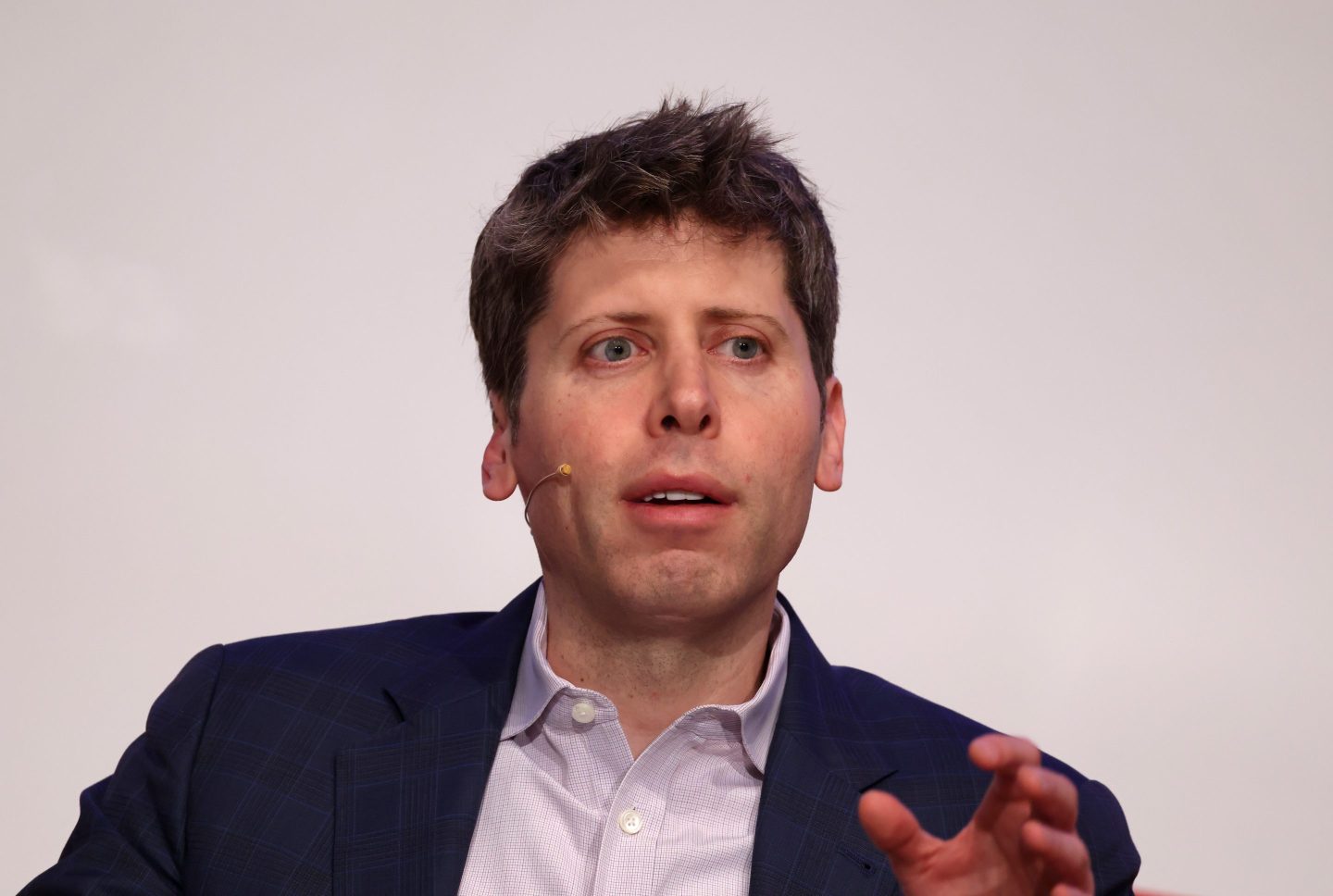
Sam Altman, co-founder and CEO of OpenAI, speaks during a panel discussion titled "The Age of AI" at the Technical University of Berlin on February 07, 2025 in Berlin, Germany.
Sam Altman, co-founder and CEO of OpenAI, speaks during a panel discussion titled "The Age of AI" at the Technical University of Berlin on February 07, 2025 in Berlin, Germany.Sean Gallup—Getty Images

OpenAI CEO Sam Altman has begged for AI regulation manytimes over the years, but times have changed. Now, the company wants the Trump administration to protect it from state-level AI bills in the U.S.

This was one of several suggestions OpenAI made Thursday in proposals directed at Trump administration advisors tasked with developing the U.S.’s “AI Action Plan.” President Donald Trump ordered officials to formulate such a plan earlier this year, and the consultation period closes Saturday.

OpenAI’s proposals come with frequent invocations of China and the supposed threat posed by its AI industry, in particular the headline-grabbing DeepSeek. If OpenAI doesn’t get its way, the company suggested, China will take the lead.

“We propose a holistic approach that enables voluntary partnership between the federal government and the private sector, and neutralizes potential [Chinese] benefit from American AI companies having to comply with overly burdensome state laws,” OpenAI global affairs chief Chris Lehane wrote.

OpenAI’s concerns about state AI bills are not misplaced. The country has so far failed to come up with any federal AI legislation so, in its absence, states have stepped in with numerous efforts of their own. As of last week there were a whopping 741 state AI bills pending, according to monitoring by the R Street Institute, a D.C. think tank.

Many overlap (Texas and California both have outstanding bills on the topic of AI-powered discrimination, for example) and the industry rightly fears an overly complex patchwork of laws that will make compliance difficult.

OpenAI’s idea is for the government to preempt these state laws. Its proposed voluntary framework would not set rules, but rather open “a single, efficient ‘front door’ to the federal government that would coordinate expertise across the entire national security and economic competitiveness communities.” OpenAI said the effort could be overseen by a “reimagined” AI Safety Institute—an organization the Biden Administration established but that the Trump administration has gutted through mass firings.

Displaying no small degree of chutzpah, OpenAI proposed that it and its peers could be incentivized to sign up by “creating glide paths for them to contract with the government, including on national security projects.”

Again, OpenAI invoked the specter of China, saying that U.S. government adoption of AI would set “an example of governments using AI to keep their people safe, prosperous, and free” that would present a ready counterpoint to Beijing’s use of AI to maintain state control and enforce Communist party doctrine.

Altman’s outfit cited China yet again when calling for the federal government to create a clear copyright exemption for AI training. Currently, training AI models on copyrighted data is a hotly-contested legal conundrum that is the subject of numerous lawsuits by authors, music labels, and other rightsholders. These cases remain mostly unresolved, although Thomson Reuters scored a possibly precedent-setting win against legal AI startup Ross Intelligence last month.

OpenAI argued that China was “unlikely to respect” the intellectual property regimes in the U.S. or the EU—where the new AI Act allows rightsholders to opt out of their property being used for AI training— “but already likely has access to all the same data, putting American AI labs at a comparative disadvantage while gaining little in the way of protections for the original IP creators.”

The company also called for tweaking of the so-called AI diffusion rules that the Biden Administration introduced in its dying days, limiting the numbers of advanced U.S. AI chips that most countries can import. As it stands, only 18 close U.S. allies can import the chips freely, with traditional allies such as Poland and Israel being subject to export caps.

OpenAI, which is reportedly finalizing its own AI chips so it doesn’t have to depend on Nvidia so much, said it would be a good idea to admit more countries to the uncapped top tier of the U.S. framework, as long as they “commit to democratic AI principles by deploying AI systems in ways that promote more freedoms for their citizens.”


Join us at the Fortune Workplace Innovation Summit May 19–20, 2026, in Atlanta. The next era of workplace innovation is here—and the old playbook is being rewritten. At this exclusive, high-energy event, the world’s most innovative leaders will convene to explore how AI, humanity, and strategy converge to redefine, again, the future of work. Register now.
About the Author
By David Meyer
LinkedIn icon
See full bioRight Arrow Button Icon

Latest in Tech

Politicsdavid sacks
Can there be competency without conflict in Washington?
By Alyson ShontellDecember 13, 2025
5 minutes ago
InnovationRobots
Even in Silicon Valley, skepticism looms over robots, while ‘China has certainly a lot more momentum on humanoids’
By Matt O'Brien and The Associated PressDecember 13, 2025
2 hours ago
Sarandos
Arts & EntertainmentM&A
It’s a sequel, it’s a remake, it’s a reboot: Lawyers grow wistful for old corporate rumbles as Paramount, Netflix fight for Warner
By Nick LichtenbergDecember 13, 2025
6 hours ago
Oracle chairman of the board and chief technology officer Larry Ellison delivers a keynote address during the 2019 Oracle OpenWorld on September 16, 2019 in San Francisco, California.
AIOracle
Oracle’s collapsing stock shows the AI boom is running into two hard limits: physics and debt markets
By Eva RoytburgDecember 13, 2025
7 hours ago
robots
InnovationRobots
‘The question is really just how long it will take’: Over 2,000 gather at Humanoids Summit to meet the robots who may take their jobs someday
By Matt O'Brien and The Associated PressDecember 12, 2025
21 hours ago
Man about to go into police vehicle
CryptoCryptocurrency
Judge tells notorious crypto scammer ‘you have been bitten by the crypto bug’ in handing down 15 year sentence 
By Carlos GarciaDecember 12, 2025
21 hours ago

Most Popular

placeholder alt text
Economy
Tariffs are taxes and they were used to finance the federal government until the 1913 income tax. A top economist breaks it down
By Kent JonesDecember 12, 2025
1 day ago
placeholder alt text
Success
Apple cofounder Ronald Wayne sold his 10% stake for $800 in 1976—today it’d be worth up to $400 billion
By Preston ForeDecember 12, 2025
1 day ago
placeholder alt text
Success
40% of Stanford undergrads receive disability accommodations—but it’s become a college-wide phenomenon as Gen Z try to succeed in the current climate
By Preston ForeDecember 12, 2025
1 day ago
placeholder alt text
Economy
For the first time since Trump’s tariff rollout, import tax revenue has fallen, threatening his lofty plans to slash the $38 trillion national debt
By Sasha RogelbergDecember 12, 2025
22 hours ago
placeholder alt text
Economy
The Fed just ‘Trump-proofed’ itself with a unanimous move to preempt a potential leadership shake-up
By Jason MaDecember 12, 2025
20 hours ago
placeholder alt text
Success
At 18, doctors gave him three hours to live. He played video games from his hospital bed—and now, he’s built a $10 million-a-year video game studio
By Preston ForeDecember 10, 2025
3 days ago
Rankings
  • 100 Best Companies
  • Fortune 500
  • Global 500
  • Fortune 500 Europe
  • Most Powerful Women
  • Future 50
  • World’s Most Admired Companies
  • See All Rankings
Sections
  • Finance
  • Leadership
  • Success
  • Tech
  • Asia
  • Europe
  • Environment
  • Fortune Crypto
  • Health
  • Retail
  • Lifestyle
  • Politics
  • Newsletters
  • Magazine
  • Features
  • Commentary
  • Mpw
  • CEO Initiative
  • Conferences
  • Personal Finance
  • Education
Customer Support
  • Frequently Asked Questions
  • Customer Service Portal
  • Privacy Policy
  • Terms Of Use
  • Single Issues For Purchase
  • International Print
Commercial Services
  • Advertising
  • Fortune Brand Studio
  • Fortune Analytics
  • Fortune Conferences
  • Business Development
About Us
  • About Us
  • Editorial Calendar
  • Press Center
  • Work At Fortune
  • Diversity And Inclusion
  • Terms And Conditions
  • Site Map

© 2025 Fortune Media IP Limited. All Rights Reserved. Use of this site constitutes acceptance of our Terms of Use and Privacy Policy | CA Notice at Collection and Privacy Notice | Do Not Sell/Share My Personal Information
FORTUNE is a trademark of Fortune Media IP Limited, registered in the U.S. and other countries. FORTUNE may receive compensation for some links to products and services on this website. Offers may be subject to change without notice.