• Home
  • Latest
  • Fortune 500
  • Finance
  • Tech
  • Leadership
  • Lifestyle
  • Rankings
  • Multimedia
TechAmazon

Amazon announces its first quantum computing chip, Ocelot, to tackle one of the biggest barriers in the field

By
Beatrice Nolan
Beatrice Nolan
Tech Reporter
Down Arrow Button Icon
By
Beatrice Nolan
Beatrice Nolan
Tech Reporter
Down Arrow Button Icon
February 27, 2025, 6:00 AM ET
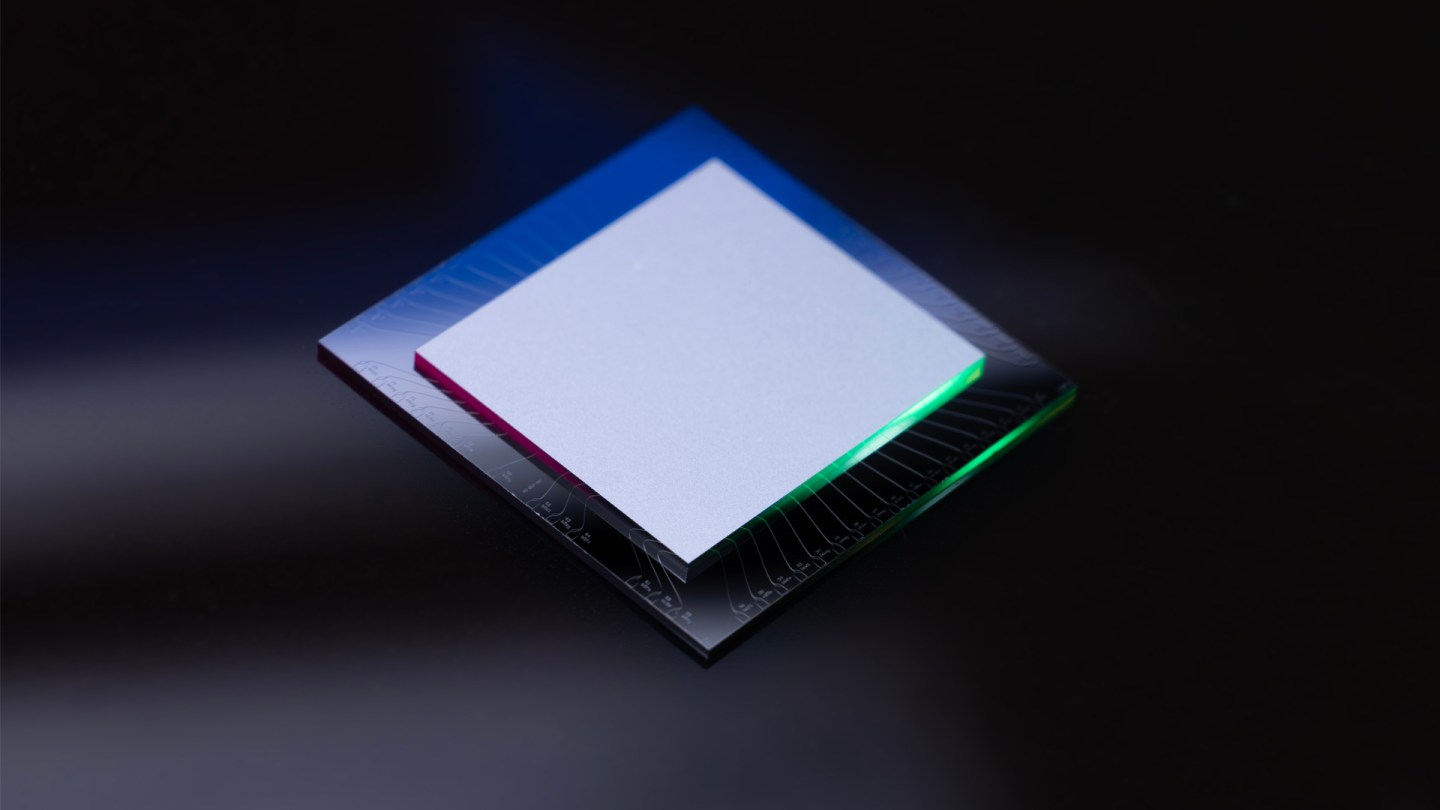
An image of Amazon's new chip.
Amazon Web Services has announced its first quantum computing chipCredit: AWS
  • Amazon Web Services has unveiled Ocelot, its first quantum computing chip, which aims to tackle one of the biggest barriers in the field: error correction. AWS claims the chip could slash the cost of quantum error correction by up to 90%, a breakthrough that could accelerate the race to build practical, fault-tolerant quantum computers.

[hotlink]Amazon[/hotlink] Web Services has announced its first quantum computing chip, Ocelot, as Big Tech companies accelerate breakthroughs in the field.

Recommended Video

The chip is designed to improve quantum error correction, a fundamental challenge in the field. AWS says that Ocelot could reduce the cost of error correction by up to 90%, addressing one of the key obstacles to building practical quantum computers capable of solving problems beyond the reach of currently available systems.

The chip is a small-scale prototype, which AWS said is designed to test the effectiveness of the company’s quantum error correction architecture. It consists of two integrated silicon microchips, each measuring approximately one square centimeter.

The company says it’s an important step forward in the race to build fault-tolerant quantum computers.

Quantum computing has the potential to transform multiple industries ranging from pharmaceuticals to weather forecasting by solving complex problems that classical computers cannot efficiently handle.

Big Tech companies, including Google, Microsoft, and IBM, have all announced quantum computing breakthroughs in the last few months.

Google has announced its Willow chip, while IBM announced it had successfully developed a quantum processor chip that consists of more than 1,000 qubits. Microsoft has also announced its Majorana 1 chip, which the company said would accelerate the timeline for quantum computers capable of solving meaningful, industrial-scale problems from decades to just years.

Error correction

Quantum computers are especially sensitive to small changes in their environment—such as vibrations, heat, or even electromagnetic interference from Wi-Fi networks and cell phones—and this “noise” can interfere with qubits and cause computational errors. To solve this problem and ensure that quantum computers perform error-free calculations, scientists rely on a process called quantum error correction, which has been hugely expensive—at least until now.

AWS said Ocelot was designed with error correction as a foundational principle rather than a later addition. The chip utilizes a specialized type of qubit known as a “cat qubit,” which gets its name from the Schrödinger’s cat thought experiment.

“We believe that if we’re going to make practical quantum computers, quantum error correction needs to come first,” said Oskar Painter, AWS’s head of quantum hardware. “That’s what we’ve done with Ocelot. We didn’t take an existing architecture and then try to incorporate error correction afterward. We selected our qubit and architecture with quantum error correction as the top requirement.”

Painter said his team estimates that scaling Ocelot to a “fully-fledged quantum computer capable of transformative societal impact would require as little as one-tenth of the resources associated with standard quantum error correcting approaches.”

Cat qubits are engineered to intrinsically suppress certain types of errors, reducing the complexity and resource demands of quantum error correction. AWS estimates that Ocelot’s architecture can reduce the resources required for error correction by a factor of five to 10 compared with conventional approaches.

“Quantum error correction relies on continued improvements in the physical qubits. We can’t just rely on the conventional approaches to how we fabricate chips,” Fernando Brandao, AWS director of applied science, said. “We have to incorporate new materials, with fewer defects, and develop more robust fabrication processes.”

Future implications

Ocelot is still a research laboratory prototype, but AWS intends to refine and scale the system.

“We believe we have several more stages of scaling to go through. It’s a very hard problem to tackle, and we will need to continue to invest in basic research, while staying connected to, and learning from, important work being done in academia,” Painter said.

“Right now, our task is to keep innovating across the quantum computing stack, to keep examining whether we’re using the right architecture, and to incorporate these learnings into our engineering efforts. It’s a flywheel of continuous improvement and scaling.”


Join us at the Fortune Workplace Innovation Summit May 19–20, 2026, in Atlanta. The next era of workplace innovation is here—and the old playbook is being rewritten. At this exclusive, high-energy event, the world’s most innovative leaders will convene to explore how AI, humanity, and strategy converge to redefine, again, the future of work. Register now.
About the Author
By Beatrice NolanTech Reporter
Twitter icon

Beatrice Nolan is a tech reporter on Fortune’s AI team, covering artificial intelligence and emerging technologies and their impact on work, industry, and culture. She's based in Fortune's London office and holds a bachelor’s degree in English from the University of York. You can reach her securely via Signal at beatricenolan.08

See full bioRight Arrow Button Icon

Latest in Tech

Sarandos
Arts & EntertainmentM&A
It’s a sequel, it’s a remake, it’s a reboot: Lawyers grow wistful for old corporate rumbles as Paramount, Netflix fight for Warner
By Nick LichtenbergDecember 13, 2025
4 hours ago
Oracle chairman of the board and chief technology officer Larry Ellison delivers a keynote address during the 2019 Oracle OpenWorld on September 16, 2019 in San Francisco, California.
AIOracle
Oracle’s collapsing stock shows the AI boom is running into two hard limits: physics and debt markets
By Eva RoytburgDecember 13, 2025
5 hours ago
robots
InnovationRobots
‘The question is really just how long it will take’: Over 2,000 gather at Humanoids Summit to meet the robots who may take their jobs someday
By Matt O'Brien and The Associated PressDecember 12, 2025
18 hours ago
Man about to go into police vehicle
CryptoCryptocurrency
Judge tells notorious crypto scammer ‘you have been bitten by the crypto bug’ in handing down 15 year sentence 
By Carlos GarciaDecember 12, 2025
19 hours ago
three men in suits, one gesturing
AIBrainstorm AI
The fastest athletes in the world can botch a baton pass if trust isn’t there—and the same is true of AI, Blackbaud exec says
By Amanda GerutDecember 12, 2025
20 hours ago
Brainstorm AI panel
AIBrainstorm AI
Creative workers won’t be replaced by AI—but their roles will change to become ‘directors’ managing AI agents, executives say
By Beatrice NolanDecember 12, 2025
20 hours ago

Most Popular

placeholder alt text
Economy
Tariffs are taxes and they were used to finance the federal government until the 1913 income tax. A top economist breaks it down
By Kent JonesDecember 12, 2025
1 day ago
placeholder alt text
Success
Apple cofounder Ronald Wayne sold his 10% stake for $800 in 1976—today it’d be worth up to $400 billion
By Preston ForeDecember 12, 2025
1 day ago
placeholder alt text
Success
40% of Stanford undergrads receive disability accommodations—but it’s become a college-wide phenomenon as Gen Z try to succeed in the current climate
By Preston ForeDecember 12, 2025
24 hours ago
placeholder alt text
Economy
For the first time since Trump’s tariff rollout, import tax revenue has fallen, threatening his lofty plans to slash the $38 trillion national debt
By Sasha RogelbergDecember 12, 2025
20 hours ago
placeholder alt text
Economy
The Fed just ‘Trump-proofed’ itself with a unanimous move to preempt a potential leadership shake-up
By Jason MaDecember 12, 2025
18 hours ago
placeholder alt text
Success
At 18, doctors gave him three hours to live. He played video games from his hospital bed—and now, he’s built a $10 million-a-year video game studio
By Preston ForeDecember 10, 2025
3 days ago
Rankings
  • 100 Best Companies
  • Fortune 500
  • Global 500
  • Fortune 500 Europe
  • Most Powerful Women
  • Future 50
  • World’s Most Admired Companies
  • See All Rankings
Sections
  • Finance
  • Leadership
  • Success
  • Tech
  • Asia
  • Europe
  • Environment
  • Fortune Crypto
  • Health
  • Retail
  • Lifestyle
  • Politics
  • Newsletters
  • Magazine
  • Features
  • Commentary
  • Mpw
  • CEO Initiative
  • Conferences
  • Personal Finance
  • Education
Customer Support
  • Frequently Asked Questions
  • Customer Service Portal
  • Privacy Policy
  • Terms Of Use
  • Single Issues For Purchase
  • International Print
Commercial Services
  • Advertising
  • Fortune Brand Studio
  • Fortune Analytics
  • Fortune Conferences
  • Business Development
About Us
  • About Us
  • Editorial Calendar
  • Press Center
  • Work At Fortune
  • Diversity And Inclusion
  • Terms And Conditions
  • Site Map

© 2025 Fortune Media IP Limited. All Rights Reserved. Use of this site constitutes acceptance of our Terms of Use and Privacy Policy | CA Notice at Collection and Privacy Notice | Do Not Sell/Share My Personal Information
FORTUNE is a trademark of Fortune Media IP Limited, registered in the U.S. and other countries. FORTUNE may receive compensation for some links to products and services on this website. Offers may be subject to change without notice.