• Home
  • News
  • Fortune 500
  • Tech
  • Finance
  • Leadership
  • Lifestyle
  • Rankings
  • Multimedia
TechAmazon

Amazon announces its first quantum computing chip, Ocelot, to tackle one of the biggest barriers in the field

By
Beatrice Nolan
Beatrice Nolan
Tech Reporter
Down Arrow Button Icon
By
Beatrice Nolan
Beatrice Nolan
Tech Reporter
Down Arrow Button Icon
February 27, 2025, 6:00 AM ET
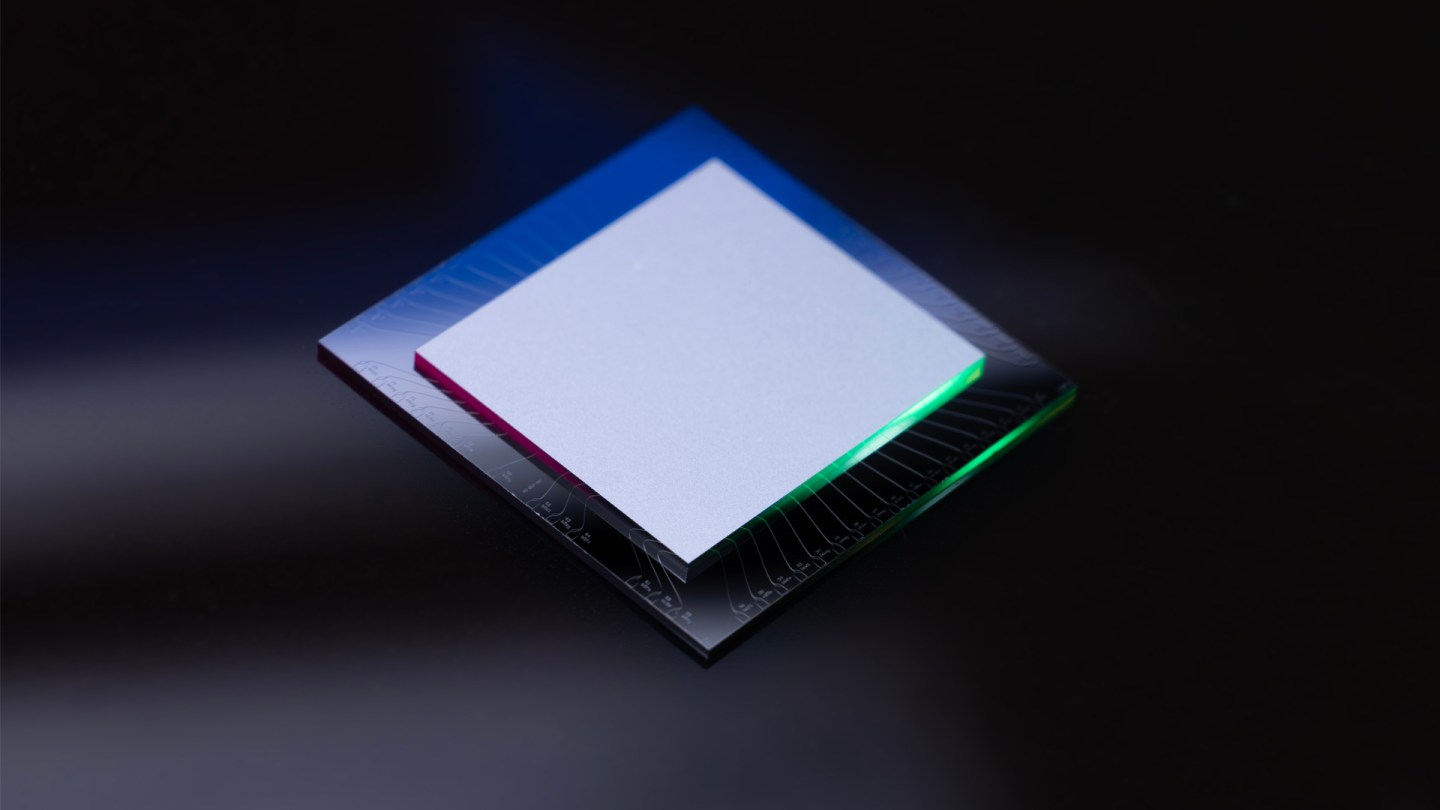
An image of Amazon's new chip.
Amazon Web Services has announced its first quantum computing chipCredit: AWS
  • Amazon Web Services has unveiled Ocelot, its first quantum computing chip, which aims to tackle one of the biggest barriers in the field: error correction. AWS claims the chip could slash the cost of quantum error correction by up to 90%, a breakthrough that could accelerate the race to build practical, fault-tolerant quantum computers.

[hotlink]Amazon[/hotlink] Web Services has announced its first quantum computing chip, Ocelot, as Big Tech companies accelerate breakthroughs in the field.

Recommended Video

The chip is designed to improve quantum error correction, a fundamental challenge in the field. AWS says that Ocelot could reduce the cost of error correction by up to 90%, addressing one of the key obstacles to building practical quantum computers capable of solving problems beyond the reach of currently available systems.

The chip is a small-scale prototype, which AWS said is designed to test the effectiveness of the company’s quantum error correction architecture. It consists of two integrated silicon microchips, each measuring approximately one square centimeter.

The company says it’s an important step forward in the race to build fault-tolerant quantum computers.

Quantum computing has the potential to transform multiple industries ranging from pharmaceuticals to weather forecasting by solving complex problems that classical computers cannot efficiently handle.

Big Tech companies, including Google, Microsoft, and IBM, have all announced quantum computing breakthroughs in the last few months.

Google has announced its Willow chip, while IBM announced it had successfully developed a quantum processor chip that consists of more than 1,000 qubits. Microsoft has also announced its Majorana 1 chip, which the company said would accelerate the timeline for quantum computers capable of solving meaningful, industrial-scale problems from decades to just years.

Error correction

Quantum computers are especially sensitive to small changes in their environment—such as vibrations, heat, or even electromagnetic interference from Wi-Fi networks and cell phones—and this “noise” can interfere with qubits and cause computational errors. To solve this problem and ensure that quantum computers perform error-free calculations, scientists rely on a process called quantum error correction, which has been hugely expensive—at least until now.

AWS said Ocelot was designed with error correction as a foundational principle rather than a later addition. The chip utilizes a specialized type of qubit known as a “cat qubit,” which gets its name from the Schrödinger’s cat thought experiment.

“We believe that if we’re going to make practical quantum computers, quantum error correction needs to come first,” said Oskar Painter, AWS’s head of quantum hardware. “That’s what we’ve done with Ocelot. We didn’t take an existing architecture and then try to incorporate error correction afterward. We selected our qubit and architecture with quantum error correction as the top requirement.”

Painter said his team estimates that scaling Ocelot to a “fully-fledged quantum computer capable of transformative societal impact would require as little as one-tenth of the resources associated with standard quantum error correcting approaches.”

Cat qubits are engineered to intrinsically suppress certain types of errors, reducing the complexity and resource demands of quantum error correction. AWS estimates that Ocelot’s architecture can reduce the resources required for error correction by a factor of five to 10 compared with conventional approaches.

“Quantum error correction relies on continued improvements in the physical qubits. We can’t just rely on the conventional approaches to how we fabricate chips,” Fernando Brandao, AWS director of applied science, said. “We have to incorporate new materials, with fewer defects, and develop more robust fabrication processes.”

Future implications

Ocelot is still a research laboratory prototype, but AWS intends to refine and scale the system.

“We believe we have several more stages of scaling to go through. It’s a very hard problem to tackle, and we will need to continue to invest in basic research, while staying connected to, and learning from, important work being done in academia,” Painter said.

“Right now, our task is to keep innovating across the quantum computing stack, to keep examining whether we’re using the right architecture, and to incorporate these learnings into our engineering efforts. It’s a flywheel of continuous improvement and scaling.”


Fortune Brainstorm AI returns to San Francisco Dec. 8–9 to convene the smartest people we know—technologists, entrepreneurs, Fortune Global 500 executives, investors, policymakers, and the brilliant minds in between—to explore and interrogate the most pressing questions about AI at another pivotal moment. Register here.
About the Author
By Beatrice NolanTech Reporter
Twitter icon

Beatrice Nolan is a tech reporter on Fortune’s AI team, covering artificial intelligence and emerging technologies and their impact on work, industry, and culture. She's based in Fortune's London office and holds a bachelor’s degree in English from the University of York. You can reach her securely via Signal at beatricenolan.08

See full bioRight Arrow Button Icon

Latest in Tech

Big TechSpotify
Spotify users lamented Wrapped in 2024. This year, the company brought back an old favorite and made it less about AI
By Dave Lozo and Morning BrewDecember 4, 2025
10 hours ago
InnovationVenture Capital
This Khosla Ventures–backed startup is using AI to personalize cancer care
By Allie GarfinkleDecember 4, 2025
14 hours ago
AIEye on AI
Companies are increasingly falling victim to AI impersonation scams. This startup just raised $28M to stop deepfakes in real time
By Sharon GoldmanDecember 4, 2025
15 hours ago
Jensen Huang
SuccessBillionaires
Nvidia CEO Jensen Huang admits he works 7 days a week, including holidays, in a constant ‘state of anxiety’ out of fear of going bankrupt
By Jessica CoacciDecember 4, 2025
15 hours ago
Ted Pick
BankingData centers
Morgan Stanley considers offloading some of its data-center exposure
By Esteban Duarte, Paula Seligson, Davide Scigliuzzo and BloombergDecember 4, 2025
15 hours ago
Zuckerberg
EnergyMeta
Meta’s Zuckerberg plans deep cuts for metaverse efforts
By Kurt Wagner and BloombergDecember 4, 2025
15 hours ago

Most Popular

placeholder alt text
Economy
Two months into the new fiscal year and the U.S. government is already spending more than $10 billion a week servicing national debt
By Eleanor PringleDecember 4, 2025
20 hours ago
placeholder alt text
Success
‘Godfather of AI’ says Bill Gates and Elon Musk are right about the future of work—but he predicts mass unemployment is on its way
By Preston ForeDecember 4, 2025
16 hours ago
placeholder alt text
Success
Nearly 4 million new manufacturing jobs are coming to America as boomers retire—but it's the one trade job Gen Z doesn't want
By Emma BurleighDecember 4, 2025
16 hours ago
placeholder alt text
North America
Jeff Bezos and Lauren Sánchez Bezos commit $102.5 million to organizations combating homelessness across the U.S.: ‘This is just the beginning’
By Sydney LakeDecember 2, 2025
3 days ago
placeholder alt text
Success
Nvidia CEO Jensen Huang admits he works 7 days a week, including holidays, in a constant 'state of anxiety' out of fear of going bankrupt
By Jessica CoacciDecember 4, 2025
15 hours ago
placeholder alt text
Health
Bill Gates decries ‘significant reversal in child deaths’ as nearly 5 million kids will die before they turn 5 this year
By Nick LichtenbergDecember 4, 2025
1 day ago
Rankings
  • 100 Best Companies
  • Fortune 500
  • Global 500
  • Fortune 500 Europe
  • Most Powerful Women
  • Future 50
  • World’s Most Admired Companies
  • See All Rankings
Sections
  • Finance
  • Leadership
  • Success
  • Tech
  • Asia
  • Europe
  • Environment
  • Fortune Crypto
  • Health
  • Retail
  • Lifestyle
  • Politics
  • Newsletters
  • Magazine
  • Features
  • Commentary
  • Mpw
  • CEO Initiative
  • Conferences
  • Personal Finance
  • Education
Customer Support
  • Frequently Asked Questions
  • Customer Service Portal
  • Privacy Policy
  • Terms Of Use
  • Single Issues For Purchase
  • International Print
Commercial Services
  • Advertising
  • Fortune Brand Studio
  • Fortune Analytics
  • Fortune Conferences
  • Business Development
About Us
  • About Us
  • Editorial Calendar
  • Press Center
  • Work At Fortune
  • Diversity And Inclusion
  • Terms And Conditions
  • Site Map

© 2025 Fortune Media IP Limited. All Rights Reserved. Use of this site constitutes acceptance of our Terms of Use and Privacy Policy | CA Notice at Collection and Privacy Notice | Do Not Sell/Share My Personal Information
FORTUNE is a trademark of Fortune Media IP Limited, registered in the U.S. and other countries. FORTUNE may receive compensation for some links to products and services on this website. Offers may be subject to change without notice.