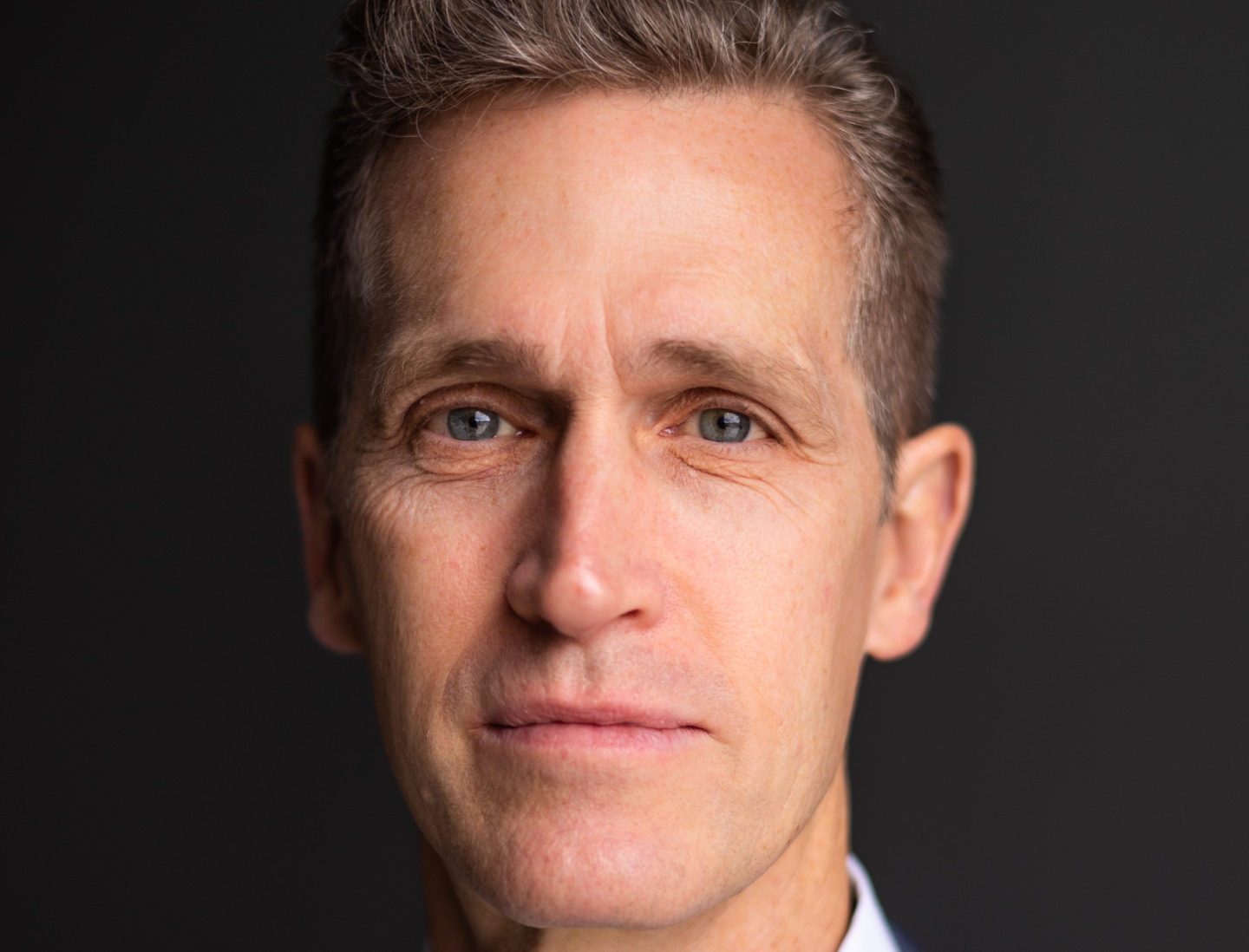
If anyone is the consummate road warrior, it’s Brett Keller.
As CEO of Priceline—a subsidiary of Fortune 500 company Booking Holdings, the world’s largest travel company—since 2016, Keller quarterbacked the launch of the brand’s full-service mobile app (the first in the travel industry) and drove the company’s early adoption of generative AI. Customer interactions with Priceline’s gen AI travel assistant, Penny, which debuted last summer, now number more than 3 million. During Keller’s tenure, Priceline has helped grow Booking Holdings’ total revenue by 135%.
He travels two to three times per month between business and personal trips. It sounds like a lot, but for him the beauty of travel lies in the opportunities it presents: not only to cultivate connections with new people and places, but also to successfully navigate through unpredictable situations—a skill that comes in handy at the office. And it always runs a little more smoothly when he has hydration packs and motion sickness pills at the ready.
Keller sat down with Fortune to discuss his far-flung adventures spanning everywhere from Japan to India to Idaho, staying centered on the road, and how exploring the globe makes him a more effective leader.
The transcript below has been condensed and lightly edited for clarity.
What’s the best trip you’ve ever taken?
I’ve been to India three times—it’s unlike any other country. There’s a power to it that’s hard to explain … like stepping into a vibrant painting with an undertone you can’t quite describe: the intensity of the sounds, colors, tastes, and the places that really challenge your senses. I think India changes you more than most other destinations—its immensity and the sheer number of people moving through its cities.
My wife and I visited last year and started in Mumbai before going on to Delhi, Agra, and Varanasi, which are all incredible. I remember walking into the Taj Mahal at 5:30 in the morning, and amid all the different smells you hear this temple music playing in the background. It was really surreal and so impressive. And Varanasi—just learning its history and watching people’s personal experiences as they enter this sacred place, where these traditions go back thousands of years—reminds you of the power of belief and of devotion to something bigger than ourselves.
If you could go anywhere in the world you haven’t yet been, where would it be, and why?
After spending maybe 24 hours in Seoul about 30 years ago, I’ve been dying to go back to South Korea. There’s something about the culture that I find really compelling. Its influence has steadily grown in the U.S. ever since the Winter Olympics in Seoul in 2018. Between K-pop, Korean films, and the food, the country is really flying high right now. I’d love to explore both the larger cities and some of the offshore islands that look really beautiful.
Also, I like to fly-fish, and I try to do it in various spots around the world. There’s a dream fly-fishing trip I’ve researched for years, in Mongolia where there’s a fish called the taimen—one of the world’s largest and wildest trout. The trip is six or seven days, and the fishing is all catch and release. You float these rivers and stay in yurts on the riverbank along the way. Taimen are about three to four feet long, which is massive for a river trout, so you really have to put the time, energy, and work in to catch them.
What’s the most memorable meal you’ve had while traveling?
We did a family trip to Japan and stayed in a ryokan in Kyoto, where they prepared a multicourse kaiseki meal for us with all these different dishes—sashimi, miso soup, pickled vegetables—and local and seasonal specialties. When they brought out the cooked fish and lifted the lids off, there they were, each with a giant eyeball staring right at us. The server explained that you’re supposed to eat the eyeball first, and my daughter, who’s 8 years old, jumped right in and popped it in her mouth. I think my wife almost passed out. I lived in Japan for a few years long ago, so that was pretty traditional for me, but it was a mind-blowing experience for my family. The Japanese are experts at the art of food—everything about the way they craft and serve is steeped in thousands of years of history and tradition.
What are your favorite travel hacks?
Whenever I travel to a new destination that I don’t know much about, I always seek out brand-new hotels. Hotels can make or break your stay, and finding new properties is almost always a win: They’re beautiful, clean, and usually have staff who are making an effort to go the extra mile because they’re trying to build their ratings. Second to that would be newly renovated properties—they usually have new mattresses and new decor, which makes for a better trip.
What three things do you never travel without?
Hydration packs. I run a lot so I drink them often, but they especially make a huge difference when I travel by keeping me hydrated and preventing headaches. They also help me acclimate more easily to new time zones. I drink a lot of Liquid I.V., which tastes great and is fabulous for recovery.
I travel out of New York, and that means there’s sometimes a two-hour drive to the airport. Then there are the long waits and multiple flights—it’s often such a chaotic journey to get anywhere. I take motion sickness pills, not because I get motion sickness, but because I’ve found they really help me feel centered as I move through all of that. They keep me from getting woozy, headaches, that kind of thing. I take a Dramamine right as I’m heading out the door, and it works.
I also take pictures of my passport, driver’s license, and bags so I have those on my phone, just in case.
Do you have any hard-and-fast travel rules?
When I’m traveling solo, I always bring a carry-on bag, but when I’m with my family, I can’t always enforce that—we do our best, but I need to be sensitive to those who like to look great and bring extra products and changes of clothes. I also always book an aisle seat—I can’t sit anywhere else—and TSA PreCheck is a must.
What’s the most important life lesson you’ve learned from travel?
I was in Paris with my wife a couple months ago, and we found this great little eyeglass shop run by a couple of Parisians, down a little cobblestone street lined with lots of other interesting artisans. We were chatting with one of the owners, who asked me what I did, and I replied that I work for a travel company in the U.S. He said, “I love to travel. The wonderful thing about it is you find yourself all over again.” And I said, “That’s a very profound statement, I’m going to write that down.”
It’s very true because travel takes you out of your life—your work and habitual processes and normal connections—and throws you into another world where that’s all gone. You have to really just be yourself in a new space, and I think that’s a beautiful way to articulate it.
Travel also really opens my eyes to the power of humans and what we’ve done—our resilience, creativity, and innovation. I think about that when I look at something that was built, say, 2,000 years ago, or rebuilt due to war or natural disasters. Or our trip to Mumbai, when my wife and I went to the Dharavi slums to talk to some of its residents about their ability to recycle and reuse everything that moves through that city. It just blows my mind. I’m so impressed by people who, with the natural resources and skill sets they have, can build things that not only create beauty but also sustain life.
Are there lessons from your own travel experiences that you’ve applied to your work at Priceline?
As a travel company, we have offices and employees worldwide, and I interact with people from literally every country in the world. Traveling and living overseas makes it so much easier to build connections with people because you can share the experiences you’ve had visiting their countries. You understand their cultural nuances, and that fosters mutual respect and makes things easier as a manager and leader. Also, travel demands adaptability—you’re always dealing with unpredictable situations. You learn how to manage through crises and how to keep your calm and operate at a level that doesn’t escalate, which has absolute applicability to business and how you run and lead companies.
Just being out in the marketplace is very different from sitting at home or in our offices, testing our technology and services. For example, I was caught up in the CrowdStrike failure last summer when I was traveling to Boise and got stuck in Salt Lake City. After five hours and about 25 updates from Delta, I gave up on my flight taking off. I used Priceline to shop for flights and, when I realized that there was no way I was getting out that night or the next day, to rent a car. The next day, I checked the flight, which never took off, and felt vindicated but also proud of our technology. I come back from my trips with new ideas about how to enhance and build it, which I share with our product teams—and they’re doing the same thing when they travel.