• Home
  • Latest
  • Fortune 500
  • Finance
  • Tech
  • Leadership
  • Lifestyle
  • Rankings
  • Multimedia
LeadershipFortune 500

A top Starbucks analyst went on a stealthy mission to test the company’s vibe shift and saw three signs of tactical changes

By
Lila MacLellan
Lila MacLellan
Former Senior Writer
Down Arrow Button Icon
By
Lila MacLellan
Lila MacLellan
Former Senior Writer
Down Arrow Button Icon
January 28, 2025, 2:53 PM ET
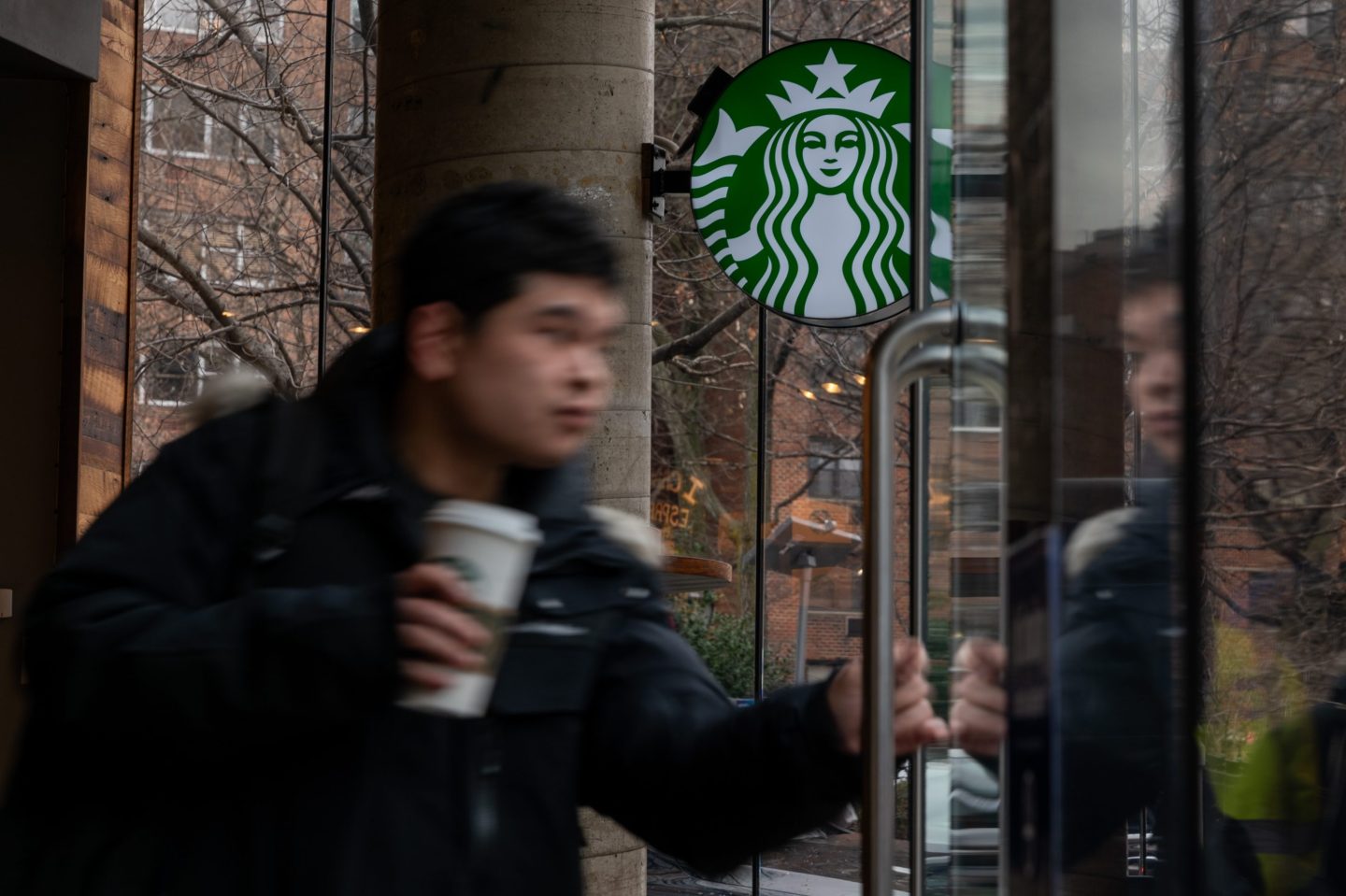
NEW YORK, NEW YORK - JANUARY 30: People exit a Starbucks store in Manhattan
Starbucks wants to entice customers to stay. Its vibe shift is a work in progress.Spencer Platt—Getty Images

Starbucks rolled out its promised “Back to Starbucks” changes this week, reintroducing practices meant to transform the hectic coffee shops back into places where people will happily linger over a latte. 

Recommended Video

Under the new marching orders instituted by still-new CEO Brian Niccol, baristas are expected to scribble customer names on to-go cups again instead of relying on printed labels, and serve to-stay drinks in actual mugs, both of which were common practice before the company pivoted to becoming a kind of rather chaotic mobile-first, low-touchpoint retailer. 

These new-again habits have already taken hold at some stores, Danilo Gargiulo, an equity research analyst for Bernstein, discovered. On early morning visits to California shops, he found signs of efforts to overhaul the vibe. “I’ve seen with my own eyes how they’re trying to shape it,” he told Fortune.

He added that he’s optimistic it’s a matter of months until Starbucks customers find the brand has changed, and that the company is moving in a positive direction. And although he and other analysts expect little change in the sales figures that have bedeviled the retailer when the company reports first-quarter earnings today, Gargiulo says he’ll be listening for subtle signs that a back-to-the-future shift is afoot. 

Evident change

Besides the mugs and magic markers, this week’s new-era program includes the introduction of free refills of hot or cold coffee or tea following the purchase of any in-store drink, as well as the return of the self-serve condiment bar. 

Niccol has also enacted a new code of conduct that allows only paying customers to hang out in the shops and use the cafés’ bathrooms, six years after the store instituted an open-door rule. This new charter is meant to make the restaurant less crowded, freeing up tables for paying visitors looking for a calm space and a bathroom that isn’t perpetually occupied. 

On his Starbucks runs in Los Angeles and San Diego, Gargiulo said he was pleasantly surprised to see three of these tactics already in play: He was handed a ceramic mug because he was ordering in, the bathrooms now required a code to enter, and nonpaying customers were asked to exit the store.  

“One of the baristas told a person that was sitting at a table to either order at the counter or leave,” says Gargiulo. That person, who had brought in food from a competitor to eat at a Starbucks table, left without protest.

“I was surprised that these three things happened to me, literally to me, on day one of these rollouts,” Gargiulo said.  

The analyst acknowledges that it’s impossible to extrapolate from such a small sample, and that many aspects of the new era will take time—Niccol plans to keep investing in staff, for example, while tweaking the overly complicated menu. But Gargiuloexpects that most Starbucks stores will feel different within months, not years. He says just holding a mug gave him a visceral sense that it was time to slow down. 

“It does look like people are chilling out,” he says. “I’m just looking at a person right now, having her piece of banana bread while drinking a coffee. The store looks a little bit more relaxing.”

An enormous task

To be sure, it is still early days in Starbucks’ attempted turnaround, and change isn’t happening without a few hiccups. 

At four locations in New York City spanning both residential and commercial neighborhoods, this reporter spotted signs touting free refills at several Manhattan locations, but only one ceramic cup in use. The condiment bar was available at two shops, while baristas at every shop were still using labels to print out customer names. Asking for a “for-here” drink prompted one manager to rip open a brand new box of mugs, while other staffers watched with curiosity. 

At a Starbucks near Central Park, one nonpaying woman seemed put out by the lack of access to a bathroom, yelling “What’s this about?” as she pushed her way through the crowd, found her way into the restroom anyway, then opened the door to yank in a friend, locking the door again as tourists politely waited. 

There are thousands of company-operated Starbucks locations in the U.S. alone, and no one could expect even Niccol, the turnaround star who transformed Chipotle’s operating model, to flip a switch and see overnight results. Customers have become accustomed to a frenetic system in stores, where to-go orders make up 70% percent of orders, driving a grab-and-go mentality that reduces the store itself to a supporting role. 

But the early changes are hopeful, according to the analyst. Knowing Chipotle’s history, he adds, “believing that Brian [Niccol] can replicate the same capabilities inside of Starbucks is kind of a given.”


Join us at the Fortune Workplace Innovation Summit May 19–20, 2026, in Atlanta. The next era of workplace innovation is here—and the old playbook is being rewritten. At this exclusive, high-energy event, the world’s most innovative leaders will convene to explore how AI, humanity, and strategy converge to redefine, again, the future of work. Register now.
About the Author
By Lila MacLellanFormer Senior Writer
LinkedIn icon

Lila MacLellan is a former senior writer at Fortune, where she covered topics in leadership.

See full bioRight Arrow Button Icon

Latest in Leadership

Nicholas Thompson
C-SuiteBook Excerpt
I took over one of the most prestigious media firms while training for an ultramarathon. Here’s what I learned becoming CEO of The Atlantic
By Nicholas ThompsonDecember 13, 2025
9 hours ago
Lauren Antonoff
SuccessCareers
Once a college dropout, this CEO went back to school at 52—but she still says the Gen Zers who will succeed are those who ‘forge their own path’
By Preston ForeDecember 13, 2025
11 hours ago
Asiathe future of work
The CEO of one of Asia’s largest co-working space providers says his business has more in common with hotels
By Angelica AngDecember 12, 2025
18 hours ago
Donald Trump
HealthHealth Insurance
‘Tragedy in the making’: Top healthcare exec on why insurance will spike to subsidize a tax cut to millionaires and billionaires
By Nick LichtenbergDecember 12, 2025
1 day ago
three men in suits, one gesturing
AIBrainstorm AI
The fastest athletes in the world can botch a baton pass if trust isn’t there—and the same is true of AI, Blackbaud exec says
By Amanda GerutDecember 12, 2025
1 day ago
Brainstorm AI panel
AIBrainstorm AI
Creative workers won’t be replaced by AI—but their roles will change to become ‘directors’ managing AI agents, executives say
By Beatrice NolanDecember 12, 2025
1 day ago

Most Popular

placeholder alt text
Economy
Tariffs are taxes and they were used to finance the federal government until the 1913 income tax. A top economist breaks it down
By Kent JonesDecember 12, 2025
1 day ago
placeholder alt text
Success
Apple cofounder Ronald Wayne sold his 10% stake for $800 in 1976—today it’d be worth up to $400 billion
By Preston ForeDecember 12, 2025
1 day ago
placeholder alt text
Success
40% of Stanford undergrads receive disability accommodations—but it’s become a college-wide phenomenon as Gen Z try to succeed in the current climate
By Preston ForeDecember 12, 2025
1 day ago
placeholder alt text
Economy
The Fed just ‘Trump-proofed’ itself with a unanimous move to preempt a potential leadership shake-up
By Jason MaDecember 12, 2025
24 hours ago
placeholder alt text
Economy
For the first time since Trump’s tariff rollout, import tax revenue has fallen, threatening his lofty plans to slash the $38 trillion national debt
By Sasha RogelbergDecember 12, 2025
1 day ago
placeholder alt text
Success
Apple CEO Tim Cook out-earns the average American’s salary in just 7 hours—to put that into context, he could buy a new $439,000 home in just 2 days
By Emma BurleighDecember 12, 2025
1 day ago
Rankings
  • 100 Best Companies
  • Fortune 500
  • Global 500
  • Fortune 500 Europe
  • Most Powerful Women
  • Future 50
  • World’s Most Admired Companies
  • See All Rankings
Sections
  • Finance
  • Leadership
  • Success
  • Tech
  • Asia
  • Europe
  • Environment
  • Fortune Crypto
  • Health
  • Retail
  • Lifestyle
  • Politics
  • Newsletters
  • Magazine
  • Features
  • Commentary
  • Mpw
  • CEO Initiative
  • Conferences
  • Personal Finance
  • Education
Customer Support
  • Frequently Asked Questions
  • Customer Service Portal
  • Privacy Policy
  • Terms Of Use
  • Single Issues For Purchase
  • International Print
Commercial Services
  • Advertising
  • Fortune Brand Studio
  • Fortune Analytics
  • Fortune Conferences
  • Business Development
About Us
  • About Us
  • Editorial Calendar
  • Press Center
  • Work At Fortune
  • Diversity And Inclusion
  • Terms And Conditions
  • Site Map

© 2025 Fortune Media IP Limited. All Rights Reserved. Use of this site constitutes acceptance of our Terms of Use and Privacy Policy | CA Notice at Collection and Privacy Notice | Do Not Sell/Share My Personal Information
FORTUNE is a trademark of Fortune Media IP Limited, registered in the U.S. and other countries. FORTUNE may receive compensation for some links to products and services on this website. Offers may be subject to change without notice.