• Home
  • Latest
  • Fortune 500
  • Finance
  • Tech
  • Leadership
  • Lifestyle
  • Rankings
  • Multimedia

Trendingnow

1

Jensen Huang made his $172 billion fortune on AI chips. His family's $75 million gift to Vanderbilt argues art decides what technology is for

2

'The demographic dividend of the last 40 years is ending': J.P. Morgan says the world is running out of the two things that kept interest rates down

3

The $39 trillion U.S. national debt isn’t as high as Japan’s and Singapore’s relative to economy size—and yet it's still worse somehow

1

Jensen Huang made his $172 billion fortune on AI chips. His family's $75 million gift to Vanderbilt argues art decides what technology is for

2

'The demographic dividend of the last 40 years is ending': J.P. Morgan says the world is running out of the two things that kept interest rates down

3

The $39 trillion U.S. national debt isn’t as high as Japan’s and Singapore’s relative to economy size—and yet it's still worse somehow
FinanceInterest Rates

Federal Reserve’s likely slowdown in rate cuts could make prospective homebuyers sad

By
Christopher Rugaber
Christopher Rugaber
and
The Associated Press
Down Arrow Button Icon
By
Christopher Rugaber
Christopher Rugaber
and
The Associated Press
Down Arrow Button Icon
November 21, 2024, 6:31 AM ET
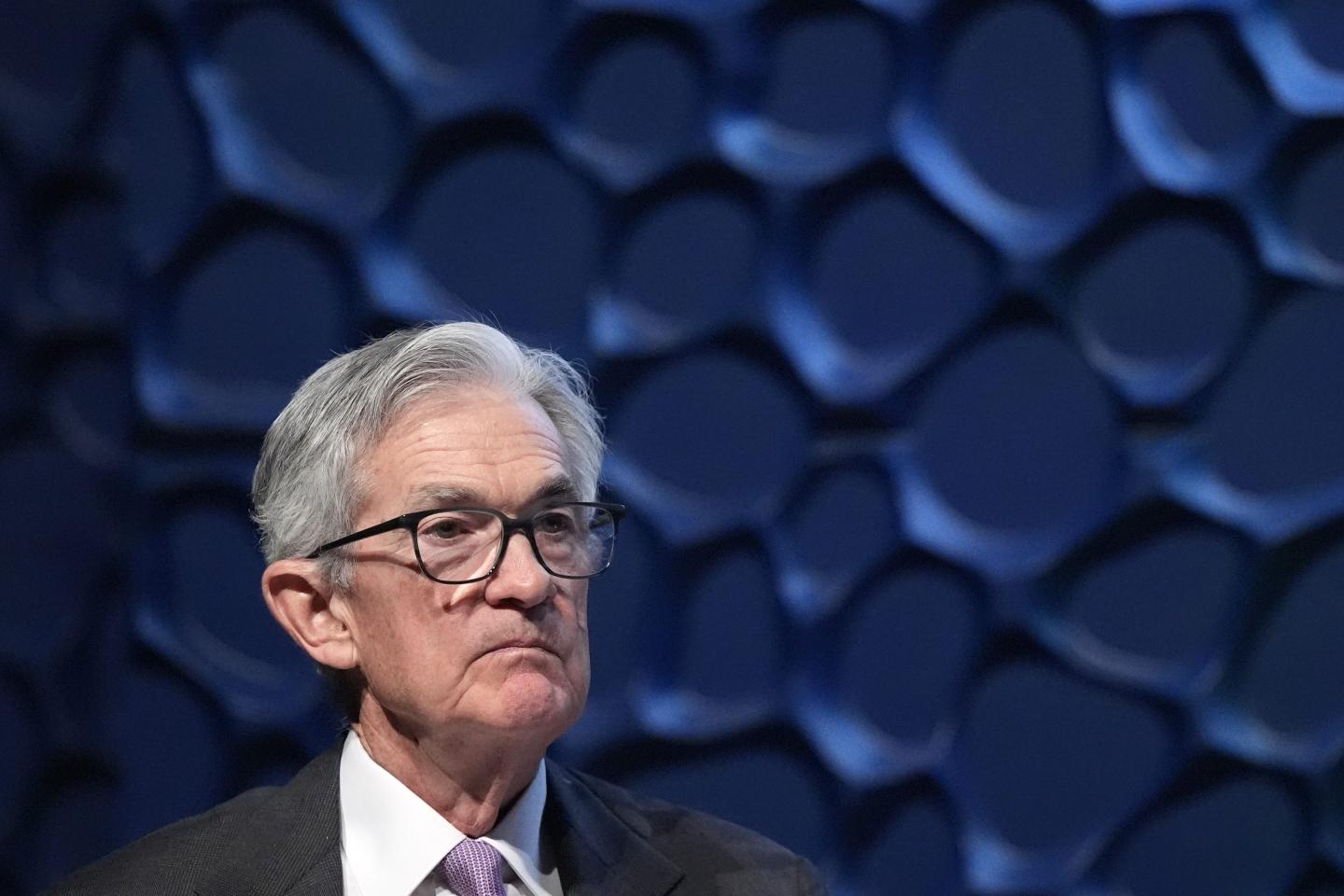
Federal Reserve Chair Jerome Powell listens to a question from a moderator during a Dallas Regional Chamber event in Music Hall at Fair Park Nov. 14, 2024, in Dallas.
Federal Reserve Chair Jerome Powell listens to a question from a moderator during a Dallas Regional Chamber event in Music Hall at Fair Park Nov. 14, 2024, in Dallas. LM Otero—AP
Add Fortune on Google for similar content.

Just a few weeks ago, the path ahead for the Federal Reserve looked straightforward: With inflation cooling and the job market slowing, the Fed appeared on track to steadily cut interest rates.

Recommended Video

In September, its officials predicted that they would reduce their benchmark rate four times next year, on top of three rate cuts this year.

Yet that outlook has swiftly changed. Several surprisingly strong economic reports, combined with President-elect Donald Trump’s policy proposals, have led to a decidedly more cautious tone from the Fed that could mean fewer cuts and higher interest rates than had been expected.

Fewer rate cuts would likely mean continued high mortgage rates and other borrowing costs for consumers and businesses. Auto loans would remain expensive. Small businesses would still face high loan rates.

In a speech last week in Dallas, Chair Jerome Powell made clear that the Fed isn’t necessarily inclined to cut rates each time it meets every six weeks.

“The economy is not sending any signals that we need to be in a hurry to lower rates,” Powell said. “The strength we are currently seeing in the economy gives us the ability to approach our decisions carefully.”

His comments were widely seen as signaling potentially fewer rate cuts in 2025, a view that sent stock prices falling after they had surged with Trump’s election.

Trump has proposed higher tariffs on all imports as well as mass deportations of undocumented immigrants — steps that economists say would worsen inflation. The president-elect has also proposed a menu of tax cuts and deregulation, which might help spur economic growth but would also fan inflation if businesses couldn’t find enough workers to meet increased consumer demand.

And recent economic data suggests that inflation pressures could prove more persistent and economic growth more resilient than was thought just a few months ago. At his most recent news conference, Powell suggested that the economy could even accelerate in 2025.

Wall Street traders and some economists now envision just two, rather than four, rate cuts next year. And while the Fed will likely cut its key rate when it meets in mid-December, traders foresee a nearly even likelihood that the central bank could leave the rate unchanged.

“I absolutely would anticipate that they’ll ease up on the pace of cuts,” said Jim Baird, chief investment officer at Plante Moran Financial Advisors. “The potential for growth to remain strong — that has to call into question whether they will feel either the need or ability to cut rates at the pace they had previously forecast.”

Economists at Bank of America expect annual inflation to remain “stuck” above 2.5%, higher than the Fed’s 2% target level, in part given the likelihood that Trump’s economic proposals, if carried out, would fuel price pressures. The economists now foresee just three rate reductions in the coming months, in December, March and June. And they expect the Fed to stop easing credit once its benchmark rate, now at 4.6%, reaches 3.9%.

Krishna Guha, an analyst at investment bank Evercore ISI, wrote last week that, “We think the looming Trump presidency is helping to drive a change in tone from the Fed — including Powell — towards a warier and more hedged posture on the pace and extent of further cuts.”

Trump has vowed to impose a 60% tariff on all Chinese goods and a “universal’’ tariff of 10% or 20% on everything else that enters the United States. On Wednesday, a top executive at Walmart, the world’s largest retailer, warned that Trump’s tariff proposals could force the company to raise prices on imported goods.

“Tariffs will be inflationary for customers,” John David Rainey, Walmart’s chief financial officer, told The Associated Press. Other consumer goods and retail companies, including Lowe’s, Stanley Black & Decker, and Columbia Sportswear, have issued similar warnings.

In trying to gauge the right level for interest rates, the Fed’s policymakers face a significant obstacle: They don’t know how much further they can reduce rates before reaching a level that neither stimulates nor restrains the economy — what’s called the “neutral rate.” The officials don’t want to cut rates so low as overheat the economy and reignite inflation. Nor do they want to keep rates so high as to damage the job market and the economy and risk a recession.

An unusually wide divergence has developed among the 19 officials on the Fed’s rate-setting committee as to where the neutral rate is. In September, the officials collectively projected that the neutral rate lies between 2.4% and 3.8%. Lorie Logan, president of the Federal Reserve Bank of Dallas, has noted that that range is twice as large as it was two years ago.

In a recent speech, Logan suggested that the Fed’s benchmark rate might be only slightly above the neutral level now. If so, that would mean few additional rate cuts are needed.

Other officials disagree. In a recent interview with The Associated Press, Austan Goolsbee, president of the Fed’s Chicago branch, said he thought the neutral rate is much lower than the Fed’s current rate. If so, many more rate cuts would likely be appropriate.

“I still think we’re far from what anybody thinks is neutral,” Goolsbee said. “We still got a ways to come down.”

Perhaps the biggest unknown is how Trump’s proposals on tariffs, deportations and tax cuts will shape the Fed’s rate decisions. Powell has stressed that the Fed won’t change its policymaking until it’s clear what changes the new administration will actually implement.

As is customary for the Fed, though, Powell avoided commenting directly on presidential policies. But he did acknowledge that the Fed’s economists are assessing the potential effects of a Trump presidency.

“We don’t actually really know what policies will be put in place,” Powell said. “We don’t know over what timeframe.”

Another factor is that the economy is much different now than when Trump first took office in January 2017. With unemployment lower than it was then, economists say, additional stimulus through tax cuts might create more demand than the economy can handle, possibly fueling inflation.

Tax cuts, “starting from an economy close to full employment, will lead to inflation and, by implication, higher Fed policy rates and a stronger dollar,” Olivier Blanchard, a former top economist at the International Monetary Fund and senior fellow at the Peterson Institute for International Economics, wrote in a recent commentary.

In 2018, when Trump imposed a slew of tariffs on imports from China, as well as on steel, aluminum and washing machines, Fed economists produced an analysis of how they should respond.

Their conclusion? As long as the tariffs were one-time increases and the public didn’t expect inflation to rise, the Fed wouldn’t have to respond by raising its key rate.

Yet last week, Powell acknowledged that the economy was different now, with inflation a bigger threat.

“Six years ago,” he said, “inflation was really low and inflation expectations were low. And now, we’ve come way back down, but we’re not back where we were. It’s a different situation.”

About the Authors
By Christopher Rugaber
See full bioRight Arrow Button Icon
By The Associated Press
See full bioRight Arrow Button Icon
Add Fortune on Google for similar content.

Latest in Finance

Finance
Lorem ipsum dolor sit amet, consectetur adipiscing elit, sed do eiusmod tempor incididunt ut labore et dolore magna aliqua. Ut enim ad minim veniam
By Fortune Editors
October 20, 2025
Finance
Lorem ipsum dolor sit amet, consectetur adipiscing elit, sed do eiusmod tempor incididunt ut labore et dolore magna aliqua. Ut enim ad minim veniam
By Fortune Editors
October 20, 2025
Finance
Lorem ipsum dolor sit amet, consectetur adipiscing elit, sed do eiusmod tempor incididunt ut labore et dolore magna aliqua. Ut enim ad minim veniam
By Fortune Editors
October 20, 2025
Finance
Lorem ipsum dolor sit amet, consectetur adipiscing elit, sed do eiusmod tempor incididunt ut labore et dolore magna aliqua. Ut enim ad minim veniam
By Fortune Editors
October 20, 2025
Finance
Lorem ipsum dolor sit amet, consectetur adipiscing elit, sed do eiusmod tempor incididunt ut labore et dolore magna aliqua. Ut enim ad minim veniam
By Fortune Editors
October 20, 2025
Finance
Lorem ipsum dolor sit amet, consectetur adipiscing elit, sed do eiusmod tempor incididunt ut labore et dolore magna aliqua. Ut enim ad minim veniam
By Fortune Editors
October 20, 2025

Most Popular

Finance
Lorem ipsum dolor sit amet, consectetur adipiscing elit, sed do eiusmod tempor incididunt ut labore et dolore magna aliqua. Ut enim ad minim veniam
By Fortune Editors
October 20, 2025
Finance
Lorem ipsum dolor sit amet, consectetur adipiscing elit, sed do eiusmod tempor incididunt ut labore et dolore magna aliqua. Ut enim ad minim veniam
By Fortune Editors
October 20, 2025
Finance
Lorem ipsum dolor sit amet, consectetur adipiscing elit, sed do eiusmod tempor incididunt ut labore et dolore magna aliqua. Ut enim ad minim veniam
By Fortune Editors
October 20, 2025
Finance
Lorem ipsum dolor sit amet, consectetur adipiscing elit, sed do eiusmod tempor incididunt ut labore et dolore magna aliqua. Ut enim ad minim veniam
By Fortune Editors
October 20, 2025
Finance
Lorem ipsum dolor sit amet, consectetur adipiscing elit, sed do eiusmod tempor incididunt ut labore et dolore magna aliqua. Ut enim ad minim veniam
By Fortune Editors
October 20, 2025
Finance
Lorem ipsum dolor sit amet, consectetur adipiscing elit, sed do eiusmod tempor incididunt ut labore et dolore magna aliqua. Ut enim ad minim veniam
By Fortune Editors
October 20, 2025
Fortune Secondary Logo
Rankings
  • 100 Best Companies
  • Fortune 500
  • Global 500
  • Fortune 500 Europe
  • Most Powerful Women
  • World's Most Admired Companies
  • See All Rankings
  • Lists Calendar
Sections
  • Finance
  • Fortune Crypto
  • Features
  • Leadership
  • Health
  • Commentary
  • Success
  • Retail
  • Mpw
  • Tech
  • Lifestyle
  • CEO Initiative
  • Asia
  • Politics
  • Conferences
  • Europe
  • Newsletters
  • Personal Finance
  • Environment
  • Magazine
  • Education
Customer Support
  • Frequently Asked Questions
  • Customer Service Portal
  • Privacy Policy
  • Terms Of Use
  • Single Issues For Purchase
  • International Print
Commercial Services
  • Advertising
  • Fortune Brand Studio
  • Fortune Analytics
  • Fortune Conferences
  • Business Development
  • Group Subscriptions
About Us
  • About Us
  • Press Center
  • Work At Fortune
  • Terms And Conditions
  • Site Map
  • About Us
  • Press Center
  • Work At Fortune
  • Terms And Conditions
  • Site Map
  • Facebook icon
  • Twitter icon
  • LinkedIn icon
  • Instagram icon
  • TikTok icon
  • YouTube icon

Latest in Finance

Photo of RFK Jr.
HealthFDA
RFK Jr.’s peptide push narrowly gains backing from FDA advisers despite objections from scientists
By The Associated Press and Matthew PerroneJuly 24, 2026
3 hours ago
Canada celebrates new Detroit River bridge connecting Ontario to Michigan as 50% tariff feud keeps American officials away
North AmericaTariffs
Canada celebrates new Detroit River bridge connecting Ontario to Michigan as 50% tariff feud keeps American officials away
By The Associated Press, Mike Householder and Ed WhiteJuly 24, 2026
3 hours ago
dario
AIEconomics
Anthropic’s head of economics just explained why Anthropic’s CEO was wrong about a white-collar bloodbath
By Nick LichtenbergJuly 24, 2026
4 hours ago
pjm
EnergyData centers
The AI boom’s hidden electricity bill — and why you’re paying it
By Nick LichtenbergJuly 24, 2026
5 hours ago
j
AINvidia
Nvidia, Microsoft lead call for open-weight AI models after Kimi
By Michael Shepard and BloombergJuly 24, 2026
5 hours ago
Trump’s latest import taxes could set a precedent for a ‘broad tariff generator’ on anything a president wants to target, expert warns
LawTariffs
Trump’s latest import taxes could set a precedent for a ‘broad tariff generator’ on anything a president wants to target, expert warns
By Jason MaJuly 24, 2026
5 hours ago

Most Popular

Jensen Huang made his $172 billion fortune on AI chips. His family's $75 million gift to Vanderbilt argues art decides what technology is for
Big Tech
Jensen Huang made his $172 billion fortune on AI chips. His family's $75 million gift to Vanderbilt argues art decides what technology is for
By Sydney LakeJuly 23, 2026
2 days ago
'The demographic dividend of the last 40 years is ending': J.P. Morgan says the world is running out of the two things that kept interest rates down
Economy
'The demographic dividend of the last 40 years is ending': J.P. Morgan says the world is running out of the two things that kept interest rates down
By Eleanor PringleJuly 24, 2026
15 hours ago
The $39 trillion U.S. national debt isn’t as high as Japan’s and Singapore’s relative to economy size—and yet it's still worse somehow
Economy
The $39 trillion U.S. national debt isn’t as high as Japan’s and Singapore’s relative to economy size—and yet it's still worse somehow
By Sasha RogelbergJuly 23, 2026
1 day ago
The millennial generation has split, new Fed research shows: Those over 35 are edging toward boomer-style wealth, while everyone else falls behind
Real Estate
The millennial generation has split, new Fed research shows: Those over 35 are edging toward boomer-style wealth, while everyone else falls behind
By Nick LichtenbergJuly 22, 2026
2 days ago
Current price of oil as of July 24, 2026
Personal Finance
Current price of oil as of July 24, 2026
By Joseph HostetlerJuly 24, 2026
13 hours ago
Turns out Dead Internet Theory was right: AI agents are eating the Web, growing by nearly 8,000% and rewiring the Internet's business model
AI
Turns out Dead Internet Theory was right: AI agents are eating the Web, growing by nearly 8,000% and rewiring the Internet's business model
By Mia OsmonbekovJuly 23, 2026
1 day ago

© 2026 Fortune Media IP Limited. All Rights Reserved. Use of this site constitutes acceptance of our Terms of Use and Privacy Policy | CA Notice at Collection and Privacy Notice | Do Not Sell/Share My Personal Information
FORTUNE is a trademark of Fortune Media IP Limited, registered in the U.S. and other countries. FORTUNE may receive compensation for some links to products and services on this website. Offers may be subject to change without notice.