• Home
  • Latest
  • Fortune 500
  • Finance
  • Tech
  • Leadership
  • Lifestyle
  • Rankings
  • Multimedia
LeadershipView from the C-Suite

How the CEO of a major aerospace company totally rewrote his playbook after a $4.2 billion deal with Boeing fell through: ‘It was a baptism by fire’

Phil Wahba
By
Phil Wahba
Phil Wahba
Senior Writer
Down Arrow Button Icon
Phil Wahba
By
Phil Wahba
Phil Wahba
Senior Writer
Down Arrow Button Icon
October 21, 2024, 1:39 PM ET
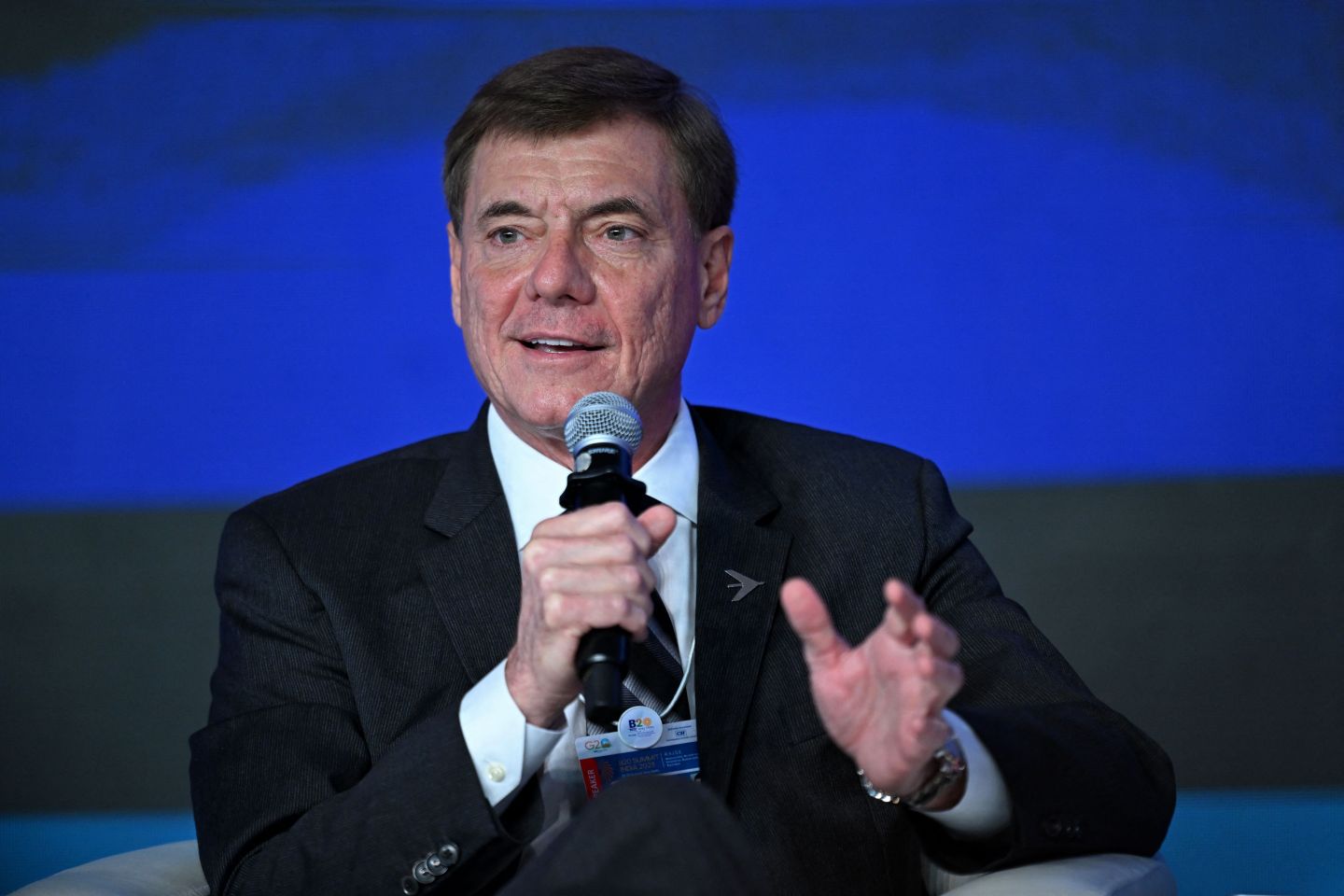
Embraer CEO Francisco Gomes Neto addresses the gathering on the first day of the three-day B20 Summit in New Delhi on August 25, 2023. (Photo by Sajjad HUSSAIN / AFP) (Photo by SAJJAD HUSSAIN/AFP via Getty Images)

When Francisco Gomes Neto was named CEO of Brazilian aircraft maker Embraer in May of 2019, a big part of his job description was to carve out its commercial aviation division in an ill-fated joint venture planned with Boeing.

Recommended Video

For Embraer, the third-largest plane maker in the world, the goal of that partnership was to build up its commercial aircraft division to better compete with Airbus, and maintain a  focus on its thriving private jet and military businesses. But in April 2020, Boeing pulled the plug after the pandemic and two major 737 Max accidents that killed hundreds severely hurt its business.  

That meant Gomes Neto had to rethink his strategy for Embraer from top to bottom, even as sales plummeted during the COVID crisis and no one knew when aviation would recover. “We had to reinvent ourselves, to reintegrate the commercial aviation and restart,” Gomes Neto told Fortune in an interview last week. “It was a baptism by fire.”

The company focused on private jets and sustainability, and it seems to be working. Gomes Neto says Embraer revenue should be around $6 billion or slightly higher this year, on track to hit $10 billion by the end of the decade. Last week, the company announced that its overall aircraft deliveries had risen by 33% year over year in the third quarter, with 57 jets delivered. Its E175 regional commercial jets currently transport some 5 million passengers a month in the U.S.

In mapping out his strategy, Gomes Neto solicited input from 70 Embraer executives, whom he credits with getting the company through the turbulence. While that sounds daunting and likely to lead to stasis by consensus-seeking, it showed Gomes Neto’s willingness to recognize that airplane building is a more complex and different game than the automotive world where the electrical engineer cut his teeth.

He says that Embraer’s current order backlog of $21 billion proves the company has executed what he calls “the best turnaround” and is now ready to enjoy “the harvest season.” 


Entering the era of sustainable fuel

With the Boeing contretemps behind it, Embraer has been busy getting its planes ready for a more sustainable era. Its fleet is already largely certified to fly using at least 50% sustainable air fuel (SAF), which comes with a smaller carbon footprint.

Embraer is now aiming to be certified for each flight to use 100% SAF by 2030. The market for SAF is still small, thanks to low supply and high cost, but airlines and planemakers alike believe it will be widely adopted in the future. “It’s inevitable,” Gomes Neto says.

But private jets, which have been widely criticized for its carbon emissions, is also a key part of the company’s growth strategy. Embraer does robust business with private jet timeshare companies like NetJets. Gomes Neto dismisses the idea that this is damaging to the environment, saying that private air travel generates a tiny fraction of total global carbon emissions. “It’s a very important productivity tool and as soon as you start to use a private jet, it’s very difficult to go back because it’s so convenient,” he says. 

(Gomes Neto also touts the fuel efficiency of Embraer’s E195-E2 commercial jets, which he says also allows the planes to take more passengers and generate more money while reducing energy use.)

While growth projections for the business jet market are modest, Gomes Neto says the business will help Embraer outperform rivals. And he adds that Embraer’s air taxis, which will be fully electric and have zero emissions, will hit the market in about two years. 

As for obstacles in the way of a successful future, Gomes Neto says the supply chain chaos of the past year is mostly over, and he’s not worried about trade wars, despite some rhetoric from politicians. “The aviation segment is very global. There aren’t that many producers, and it’s well regulated,” he says.

One lesson from the COVID crisis, he says,  is that a CEO has to set the tone for the troops by remaining upbeat. “As a leader, we always have to be positive because one thing we know is that the crisis will end one day.”

Join us at the Fortune Workplace Innovation Summit May 19–20, 2026, in Atlanta. The next era of workplace innovation is here—and the old playbook is being rewritten. At this exclusive, high-energy event, the world’s most innovative leaders will convene to explore how AI, humanity, and strategy converge to redefine, again, the future of work. Register now.
About the Author
Phil Wahba
By Phil WahbaSenior Writer
LinkedIn iconTwitter icon

Phil Wahba is a senior writer at Fortune primarily focused on leadership coverage, with a prior focus on retail.

See full bioRight Arrow Button Icon

Latest in Leadership

Asiathe future of work
The CEO of one of Asia’s largest co-working space providers says his business has more in common with hotels
By Angelica AngDecember 12, 2025
47 minutes ago
Donald Trump
HealthHealth Insurance
‘Tragedy in the making’: Top healthcare exec on why insurance will spike to subsidize a tax cut to millionaires and billionaires
By Nick LichtenbergDecember 12, 2025
8 hours ago
three men in suits, one gesturing
AIBrainstorm AI
The fastest athletes in the world can botch a baton pass if trust isn’t there—and the same is true of AI, Blackbaud exec says
By Amanda GerutDecember 12, 2025
8 hours ago
Brainstorm AI panel
AIBrainstorm AI
Creative workers won’t be replaced by AI—but their roles will change to become ‘directors’ managing AI agents, executives say
By Beatrice NolanDecember 12, 2025
9 hours ago
Ryan Serhant lifts his arms at the premiere of Owning Manhattan, his Netflix show
Successrelationships
Ryan Serhant, a real estate mogul who’s met over 100 billionaires, reveals his best networking advice: ‘Every room I go into, I use the two C’s‘
By Dave SmithDecember 12, 2025
10 hours ago
Fei-Fei Li, the "Godmother of AI," says she values AI skills more than college degrees when hiring software engineers for her tech startup.
AITech
‘Godmother of AI’ says degrees are less important in hiring than how quickly you can ‘superpower yourself’ with new tools
By Nino PaoliDecember 12, 2025
11 hours ago

Most Popular

placeholder alt text
Economy
Tariffs are taxes and they were used to finance the federal government until the 1913 income tax. A top economist breaks it down
By Kent JonesDecember 12, 2025
17 hours ago
placeholder alt text
Success
At 18, doctors gave him three hours to live. He played video games from his hospital bed—and now, he’s built a $10 million-a-year video game studio
By Preston ForeDecember 10, 2025
3 days ago
placeholder alt text
Success
Palantir cofounder calls elite college undergrads a ‘loser generation’ as data reveals rise in students seeking support for disabilities, like ADHD
By Preston ForeDecember 11, 2025
1 day ago
placeholder alt text
Success
40% of Stanford undergrads receive disability accommodations—but it’s become a college-wide phenomenon as Gen Z try to succeed in the current climate
By Preston ForeDecember 12, 2025
12 hours ago
placeholder alt text
Arts & Entertainment
'We're not just going to want to be fed AI slop for 16 hours a day': Analyst sees Disney/OpenAI deal as a dividing line in entertainment history
By Nick LichtenbergDecember 11, 2025
1 day ago
placeholder alt text
Success
Apple cofounder Ronald Wayne sold his 10% stake for $800 in 1976—today it’d be worth up to $400 billion
By Preston ForeDecember 12, 2025
13 hours ago
Rankings
  • 100 Best Companies
  • Fortune 500
  • Global 500
  • Fortune 500 Europe
  • Most Powerful Women
  • Future 50
  • World’s Most Admired Companies
  • See All Rankings
Sections
  • Finance
  • Leadership
  • Success
  • Tech
  • Asia
  • Europe
  • Environment
  • Fortune Crypto
  • Health
  • Retail
  • Lifestyle
  • Politics
  • Newsletters
  • Magazine
  • Features
  • Commentary
  • Mpw
  • CEO Initiative
  • Conferences
  • Personal Finance
  • Education
Customer Support
  • Frequently Asked Questions
  • Customer Service Portal
  • Privacy Policy
  • Terms Of Use
  • Single Issues For Purchase
  • International Print
Commercial Services
  • Advertising
  • Fortune Brand Studio
  • Fortune Analytics
  • Fortune Conferences
  • Business Development
About Us
  • About Us
  • Editorial Calendar
  • Press Center
  • Work At Fortune
  • Diversity And Inclusion
  • Terms And Conditions
  • Site Map

© 2025 Fortune Media IP Limited. All Rights Reserved. Use of this site constitutes acceptance of our Terms of Use and Privacy Policy | CA Notice at Collection and Privacy Notice | Do Not Sell/Share My Personal Information
FORTUNE is a trademark of Fortune Media IP Limited, registered in the U.S. and other countries. FORTUNE may receive compensation for some links to products and services on this website. Offers may be subject to change without notice.