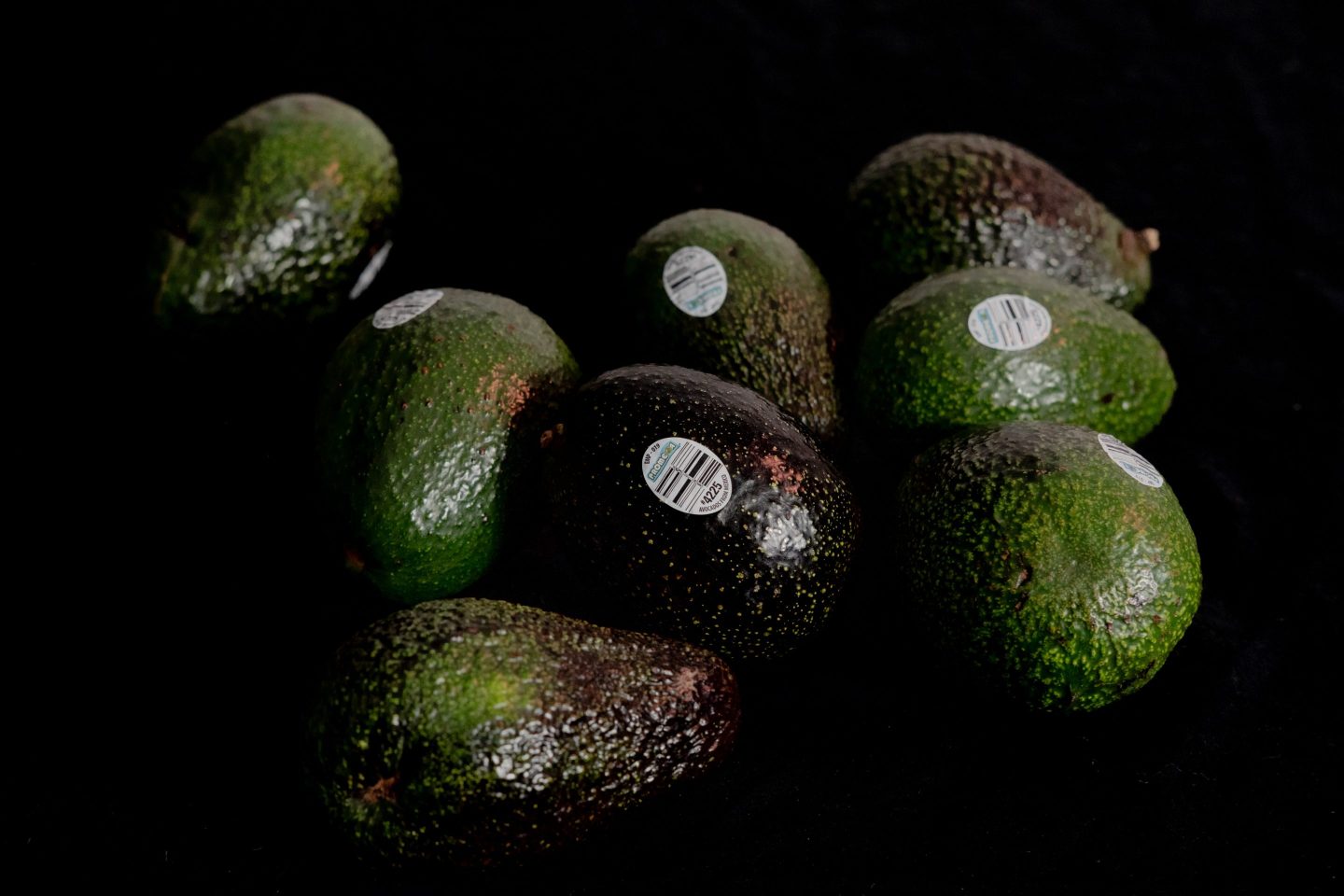
California avocado growers are fuming this week about a U.S. decision to hand over pest inspections of Mexican orchards to the Mexican government.
Inspectors hired by the U.S. Department of Agriculture have been guarding against imports of avocados infected with insects and diseases since 1997, but they have also been threatened in Mexico for refusing to certify deceptive shipments in recent years.
Threats and violence against inspectors have caused the U.S. to suspend inspections in the past, and California growers question whether Mexico’s own inspectors would be better equipped to withstand such pressure.
“This action reverses the long-established inspection process designed to prevent invasions of known pests in Mexico that would devastate our industry,” the California Avocado Commission wrote in an open letter to U.S. Secretary of Agriculture Tom Vilsack on Monday.
At present, inspectors work for the U.S. Department of Agriculture’s Animal and Plant Health Inspection Service, known as APHIS. Because the United States also grows avocados, U.S. inspectors observe orchards and packing houses in Mexico to ensure exported avocados don’t carry pests that could hurt U.S. crops.
“It is well known that their physical presence greatly reduces the opportunity of others to game the system,” the avocado commission wrote. ”What assurances can APHIS provide us that its unilateral reversal of the process will be equal to or better than what has protected us?”
The letter added, “We are looking for specifics as to why you have concluded that substituting APHIS inspectors with Mexican government inspectors is in our best interest.”
The decision was announced last week in a short statement by Mexico’s Agriculture Department, which claimed that “with this agreement, the U.S. health safety agency is recognizing the commitment of Mexican growers, who in more than 27 years have not had any sanitary problems in exports.”
The idea that there have been no problems is far from the truth.
In 2022, inspections were halted after one of the U.S. inspectors was threatened in the western state of Michoacan, where growers are routinely subject to extortion by drug cartels. Only the states of Michoacan and Jalisco are certified to export avocados to the United States.
The U.S. Department of Agriculture said at the time that the inspector had received a threat “against him and his family.”
The inspector had “questioned the integrity of a certain shipment, and refused to certify it based on concrete issues,” according to the USDA statement. Some packers in Mexico buy avocados from other, non-certified states, and try to pass them off as being from Michoacan.
Sources at the time said the 2022 threat involved a grower demanding the inspector certify more avocados than his orchard was physically capable of producing, suggesting that at least some had been smuggled in from elsewhere.
And in June, two USDA employees were assaulted and temporarily held by assailants in Michoacan. That led the U.S. to suspend inspections in Mexico’s biggest avocado-producing state.
The U.S. Department of Agriculture did not immediately respond to questions about why the decision was made, or whether it was related to the threats.
Mexico currently supplies about 80% of U.S. imports of the fruit. Growers in the U.S. can’t supply the country’s whole demand, nor provide fruit year-round.