
• Home
  • Latest
  • Fortune 500
  • Finance
  • Tech
  • Leadership
  • Lifestyle
  • Rankings
  • Multimedia

Trendingnow

1

Analysts expected oil to surge above $200 but China has quietly kept prices half of that—and can’t for much longer

2

Pentagon accuses Alibaba, Baidu and BYD, three of China's biggest companies, of supporting the Chinese military

3

Current price of oil as of June 10, 2026

1

Analysts expected oil to surge above $200 but China has quietly kept prices half of that—and can’t for much longer

2

Pentagon accuses Alibaba, Baidu and BYD, three of China's biggest companies, of supporting the Chinese military

3

Current price of oil as of June 10, 2026
Financeclimate change

The next banking crisis could come from climate change

Irina Ivanova
By
Irina Ivanova
Irina Ivanova
Deputy US News Editor
Down Arrow Button Icon
Irina Ivanova
By
Irina Ivanova
Irina Ivanova
Deputy US News Editor
Down Arrow Button Icon
September 23, 2024, 12:02 AM ET
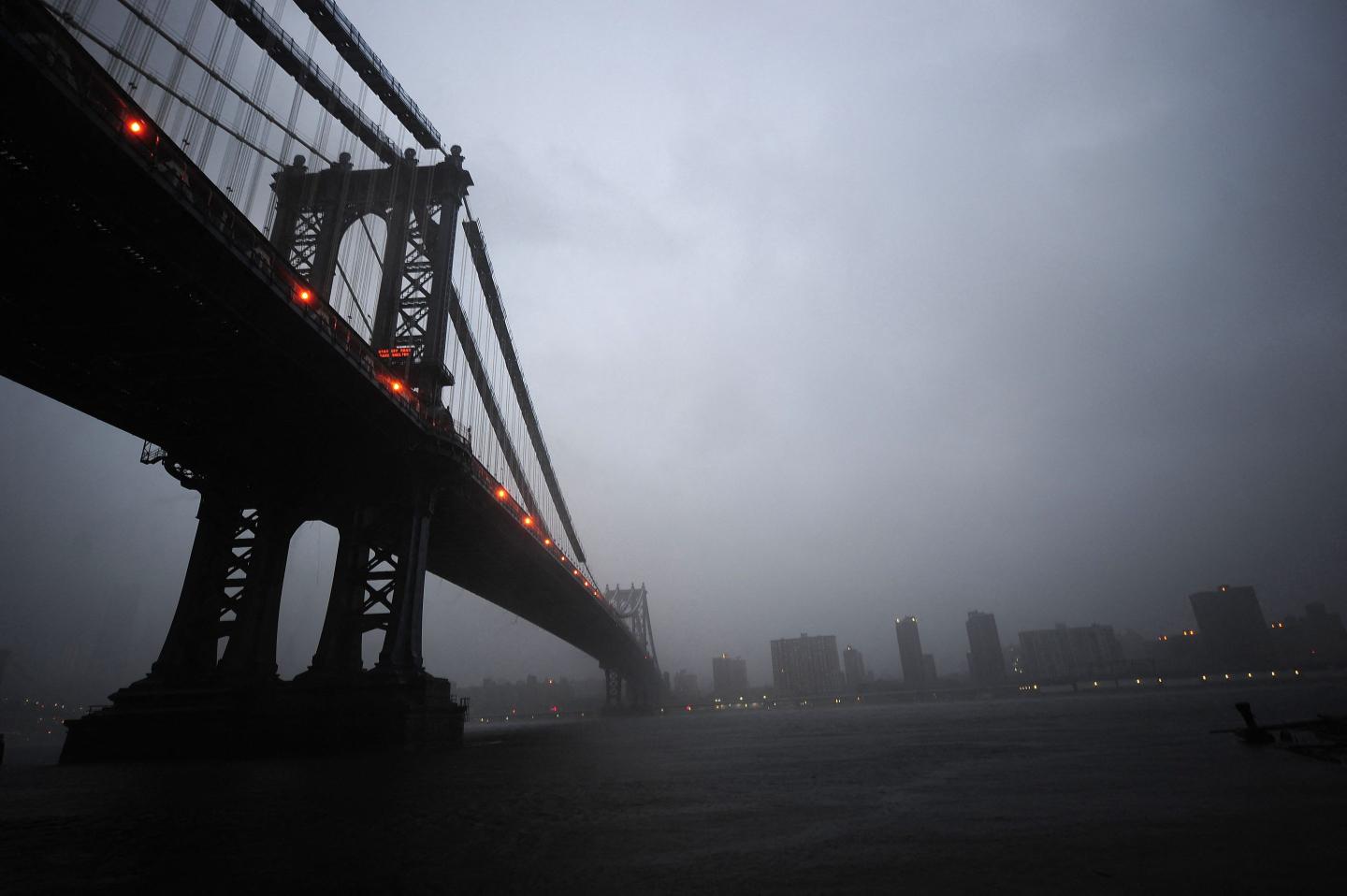
Manhattan Bridge during a storm
Hurricane Irene slammed lower Manhattan and Brooklyn in 2011.EMMANUEL DUNAND/AFP

America’s smallest banks face potentially destructive losses from climate-related weather disasters, according to a first-of-its-kind report from a climate change nonprofit. And they’re not even aware of the risk.

Recommended Video

Property damage from floods, wind, storm surges, hail, or wildfires threatens a collective $2.4 billion across nearly 200 national banks, averaging 1.5% of these banks’ total portfolio value, according to First Street. Most of this risk is concentrated amid small regional or community banks. In fact, nearly one in three regional banks face significant climate risk. But large institutions aren’t immune, with one in four facing such risks too, the report found.

“Risk exposure varies, but no matter the size of the institution, all banks had some level of climate risk within their lending footprint,” Jeremy Porter, First Street’s head of climate implications, told Fortune. “The most vulnerable were regional, small, and community banks with highly concentrated portfolios in areas prone to flooding, wildfires, or hurricanes. However, even some of the larger banks faced significant enough risk to merit further scrutiny.” 

First Street conducted its analysis by looking at extreme weather risks in banks’ physical locations and using it as a proxy for the commercial and residential properties on which banks have issued loans. 

Nearly one-third of the nation’s banks are exposed to climate-related risks that could reduce the value of their holdings by 1%, a threshold the Securities and Exchange Commission has defined as material. 

“If you have any line item, as a publicly traded company, with the potential to lose 1% of value… you have to report it,” First Street CEO Matthew Eby said. “On average, every single one of these small banks and community banks hold so much risk, they [would] all have to report it.” 

Why banks don’t know 

The SEC’s 1% rule is currently on hold while it faces legal challenges—but regardless, it and other financial reporting requirements exempt small banks. Experts say many of these institutions likely don’t know just how risky their portfolios are. And the ballooning costs of weather-related disasters, which are expected to rise dramatically as climate change worsens, show why it’s critical to understand such risks. Since the 1980s, floods, wildfires, hurricanes, and other weather disasters have caused an ever-rising amount of financial damage, much of it in areas previously immune to weather disasters. 

Hurricane Debby, which pummeled Florida and the Carolinas last month before moving up the East Coast, caused an estimated $1.4 billion of property losses in the U.S. and over $2 billion in Canada, according to estimates. (It was the costliest event in the history of Quebec, Reinsurance News noted.) But an analysis by First Street found that nearly 8 in 10 of the damage was outside of historical FEMA flood zones, meaning the affected properties were unlikely to have flood insurance, and their owners less able to weather a catastrophic financial loss.

Repeated across hundreds or thousands of properties, such financial losses could spell disaster for small banks that have outstanding loans concentrated in a specific area. One bank flagged as high-risk by First Street has most of its branches across coastal New England, a region that has seen devastating back-to-back floods for the past two years and where climate change is expected to exacerbate extreme weather.

“If you lost, after insurance, 14 or 15% of your residential real estate portfolio or commercial real estate portfolio, there's no way you have the reserves to withstand that, so you’re talking about potential bank failure,” Eby said.

He added, “financial institutions are really the big concern, because if they fail in financial crises, that impacts everyone else, as opposed to just a company failing by itself.”  

Unknown unknowns

While climate risk is a growing concern for banks of all sizes, the smallest institutions are least able to establish and price that risk, said Clifford Rossi, a former Citigroup risk officer who now directs the Smith Enterprise Risk Consortium at the University of Maryland. 

“So many other things are affecting small banks—they’re dealing with competitive pressure from the big guys that affect economies of scale, they're fixated on how they're managing their assets, interest rates are declining… those things are top of mind,” he said. 

Rossi questioned First Street's methodology and cautioned against putting numerical estimates on bank losses based on branch locations, saying they could provide wildly varying figures. 

“There's certainly a degree of risk in those portfolios, but we don’t know how much,” he said. 

Every bank should do a loan-level analysis of their portfolio by putting data on addresses, longitude, latitude, and commercial real estate into a climate model to assess the physical risk, he added.

When it comes to estimates, he warned, “We need to be careful about saying the sky is falling when we still don’t have the best analysis in town.”

But that kind of analysis is time-consuming and difficult, even for the largest institutions. The Federal Reserve this spring published the results of a test to determine how aware America’s six largest banks—Bank of America, Citigroup, Goldman Sachs, JPMorgan Chase, Morgan Stanley, and Wells Fargo—were of their climate risks. 

The answer: Not very.

According to the banks, they didn’t have reliable information on the types of buildings they held, their insurance coverage, weather exposure, or climate-modeling data. 

The new analysis “underscores the need for all banks, financial institutions, and asset owners to proactively incorporate climate risk into their broader risk management frameworks,” First Street’s Porter said.  

“Climate risk is present in these portfolios—and it’s measurable. The Federal Reserve, the SEC, and other regulatory bodies are already acknowledging this risk through stress tests, and it’s only a matter of time before mandatory reporting becomes standard practice.”

About the Author
Irina Ivanova
By Irina IvanovaDeputy US News Editor

Irina Ivanova is the former deputy U.S. news editor at Fortune.


See full bioRight Arrow Button Icon

Latest in Finance

Finance
Lorem ipsum dolor sit amet, consectetur adipiscing elit, sed do eiusmod tempor incididunt ut labore et dolore magna aliqua. Ut enim ad minim veniam
By Fortune Editors
October 20, 2025
Finance
Lorem ipsum dolor sit amet, consectetur adipiscing elit, sed do eiusmod tempor incididunt ut labore et dolore magna aliqua. Ut enim ad minim veniam
By Fortune Editors
October 20, 2025
Finance
Lorem ipsum dolor sit amet, consectetur adipiscing elit, sed do eiusmod tempor incididunt ut labore et dolore magna aliqua. Ut enim ad minim veniam
By Fortune Editors
October 20, 2025
Finance
Lorem ipsum dolor sit amet, consectetur adipiscing elit, sed do eiusmod tempor incididunt ut labore et dolore magna aliqua. Ut enim ad minim veniam
By Fortune Editors
October 20, 2025
Finance
Lorem ipsum dolor sit amet, consectetur adipiscing elit, sed do eiusmod tempor incididunt ut labore et dolore magna aliqua. Ut enim ad minim veniam
By Fortune Editors
October 20, 2025
Finance
Lorem ipsum dolor sit amet, consectetur adipiscing elit, sed do eiusmod tempor incididunt ut labore et dolore magna aliqua. Ut enim ad minim veniam
By Fortune Editors
October 20, 2025

Most Popular

Finance
Lorem ipsum dolor sit amet, consectetur adipiscing elit, sed do eiusmod tempor incididunt ut labore et dolore magna aliqua. Ut enim ad minim veniam
By Fortune Editors
October 20, 2025
Finance
Lorem ipsum dolor sit amet, consectetur adipiscing elit, sed do eiusmod tempor incididunt ut labore et dolore magna aliqua. Ut enim ad minim veniam
By Fortune Editors
October 20, 2025
Finance
Lorem ipsum dolor sit amet, consectetur adipiscing elit, sed do eiusmod tempor incididunt ut labore et dolore magna aliqua. Ut enim ad minim veniam
By Fortune Editors
October 20, 2025
Finance
Lorem ipsum dolor sit amet, consectetur adipiscing elit, sed do eiusmod tempor incididunt ut labore et dolore magna aliqua. Ut enim ad minim veniam
By Fortune Editors
October 20, 2025
Finance
Lorem ipsum dolor sit amet, consectetur adipiscing elit, sed do eiusmod tempor incididunt ut labore et dolore magna aliqua. Ut enim ad minim veniam
By Fortune Editors
October 20, 2025
Finance
Lorem ipsum dolor sit amet, consectetur adipiscing elit, sed do eiusmod tempor incididunt ut labore et dolore magna aliqua. Ut enim ad minim veniam
By Fortune Editors
October 20, 2025
Fortune Secondary Logo
Rankings
  • 100 Best Companies
  • Fortune 500
  • Global 500
  • Fortune 500 Europe
  • Most Powerful Women
  • World's Most Admired Companies
  • See All Rankings
  • Lists Calendar
Sections
  • Finance
  • Fortune Crypto
  • Features
  • Leadership
  • Health
  • Commentary
  • Success
  • Retail
  • Mpw
  • Tech
  • Lifestyle
  • CEO Initiative
  • Asia
  • Politics
  • Conferences
  • Europe
  • Newsletters
  • Personal Finance
  • Environment
  • Magazine
  • Education
Customer Support
  • Frequently Asked Questions
  • Customer Service Portal
  • Privacy Policy
  • Terms Of Use
  • Single Issues For Purchase
  • International Print
Commercial Services
  • Advertising
  • Fortune Brand Studio
  • Fortune Analytics
  • Fortune Conferences
  • Business Development
  • Group Subscriptions
About Us
  • About Us
  • Press Center
  • Work At Fortune
  • Terms And Conditions
  • Site Map
  • About Us
  • Press Center
  • Work At Fortune
  • Terms And Conditions
  • Site Map
  • Facebook icon
  • Twitter icon
  • LinkedIn icon
  • Instagram icon
  • Pinterest icon

Latest in Finance

visa
AIVisa
Visa thinks it’s a great idea for AI agents to shop and pay for things without human approval
By Barbara Ortutay, Ken Sweet and The Associated PressJune 11, 2026
2 hours ago
Top CD rates from major banks June 11, 2026: Chase CDs, Bank of America CDs, Citibank CDs, and more
Personal FinanceCertificates of Deposit (CDs)
Top CD rates from major banks on June 11, 2026: Chase CDs, Bank of America CDs, Citibank CDs, and more
By Joseph HostetlerJune 11, 2026
2 hours ago
Current price of Ethereum for June 11, 2026
Personal FinanceEthereum
Current price of Ethereum for June 11, 2026
By Joseph HostetlerJune 11, 2026
2 hours ago
Current price of Bitcoin for June 11, 2026
Personal FinanceCryptocurrency
Current price of Bitcoin for June 11, 2026
By Joseph HostetlerJune 11, 2026
2 hours ago
Chevron’s CFO on why finance chiefs are defining AI’s business value
NewslettersCFO Daily
Chevron’s CFO on why finance chiefs are defining AI’s business value
By Sheryl EstradaJune 11, 2026
2 hours ago
Current price of oil as of June 11, 2026
Personal FinanceOil
Current price of oil as of June 11, 2026
By Joseph HostetlerJune 11, 2026
2 hours ago

Most Popular

Analysts expected oil to surge above $200 but China has quietly kept prices half of that—and can’t for much longer
Energy
Analysts expected oil to surge above $200 but China has quietly kept prices half of that—and can’t for much longer
By Sasha RogelbergJune 10, 2026
21 hours ago
Pentagon accuses Alibaba, Baidu and BYD, three of China's biggest companies, of supporting the Chinese military
Asia
Pentagon accuses Alibaba, Baidu and BYD, three of China's biggest companies, of supporting the Chinese military
By Kate O'Keeffe and BloombergJune 8, 2026
3 days ago
Current price of oil as of June 10, 2026
Personal Finance
Current price of oil as of June 10, 2026
By Joseph HostetlerJune 10, 2026
1 day ago
Costco CEO Ron Vachris rose from forklift driver to the C-suite without a college degree: ‘Don’t chase a title’ is the career advice that got him there
Success
Costco CEO Ron Vachris rose from forklift driver to the C-suite without a college degree: ‘Don’t chase a title’ is the career advice that got him there
By Preston ForeJune 8, 2026
3 days ago
Marc Lore’s robots make 500 burrito bowls an hour. A human can make 45
Innovation
Marc Lore’s robots make 500 burrito bowls an hour. A human can make 45
By Amanda GerutJune 9, 2026
2 days ago
A ‘MAGA Warrior’ Texas ag chief is publicly blasting the USDA over a flesh-eating pest threatening America's beef supply
North America
A ‘MAGA Warrior’ Texas ag chief is publicly blasting the USDA over a flesh-eating pest threatening America's beef supply
By Marco Quiroz-GutierrezJune 10, 2026
1 day ago

© 2026 Fortune Media IP Limited. All Rights Reserved. Use of this site constitutes acceptance of our Terms of Use and Privacy Policy | CA Notice at Collection and Privacy Notice | Do Not Sell/Share My Personal Information
FORTUNE is a trademark of Fortune Media IP Limited, registered in the U.S. and other countries. FORTUNE may receive compensation for some links to products and services on this website. Offers may be subject to change without notice.