• Home
  • Latest
  • Fortune 500
  • Finance
  • Tech
  • Leadership
  • Lifestyle
  • Rankings
  • Multimedia
CommentaryEnvironment

Extreme weather nearly killed my business, and climate change means more of it. What I wish I’d known

By
Mityne Lewis
Mityne Lewis
Down Arrow Button Icon
By
Mityne Lewis
Mityne Lewis
Down Arrow Button Icon
August 9, 2024, 11:21 AM ET

Mityne Lewis is executive director and owner of Peas in a Pod Daycare in Chicago.

As extreme weather events grow more commonplace, small-business owners—many without the right kind of insurance—become increasingly vulnerable to catastrophic flooding and other risks.
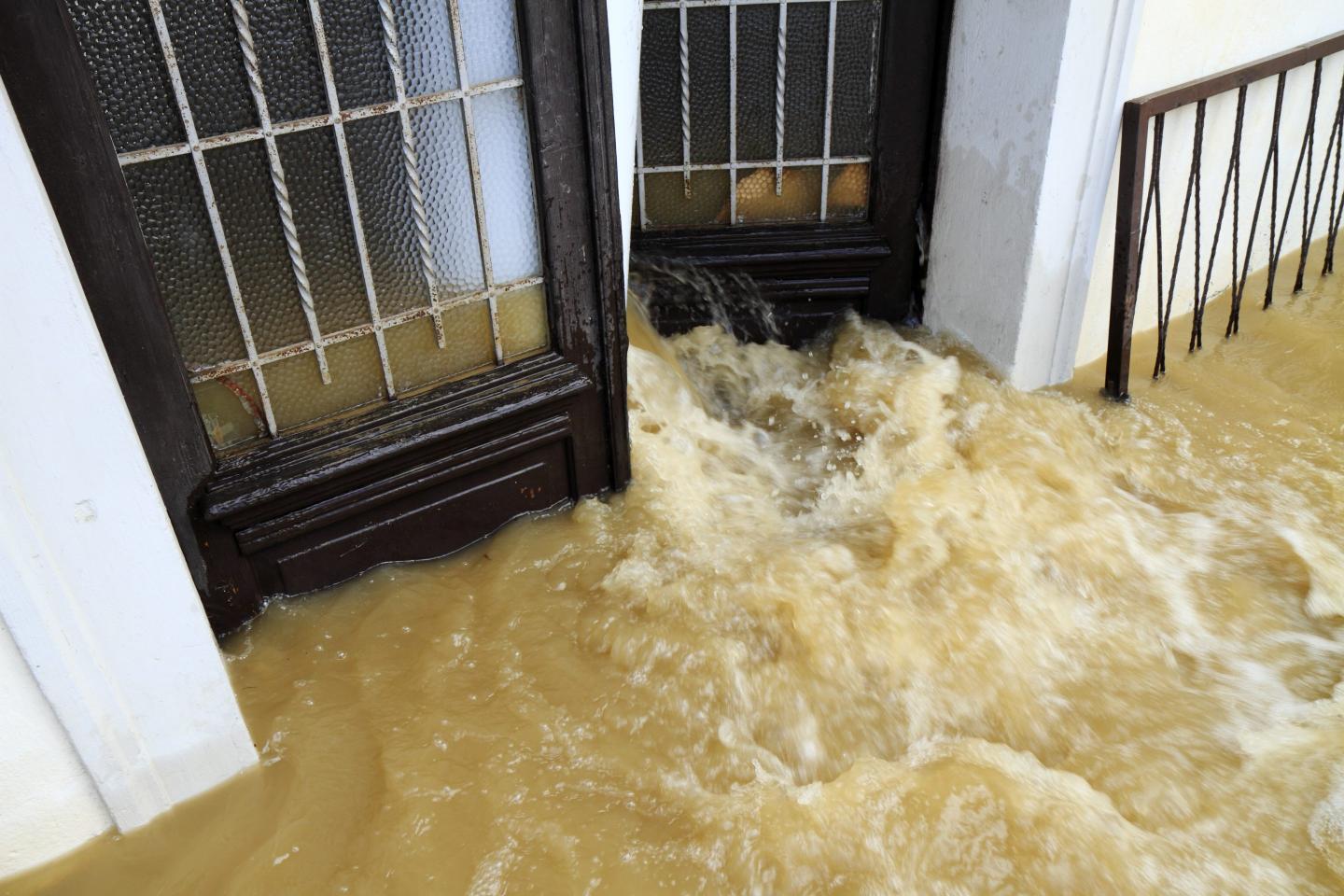
As extreme weather events grow more commonplace, small-business owners—many without the right kind of insurance—become increasingly vulnerable to catastrophic flooding and other risks. getty

I never thought it would happen to me. That’s what they all say, right?

Until it did. My business flooded in July last year. It was on a weekend where Chicago experienced record rainfall fueled by climate change, and on that Sunday afternoon the skies really let loose. No children or staff were present at the childcare program I operate from my home. That was fortunate, because reports of widespread flooding on Chicago’s west side, where I live, were blanketing the news. So, I went downstairs to check on things.

Water woes and no flood insurance

What I saw shocked me and often replays in my head to this day. The floor was covered in water up to my ankles. And it was rising fast. There was no time to turn on the sump pump, so I began grabbing things as quickly as I could—daycare equipment, curriculum materials, rugs. Amid my frenzy, things turned from bad to worse.

My business records, housed in cardboard boxes on the floor, began to disintegrate before my eyes. The furniture was starting to float. I called out for my husband, and he joined me trying to salvage what we could. Soon, we realized that our freezer, washer, and dryer—all plugged into outlets—were sitting in the same water through which we waded. So, we decided to move upstairs and just let whatever happens, happen. The water kept surging, topping out at about three feet.

Then it all stopped. There was a loud gurgling sound like the one you hear when pulling the plug out of a bathtub, and the water drained away. It came time to survey the damage and pick up the pieces. There weren’t many to grab. We threw out furniture, rugs, diapers, food, books, stuffed animals, blankets, crayons, coloring pages, and vital business and tax documents. All of it, ruined. 

Preparedness pays off 

It feels like anytime I turn on the news, there’s a story about a historically bad flood, blazing wildfire, or unprecedented hurricane ravaging some community it was never supposed to. It’s becoming too clear: These and other severe weather events are affecting more people and places while increasing in frequency and severity. The area where I live and work is not a traditional flood zone, so I didn’t feel like I needed to invest in flood insurance. That meant I had no coverage for this event, and I was on the hook for everything.

What’s more, the impact to my business was not felt by me alone. When my daycare couldn’t operate, parents had to stay home with their kids or scramble to find someone who could watch them. That’s easier for some than others. Many must forgo their daily wages to accommodate. It’s a reminder that weather-related disasters have downstream consequences beyond the physical damage they inflict. When businesses go offline, it causes a ripple effect that significantly disrupts a community’s economy long after the storm has passed.

A recent study on the benefits of investing in disaster preparedness—from the U.S. Chamber of Commerce, Allstate, and the U.S. Chamber of Commerce Foundation—details these downstream economic impacts for the first time. Their findings show that the financial benefits associated with investing in disaster preparedness are enormous; every $1 invested in disaster preparedness saves $13 in damages, cleanup, and economic costs.

Prioritizing preparedness at a small business

As a small-business owner, I wish I had done more to prepare. Making those investments ahead of time would have saved me—and likely many of those who rely on my services—thousands of dollars and weeks of hardship. I learned a tremendous amount from experiencing the flooding, and I want to share that knowledge with other small-business owners who might also be vulnerable. But if you’re like I was, you might not know where to start.

Here are a few things I wish I’d known before the flood:

  • Research grant programs. My situation could have been a lot worse had I not happened to run across a grant program for small-business owners offered by the U.S. Chamber of Commerce Foundation called the Readiness for Resiliency Program. If small business owners complete a checklist of disaster prep steps, the program offers $5,000 grants to those businesses if a disaster strikes their area. When we found ourselves in the difficult situation of trying to cover costs associated with the flooding and making payroll, all while pausing business operations, this grant proved a true lifeline. I received news that my business had been awarded a grant and we used the money to pay our staff and make investments to ensure we were better prepared for a flood—or another weather-related disaster—in the future.
  • Have a response plan. Make sure you have ready access to your local emergency services numbers in case internet access goes down. Better yet, outline a personal restoration plan that you can activate following a severe-weather event. Account for everyone you might need to call: insurance, federal and state tax authorities, utility companies, and service providers.
  • Practice makes perfect. Don’t just have a plan on paper. Rehearse it. Run through drills with your staff if you’re a business owner or family members if you’re an individual. This will help reveal any gaps in your plan. Run through the list of people you need to contact after the event and designate who is responsible for outreach. Identify the immediate steps you’ll take once the crisis has passed. After these drills, discuss ways you can improve your preparedness.
  • Back up your business records. Back up your physical records by uploading them to hard drives or the cloud. Redundancies are critical. Make sure to store your physical and digital records in two different locations.
  • Keep emergency kits nearby and easily accessible. Include things like a terrestrial radio, non-perishable food, water, flashlights, blankets, and batteries. Don’t assume rescue will come quickly if you’re trapped during a disaster. Make sure you’re equipped with the necessary supplies to keep you safe and comfortable until help arrives. In some cases, that could be hours or even days. Allstate’s Disaster Help Center provides tips about prep, recovery, and coverage by weather peril.
  • Build a rainy-day fund. Estimate how much money you need to have on hand to run your business and pay your employees for one to three months. If you don’t have enough funds to cover these costs now, start saving. Every little bit counts, and it could be the difference between maintaining or losing your business. 

The hardship I experienced is something I wouldn’t wish on any business owner. But the unfortunate truth is that more of them are becoming vulnerable to that fate as extreme weather events grow more commonplace. Taking steps now can pay off in a big way if disaster strikes.

More reading:

  • The path to net zero that doesn’t punish consumers, businesses, or politicians
  • Extreme weather is a $23 billion problem for the housing market—and growing, but this analytics chief says ‘really encouraging’ investments are coming to market
  • Why does the U.S. have more extreme weather than other countries?
  • How to protect your home—and your wallet—against natural disasters

The opinions expressed in Fortune.com commentary pieces are solely the views of their authors and do not necessarily reflect the opinions and beliefs of Fortune.

Join us at the Fortune Workplace Innovation Summit May 19–20, 2026, in Atlanta. The next era of workplace innovation is here—and the old playbook is being rewritten. At this exclusive, high-energy event, the world’s most innovative leaders will convene to explore how AI, humanity, and strategy converge to redefine, again, the future of work. Register now.
About the Author
By Mityne Lewis
See full bioRight Arrow Button Icon

Latest in Commentary

Finance
Lorem ipsum dolor sit amet, consectetur adipiscing elit, sed do eiusmod tempor incididunt ut labore et dolore magna aliqua. Ut enim ad minim veniam
By Fortune Editors
October 20, 2025
Finance
Lorem ipsum dolor sit amet, consectetur adipiscing elit, sed do eiusmod tempor incididunt ut labore et dolore magna aliqua. Ut enim ad minim veniam
By Fortune Editors
October 20, 2025
Finance
Lorem ipsum dolor sit amet, consectetur adipiscing elit, sed do eiusmod tempor incididunt ut labore et dolore magna aliqua. Ut enim ad minim veniam
By Fortune Editors
October 20, 2025
Finance
Lorem ipsum dolor sit amet, consectetur adipiscing elit, sed do eiusmod tempor incididunt ut labore et dolore magna aliqua. Ut enim ad minim veniam
By Fortune Editors
October 20, 2025
Finance
Lorem ipsum dolor sit amet, consectetur adipiscing elit, sed do eiusmod tempor incididunt ut labore et dolore magna aliqua. Ut enim ad minim veniam
By Fortune Editors
October 20, 2025
Finance
Lorem ipsum dolor sit amet, consectetur adipiscing elit, sed do eiusmod tempor incididunt ut labore et dolore magna aliqua. Ut enim ad minim veniam
By Fortune Editors
October 20, 2025

Most Popular

Finance
Lorem ipsum dolor sit amet, consectetur adipiscing elit, sed do eiusmod tempor incididunt ut labore et dolore magna aliqua. Ut enim ad minim veniam
By Fortune Editors
October 20, 2025
Finance
Lorem ipsum dolor sit amet, consectetur adipiscing elit, sed do eiusmod tempor incididunt ut labore et dolore magna aliqua. Ut enim ad minim veniam
By Fortune Editors
October 20, 2025
Finance
Lorem ipsum dolor sit amet, consectetur adipiscing elit, sed do eiusmod tempor incididunt ut labore et dolore magna aliqua. Ut enim ad minim veniam
By Fortune Editors
October 20, 2025
Finance
Lorem ipsum dolor sit amet, consectetur adipiscing elit, sed do eiusmod tempor incididunt ut labore et dolore magna aliqua. Ut enim ad minim veniam
By Fortune Editors
October 20, 2025
Finance
Lorem ipsum dolor sit amet, consectetur adipiscing elit, sed do eiusmod tempor incididunt ut labore et dolore magna aliqua. Ut enim ad minim veniam
By Fortune Editors
October 20, 2025
Finance
Lorem ipsum dolor sit amet, consectetur adipiscing elit, sed do eiusmod tempor incididunt ut labore et dolore magna aliqua. Ut enim ad minim veniam
By Fortune Editors
October 20, 2025
Fortune Secondary Logo
Rankings
  • 100 Best Companies
  • Fortune 500
  • Global 500
  • Fortune 500 Europe
  • Most Powerful Women
  • World's Most Admired Companies
  • See All Rankings
  • Lists Calendar
Sections
  • Finance
  • Fortune Crypto
  • Features
  • Leadership
  • Health
  • Commentary
  • Success
  • Retail
  • Mpw
  • Tech
  • Lifestyle
  • CEO Initiative
  • Asia
  • Politics
  • Conferences
  • Europe
  • Newsletters
  • Personal Finance
  • Environment
  • Magazine
  • Education
Customer Support
  • Frequently Asked Questions
  • Customer Service Portal
  • Privacy Policy
  • Terms Of Use
  • Single Issues For Purchase
  • International Print
Commercial Services
  • Advertising
  • Fortune Brand Studio
  • Fortune Analytics
  • Fortune Conferences
  • Business Development
  • Group Subscriptions
About Us
  • About Us
  • Press Center
  • Work At Fortune
  • Terms And Conditions
  • Site Map
  • About Us
  • Press Center
  • Work At Fortune
  • Terms And Conditions
  • Site Map
  • Facebook icon
  • Twitter icon
  • LinkedIn icon
  • Instagram icon
  • Pinterest icon

Latest in Commentary

Hong Kong is the hub for China’s AI IPOs. It can be so much more than that
CommentaryHong Kong
Hong Kong is the hub for China’s AI IPOs. It can be so much more than that
By Brian Wong and Tony ChanMay 3, 2026
23 hours ago
jason corso
Commentarydisruption
AI models are choking on junk data
By Jason Corso and David CowanMay 3, 2026
1 day ago
blake
CommentaryHousing
I spent a decade selling homes to the ultra-wealthy. What I saw explains the housing market’s nepo problem
By Blake O'ShaughnessyMay 3, 2026
1 day ago
Can the ‘blue economy’ deliver on its promise? Investors are starting see the ocean as an asset worth protecting
CommentaryConservation
Can the ‘blue economy’ deliver on its promise? Investors are starting see the ocean as an asset worth protecting
By Natalie Sum Yue ChungMay 2, 2026
2 days ago
old
Commentaryaffordability
The American household just took an 81% margin cut. Wall Street hasn’t priced it in
By Katica RoyMay 2, 2026
2 days ago
dario
CommentaryAnthropic
Anthropic’s most powerful AI model just exposed a crisis in corporate governance. Here’s the framework every CEO needs.
By Jeffrey Sonnenfeld, Stephen Henriques, Dan Kent and Holden LeeMay 2, 2026
2 days ago

Most Popular

Diary of a CEO founder says he hired someone with 'zero' work experience because she 'thanked the security guard by name' before the interview
Success
Diary of a CEO founder says he hired someone with 'zero' work experience because she 'thanked the security guard by name' before the interview
By Emma BurleighMay 3, 2026
1 day ago
As economic despair mounts, Russian official admits the country has had enough of Putin's war on Ukraine. 'We can’t even take one region'
Economy
As economic despair mounts, Russian official admits the country has had enough of Putin's war on Ukraine. 'We can’t even take one region'
By Jason MaMay 3, 2026
23 hours ago
Scott Bessent on financial literacy: 'it drives me crazy' to see young men in blue-collar construction jobs playing the lottery
Personal Finance
Scott Bessent on financial literacy: 'it drives me crazy' to see young men in blue-collar construction jobs playing the lottery
By Fatima Hussein and The Associated PressMay 1, 2026
3 days ago
America got rich and got sad. A top economist says 2020 broke something that hasn't healed
Economy
America got rich and got sad. A top economist says 2020 broke something that hasn't healed
By Nick LichtenbergMay 3, 2026
1 day ago
I spent a decade selling homes to the ultra-wealthy. What I saw explains the housing market's nepo problem
Commentary
I spent a decade selling homes to the ultra-wealthy. What I saw explains the housing market's nepo problem
By Blake O'ShaughnessyMay 3, 2026
1 day ago
Sam Altman says the quiet part out loud, confirming some companies are ‘AI washing’ by blaming unrelated layoffs on the technology
AI
Sam Altman says the quiet part out loud, confirming some companies are ‘AI washing’ by blaming unrelated layoffs on the technology
By Sasha RogelbergMay 3, 2026
1 day ago

© 2026 Fortune Media IP Limited. All Rights Reserved. Use of this site constitutes acceptance of our Terms of Use and Privacy Policy | CA Notice at Collection and Privacy Notice | Do Not Sell/Share My Personal Information
FORTUNE is a trademark of Fortune Media IP Limited, registered in the U.S. and other countries. FORTUNE may receive compensation for some links to products and services on this website. Offers may be subject to change without notice.