• Home
  • Latest
  • Fortune 500
  • Finance
  • Tech
  • Leadership
  • Lifestyle
  • Rankings
  • Multimedia

Trendingnow

1

U.S. companies have finally gotten $71 billion in tariff refunds, but they’re using it to offset inflation caused by the Iran war

2

FedEx CEO says we are in the middle of the biggest supply chain shift he’s seen in 35 years: ‘We are the referendum’

3

Buffett says AI giants are ‘playing a game they don’t want to play’ in the AI race, reveals he was behind Berkshire’s $31 billion bet on Google

1

U.S. companies have finally gotten $71 billion in tariff refunds, but they’re using it to offset inflation caused by the Iran war

2

FedEx CEO says we are in the middle of the biggest supply chain shift he’s seen in 35 years: ‘We are the referendum’

3

Buffett says AI giants are ‘playing a game they don’t want to play’ in the AI race, reveals he was behind Berkshire’s $31 billion bet on Google
FinanceEconomy

Japanese companies used to be the biggest investors in China. Now they’re bailing

By
Bloomberg
Bloomberg
Down Arrow Button Icon
By
Bloomberg
Bloomberg
Down Arrow Button Icon
September 8, 2024, 7:28 PM ET
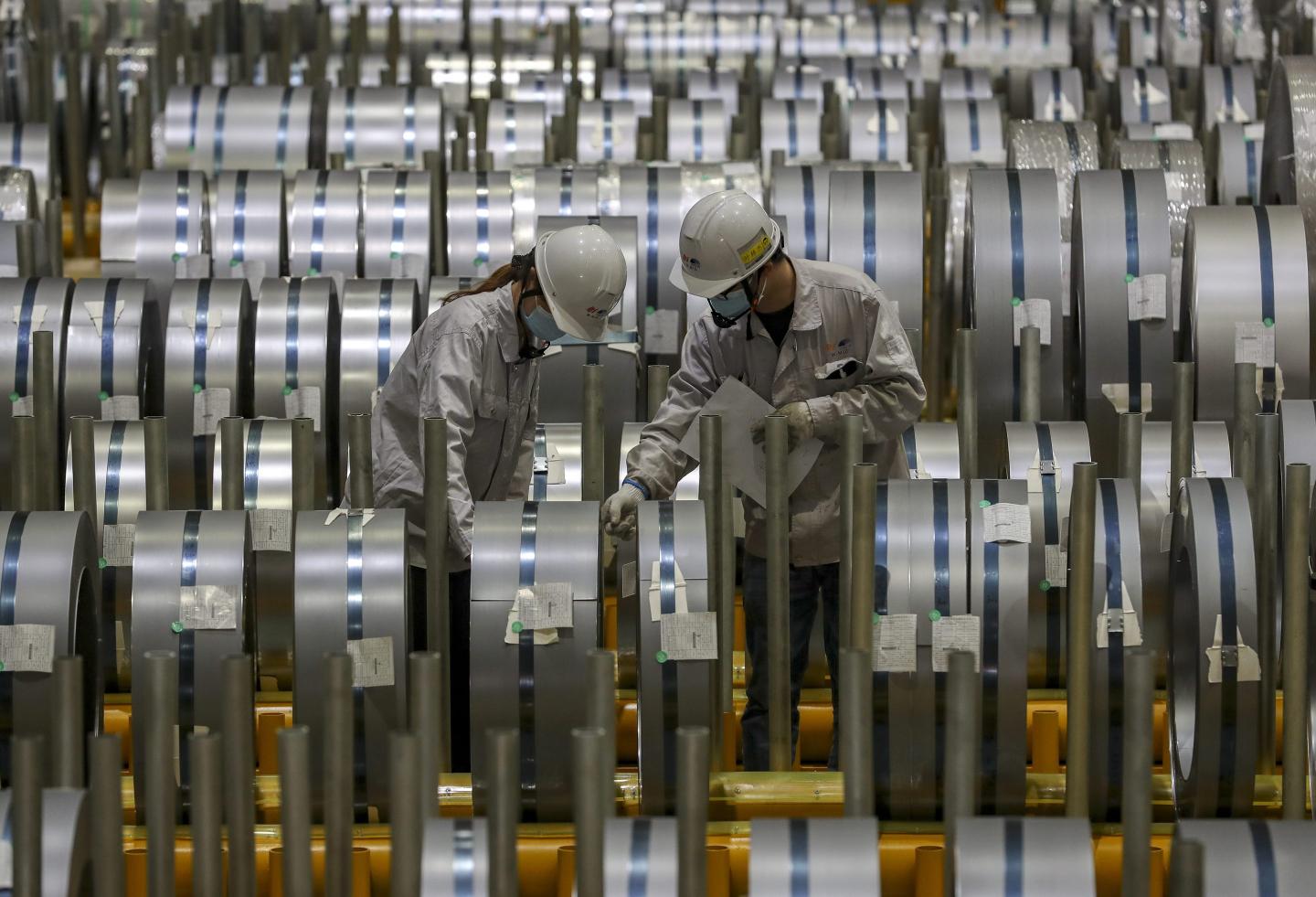
factory workers inspect metal
Workers at MIZ Metal Product Wuhan Co. Ltd., a joint venture between Japan's Itochu-Marubeni Steel Inc. and its Chinese partner in 2021.Feature China—Future Publishing via Getty Images
Add Fortune on Google for similar content.

Japanese companies are increasingly abandoning an approach to business in China that once seemed immune to politics, a stark shift after years when they were the biggest single investors in their neighbor’s economy.  

Recommended Video

In an era defined by geopolitical risks and worry over China’s faltering growth, the economic math no longer adds up for the likes of Nippon Steel Corp., which said in July it was exiting its joint venture in China. Mitsubishi Motors Corp. suspended its local operations indefinitely last year, a casualty of slumping car sales and China’s rapid shift to electric vehicles.

Almost half of Japanese firms in China polled in a recent survey said they won’t spend more or will cut investment this year. Companies listed rising wages, falling prices and geopolitics as the biggest issues they faced.

“We are now past Japan’s peak economic engagement with China,” said Robert Ward, director of geo-economics and strategy at the International Institute for Strategic Studies in London. 

The hurdles range from the US-Chinese tech competition to rising tensions in the Taiwan Strait, according to Ward. “Geopolitics is a significant factor” in the changing attitudes, he said.

The slow-motion rupture threatens an economic bond that dates back more than four decades, when Japan started to extend trillions of yen in development assistance to China by way of low-interest loans. Commerce and trade have been a pillar of an otherwise contentious relationship between the two Asian giants — summed up among academics by the catchphrase “hot business, cold politics.”

This time, the chill of geopolitical winds is proving hard to contain.

New foreign direct investment is on track to stagnate near 2023’s multi-year low after volumes in the first quarter fell to the lowest since 2016. It’s a turnaround for Japanese companies that had built up an FDI stock of almost $130 billion in China through the end of last year.

This is a turnaround from previous periods of bilateral tension, which didn’t affect investment much. Even in 2010-2012, when the territorial dispute between the two sides was hot and Beijing temporarily blocked shipments of rare earths to Japan, companies still increased their stock of investment by an average of 13% each year.

China seems concerned about the decline and has been trying to attract Japanese businesses to invest more, according to an official in Tokyo involved with China policy, who asked not to be named discussing official matters.

The political backdrop is also far less benign. Last month, a Chinese military airplane intruded into Japan’s airspace for the first time, an incident soon followed by a Chinese naval vessel entering Japanese territorial waters. 

What’s more, threats have emerged to the welfare of Japanese inside the country.

A knife attack on a Japanese woman and her child in Suzhou in central China in June — which the Chinese government called an “isolated” incident — caused concern across the Japanese community and heightened security at schools nationwide. Japan is still asking the authorities in Suzhou to provide detailed information on the incident, according to a statement from an embassy spokesperson. 

The detention of a Japanese pharmaceutical executive early last year also stoked public alarm about the safety of Japanese citizens in China. The man was indicted for espionage earlier this month.

Japan’s firms are also getting caught up in broader geopolitical tensions, with the US pressuring Tokyo to tighten export restrictions on high-tech exports for the semiconductor sector, and China reportedly threatening retaliation if that happens.

Some of Japan’s companies are even speaking about China as a threat instead of an opportunity. The head of one of the nation’s biggest trading firms has called for government assistance to help the country’s businesses compete in places like Southeast Asia, where Chinese firms such as BYD Co. are quickly making inroads.

For Nippon Steel — one of the first Japanese investors into China — the local business had become an obstacle to its attempt to buy US Steel Corp., with politicians in America pointing to it as a national security threat.

Looking Elsewhere

As the focus for Japanese companies shifts elsewhere in Asia and beyond, the travails of China’s economy are taking much of the blame as well. Of the 1,760 firms in the survey by the Japanese Chamber Commerce and Industry in China, 60% said the economy now was worse than last year. 

China’s importance for Japanese exporters isn’t the same as in years past, as firms adapt to US tariffs and other changes including incentives from Tokyo to move factories from China. 

China took less than 18% of Japan’s exports last year — the lowest level since 2015 — with values slipping almost 7% compared with double-digit growth to the US and European Union. As a result, the US overtook China as Japan’s largest export market for the first time in four years. 

Komatsu Ltd. is a case in point. The maker of excavators and heavy equipment is selling a lot less in China as the economy slows, construction slumps and competition stiffens.

While Komatsu’s revenue in China for construction and mining equipment plunged 57% last financial year from a peak in 2019, it was up almost 46% globally over the same period.

The were around 31,000 Japanese companies in China last year, according to Japan’s Ministry of Foreign Affairs, down by about a 10th from 2020. Over the same period, some 4,000 firms set up offices elsewhere in the world. 

“Right now companies are restructuring their business to stop losses,” said Masami Miyashita, general manager of the Japan-China Economic Association in Beijing. “It’s not the time invest.”

At a recent conference in the Chinese port city of Qingdao aimed at attracting foreign companies, the mood was equally grim. None of the half-a-dozen senior Japanese executives who spoke to Bloomberg said they planned to expand investments, expressing little optimism for the economy this year or next.

However not every Japanese firm is backing away. 

Panasonic Holdings Corp. was planning to invest more than 50 billion yen ($350 million) from early last year to build new appliance factories, according to the Nikkei newspaper, while Kobe Steel Ltd. recently announced it would form a joint venture with a company in China.

But it will take far more to mend economic ties. 

Chinese companies have become more competitive, and the geopolitical showdown between the US and China is scaring off Japanese firms from investing in some sectors, such as semiconductors and emerging tech, according to Kazuto Suzuki, a professor of global political economy at the University of Tokyo.

“Japanese companies do not see an immediate recovery of the Chinese economy, so it does not make sense to increase investment,” he said. “Other factors, such as geoeconomic concerns and lack of transparency will make it difficult to invest on a large scale as they used to do.”

About the Author
By Bloomberg
See full bioRight Arrow Button Icon
Add Fortune on Google for similar content.

Latest in Finance

Finance
Lorem ipsum dolor sit amet, consectetur adipiscing elit, sed do eiusmod tempor incididunt ut labore et dolore magna aliqua. Ut enim ad minim veniam
By Fortune Editors
October 20, 2025
Finance
Lorem ipsum dolor sit amet, consectetur adipiscing elit, sed do eiusmod tempor incididunt ut labore et dolore magna aliqua. Ut enim ad minim veniam
By Fortune Editors
October 20, 2025
Finance
Lorem ipsum dolor sit amet, consectetur adipiscing elit, sed do eiusmod tempor incididunt ut labore et dolore magna aliqua. Ut enim ad minim veniam
By Fortune Editors
October 20, 2025
Finance
Lorem ipsum dolor sit amet, consectetur adipiscing elit, sed do eiusmod tempor incididunt ut labore et dolore magna aliqua. Ut enim ad minim veniam
By Fortune Editors
October 20, 2025
Finance
Lorem ipsum dolor sit amet, consectetur adipiscing elit, sed do eiusmod tempor incididunt ut labore et dolore magna aliqua. Ut enim ad minim veniam
By Fortune Editors
October 20, 2025
Finance
Lorem ipsum dolor sit amet, consectetur adipiscing elit, sed do eiusmod tempor incididunt ut labore et dolore magna aliqua. Ut enim ad minim veniam
By Fortune Editors
October 20, 2025

Most Popular

Finance
Lorem ipsum dolor sit amet, consectetur adipiscing elit, sed do eiusmod tempor incididunt ut labore et dolore magna aliqua. Ut enim ad minim veniam
By Fortune Editors
October 20, 2025
Finance
Lorem ipsum dolor sit amet, consectetur adipiscing elit, sed do eiusmod tempor incididunt ut labore et dolore magna aliqua. Ut enim ad minim veniam
By Fortune Editors
October 20, 2025
Finance
Lorem ipsum dolor sit amet, consectetur adipiscing elit, sed do eiusmod tempor incididunt ut labore et dolore magna aliqua. Ut enim ad minim veniam
By Fortune Editors
October 20, 2025
Finance
Lorem ipsum dolor sit amet, consectetur adipiscing elit, sed do eiusmod tempor incididunt ut labore et dolore magna aliqua. Ut enim ad minim veniam
By Fortune Editors
October 20, 2025
Finance
Lorem ipsum dolor sit amet, consectetur adipiscing elit, sed do eiusmod tempor incididunt ut labore et dolore magna aliqua. Ut enim ad minim veniam
By Fortune Editors
October 20, 2025
Finance
Lorem ipsum dolor sit amet, consectetur adipiscing elit, sed do eiusmod tempor incididunt ut labore et dolore magna aliqua. Ut enim ad minim veniam
By Fortune Editors
October 20, 2025
Fortune Secondary Logo
Rankings
  • 100 Best Companies
  • Fortune 500
  • Global 500
  • Fortune 500 Europe
  • Most Powerful Women
  • World's Most Admired Companies
  • See All Rankings
  • Lists Calendar
Sections
  • Finance
  • Fortune Crypto
  • Features
  • Leadership
  • Health
  • Commentary
  • Success
  • Retail
  • Mpw
  • Tech
  • Lifestyle
  • CEO Initiative
  • Asia
  • Politics
  • Conferences
  • Europe
  • Newsletters
  • Personal Finance
  • Environment
  • Magazine
  • Education
Customer Support
  • Frequently Asked Questions
  • Customer Service Portal
  • Privacy Policy
  • Terms Of Use
  • Single Issues For Purchase
  • International Print
Commercial Services
  • Advertising
  • Fortune Brand Studio
  • Fortune Analytics
  • Fortune Conferences
  • Business Development
  • Group Subscriptions
About Us
  • About Us
  • Press Center
  • Work At Fortune
  • Terms And Conditions
  • Site Map
  • About Us
  • Press Center
  • Work At Fortune
  • Terms And Conditions
  • Site Map
  • Facebook icon
  • Twitter icon
  • LinkedIn icon
  • Instagram icon
  • Pinterest icon

Latest in Finance

Svenja Gudell, Chief Economist, Indeed
Commentaryaging
Indeed chief economist: Aging Baby Boomers are America’s real labor problem, not AI
By Svenja GudellJuly 18, 2026
17 minutes ago
Trump may have to choose between an endless quagmire and ceding the Strait of Hormuz to Iran
EnergyIran
Trump may have to choose between an endless quagmire and ceding the Strait of Hormuz to Iran
By Jordan BlumJuly 18, 2026
2 hours ago
SpaceX stock falls back to earth shortly after Wall Street analysts release florid targets: ‘Paving the superhighway to the stars’
Investinginvesting strategy
SpaceX stock falls back to earth shortly after Wall Street analysts release florid targets: ‘Paving the superhighway to the stars’
By Shawn TullyJuly 18, 2026
2 hours ago
After the Supreme Court killed his first tariffs, Trump turns to a new legal workaround to impose 25% tariffs on Brazil and possibly others
EconomyTariffs
After the Supreme Court killed his first tariffs, Trump turns to a new legal workaround to impose 25% tariffs on Brazil and possibly others
By Marco Quiroz-GutierrezJuly 17, 2026
12 hours ago
Commercial auto insurance explained for business owners
Personal FinanceInsurance
Commercial auto insurance explained for business owners
By Joseph HostetlerJuly 17, 2026
14 hours ago
So you want to buy a sports franchise? Why entering sports ownership gives the rich a ‘very elite and exclusive club’ with great tax benefits
InvestingSports
So you want to buy a sports franchise? Why entering sports ownership gives the rich a ‘very elite and exclusive club’ with great tax benefits
By Catherina GioinoJuly 17, 2026
14 hours ago

Most Popular

U.S. companies have finally gotten $71 billion in tariff refunds, but they’re using it to offset inflation caused by the Iran war
Economy
U.S. companies have finally gotten $71 billion in tariff refunds, but they’re using it to offset inflation caused by the Iran war
By Sasha RogelbergJuly 17, 2026
1 day ago
FedEx CEO says we are in the middle of the biggest supply chain shift he’s seen in 35 years: ‘We are the referendum’
C-Suite
FedEx CEO says we are in the middle of the biggest supply chain shift he’s seen in 35 years: ‘We are the referendum’
By Fortune EditorsJuly 15, 2026
3 days ago
Buffett says AI giants are ‘playing a game they don’t want to play’ in the AI race, reveals he was behind Berkshire’s $31 billion bet on Google
Big Tech
Buffett says AI giants are ‘playing a game they don’t want to play’ in the AI race, reveals he was behind Berkshire’s $31 billion bet on Google
By Mia OsmonbekovJuly 16, 2026
2 days ago
Current price of oil as of July 17, 2026
Personal Finance
Current price of oil as of July 17, 2026
By Joseph HostetlerJuly 17, 2026
24 hours ago
Kevin O’Leary claimed opposition to his Utah data center was fueled by Chinese money. Now he and Fox News are being sued for defamation
Law
Kevin O’Leary claimed opposition to his Utah data center was fueled by Chinese money. Now he and Fox News are being sued for defamation
By Marco Quiroz-GutierrezJuly 17, 2026
1 day ago
Current price of silver as of Friday, July 17, 2026
Personal Finance
Current price of silver as of Friday, July 17, 2026
By Joseph HostetlerJuly 17, 2026
1 day ago

© 2026 Fortune Media IP Limited. All Rights Reserved. Use of this site constitutes acceptance of our Terms of Use and Privacy Policy | CA Notice at Collection and Privacy Notice | Do Not Sell/Share My Personal Information
FORTUNE is a trademark of Fortune Media IP Limited, registered in the U.S. and other countries. FORTUNE may receive compensation for some links to products and services on this website. Offers may be subject to change without notice.