
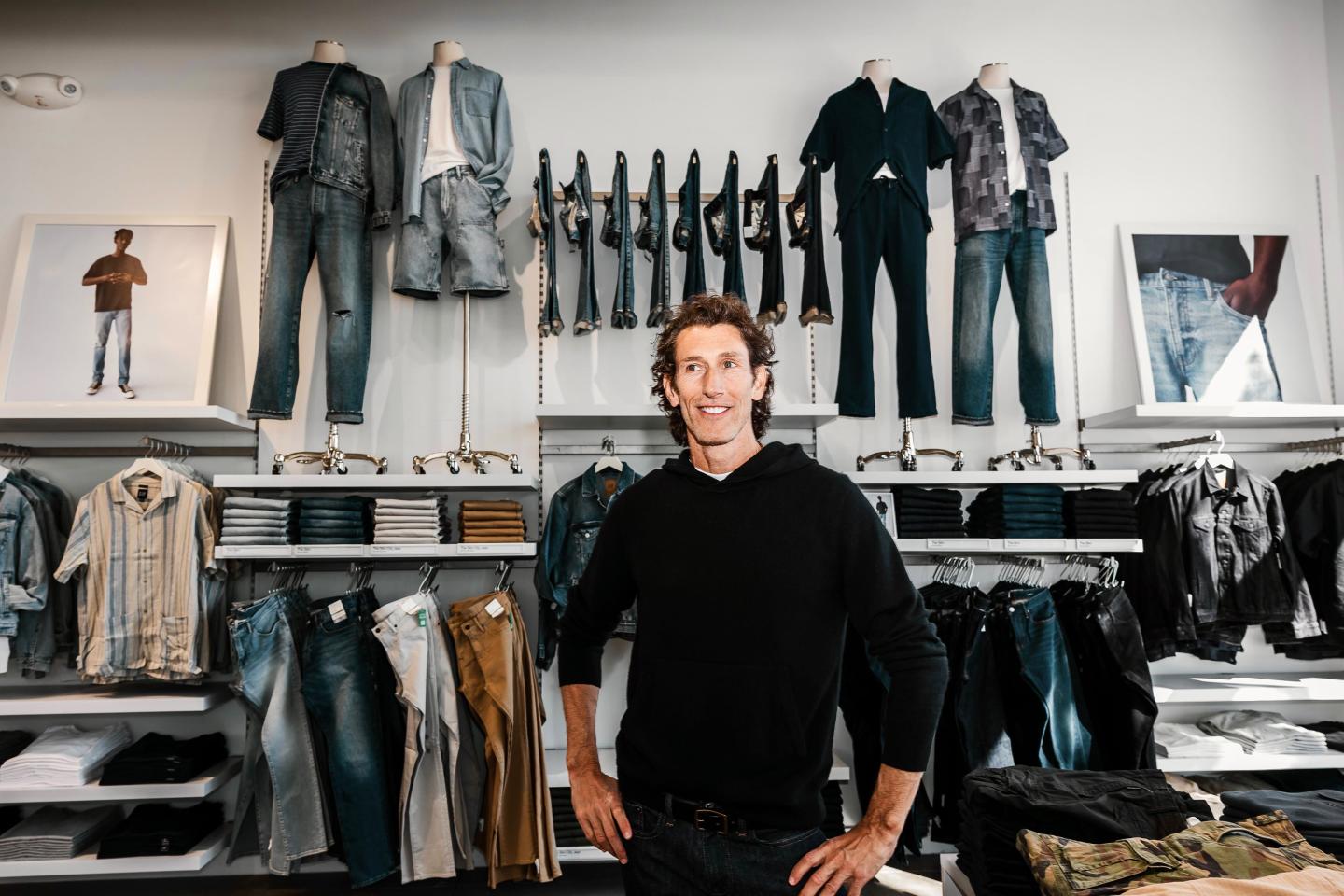
This spring, Gap Inc.’s long losing streak finally ended. In late May, the company reported that all four brands in its portfolio had seen growth in quarterly comparable sales for the first time in seven years. Wall Street exploded with relief at signs that Gap Inc.’s lengthy slump might be over and sent shares up 20% that day. The company behind the Gap, Old Navy, Banana Republic, and Athleta also posted stronger-than-expected profits, bolstering faith that Richard Dickson, now its chief executive of one year, was solving the riddle of how to fix the chronically lagging maker of iconic American clothing.
When Dickson became CEO last August, hopes were high that the man who had reinvigorated Mattel’s Barbie franchise could turn Gap Inc. around, too. Dickson, who had been on Gap Inc.’s board for a year before becoming CEO, says he knew full well how much repair work had to be done on what he considered to be a company in “distress.”
“Here are some of America’s greatest apparel brands. How did this happen? How can I help?” he recalled in an interview with Fortune earlier this month.
Of course, one promising quarter doesn’t ensure a lasting comeback. (Investors will find out next week whether this spring’s earnings were a blip when Gap Inc. reports its second-quarter results.) Multiple turnaround attempts in the past 20 years haven’t yielded much, and promises from executives have fallen short. But analysts say the progress since Dickson took over is undeniable.
“We’re seeing across all the businesses that it’s clean, it’s tidier, and more relevant,” says Wendy Liebmann, CEO at WSL Strategic Retail. “He’s a brilliant marketer, but a big part of the fashion world now is ‘How do you stand out? How are you different?’”
One theme Dickson emphasizes is the need for Gap Inc.’s brands to be part of the cultural discourse again. “Fashion is entertainment. It’s also art, innovation, and culture,” Dickson says on his LinkedIn profile.
Culturally relevant again?
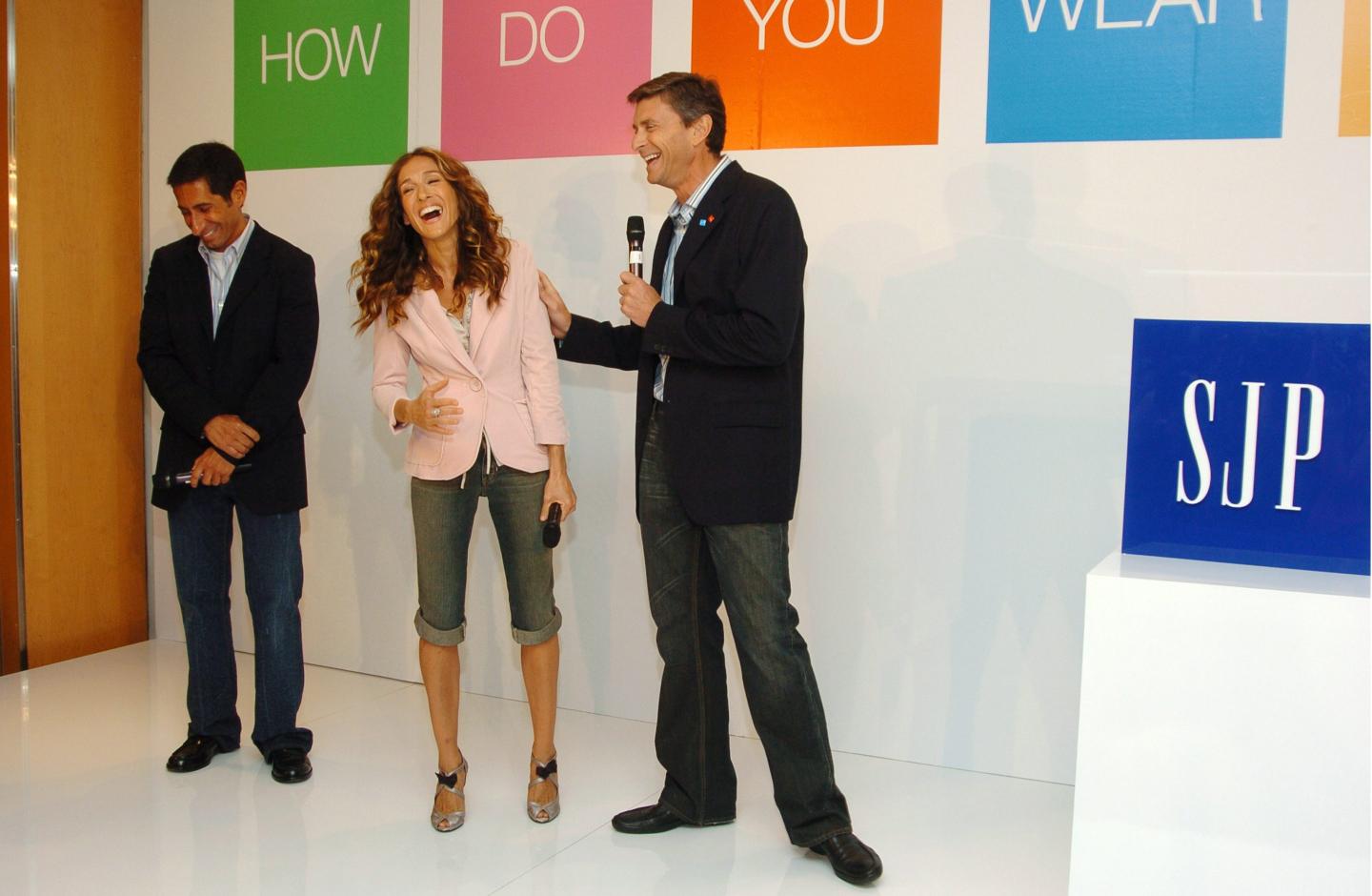
In the late 1980s, 1990s, and 2000s, the Gap was able to get people as diverse as author Joan Didion, rapper LL Cool J, and Sex and the City star Sarah Jessica Parker to appear in its ads. In 2011, Banana Republic had a mega-successful line of ’60s-style clothing designed in collaboration with the costumer for the TV show Mad Men. For years, Old Navy’s ads featured the iconic fashion editor Carrie Donovan, who declared its merchandise “fabulous.” In 2019, Athleta signed an endorsement deal with Olympic champion sprinter Allyson Felix soon after she criticized Nike for its pay practices for pregnant runners.
But Gap Inc. is no longer the cultural influencer it once was. A big move Dickson made in May was to name Omnicom Media Group as its sole ad agency, saying the firm “recognizes that fashion is entertainment, and they know how to work at the speed of culture.” Having a single agency will help Gap Inc. reduce competing messaging from the same brands and react more quickly to shifts in the zeitgeist. What’s more, Dickson says, too much of Gap Inc.’s messaging had focused on promotions rather than brand identity, overwhelming consumers and making things feel transactional rather than fostering emotion.
Dickson gets hands-on with the language used on Gap Inc. websites, joking that he sometimes serves as the “Chief Editing Officer.” He found early on that some of the storytelling was off-brand and not compelling. His editing has also extended to Gap Inc.’s product assortment, which, under his watch, has shrunk 20% as he’s culled off-message items that cluttered stores and websites.
It’s natural for a CEO to lean into what he knows best during the early stages of a turnaround. At Mattel, where he had worked since 2014 before moving to Gap Inc., Dickson put Barbie at the center of popular culture with creative marketing campaigns, introducing Barbie dolls of different races and body shapes and using brand collaborations to update a toy that many people had begun to think was outdated. His work helped set Barbie up for the enormous success of the blockbuster 2023 movie based on the doll.
Dickson is moving fast to clarify each Gap Inc. brand identity as the company’s businesses aim to recover from recent missteps. Only a year ago, Banana Republic was making an ill-advised and since-abandoned effort to reinvent itself as a higher-end home goods brand. In May, its brand president left. And Athleta, which had long held its own against Lululemon until slipping last year, has only had its new CEO, former Alo chief Chris Blakeslee, for a year.
Dickson’s efforts have focused on big changes in marketing strategy. But retail experts warn that fresh in-store looks and merchandise must accompany new marketing, otherwise shoppers could be disappointed.
“You don’t want to put the cart before the horse. You have to be ready when you’re going to spend the marketing dollars because you don’t want the customer to finally go into the store again and go, ‘That was just a flash,’” says Stacey Widlitz, CEO of consulting firm SW Retail Advisors.
Another Gap turnaround?
Dickson’s confidence that Gap Inc.’s turnaround is real this time stems from factors like the success of Gap’s recent Linen Moves line, a collection of higher-quality linen clothing, and that Old Navy, which generates almost half of Gap Inc.’s sales, has more “clarity and conviction.” Old Navy now has fewer items and has brought back more of the affordable fashion that made it an $8 billion brand.
Still, you can forgive analysts for taking a cautious approach to a comeback that executives have promised for years.
There always seemed to be one fashion-flop excuse or production snafu to explain weak numbers. Banana Republic once famously made blazers in 2015 with armholes too small for the average woman. In 2022, Old Navy botched its introduction of plus-size items, one of its biggest launches ever, and found itself having to heavily discount a lot of its clothing. Then-CEO Sonia Syngal exited the company soon after. (It was also on her watch that Gap Inc. entered a disastrous business deal with Kanye West.)
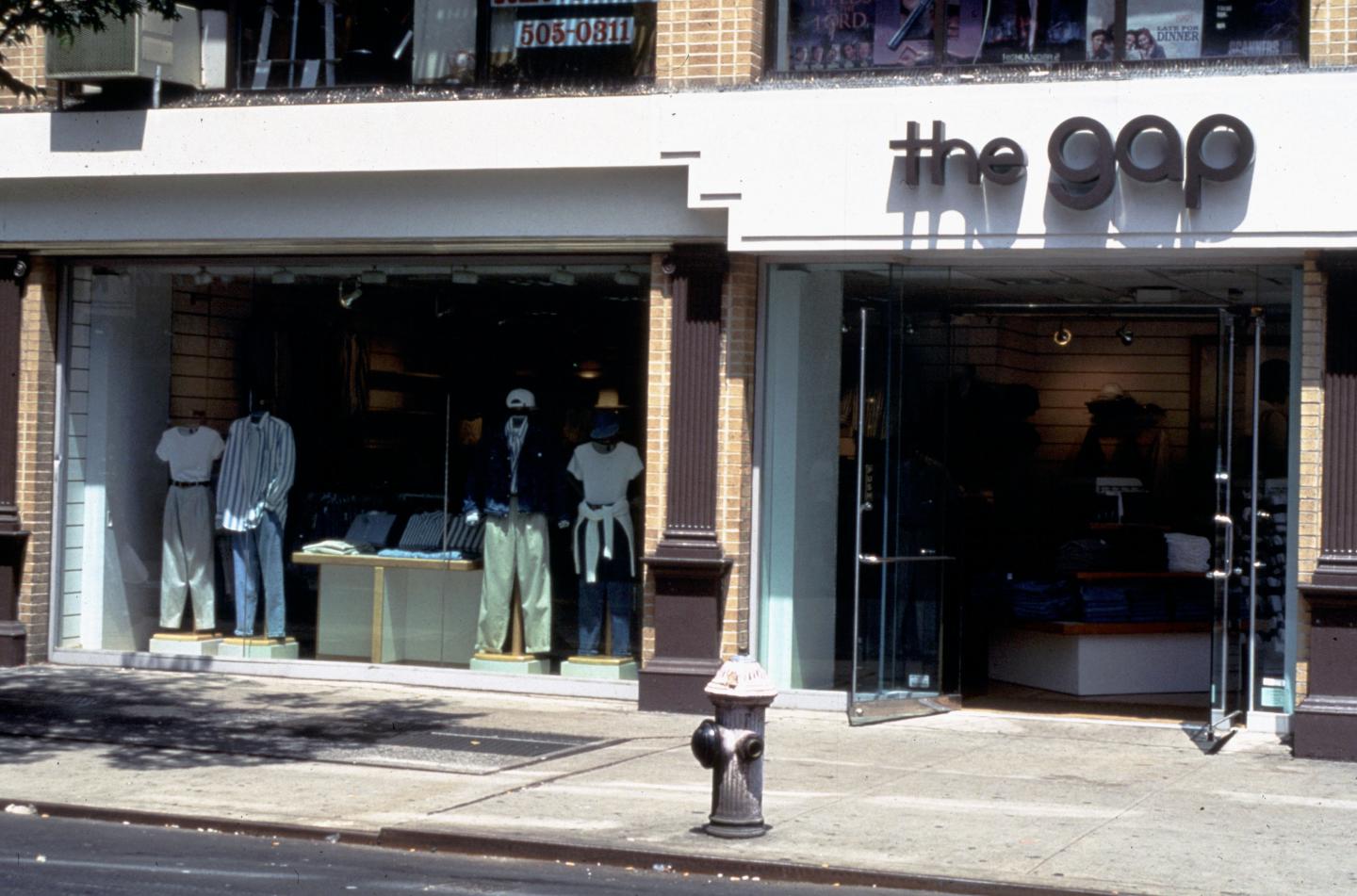
Another ex-CEO, Art Peck, who was fired in 2019 after several efforts to right the Gap Inc. ship, once said that the company was having “product acceptance issues” as if to blame consumers for not being interested in its products rather than the company for not making products shoppers wanted. The interim CEO between Syngal and Dickson, Bob Martin, last year also trotted out the “product acceptance” language to explain Athleta’s failings.
So the question remains: Why would Dickson succeed where his predecessors failed? He thinks it comes down to Gap Inc. trying to be too many things to too many customers.
“This company has had legendary talent,” he says, noting that he wouldn’t have taken a job that invited so much scrutiny if he hadn’t thought Gap Inc. was fixable. “With compliments to past leadership, everyone came in strategically well intended, with good ideas but flawed execution,” he says.
Dickson says the Gap, for instance, introduced too many initiatives such as new product launches and collaborations, while not doing much about its stores being blah. There was also a problem of too much overlap and competition between Gap Inc. brands, such as Gap’s activewear competing with Athleta, or Old Navy cannibalizing Gap. (Abercrombie & Fitch was similarly struggling a few years ago but increased the “fashion distance” between A&F and its sister brand Hollister to great success.)
Despite the yearslong narrative that Gap Inc. is in sharp decline, the company last year took in revenue of $14.9 billion, roughly on par with 2009 levels. (It hit a peak of $16.58 billion six years ago.) But treading water for more than a decade is not the key to longevity. For years, what kept Gap Inc. from imploding was the hot growth of Old Navy and Athleta, which compensated for the chronic declines of its two other brands—notably the Gap, whose sales are roughly half what they were 15 years ago.
Yet all of Gap Inc.’s brands still have a deep reservoir of goodwill from shoppers that Dickson can tap. “The great thing about the apparel business is that as quickly as you’ve become the underdog, you can quickly snap back, just look at Abercrombie,” says SW Retail Advisors’ Widlitz. Almost a decade ago, Abercrombie & Fitch seemed moribund, but the company managed to reverse that a few years ago with a clearer delineation between brands, and it is booming now: In 2023, net sales rose 16%, and the hot growth has continued this year.
To replicate Abercrombie’s success, Dickson is building what he calls a “healthier foundation” for the company, one rooted in a faster metabolism; consistent priority-setting across brands and holding leaders accountable to those goals; and clarifying each brand’s raison d’être. “We never really spent enough time fixing fundamentals, and retail is a business about detail,” he says. It also means Gap is using newer metrics, like how much buzz a brand’s initiative is creating on platforms like TikTok.
Dickson has also sought to transform Gap Inc.’s internal culture to motivate a workforce that’s endured the tumult of five CEOs in the past decade as well as the pandemic. He communicates more often with the troops and has ramped up internal events designed to make employees feel part of something big. Wells Fargo in a recent research note praised Dickson for “unlocking a culture of creativity.”
That new vibe at Gap Inc. means more candor in discussions about what ails the company rather than just saying “everything is fine” when it’s not. “If we don’t ask the question, and don’t acknowledge a problem as a family, we’re never going to solve anything,” he adds, bemoaning what he called a “positivity bias.” Now, in meetings with underlings, he specifically asks what is working and what is not in a store, with a product launch, and so on.
As much as Gap Inc. is making a big deal of Dickson’s first anniversary as CEO—the company is ringing the New York Stock Exchange bell on Thursday to mark its stock ticker’s rebrand as “GAP” after decades as “GPS”—he knows that it’s hazardous to declare victory so early on. But he also sees lots of green shoots.
“There’s now clarity on prices, there’s clarity on storytelling, and if you go to our stores, there’s more of an edit. We’ve got a lot of work to do, like, a lot,” he says. “So it’s a marathon, not a sprint. But the lights are on.”