Beating the heat in the US is a little harder this summer than it used to be: E. coli and cyanobacteria are causing widespread beach closures at lakes and rivers. It’s a problem exacerbated by climate change-fueled warmer waters and more prolific downpours, which are creating perfect conditions for bacteria to flourish.
Bacteria tend to grow in warm conditions and between 1985 and 2009, lakes and ponds warmed at a rate of roughly 0.6F (0.3C) per decade. That shift is increasing the risk of blooms in historically cold places. The bacteria can cause a host of symptoms, including blisters, rashes, diarrhea, muscle weakness, and liver damage, to name a few. Outbreaks can also tax ecosystems.
All that comes at a price: In the US alone, preventing and treating harmful cyanobacterial blooms cost more than $1 billion between 2010 and 2020, and the figure is likely to rise due to global warming.
Heavy rain often provides the “fuel and supplies” for bacterial spikes, according to Kaitlin Reinl, a limnologist at the National Oceanic and Atmospheric Administration. Stormwater drives bacterial growth by washing phosphorus and nitrogen into lakes and rivers, where heat waves can drive bacteria and algae growth.
“Basically, temperature speeds up everything,” says Hans-Peter Grossart, professor of aquatic microbial ecology and biodiversity at Potsdam University. “The carbon dioxide equilibrium in the water has been changed because we have higher atmospheric CO2 concentrations now. The greenhouse [effect] increases nutrient concentration (e.g. phosphorus and nitrogen presence in the water) and CO2 concentration.”
One of the most common bacterial threats to water quality is diarrheagenic E. coli, which thrives in warmer conditions: Each 1C increase in monthly average temperature raises its incidence by 8%.
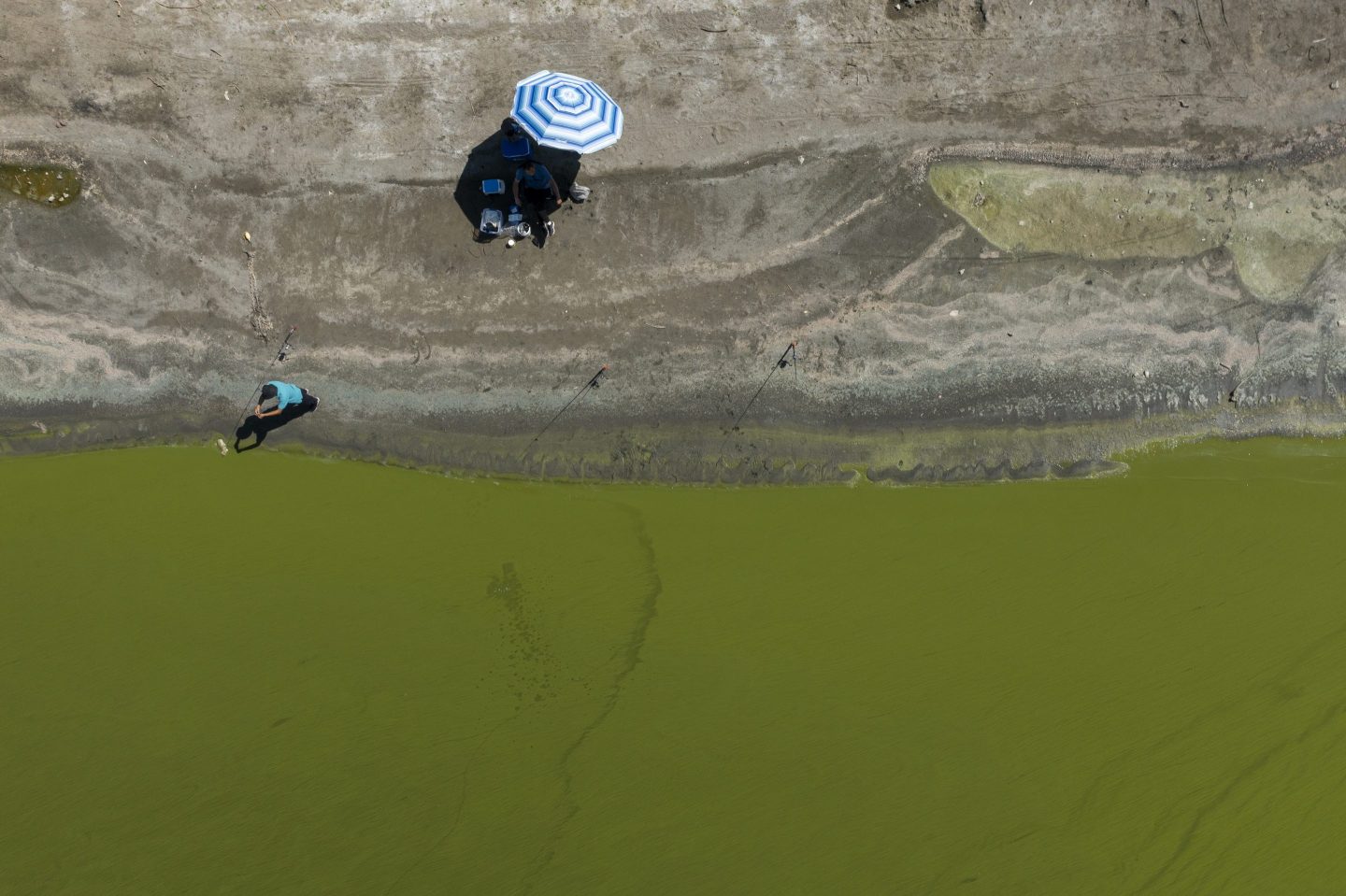
Cyanobacteria — dubbed blue-green algae — also blooms in the high heat. When the algae decomposes, it releases harmful toxins that cause respiratory and gastrointestinal issues as well as skin and eye irritation. More extreme impacts include seizures and liver damage, and the algae can even kill pets and wildlife, according to the US Centers for Disease Control and Prevention.
In historically hot climates like Florida, precipitation is the largest factor driving cyanobacterial blooms. But rising temperatures are impacting waterways in cooler climates that typically aren’t associated with cyanobacterial blooms. Massachusetts reached a season record with 55 beach closures as of Aug. 16, 87% of them due to bacterial spikes, according to the state’s Interactive Beach Water Quality Dashboard. Vermont’s cyanobacteria tracker currently lists more than 40 active alerts.
Even Lake Tahoe, famous for its pristine waters, showed signs warning of toxic algal blooms earlier this summer. While those concerns were a false alarm, the risk of a real outbreak hangs over the lake. Algal blooms have become a growing issue in recent years, and dangerous toxins were detected in a pond on Lake Tahoe’s Nevada shores, though it wasn’t connected to the lake.
“The 1.4 degree rise in annual water temperature is having an impact on parts of the lake that we thought would never be a problem,” says Jeff Cowen, a public information officer at the Tahoe Regional Planning Agency.
That’s also threatening Tahoe’s $5.1 billion in yearly tourism revenue, which makes up 60% of the area’s economy, according to Cowen. While Tahoe can blunt any would-be summer issues with its prolific winter skiing season, many lakeside economies depend on visitors flocking there to take a dip on hot days.
Adam Gufarotti, community support manager for the city of Lake Elsinore, says harmful algae blooms are a major concern. As the largest freshwater lake in Southern California, Elsinore draws visitors from around the region. But in 2022, the lake shut down for six months due to a dangerous bacterial bloom. The city lost $300,000 in lake use fees alone. Gufarotti noted that the toll was even higher for local retailers dependent on tourism revenue.
To avert a repeat, Lake Elsinore in February kickstarted a $2 million investment to pilot what’s known as nanobubble technology, from Moleaer Inc. By injecting the lake with pure oxygen, Moleaer’s nanobubble barges increase lake levels of the element and limit the release of phosphorus that allows bacteria to thrive. The lake purchased two more barges in June.
But technological solutions for large bodies of water remain few and far between. Gufarotti says he is constantly being pitched on new water-quality solutions, but many can’t handle a lake of Elsinore’s size. “A lot of the time, the largest body of water they’ve cleaned up is one acre or 50 acres. Lake Elsinore is 3,000 acres,” he says. The cost of using these technologies at that scale can be prohibitively high, with some startups asking for tens of millions of dollars.
Ultimately, the best strategies for reducing the risk of harmful bacterial blooms are reducing nitrogen and phosphorus pollution to cut off the fuel algae need, and lowering emissions. Failing to do so could leave tourism-dependent communities up a creek.
“The lake’s beauty, scenic quality, blueness and clarity are what attract people in the first place,” Tahoe’s Cowen says. “But it goes beyond that: Here, the economy is the environment and the environment is the economy.”