Last week, a U.S. judge ruled that Google was breaking antitrust law by paying the likes of Apple and Samsung tens of billions of dollars to shore up its illegal monopoly in web search by making Google Search the preinstalled default option in their devices and browsers.
However, Judge Amit Mehta has yet to rule what the solution—or “remedy” in antitrust-speak—to this lawbreaking should be. In theory, it could be something relatively mild, like making Google share its search data with rival providers. Mehta could order Google to stop paying device-makers like Apple. But according to Bloomberg’s sources, the Justice Department is also considering the nuclear option: breaking up Google.
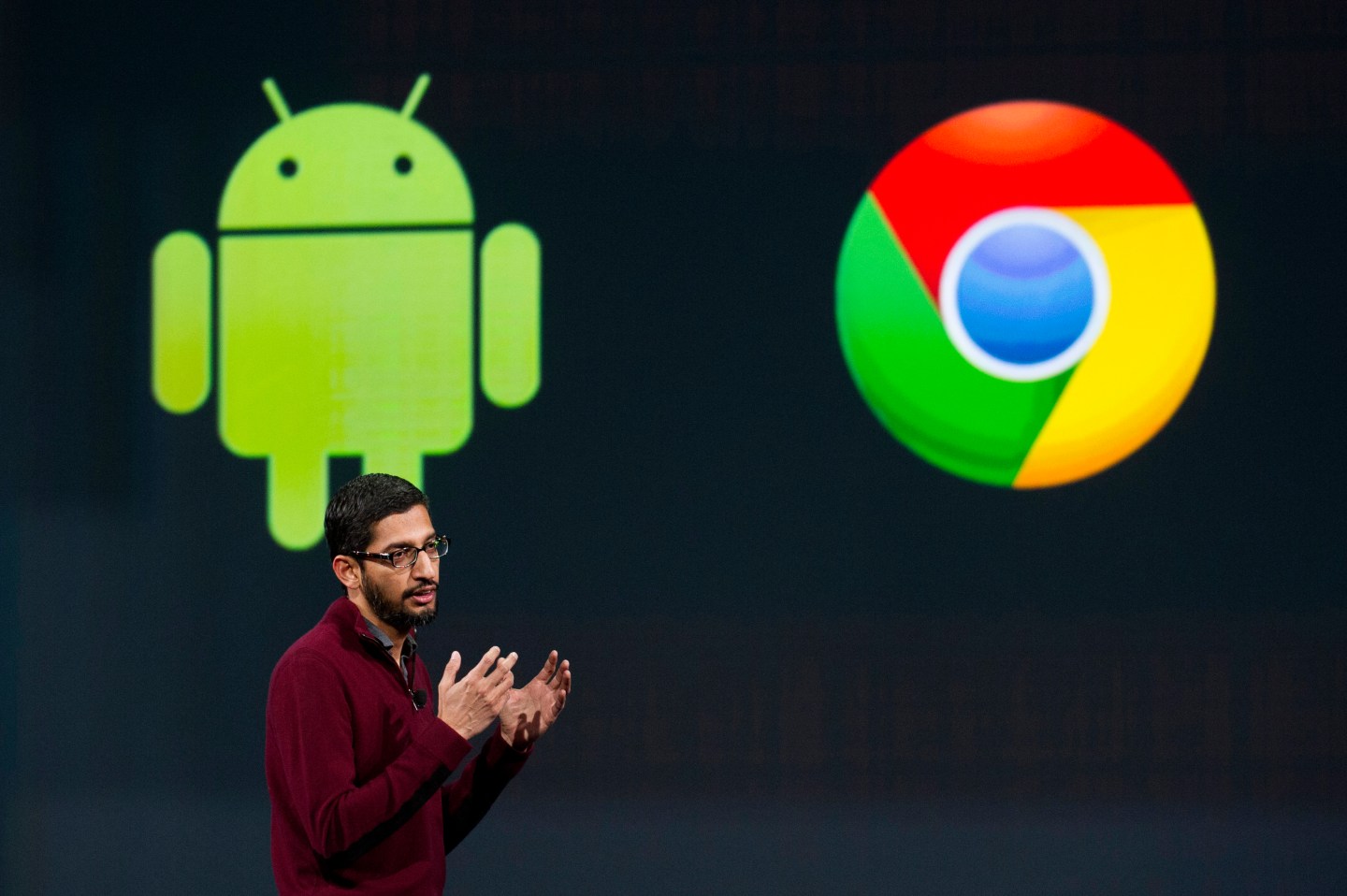
That could reportedly mean forcing Google to divest its Android mobile operating system or its Chrome browser, both of which are central to the dominance of Google Search—the go-to tool for more than 90% of American search queries. A divestment of the Google Ads platform is reportedly also under consideration.
Unsurprisingly, investors in Google parent Alphabet have not greeted Bloomberg’s report warmly. Shares fell by more than 3% on Wednesday morning, before recovering slightly.
They might have fallen further, were it not for the fact that a wholesale breakup of a Big Tech company would be unprecedented, making it difficult to imagine. (U.K. antitrust regulators did force Meta to unwind its acquisition of the GIF repository Giphy a couple years back, but Giphy—now owned by Shutterstock—wasn’t exactly core to Meta’s business.)
The idea of a Big Tech breakup is not unprecedented, though.
Nearly a quarter-century ago, Microsoft had also been found to be abusing a monopolistic position—in that case, in the market for PC operating systems. It was a time at which the web was taking off, and Microsoft broke antitrust law by bundling its own Internet Explorer bundle with Windows, to stymie the advance of third-party browsers like Marc Andreessen’s Netscape Navigator.
A district court ordered the breakup of Microsoft into a Windows unit and a separate unit that would have handled other Microsoft software, like Internet Explorer. But Microsoft appealed and won, at least to the extent that it no longer faced breakup as a remedy; it ended up settling the antitrust case in 2001 with promises to let manufacturers ship Windows PCs with other operating systems and Microsoft-rivaling software, without retaliation.
Microsoft’s narrow escape—partly the result of improper public statements made by the judge during the initial trial—means that the most recent example in U.S. antitrust history of a major corporate breakup occurred more than 40 years ago, when telco giant AT&T was split into a long-distance carrier and seven so-called Baby Bells.
But, while Big Tech has never had to experience a dismemberment on that scale, times are changing. Companies like Google, Apple, and Meta have unprecedented scale and power on a global level and an outsize role in the stock markets, and there’s plenty of political will to rein them in. Jonathan Kanter, the DOJ’s aggressive antitrust chief, has been arguing for many years that the only way to address Google’s alleged violations is to break it up—a stance that did not hinder his appointment as assistant attorney general for antitrust in late 2021.
The impact of a breakup would resonate far beyond Mountain View
The odds of a Google breakup are still long, given the company’s expected appeal of the ruling, and if the decision is upheld, the many, less-draconian alternative remedies for Judge Mehta to consider.
But in the unlikely event that Judge Mehta agreed to take the divestiture route, the result would be seismic. And for Google, which currently enjoys a market valuation of close to $2 trillion, an existential crisis.
Anything that directly reduces Google’s search revenues—still by far the company’s biggest cash cow—would hurt. While Chrome and Android are not explicitly search products, they each serve as a vital point of connection to consumers: Chrome holds nearly two-thirds of the global browser market, and Android a slightly larger share of the global smartphone market. If either were to cease being a Google product, Google would have less ability to steer consumers to its moneymaking services (like search advertising).
And if the future of consumer tech is nearly as AI-centric as the industry claims, an Android-less Google would also find itself hobbled in this critical arena.
Just yesterday, Google held a splashy event to show off its latest lineup of hardware products, including Google Pixel smartphones. As the event made clear, these devices, as well as the broader ecosystem of third-party Android hardware products, are the most important vehicle for Google’s AI ambitions—without Android, Google has no obvious way to ensure that billions of people get to interact with its Gemini-powered chatbots and other AI services on a daily basis. (Indeed, one can imagine Google’s leverage of Android to promote Gemini being the kind of issue that could inspire a future antitrust suit in the U.S. or elsewhere.)
The impact of a Google breakup would also be felt far beyond Mountain View, as Google and plenty of its peers are also embroiled in other antitrust cases that could theoretically lead to a similar outcome.
The DOJ currently has a separate case against Google that, it hopes, could result in Google having to sell off parts of its ad-tech operations. The Federal Trade Commission has a lawsuit going against Meta that aims for the divestiture of Instagram and WhatsApp. The FTC also has a complaint against Amazon that, some experts have suggested, could result in the spinning-off of the e-commerce giant’s logistics services.
So, thanks to its timing, Google’s antitrust loss on the search front could end up being the tipping point for a grand humbling of Big Tech. If the company prevails, it could provide the precedent to demonstrate that these behemoths cannot be cut down to size—a demonstration tech companies no doubt hope would scare off regulators for another couple of decades.