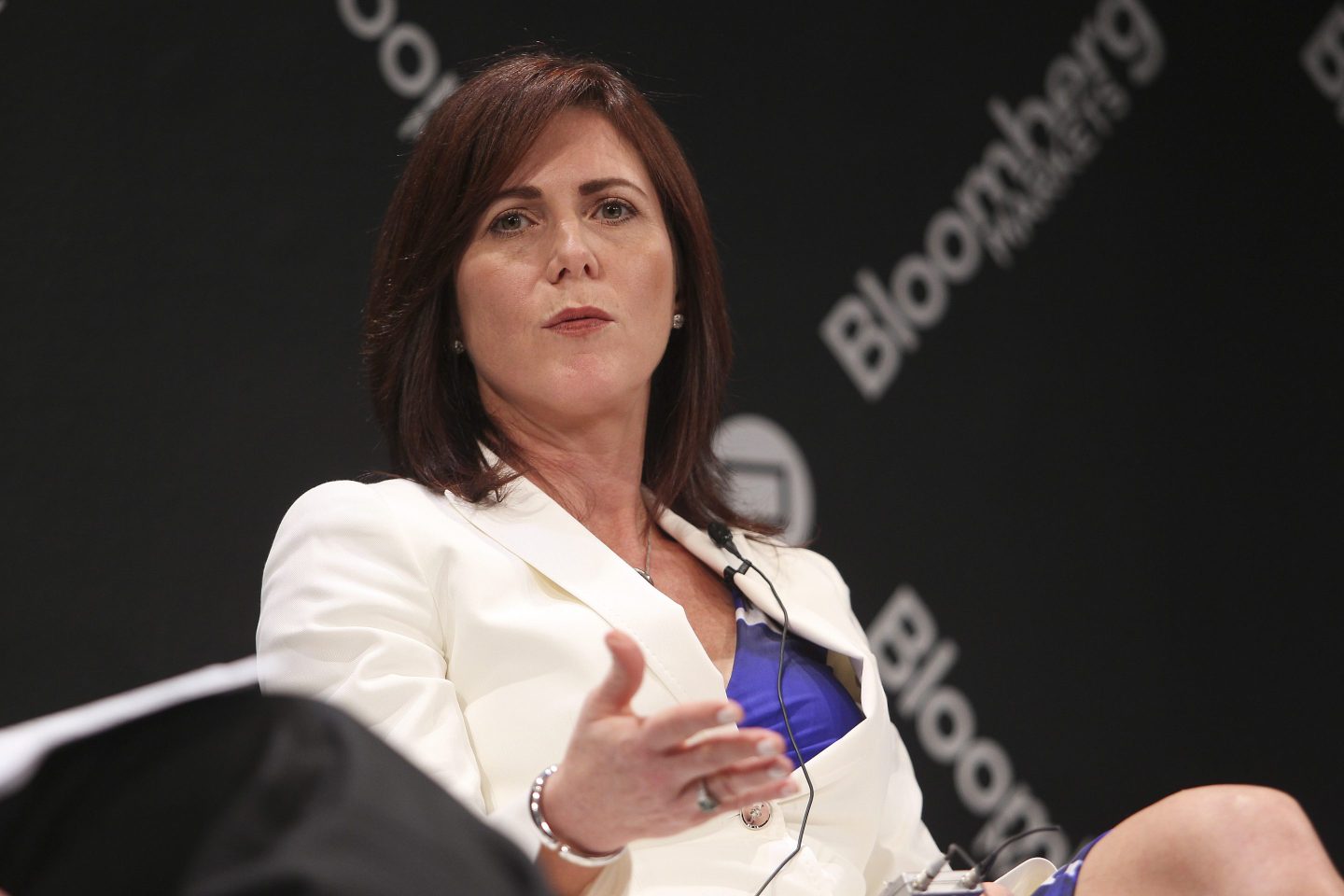
Ivy Zelman was “Poison Ivy” long before she called the 2008 housing crash. She didn’t like the nickname much in middle school, but things have changed, and the executive vice president of Walker & Dunlop company Zelman & Associates now considers it a badge of honor. She was an analyst at Credit Suisse who followed homebuilders in the years before the subprime mortgage crisis. Housing was unaffordable, lending was bonkers, and builders were buying land and scaling frivolously, she explained. “There was no money down and liar loans,” Zelman said.
“People used to joke, ‘Oh, someday she’ll be right,’” Zelman recalled, and in the summer of 2005, her team released a report called “Investors Gone Wild.” In the second half of the year, the market started to turn for the worse, and she doubled down. During a 2006 earnings call with Bob Toll, then–chief executive of McMansion builder Toll Brothers, Toll said things were getting better, and maybe the housing market had bottomed. Zelman famously responded: “Which Kool-Aid are you drinking, because I want some.”
Yet stocks rallied that year, and the housing market was thought to be recovering. Still, she wasn’t convinced; Zelman kept her bearish tune. “That was hard,” she said. “There were many nights where I could tell you that it wasn’t fun.” But she was vindicated months after that call, when mortgage lender New Century, which issued $51.6 billion in subprime loans in 2006, filed for Chapter 11 bankruptcy. “That was the beginning of the end,” Zelman said. The housing market crashed, and it was a catalyst for the Great Financial Crisis.
A new predicament
Less than two decades later, and the housing world is in another predicament. Its most dire problem, as Zelman sees it, is a lack of affordability. Lower than ever mortgage rates and a pandemic fueled a housing boom; home prices skyrocketed, and eventually, mortgage rates did, too, once the Federal Reserve raised interest rates to tame scorching inflation. Things may be slightly better, but a lot of people can’t buy homes, so they are living with their parents until their mid- to late twenties, Zelman said, and “it’s delaying household formations.”
It isn’t the same as what happened in the years leading up to the financial crisis, or throughout it, because home prices haven’t fallen, not on a national scale; they actually rose. But sales, or rather existing-home sales, have plummeted. “You’ve never seen recessionary volume with home price inflation as robust as that was,” she said, referring to last year, when existing-home sales fell to their lowest point in almost three decades. People weren’t selling their homes, because they didn’t want to lose the low mortgage rate they’d locked in prior, and there was so little inventory that even if they chose to sell, there was a question of where they’d go. And while she sees existing-home sales improving as turnover increases, she doesn’t expect it to go back to typical levels, because there’s a demographic headwind, too. People are aging, and when Gen Xers and baby boomers age, they move less, Zelman explained.
Everything feels frozen in place, and in the existing-home camp, it kind of is. But people have to move sometime, and we’re already seeing it in real time. Luckily, because of that, inventory is increasing. So in some metropolitan areas where there’s substantial inventory, home prices are declining or are otherwise flat. And it isn’t simply an increase in existing stock as those who delayed moves finally do so, but the presence of new homes. New-home sales, until recently, have done surprisingly well, and part of that is because builders can construct smaller homes or offer incentives to springboard demand: Mortgage rate buydowns are a big one. Still, “affordability is pretty stretched, so the housing market’s kind of in a grind mode,” Zelman said, and we might be stuck in it for a bit.
And a Fed cut doesn’t necessarily mean mortgage rates will fall, despite what people tend to suspect, Zelman said, echoing her colleague who said something similar earlier in the month. Mortgage rates are correlated to the 10-year Treasury yield, but the difference between the two is called the “spread,” and the spread is much higher than historical norms, an indicator of a particularly complex economic environment. The bond market is already anticipating, and pricing in, a rate cut from the Fed, another sign of perceived risk in the mortgage market as well as concerns about credit quality. In the next one to two years, Zelman only sees mortgage rates declining 0.50%. “Mortgage rates will still have a six handle on them, and that means that we still have affordability that’s pretty stretched,” she said.
The upside?
In recent months, home-price inflation has slowed, and showed signs of slowing further. “We do expect deceleration to continue and see more pronounced slowing in the back half of the year into the low single digits, and I think that’s really because we view the inventory scenario as likely to continue to put downward pressure on home price,” Zelman said. However, because of the variation in where new-home construction occurs, there could be metros where home prices don’t ease at all.