• Home
  • Latest
  • Fortune 500
  • Finance
  • Tech
  • Leadership
  • Lifestyle
  • Rankings
  • Multimedia
CommentaryEnvironment

We used satellite imagery and AI to see who’s keeping their climate pledges. Here’s the shocking reality we found

By
Antoine Rostand
Antoine Rostand
Down Arrow Button Icon
By
Antoine Rostand
Antoine Rostand
Down Arrow Button Icon
July 17, 2024, 7:23 AM ET

Antoine Rostand is the president and co-founder of Kayrros, a world leader in environmental intelligence.

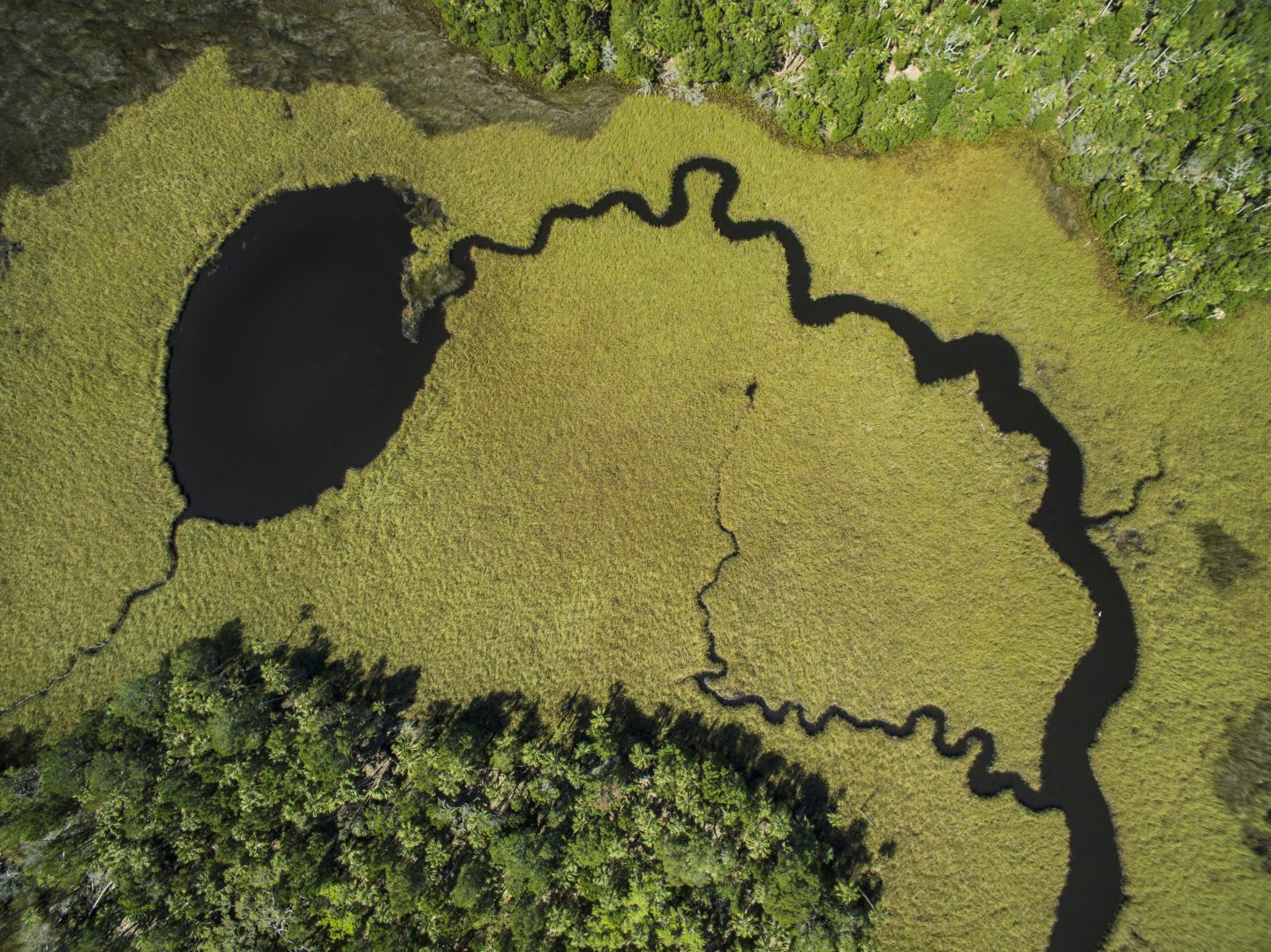
Most conservation and emissions-reduction projects funded by the carbon market in the Amazon and Africa were found to be working.
Most conservation and emissions-reduction projects funded by the carbon market in the Amazon and Africa were found to be working.Getty Images

Committing countries or companies to climate pledges doesn’t guarantee that those pledges will be honored. After all, the planet is getting a great deal hotter every year, with the record-breaking temperature in India in May just the latest example. If companies and countries were fully honoring their commitments, it’s highly likely that the rate of global warming would be slowing. And one reason why companies and countries are not honoring their pledges is a simple lack of transparency.

This is where technology comes in. We now have at our disposal tools that allow us to see, with pinpoint precision and in close to real-time, exactly what is going on with regard to the climate and where. We can see, for instance, that the average difference between what the 42 biggest oil and gas producers say they emit, and what they actually emit, is vast.

We calculated this at Kayrros by modeling the methane intensities of upstream oil and gas activities, assuming a diverse range of territories where production took place and a variety of production volumes. We brought together data drawn from satellites and processed by artificial intelligence (AI), as well as public estimates of methane emissions, country-level oil and gas production data, and self-reporting by companies. On average, our model shows 16.1 times larger methane intensities than those reported by companies. This is largely down to the fact that regional production profiles differ greatly and can have a significant impact on the value of modeled methane intensities.

But that isn’t all that we can see thanks to advances in Earth observation technology. We can see that (despite massive skepticism) the overwhelming majority of forest conservation and restoration projects tied to the voluntary carbon market do perform their function, and therefore could—and should—be seen as a viable and effective means of directing money from the big polluters in the Global North to the stewards of our forestry endowment in the Global South. In June last year, we used our Forest Carbon Monitor to assess more than 90% of the Amazon, which is the world’s largest rainforest and one of the world’s largest carbon sinks. Our analysis, which we ran by processing terabytes of satellite data with AI, showed that of 75 reviewed conservation and emissions-reduction projects funded by the carbon market, just five showed the same static deforestation rates. In other words, 96% were working. More recent analyses—considered 115 REDD+ projects (98 of which are active), spread across the Amazon and Africa—yielded similar findings. In short, Earth observation technology now ensures that the world can see who is meeting their commitments and who is falling short.

That same technology has revealed something disquieting: Almost none of the signatories of the Global Methane Pledge are following through on their commitment. That commitment was to collectively reduce methane emissions by 30% from 2020 levels by 2030, and it was rooted in the robust scientific fact that in its first 20 years in the atmosphere, methane is 84 times as potent as carbon dioxide. Fulfilling the GMP could therefore eliminate over 0.2˚C of warming by 2050. That countries aren’t following through on promises like these suggests that their leaders see them as contingent on circumstances, which undermines both past and future climate commitments, suggesting that they are, in fact, optional.

Climate action must stand above and beyond political and ideological disputes, which ultimately depend on there being a secure societal context in which to have them. If the planet keeps getting hotter, and national and corporate promises keep falling by the wayside, those societies will begin to feel very insecure indeed. We have the technology to inform legislation and regulation, to make sure climate action is as targeted, unintrusive, and cost-effective as possible. COP is now fewer than five months away. Commitments must be firm and enduring, able to be maintained regardless of whatever else is going on—because something else will always be going on.

More must-read commentary published by Fortune:

  • How U.S.-China competition is benefiting the world—and reshaping the global economy
  • Venture capital could be NATO’s ultimate weapon. Here’s why
  • Gen Z’s enthusiasm for all things touchable is resurrecting the analog economy—and costing parents
  • Fearless Fund counsel: The court ruling barring grants to Black women entrepreneurs should terrify CEOs

The opinions expressed in Fortune.com commentary pieces are solely the views of their authors and do not necessarily reflect the opinions and beliefs of Fortune.

Join us at the Fortune Workplace Innovation Summit May 19–20, 2026, in Atlanta. The next era of workplace innovation is here—and the old playbook is being rewritten. At this exclusive, high-energy event, the world’s most innovative leaders will convene to explore how AI, humanity, and strategy converge to redefine, again, the future of work. Register now.
About the Author
By Antoine Rostand
See full bioRight Arrow Button Icon

Latest in Commentary

CommentaryLeadership
Leading the agentic enterprise: What the next wave of AI demands from CEOs
By François Candelon, Amartya Das, Sesh Iyer, Shervin Khodabandeh and Sam RansbothamDecember 12, 2025
1 hour ago
Sarandos
CommentaryAntitrust
Netflix’s takeover of Warner Brothers is a nightmare for consumers
By Ike BrannonDecember 11, 2025
22 hours ago
student
CommentaryEducation
International students skipped campus this fall — and local economies lost $1 billion because of it
By Bjorn MarkesonDecember 10, 2025
2 days ago
jobs
Commentaryprivate equity
There is a simple fix for America’s job-quality crisis: actually give workers a piece of the business 
By Pete StavrosDecember 9, 2025
3 days ago
Jon Rosemberg
CommentaryProductivity
The cult of productivity is killing us
By Jon RosembergDecember 9, 2025
3 days ago
Trump
CommentaryTariffs and trade
AI doctors will be good at science but bad at business, and big talk with little action means even higher drugs prices: 10 healthcare predictions for 2026 from top investors
By Bob Kocher, Bryan Roberts and Siobhan Nolan ManginiDecember 9, 2025
3 days ago

Most Popular

placeholder alt text
Success
At 18, doctors gave him three hours to live. He played video games from his hospital bed—and now, he’s built a $10 million-a-year video game studio
By Preston ForeDecember 10, 2025
2 days ago
placeholder alt text
Investing
Baby boomers have now 'gobbled up' nearly one-third of America's wealth share, and they're leaving Gen Z and millennials behind
By Sasha RogelbergDecember 8, 2025
4 days ago
placeholder alt text
Success
Palantir cofounder calls elite college undergrads a ‘loser generation’ as data reveals rise in students seeking support for disabilities, like ADHD
By Preston ForeDecember 11, 2025
20 hours ago
placeholder alt text
Economy
‘We have not seen this rosy picture’: ADP’s chief economist warns the real economy is pretty different from Wall Street’s bullish outlook
By Eleanor PringleDecember 11, 2025
1 day ago
placeholder alt text
Uncategorized
Transforming customer support through intelligent AI operations
By Lauren ChomiukNovember 26, 2025
16 days ago
placeholder alt text
Economy
‘Be careful what you wish for’: Top economist warns any additional interest rate cuts after today would signal the economy is slipping into danger
By Eva RoytburgDecember 10, 2025
2 days ago
Rankings
  • 100 Best Companies
  • Fortune 500
  • Global 500
  • Fortune 500 Europe
  • Most Powerful Women
  • Future 50
  • World’s Most Admired Companies
  • See All Rankings
Sections
  • Finance
  • Leadership
  • Success
  • Tech
  • Asia
  • Europe
  • Environment
  • Fortune Crypto
  • Health
  • Retail
  • Lifestyle
  • Politics
  • Newsletters
  • Magazine
  • Features
  • Commentary
  • Mpw
  • CEO Initiative
  • Conferences
  • Personal Finance
  • Education
Customer Support
  • Frequently Asked Questions
  • Customer Service Portal
  • Privacy Policy
  • Terms Of Use
  • Single Issues For Purchase
  • International Print
Commercial Services
  • Advertising
  • Fortune Brand Studio
  • Fortune Analytics
  • Fortune Conferences
  • Business Development
About Us
  • About Us
  • Editorial Calendar
  • Press Center
  • Work At Fortune
  • Diversity And Inclusion
  • Terms And Conditions
  • Site Map

© 2025 Fortune Media IP Limited. All Rights Reserved. Use of this site constitutes acceptance of our Terms of Use and Privacy Policy | CA Notice at Collection and Privacy Notice | Do Not Sell/Share My Personal Information
FORTUNE is a trademark of Fortune Media IP Limited, registered in the U.S. and other countries. FORTUNE may receive compensation for some links to products and services on this website. Offers may be subject to change without notice.