
• Home
  • Latest
  • Fortune 500
  • Finance
  • Tech
  • Leadership
  • Lifestyle
  • Rankings
  • Multimedia
Personal FinanceJPMorgan Chase

Chase’s plan to charge for checking accounts—and how consumers might respond

Alicia Adamczyk
By
Alicia Adamczyk
Alicia Adamczyk
Senior Writer
Down Arrow Button Icon
Alicia Adamczyk
By
Alicia Adamczyk
Alicia Adamczyk
Senior Writer
Down Arrow Button Icon
July 8, 2024, 3:28 PM ET
Markets React To JPMorgan Chase Reporting 2 Billion Dollar Loss
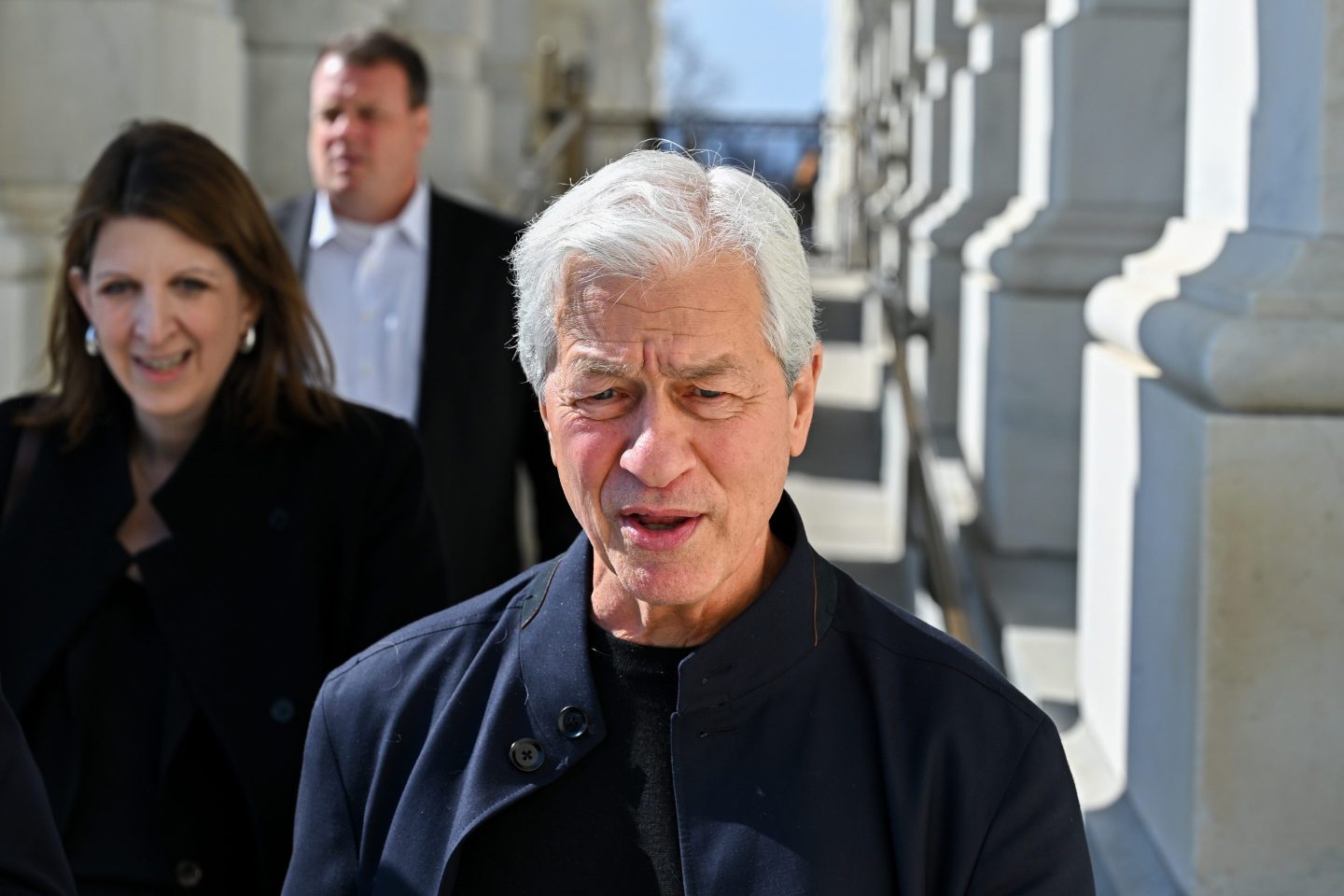
Chase Bank may start charging a fee for checking accounts.Spencer Platt—Getty Images

JPMorgan Chase could soon start charging some 86 million people for holding their own money for them. That’s according to Marianne Lake, CEO of consumer and community banking at JPMorgan Chase, who told the Wall Street Journal the bank may institute checking account fees in order to recoup any revenue lost if regulators go forward with a plan to cap overdraft fees.

Recommended Video

Currently, Chase charges up to $35 for checking accounts if certain requirements, like a monthly direct deposit, aren’t met. And it charges a $34 overdraft fee per transaction that overdraws an account by more than $50 (up to three per day). That enabled the bank to rack in over $1 billion in overdraft fees in 2023, according to the Consumer Financial Protection Bureau (CFPB), the most of any bank in the U.S.

The proposed regulations from the CFPB would cap those fees between $3 to $14, which the agency estimates will save consumers at least $3.5 billion each year. Of course, savings for consumers mean lost revenue for Chase, which it will look to make up elsewhere.

“It is not practical for many of the services to be free if we won’t be able to draw from those profit pools,” Lake told the Journal.

Lake did not say how much the checking account fees would be or what accounts they would apply to, but the Journal‘s story notes that other currently free products and services, like credit score trackers and financial planning tools, could also soon come at a cost. Chase’s proposed fee comes at a time when the average monthly fee for a non-interest checking account is $5.31, and $15.33 for an interest-bearing account, according to Bankrate.

Lake spoke to investors about the changing regulatory environment in May, saying that the average consumer was the most likely to be impacted.

“I think it is reasonable to expect the industry will make sweeping changes to how products and services are offered and priced,” she said, noting that credit will become “much more expensive and free checking may only be attainable for the most affluent Americans.”

An overdraft fee is applied when customers try to spend more than they have in their checking account. They became a major source of revenue for banks in 2010s, although other institutions—including Citi and Capital One—have eliminated or reined them in significantly in light of the possible new rules.

That said, Chase is earning significantly less revenue from overdraft fees than it once did: In 2019, the bank brought in over $2 billion, double last year’s figure.

What can consumers do?

How that plays out for consumers depends on how high the fees are, says Lauren Saunders, associate director of the National Consumer Law Center. Overdraft fees tend to hit low-income consumers the hardest—those who can least afford to pay them.

“In general, a modest monthly fee is better than a huge, backend overdraft fee,” says Saunders. “I don’t think they will be able to sustain high fees, and people should take their business elsewhere if they do.”

It’s also important to note that depending on the outcome of the presidential election in November, the federal regulations might not be put in place at all. Still, the best thing consumers can do is shop around for the best deal, says Saunders. Plenty of banks, including online-only institutions like Ally, offer fee-free accounts, as well as much smaller overdraft fees (if they charge the fees at all). Indeed, 45% of non-interest checking accounts are completely free and 87% can be free if requirements, like direct deposit or a minimum balance, are met, per Bankrate.

“Chase is more reliant on overdraft fees than other banks and so they’re looking to squeeze consumers in another way,” says Saunders. “Hopefully other banks who have made more significant changes to their overdraft practices can see a sustainable way to have bank accounts without big monthly fees.”

There are also non-bank financial institutions which often offer free services, though consumers should also approach these with caution, Saunders says, pointing to the recent collapse of Synapse, a financial technology company that acts as a middleman between fintechs and banks. Its abrupt bankruptcy left tens of thousands of business and consumers with frozen accounts they could not access.

That said, other banks may soon follow Chase’s lead. Smaller community banks and credit unions are less likely to do so, says Ted Rossman, senior industry analyst at Bankrate. And they may find other avenues—say, via higher ATM fees—to make up revenue.

“Banking is a copycat industry and I would expect large rivals to follow suit if a major player such as Chase raised fees,” says Rossman. “It’s also important to note that fees can be like whack-a-mole: One goes down, another pops up.”


Join us at the Fortune Workplace Innovation Summit May 19–20, 2026, in Atlanta. The next era of workplace innovation is here—and the old playbook is being rewritten. At this exclusive, high-energy event, the world’s most innovative leaders will convene to explore how AI, humanity, and strategy converge to redefine, again, the future of work. Register now.
About the Author
Alicia Adamczyk
By Alicia AdamczykSenior Writer
LinkedIn iconTwitter icon

Alicia Adamczyk is a former New York City-based senior writer at Fortune, covering personal finance, investing, and retirement.

See full bioRight Arrow Button Icon

Latest in Personal Finance

Sam Altman
Arts & EntertainmentMedia
‘We’re not just going to want to be fed AI slop for 16 hours a day’: Analyst sees Disney/OpenAI deal as a dividing line in entertainment history
By Nick LichtenbergDecember 11, 2025
6 hours ago
Personal FinanceLoans
Is it worth it to pay off a personal loan early?
By Joseph HostetlerDecember 11, 2025
7 hours ago
Personal Financegold prices
Current price of gold as of December 11, 2025
By Danny BakstDecember 11, 2025
14 hours ago
Current price of silver as of Thursday, December 11, 2025
Personal Financesilver
Current price of silver as of Thursday, December 11, 2025
By Joseph HostetlerDecember 11, 2025
15 hours ago
Powell
EconomyFederal Reserve
Trump slams Fed’s third-straight rate cut as ‘too small,’ saying he wishes it was twice as large
By Christopher Rugaber and The Associated PressDecember 11, 2025
15 hours ago
mackenzie
Personal Financephilanthropy
‘This year, I really see education and climate’: Patterns in billionaire MacKenzie Scott’s massive giving emerge with time
By Thalia Beaty and The Associated PressDecember 11, 2025
16 hours ago

Most Popular

placeholder alt text
Success
At 18, doctors gave him three hours to live. He played video games from his hospital bed—and now, he’s built a $10 million-a-year video game studio
By Preston ForeDecember 10, 2025
2 days ago
placeholder alt text
Investing
Baby boomers have now 'gobbled up' nearly one-third of America's wealth share, and they're leaving Gen Z and millennials behind
By Sasha RogelbergDecember 8, 2025
3 days ago
placeholder alt text
Economy
‘Be careful what you wish for’: Top economist warns any additional interest rate cuts after today would signal the economy is slipping into danger
By Eva RoytburgDecember 10, 2025
1 day ago
placeholder alt text
Politics
Exclusive: U.S. businesses are getting throttled by the drop in tourism from Canada: ‘I can count the number of Canadian visitors on one hand’
By Dave SmithDecember 10, 2025
2 days ago
placeholder alt text
Economy
‘We have not seen this rosy picture’: ADP’s chief economist warns the real economy is pretty different from Wall Street’s bullish outlook
By Eleanor PringleDecember 11, 2025
17 hours ago
placeholder alt text
Success
Palantir cofounder calls elite college undergrads a ‘loser generation’ as data reveals rise in students seeking support for disabilities, like ADHD
By Preston ForeDecember 11, 2025
12 hours ago
Rankings
  • 100 Best Companies
  • Fortune 500
  • Global 500
  • Fortune 500 Europe
  • Most Powerful Women
  • Future 50
  • World’s Most Admired Companies
  • See All Rankings
Sections
  • Finance
  • Leadership
  • Success
  • Tech
  • Asia
  • Europe
  • Environment
  • Fortune Crypto
  • Health
  • Retail
  • Lifestyle
  • Politics
  • Newsletters
  • Magazine
  • Features
  • Commentary
  • Mpw
  • CEO Initiative
  • Conferences
  • Personal Finance
  • Education
Customer Support
  • Frequently Asked Questions
  • Customer Service Portal
  • Privacy Policy
  • Terms Of Use
  • Single Issues For Purchase
  • International Print
Commercial Services
  • Advertising
  • Fortune Brand Studio
  • Fortune Analytics
  • Fortune Conferences
  • Business Development
About Us
  • About Us
  • Editorial Calendar
  • Press Center
  • Work At Fortune
  • Diversity And Inclusion
  • Terms And Conditions
  • Site Map

© 2025 Fortune Media IP Limited. All Rights Reserved. Use of this site constitutes acceptance of our Terms of Use and Privacy Policy | CA Notice at Collection and Privacy Notice | Do Not Sell/Share My Personal Information
FORTUNE is a trademark of Fortune Media IP Limited, registered in the U.S. and other countries. FORTUNE may receive compensation for some links to products and services on this website. Offers may be subject to change without notice.