• Home
  • News
  • Fortune 500
  • Tech
  • Finance
  • Leadership
  • Lifestyle
  • Rankings
  • Multimedia
Environmentcommercial fishing

Don’t eat shellfish from Oregon and Washington, FDA warns. Here’s what to know about the potential contamination risk

By
Claire Rush
Claire Rush
and
The Associated Press
Down Arrow Button Icon
By
Claire Rush
Claire Rush
and
The Associated Press
Down Arrow Button Icon
June 11, 2024, 5:14 AM ET
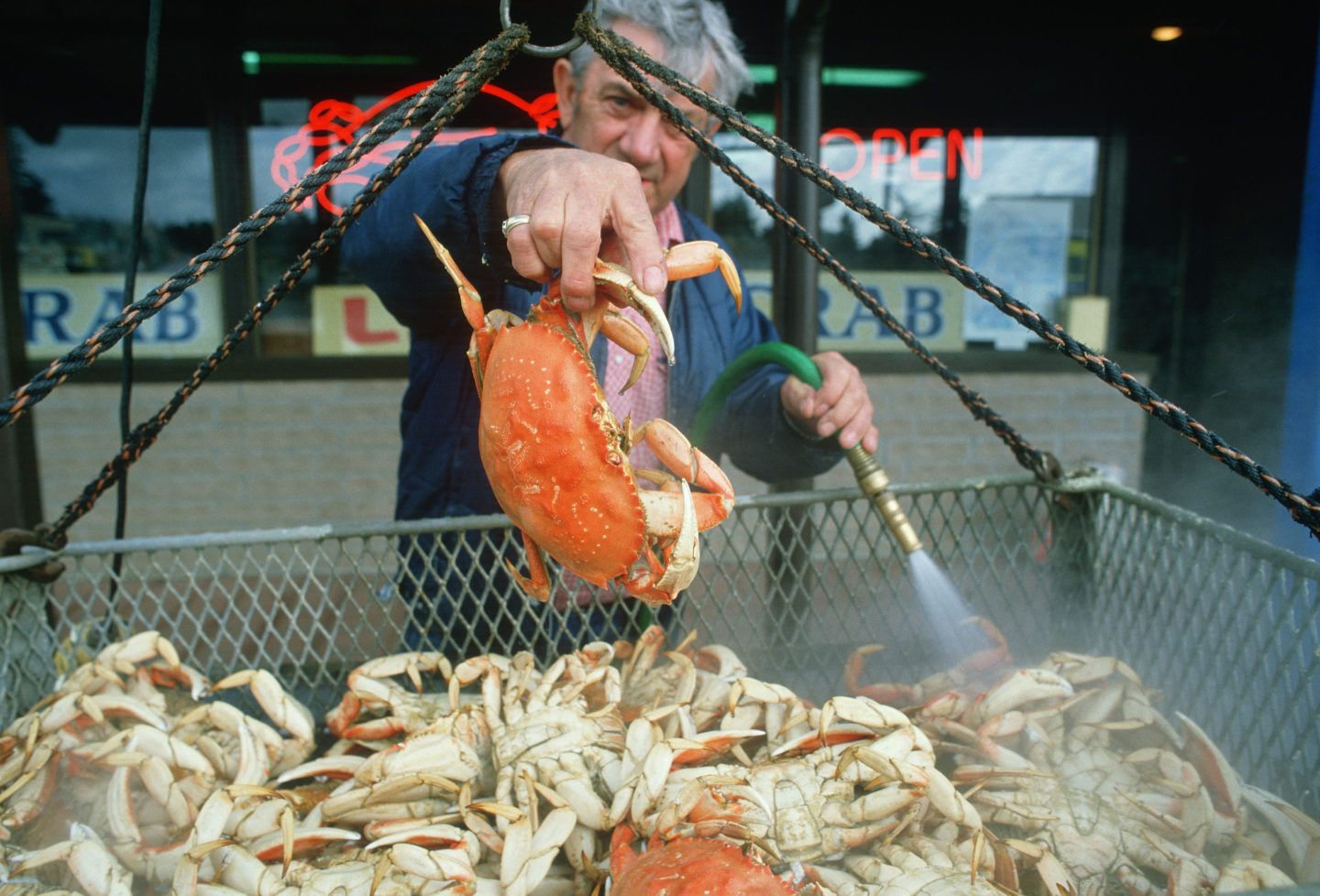
Crab vendor in Oregon
Things to know about FDA warning on paralytic shellfish poisoning in Pacific Northwest.Joe Sohm—Visions of America/Universal Images Group/Getty Images

The U.S. Food and Drug Administration says consumers should avoid eating shellfish from Oregon and Washington state as they may be contaminated with toxins that cause paralytic shellfish poisoning. At least 31 people have been sickened in Oregon so far, according to state health officials. Here’s what to know about the federal agency’s advisory.

What’s the FDA warning?

The warning says to avoid oysters and bay clams harvested from Netarts and Tillamook bays in northern Oregon since May 28, as well as shellfish harvested from areas around Willapa Bay in southern Washington since May 26. They may be contaminated with high levels of paralytic shellfish poisoning, or PSP, a naturally occurring toxin produced by algae.

Shellfish harvested from those areas during that period were distributed beyond Oregon and Washington to Arizona, California, Colorado, Hawaii, Nevada, New York. The FDA has warned restaurants and retailers in those states not to serve it.

What do we know so far?

Elevated levels of toxins were first detected in shellfish on the Oregon coast on May 17, state fish and wildlife officials said.

Since then, a paralytic shellfish poisoning outbreak has sickened at least 31 people in Oregon, according to the Oregon Health Authority. The agency has asked people who have harvested or eaten Oregon shellfish since May 13 to fill out a survey intended to help investigators identify the cause of the outbreak and the number of people sickened.

Oregon authorities have closed the state’s entire coastline to the harvesting of mussels, razor clams and bay clams. Agriculture officials have also closed three bays, including those named in the FDA advisory, to commercial oyster harvesting.

Officials in neighboring Washington have also closed the state’s Pacific coastline to the harvesting of shellfish, including mussels, clams, scallops and oysters, a a shellfish safety map produced by the Washington State Department of Health shows.

What is paralytic shellfish poisoning?

Paralytic shellfish poisoning, or PSP, is caused by saxitoxin, a naturally occurring toxin that’s produced by algae. Saxitoxin is a neurotoxin, meaning it can damage nerve tissue.

People who eat shellfish contaminated with high levels of saxitoxins usually start feeling ill within 30 to 60 minutes, according to Oregon health officials. Symptoms include numbness of the mouth and lips, vomiting, diarrhea, shortness of breath and irregular heartbeat in severe cases.

There is no antidote to PSP, according to the health agency. Treatment for severe cases may require mechanical ventilators to help with breathing.

Authorities warn that cooking or freezing contaminated shellfish doesn’t kill the toxins or make it safe to eat.

What is causing this?

A “very large” algal bloom has resulted in “unprecedented levels” of PSP toxins along Oregon’s coast, Matthew Hunter, shellfish program manager for the Oregon Department of Fish and Wildlife, said during a briefing.

The toxins have accumulated in the shellfish, sickening some people who have eaten them.

While the factors that create harmful algal blooms are not well understood, certain factors — resulting from both natural processes and human activities — are believed to play a role, according to the National Oceanic and Atmospheric Administration.

“Studies show that many algal species flourish when wind and water currents are favorable,” the agency says on a webpage dedicated to explaining harmful algal blooms. Some blooms, it says, stem from “sluggish water circulation, unusually high water temperatures, and extreme weather events like hurricanes, floods, and drought.”

Algae growth can also increase when nutrients used in fertilizers, mainly phosphorus and nitrogen, flow into bodies of water, according to the agency.

How long will this last?

Oregon officials said it may take weeks, months or even up to a year for toxin levels to subside, depending on the type of shellfish.

Mussels can accumulate paralytic shellfish poison rapidly, but also rid themselves of it quickly, according to Hunter, the Oregon fish and wildlife official. Because of this, it may take anywhere from two weeks to a month for mussels to eliminate the toxin.

Razor clams, however, are slower to do so. It may take them several months to a year to cleanse themselves due to the current high levels of toxin, Hunter said.

How common is this?

Such high levels of paralytic shellfish poison haven’t been detected in Oregon in decades, according to Hunter, who cited a previous shellfish harvesting closure in the state in 1992.

However, PSP has been prevalent in the regional waters for centuries, he said.

What’s the economic impact?

The harvesting closures may deal a blow to Pacific Northwest fisheries.

The shellfish industry generates $270 million each year for the region’s economy, according to the National Oceanic and Atmospheric Administration, and employs some 3,200 people.

Fortune Brainstorm AI returns to San Francisco Dec. 8–9 to convene the smartest people we know—technologists, entrepreneurs, Fortune Global 500 executives, investors, policymakers, and the brilliant minds in between—to explore and interrogate the most pressing questions about AI at another pivotal moment. Register here.
About the Authors
By Claire Rush
See full bioRight Arrow Button Icon
By The Associated Press
See full bioRight Arrow Button Icon

Latest in Environment

AIAmazon
More than 1,000 Amazon employees sign open letter warning the company’s AI ‘will do staggering damage to democracy, our jobs, and the earth’
By Nino PaoliDecember 2, 2025
1 day ago
Brazil
EnvironmentBrazil
Why the world’s top coffee producer is switching up its beans
By Renata Carlos Daou and BloombergNovember 30, 2025
3 days ago
EuropeSwitzerland
Swiss voters reject tax of up to 50% on large donations or inheritances, fearing exodus of wealthy instead of fighting climate change
By Jamey Keaten and The Associated PressNovember 30, 2025
3 days ago
Jacqueline Novogratz is the founder and CEO of Acumen
Commentaryphilanthropy
Philanthropy isn’t fading. It’s evolving
By Jacqueline NovogratzNovember 30, 2025
3 days ago
EconomyDiamonds
Lab-grown diamonds are crushing this African economy that was built on natural stones
By Sello Motseta, Farai Mutsaka and The Associated PressNovember 29, 2025
3 days ago
Justin Thomas hits from the seventh tee during the first round of the Tournament of Champions golf tournament at Kapalua Plantation Course on Kapalua, Hawaii in January 2016.
EnvironmentGolf
Brown grass caused the PGA Tour to pull out of a historic Maui golf course, leaving a $50 million hole for the island reeling from drought, wildfires
By Jennifer Sinco Kelleher and The Associated PressNovember 29, 2025
4 days ago

Most Popular

placeholder alt text
Economy
Ford workers told their CEO 'none of the young people want to work here.' So Jim Farley took a page out of the founder's playbook
By Sasha RogelbergNovember 28, 2025
5 days ago
placeholder alt text
Success
Warren Buffett used to give his family $10,000 each at Christmas—but when he saw how fast they were spending it, he started buying them shares instead
By Eleanor PringleDecember 2, 2025
1 day ago
placeholder alt text
Economy
Elon Musk says he warned Trump against tariffs, which U.S. manufacturers blame for a turn to more offshoring and diminishing American factory jobs
By Sasha RogelbergDecember 2, 2025
18 hours ago
placeholder alt text
North America
Jeff Bezos and Lauren Sánchez Bezos commit $102.5 million to organizations combating homelessness across the U.S.: ‘This is just the beginning’
By Sydney LakeDecember 2, 2025
20 hours ago
placeholder alt text
C-Suite
MacKenzie Scott's $19 billion donations have turned philanthropy on its head—why her style of giving actually works
By Sydney LakeDecember 2, 2025
1 day ago
placeholder alt text
North America
Anonymous $50 million donation helps cover the next 50 years of tuition for medical lab science students at University of Washington
By The Associated PressDecember 2, 2025
22 hours ago
Rankings
  • 100 Best Companies
  • Fortune 500
  • Global 500
  • Fortune 500 Europe
  • Most Powerful Women
  • Future 50
  • World’s Most Admired Companies
  • See All Rankings
Sections
  • Finance
  • Leadership
  • Success
  • Tech
  • Asia
  • Europe
  • Environment
  • Fortune Crypto
  • Health
  • Retail
  • Lifestyle
  • Politics
  • Newsletters
  • Magazine
  • Features
  • Commentary
  • Mpw
  • CEO Initiative
  • Conferences
  • Personal Finance
  • Education
Customer Support
  • Frequently Asked Questions
  • Customer Service Portal
  • Privacy Policy
  • Terms Of Use
  • Single Issues For Purchase
  • International Print
Commercial Services
  • Advertising
  • Fortune Brand Studio
  • Fortune Analytics
  • Fortune Conferences
  • Business Development
About Us
  • About Us
  • Editorial Calendar
  • Press Center
  • Work At Fortune
  • Diversity And Inclusion
  • Terms And Conditions
  • Site Map

© 2025 Fortune Media IP Limited. All Rights Reserved. Use of this site constitutes acceptance of our Terms of Use and Privacy Policy | CA Notice at Collection and Privacy Notice | Do Not Sell/Share My Personal Information
FORTUNE is a trademark of Fortune Media IP Limited, registered in the U.S. and other countries. FORTUNE may receive compensation for some links to products and services on this website. Offers may be subject to change without notice.