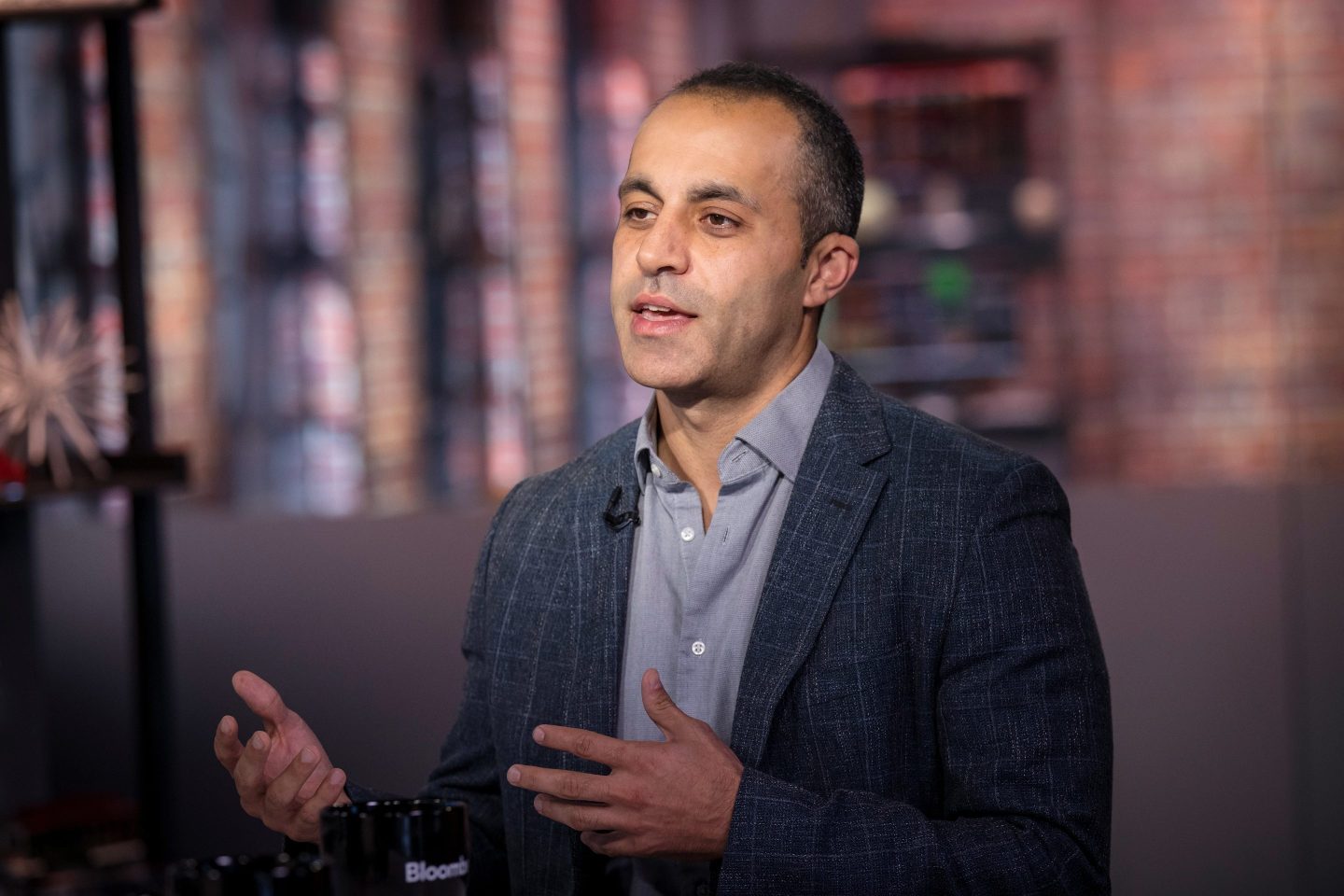
Here we are again, I tell Databricks CEO Ali Ghodsi as we hop on a Zoom on a sunny Tuesday.
It really does feel like déjà vu. Databricks has been on a headline-making acquisition streak over the last year, and this week the company announced another big-ticket deal with its plan to buy open source-focused data manager Tabular.
Though we don’t know the exact contours of the deal, Databricks confirmed it’s north of $1 billion, making it the company’s second billion-dollar deal within 12 months. Databricks made a splash in late June 2023, buying MosaicML for $1.3 billion. And the deals have rolled out quickly since: In October, Databricks bought Arcion, a Databricks Ventures-backed startup, in a deal valued at $100 million. In January, Term Sheet had the exclusive on Databricks’ buyout of AI-focused data platform Einblick, and in March the company bought Lilac AI.
The Tabular deal is noteworthy for a few reasons. First, for its size: Databricks is now officially in the “we do billion-dollar deals repeatedly” club, which is pretty extraordinary for a VC-backed startup. Second, the deal reflects the growing rivalry in a high-stakes business data turf war between Databricks and Snowflake.
The name of the latest chapter in this rivalry: Iceberg.
Iceberg is an open-source layer that helps store and organize massive amounts of data in “data lakes” (for the uninitiated, a data lake is a low-cost but unstructured way of storing raw data). Iceberg was started in 2017 by Ryan Blue and Dan Weeks, who with Jason Reid, cofounded Tabular in 2021. Tabular would go on to be backed by Andreessen Horowitz, Altimeter Capital, and Zetta Venture Partners, raising $37 million through Series B, according to Crunchbase.
A source familiar with the matter told me that Snowflake also tried to buy Tabular, and ended up locked in a bidding war with Databricks. (Snowflake declined comment for this story). I ask Ghodsi for his take on how Tabular fits into the competition with Snowflake:
“What I will say is this: I think that this lakehouse approach, where you own your own data is obviously super disruptive,” he said. “So, yeah, I think it’s a challenge to them, but frankly there are so many others out there… To be honest with you, I think they all see it as threatening to them, because they’re going to lose revenues. Snowflake itself has said that they’re going to lose revenue because of this lakehouse open source format.”
Snowflake seemed to acknowledge the Iceberg challenge in its Q4 earnings call, when its CFO warned investors of “revenue headwinds” due to, among other things, “the expectation that some of our customers will leverage Iceberg tables for their storage.”
But that was back in February, and a lot has changed in three months, including Snowflake’s CEO. The company is now led by Sridhar Ramaswamy, and on Monday Snowflake announced its Polaris Catalog—a bet on an enhanced open source strategy that’s directly tied to(you guessed it) Iceberg. (If you want to read more about Snowflake, my colleague Sharon Goldman just interviewed Ramaswamy and wrote a piece about his vision—including on M&A).
And lest you think any of this isn’t inextricably linked to AI, never fear—it is.
“The lakehouse, this Tabular [deal], these kinds of things actually enable you to store other types of data, and that’s important for AI,” said Ghodsi. “It’s the data ingredient of AI. It’s not the algorithm or the ChatGPT thing. It’s the data. And I think people undervalue data in this space, for AI.”
But understanding the timeline on all this is tricky, Ghodsi said.
“In the short-term, everybody’s overestimating the impact of these disruptions,” he told Term Sheet. “In the long run, everybody’s underestimating the impact of these disruptions. I think that’s what’s happened… The crossroads for us is, how well can we really embrace generative AI in the fullness of the platform and really make it super, super easy for anyone to use these platforms?… That will completely determine our future.”
See you tomorrow,
Allie Garfinkle
Twitter: @agarfinks
Email: alexandra.garfinkle@fortune.com
Submit a deal for the Term Sheet newsletter here.
Joe Abrams curated the deals section of today’s newsletter.
Correction: The email version of this newsletter had a typo in Ghodsi’s name. We regret the error.
VENTURE DEALS
- Vilya, a Seattle, Wash. and South San Francisco-based developer of medicines designed to target disease biology, raised $71 million in Series A funding. ARCH Venture Partners led the round and was joined by NVentures, Menlo Ventures, Madrona, Lifeforce Capital, and Altitude Life Science Ventures.
- Twelve Labs, a San Francisco-based developer of an AI model designed to be able to understand videos like humans can, raised $50 million in Series A funding. NVentures and NEA led the round and were joined by existing investors Index Ventures, Radical Ventures, WndrCo, and Korea Investment Partners.
- AcuityMD, a Boston, Mass.-based platform for building and marketing medtech products, raised $45 million in Series B funding. ICONIQ Growth led the round and was joined by Atreides Management, Stepstone Group, and existing investors Redpoint Ventures, Benchmark Capital, and Artisanal Ventures.
- Tobiko Data, a San Mateo, Calif.-based data infrastructure platform, raised $4.5 million in seed funding from Unusual Ventures and $17.3 million in Series A funding. Theory Ventures led the Series A round and was joined by 20Sales, and others.
- Vantage Discovery, a San Francisco-based developer of AI-powered search and product discovery tools for ecommerce stores and retailers, raised $16 million in Series A funding. Lobby Capital led the round and was joined by The Hive, Future Positive, Common Metal, and others.
- Fhenix, a Tel Aviv, Israel-based Ethereum Layer 2 network developer, raised $15 million in Series A funding. Hack VC led the round and was joined by Dao5, Amber Group, Primitive Ventures, GSR, Collider Ventures, and Stake Capital.
- Windborne, a Palo Alto, Calif.-based platform for AI-powered weather forecasts, raised $15 million in Series A funding. Khosla Ventures led the round and was joined by existing investors Footwork VC, Pear VC, and Convective Capital.
- re:cap, a Berlin, Germany-based company that offers debt financing and other financial services to companies, raised $14.6 million in Series A funding. Entrée Capital led the round and was joined by existing investors Felix Capital and Project A.
- Zingly, a San Francisco-based customer relationship platform, raised $10 million in seed funding from Dell Technologies Capital, WestWave Capital, Scribble Ventures, Formus Capital, Geekdom Fund, Array Ventures, Firebolt Ventures, Burst Capital, and others.
- Viaduct, a Menlo Park, Calif.-based developer of an AI model designed to solve and predict product failures, raised $10 million in Series B funding. FM Capital led the round and was joined by Innovation Endeavors, Exor, Stellantis Ventures, and Sumitomo Rubber.
- Axena Health, a Newton, Mass.-based developer of medical devices for women’s pelvic health, raised $9.4 million in Series A funding from Cross-Border Impact Ventures, AXA IM Alts, KOFA Healthcare, and Avestria Ventures.
- Field Materials, a Palo Alto, Calif.-based AI procurement platform for contractors to control and verify spending, raised $8.2 million in seed funding. DivcoWest Ventures, Navitas Capital, Zelda Ventures, and Flyer One Ventures led the round and were joined by existing investors Blumberg Capital, s16vc, Zacua Ventures, and others.
- Raydiant Oximetry, a San Ramon, Calif. and Cork, Ireland-based developer of technology for measuring fetal oxygen levels, raised $7.5 million in a Series A3 extension. Cross-Border Impact Ventures led the round and was joined by RH Capital, Global Health Impact Fund, VCapital, and the March of Dimes Innovation Fund.
- Liminal, a Denver, Colo.-based data security platform for generative AI, raised $5 million in seed funding. Fin Capital led the round and was joined by High Alpha, Matchstick Ventures, Craft Ventures, and others.
- Dasseti, a New York City-based data collection and content management platform, raised $4.3 million in a Series A extension. Nasdaq Ventures led the round and was joined by existing investors.
- Spike, a San Francisco, Calif.-based API platform for health data, raised $3.5 million in seed funding. Practica Capital and TheVentureCity led the round and was joined by CEAS Investments, Plug & Play Ventures, Geek Ventures, and Axel Springer Porsche (APX).
- Alinia AI, a Barcelona, Spain and New York City-based platform for controlled AI model integration, raised $2.4 million in pre-seed funding. Speedinvest and Precursor led the round and were joined by KFund and angel investors.
PRIVATE EQUITY
- Cloudera, backed by CD&R and KKR, acquired Verta, a Menlo Park, Calif.-based platform designed to accelerate generative AI development. Financial terms were not disclosed.
- New Mountain Capital acquired a majority stake in Consor Holdings, a Houston, Texas-based provider of transportation and water infrastructure engineering and consulting services. Financial terms were not disclosed.
- NDH Advisors, backed by Unity Partners, acquired McGowan Guntermann, a Santa Barbara, Calif.-based tax and accounting firm. Financial terms were not disclosed.
- Omega Systems Consultants, a portfolio company of Pfingsten, acquired Amnet Systems, a Stamford, Conn. and Naples, Fla.-based provider of IT, cybersecurity, and other services. Financial terms were not disclosed.
- RoadSafe Traffic Systems, a portfolio company of Trilantic North America and Investcorp, acquired Site-Safe Products, a Leitchfield, Ky.-based work-zone safety provider, and its wholly-owned subsidiary, Innovative Access Solutions. Financial terms were not disclosed.
- Sheer Logistics, a portfolio company of Woodlawn Partners, acquired CargoBarn, an Atlanta, Ga.-based third-party logistics provider. Financial terms were not disclosed.
- Tyto Athene, a portfolio company of Arlington Capital Partners, agreed to acquire MindPoint Group, a McLean, Va.-based provider of cybersecurity services to U.S. federal agencies and organizations. Financial terms were not disclosed.
EXITS
- Kymera International, a portfolio company of Palladium Equity Partners, agreed to acquire Fiven, an Oslo, Norway-based producer of Silicon Carbide, from OpenGate Capital. Financial terms were not disclosed.
- L Squared Capital Partners agreed to acquire TeachTown, a Woburn, Mass.-based provider of education curriculum software for students with moderate to severe disabilities, from Bain Capital Double Impact. Financial terms were not disclosed.
OTHER
- CSG (NASDAQ: CSGS) acquired iCG Pay, a Fort Myers, Fla.-based ACH and credit card payment processing company, for $17 million.
- Frontdoor (NASDAQ: FTDR) agreed to acquire 2-10 Home Buyers Warranty, a Denver, Colo.-based provider of new home structural warranty protection plans, for $585 million in cash.
- Infinite Reality acquired Action Face, a Berkeley, Calif.-based AI-powered avatar creation platform Financial terms were not disclosed.
- Society Brands acquired Vitality Now, a Studio City, Calif.-based producer of mental and physical performance supplements. Financial terms were not disclosed.
FUNDS + FUNDS OF FUNDS
- WndrCo, a Redwood City, Calif.-based venture capital firm, raised $460 million for its seed and venture funds focused on companies in the future of work, consumer technology, cybersecurity, and developer infrastructure industries.
PEOPLE
- Edison Partners, a Princeton, N.J. and Nashville, Tenn.-based growth investment firm, promoted Michael Dirla to vice president.
- Luminate Capital Partners, a San Francisco-based private equity firm, promoted Lucy Li to partner.